

Dark surrealism art: your guide to limited editions
Dark surrealism isn’t just moody imagery or gothic aesthetics. It’s a sophisticated art form where grief, transformation, and healing converge through symbolic narratives that challenge perception. For collectors seeking emotionally resonant, limited-edition works from independent artists, understanding the techniques, symbolism, and authenticity markers transforms appreciation into informed acquisition. This guide reveals what makes dark surrealism compelling and how to confidently build your collection.
Table of Contents
- Understanding Dark Surrealism Art: Meaning And Techniques
- Symbolism And Meaning: Decoding Elements In Dark Surrealist Artworks
- Collecting Limited-Edition Dark Surrealism Prints: Authenticity And Quality
- Historical Techniques And Notable Artists Shaping Dark Surrealism
- Discover And Acquire Dark Surrealism Art At The Mansion Press
- Frequently Asked Questions
Key takeaways
| Point | Details |
|---|---|
| Technical mastery | Dark surrealism blends 3D modeling with digital painting to create complex, layered visual narratives. |
| Symbolic depth | Every element carries intentional meaning, transforming artworks into emotional experiences beyond surface aesthetics. |
| Authentic editions | Legitimate prints feature hand-signed numbering and archival quality materials guaranteeing longevity and value. |
| Historical roots | Techniques pioneered by Max Ernst in 1925 continue influencing contemporary dark surreal artists today. |
Understanding dark surrealism art: meaning and techniques
Dark surrealism explores profound human experiences like grief, loss, transformation, and healing through symbolic visual language. Unlike conventional dark art focused solely on macabre aesthetics, this genre prioritizes emotional narratives that invite reflection and interpretation. Artists deliberately construct multilayered meanings where each visual element serves a specific purpose in the broader thematic framework.
Modern dark surrealism artists employ sophisticated technical approaches. Many combine 3D modeling with digital painting techniques to achieve depth impossible through traditional methods alone. This hybrid approach allows precise control over lighting, texture, and spatial relationships while maintaining painterly qualities that convey emotion. The result is imagery that feels simultaneously otherworldly and intimately human.
The psychology behind dark art reveals why these works resonate so powerfully with collectors. Artists often describe their creative process as therapeutic, channeling complex emotions into visual form. This authenticity translates to viewers who recognize their own experiences reflected in the symbolism. The artwork becomes a mirror for processing difficult feelings, making it valuable beyond mere decoration.
Key technical elements include:
- Layered composition building symbolic narratives through spatial relationships
- Deliberate color palettes evoking specific emotional responses
- Textural contrast between smooth and rough elements creating visual tension
- Atmospheric lighting directing viewer attention to focal points
Pro Tip: Research artist statements before purchasing. Understanding the creator’s intended symbolism deepens your connection to the piece and enriches long-term appreciation as your collection grows.
Dark surrealism transforms personal struggles into universal visual poetry, inviting collectors into shared emotional landscapes that transcend words.
Symbolism and meaning: decoding elements in dark surrealist artworks
Symbolism forms the foundation of dark surrealism, where visual elements function as emotional shorthand. Understanding this symbolic language transforms casual viewing into profound engagement. Each element carries deeper meaning beyond its literal representation, creating interpretive layers that reveal themselves over time.
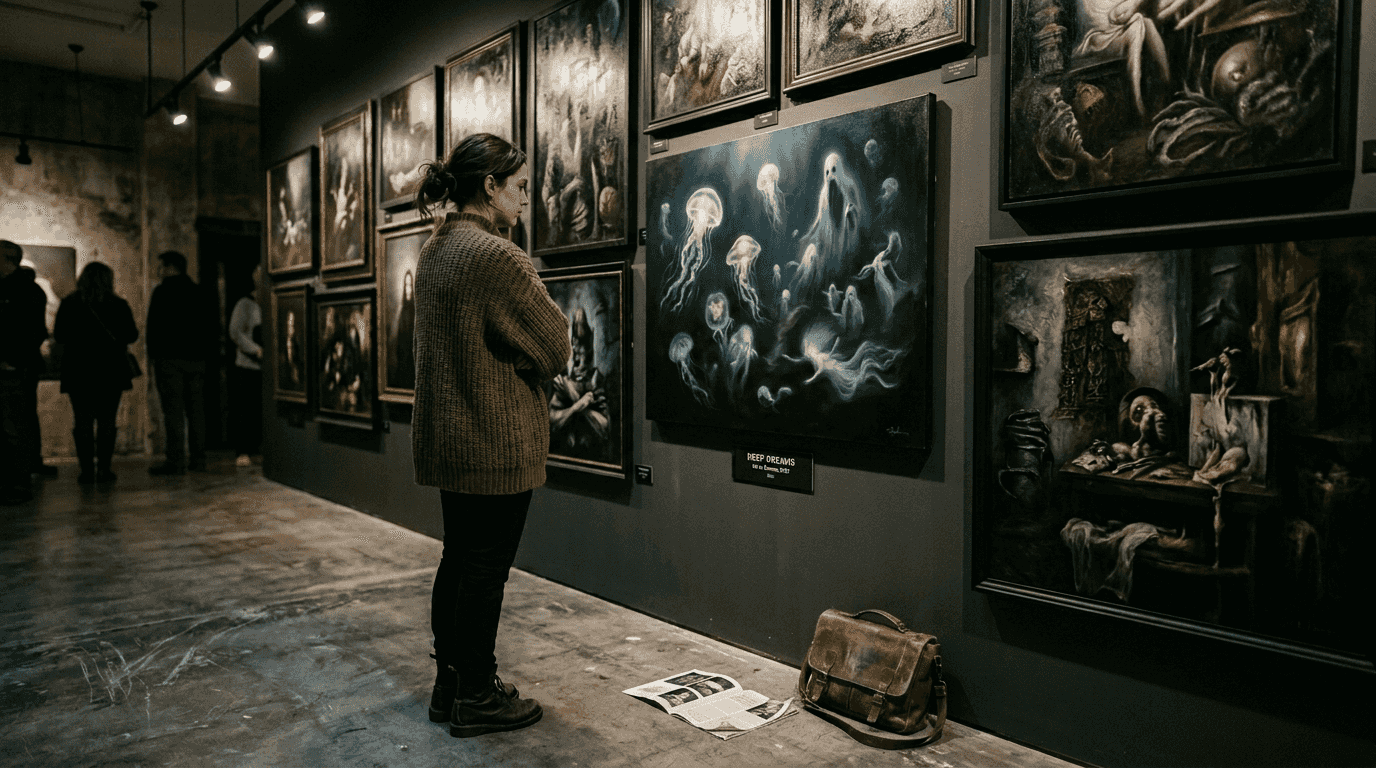
Common symbolic motifs include jellyfish representing grief’s unpredictable, flowing nature. Their translucent bodies suggest memory’s fragility and the way trauma can feel simultaneously present and intangible. Artists deploy these creatures to explore how loss moves through us in waves, sometimes gentle, sometimes overwhelming. The juxtaposition challenges viewers to sit with discomfort while finding beauty in darkness.
Translucent or ghostly figures frequently appear in dark surrealist compositions, depicting suspended emotional states or memories that refuse to fade. These ethereal forms occupy liminal spaces between presence and absence, mirroring how we hold onto people or experiences even after they’ve passed. The technique creates visual metaphors for psychological processes that resist literal description.
Artists deliberately combine unsettling and whimsical elements to destabilize viewer expectations. A childlike figure might wear a grotesque mask, or delicate flowers might grow from decaying matter. These contrasts force reconsideration of comfortable categories like beautiful versus ugly, inviting deeper contemplation about transformation and renewal. Understanding these dark art themes enhances collecting decisions.
Interpreting symbolic layers:
- Examine recurring motifs across an artist’s portfolio to identify personal symbolic vocabulary
- Consider compositional placement, as central elements often carry primary meaning
- Note color associations, where palette shifts signal emotional transitions
- Research cultural and mythological references that inform symbolic choices
Pro Tip: Photograph your collection and revisit images months later. Your interpretation will evolve as life experiences shift, revealing how truly layered dark surrealist symbolism becomes over time.
Collecting limited-edition dark surrealism prints: authenticity and quality
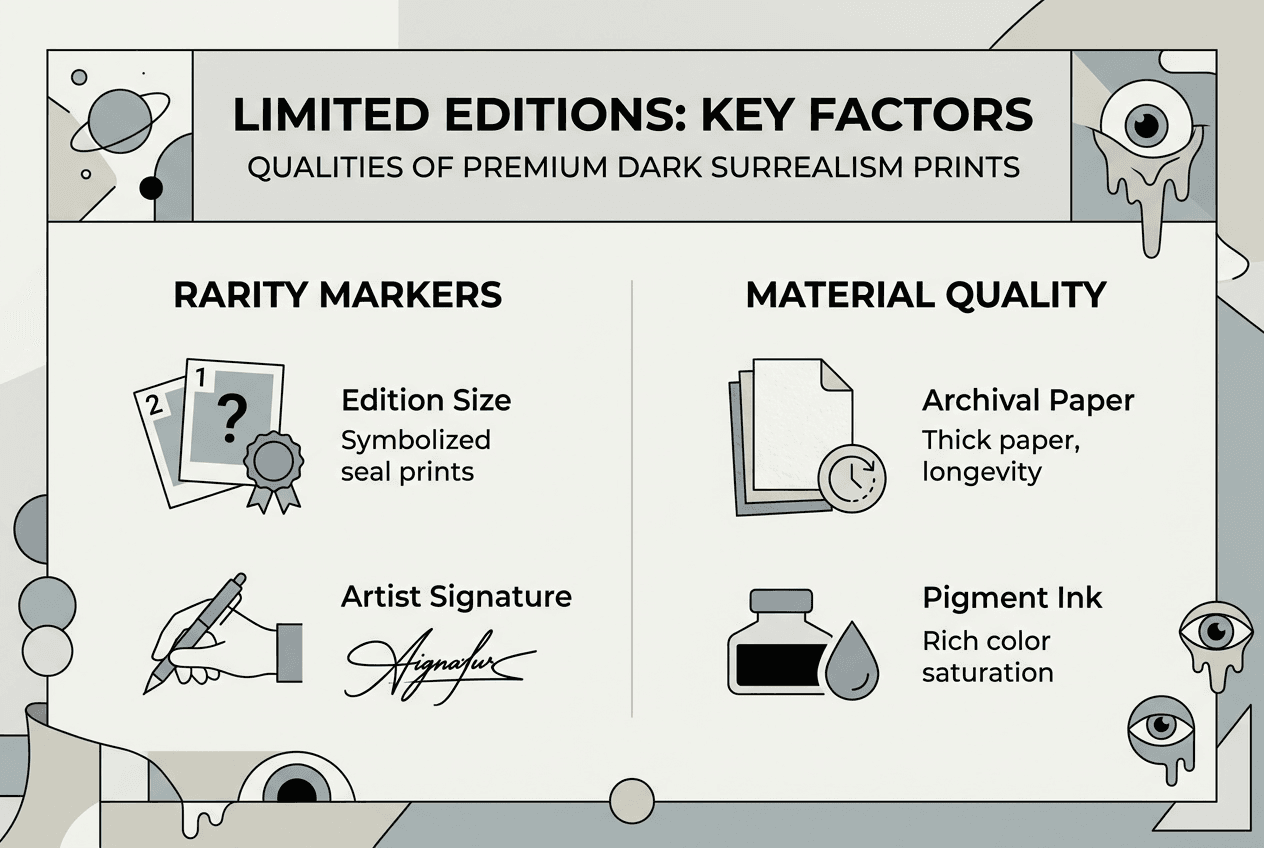
Authentic limited-edition prints carry specific markers distinguishing them from mass-produced reproductions. Collectors must understand these quality indicators to build valuable portfolios. Genuine prints feature hand-signed and numbered authentication typically appearing on both front and back, confirming the artist’s direct involvement in edition approval.
Premium archival materials determine longevity and investment potential. Many dark surrealism artists use Premium Fuji Crystal DP II photo paper specifically engineered for color stability and fade resistance over decades. This archival quality paper maintains vibrancy far longer than standard printing substrates, protecting your investment against environmental degradation. The surface finish affects how light interacts with imagery, influencing emotional impact.
Edition size directly correlates with rarity and value. Smaller editions command higher prices because fewer examples exist. Common configurations include editions of 25, 50, or 100 prints. Artists often reserve artist proofs numbered separately from the main edition, creating an additional tier of collectibility. Understanding dark realism art collecting principles helps evaluate edition significance.
| Print Attribute | Standard Quality | Premium Quality |
|---|---|---|
| Paper type | Generic photo paper | Fuji Crystal DP II archival |
| Signing | Digital signature printed | Hand-signed by artist |
| Numbering | Edition size not specified | Hand-numbered with total |
| Color accuracy | Variable screen to print | Calibrated color matching |
| Expected lifespan | 10-20 years | 100+ years archival |
Color calibration ensures what you see online matches the physical print. Reputable artists provide color-accurate photography and detailed specifications. Size options typically range from 8x10 inches to 24x36 inches, with larger formats commanding premium prices due to material costs and visual impact. Consider display space and viewing distance when selecting dimensions.
Proper framing and care extend print lifespan significantly:
- Use UV-protective glass to prevent light damage
- Maintain stable humidity between 30-50% to prevent paper warping
- Avoid direct sunlight exposure even with UV protection
- Store unframed prints flat in acid-free sleeves
Pro Tip: Request a certificate of authenticity documenting edition details, materials, and artist signature. This documentation proves provenance if you later resell, significantly enhancing value retention and collector confidence.
The impact of dark expressionism on contemporary collecting demonstrates how technical quality separates investment-grade pieces from decorative prints. Serious collectors prioritize archival materials knowing these works appreciate over time.
Historical techniques and notable artists shaping dark surrealism
Max Ernst pioneered foundational surrealist techniques in 1925 that continue influencing dark surrealism today. His innovations introduced unpredictability into controlled artistic processes, perfectly embodying surrealism’s embrace of unconscious creativity. Ernst’s frottage technique involved rubbing textures from surfaces onto paper, while grattage scraped wet paint to reveal underlying layers, creating organic patterns impossible through deliberate brushwork alone.
These historical methods established principles contemporary artists adapt using digital tools. Modern dark surrealists apply similar layering philosophies through software, building complex compositions by revealing and concealing elements. The conceptual approach remains consistent even as technology evolves. Understanding this lineage enriches appreciation for how artists honor tradition while innovating.
Technical analysis of Ernst’s works reveals sophisticated material layering:
- Initial canvas preparation with varied texture applications
- Base color layer establishing atmospheric foundation
- Frottage transfer introducing organic patterns and texture
- Grattage removal selectively revealing underlayers
- Final detail painting refining composition and focal points
Contemporary dark surreal artists integrate both analog and digital methods, often creating physical sketches before digital rendering or printing digital work for hand-finishing. This hybrid workflow combines computational precision with human touch, resulting in pieces that feel both technically accomplished and emotionally immediate. The surrealism in visual storytelling tradition continues evolving through these blended approaches.
| Technique | Historical Application | Contemporary Adaptation |
|---|---|---|
| Frottage | Physical texture rubbing | Digital texture overlays |
| Grattage | Paint scraping | Layer masking and blending |
| Automatism | Unconscious mark-making | Generative algorithms combined with manual control |
| Decalcomania | Paint transfer between surfaces | Digital mirroring and symmetry tools |
Studying surreal comics techniques reveals how narrative artists apply similar principles to sequential storytelling. The cross-pollination between fine art and illustration strengthens both fields, creating richer visual vocabularies that collectors appreciate across mediums.
Understanding historical context helps collectors recognize when contemporary artists genuinely innovate versus merely mimicking surface aesthetics. Authentic dark surrealism demonstrates technical mastery serving deeper conceptual purposes, continuing the tradition of using unconventional methods to access psychological truths.
Discover and acquire dark surrealism art at The Mansion Press
Ready to start or expand your dark surrealism collection? The Mansion Press curates exceptional limited-edition prints and original artworks from independent artists pushing this genre forward. Our carefully selected pieces demonstrate the technical mastery and symbolic depth explored throughout this guide, ensuring you acquire investment-quality works that resonate emotionally and appreciate over time.
Explore artist profiles revealing the stories and symbolism behind each piece. Our platform connects you directly with creators, providing authenticity documentation and archival quality guarantees. Whether you’re drawn to the psychology behind dark art or specific dark art themes, you’ll find pieces speaking to your aesthetic and emotional preferences. Visit The Mansion Press today to discover artworks that transform spaces and perspectives.
Frequently asked questions
What defines dark surrealism as an art genre?
Dark surrealism blends surrealist imagery with themes exploring grief, transformation, loss, and healing through symbolic visual narratives. Unlike generic dark art focused on macabre aesthetics, this genre prioritizes emotional depth and layered meaning that invites sustained contemplation. Artists use both traditional and digital techniques to create psychologically resonant works transcending surface-level interpretation.
How do artists create the layered imagery in dark surrealism?
Artists frequently combine 3D modeling with digital painting to achieve complex depth and texture impossible through single-medium approaches. This integration allows precise control over lighting, spatial relationships, and atmospheric effects while maintaining painterly emotional qualities. The technical blending mirrors the conceptual layering that makes dark surrealism symbolically rich.
What should collectors look for to verify authenticity of limited-edition prints?
Authentic prints are hand-signed and numbered by artists on both front and back, confirming direct involvement in edition approval. Premium archival paper like Fuji Crystal DP II ensures longevity, while certificates of authenticity document materials, edition size, and provenance. These markers distinguish investment-grade pieces from reproductions lacking collectible value.
How does symbolism enhance dark surrealist art?
Symbolism transforms dark surrealist works into multilayered emotional experiences where each element carries deeper meaning beyond literal representation. Visual metaphors allow artists to explore complex psychological states resisting verbal description. This symbolic richness invites repeated viewing as interpretations evolve with personal experience, making pieces increasingly valuable over time to discerning collectors.
Recommended
- Discover The Strange House limited editions value – The Mansion Press
- Modern Surreal Comics: Complete Guide for Collectors – The Mansion Press
- Dark Realism Art: Meaning, Impact, and Collecting – The Mansion Press
- Complete Guide to Surreal Comic Art Styles – The Mansion Press
- What is an online merch store? A guide for artists in 2026 – The Inner Sanctum Group