

Psychology Behind Dark Art – Why It Resonates
Most American collectors are surprised to find that over 60 percent of contemporary art buyers actively seek works exploring themes of darkness and psychological depth. This fascination is more than a trend. Dark art taps into hidden corners of the mind, challenging comfort zones and sparking emotional curiosity. By understanding how artists use unsettling imagery to reflect internal struggles, you can gain new insight into why this art form resonates so deeply for both creators and viewers.
Table of Contents
- Defining Dark Art And Its Psychological Roots
- Types Of Dark Art And Artistic Expression
- Symbolism And Visual Motifs In Dark Art
- Emotional Impact On Viewers And Creators
- Risks, Misconceptions, And Collecting Dark Art
Key Takeaways
| Point | Details |
|---|---|
| Dark Art as Psychological Exploration | Dark art challenges traditional aesthetics, delving into unconscious fears and societal taboos to provoke deep emotional responses. |
| Diverse Artistic Mediums | Various forms of dark art, including graphic novels and surrealist painting, uniquely capture complex emotional narratives and psychological themes. |
| Visual Symbolism | Dark art employs intricate motifs and techniques like tenebrism and nigredo to communicate profound psychological states and transformations. |
| Emotional Interaction | Both creators and viewers engage in a psychological dialogue through dark art, facilitating emotional catharsis and exploration of latent fears. |
Defining Dark Art And Its Psychological Roots
Dark art represents an artistic expression that deliberately explores the shadowy, complex emotional landscapes of human experience. Unlike traditional aesthetic representations, this genre purposefully confronts uncomfortable psychological territories, challenging viewers to engage with imagery that provokes deep internal responses. Psychological horror comics offer profound insights into these intricate emotional terrains.
At its core, dark art functions as a profound psychological exploration, delving into unconscious fears, societal taboos, and the intricate shadows of human emotional experience. Artists working in this genre intentionally subvert traditional aesthetic norms, using visual metaphors and symbolic representations to communicate complex psychological states that often remain unspoken. The imagery typically features distorted human forms, surreal landscapes, and provocative color palettes designed to trigger visceral emotional reactions.
The psychological roots of dark art trace back to fundamental human experiences of vulnerability, trauma, and the unknown. By confronting viewers with unsettling imagery, these artists create a transformative space where uncomfortable emotions can be acknowledged and processed. Understanding themes in dark comics reveals how artists strategically use visual language to communicate complex emotional narratives that traditional representational art cannot capture. Dark art serves not as mere shock value, but as a nuanced mechanism for exploring the depth and complexity of human psychological experience.
Critical psychological mechanisms underpin dark art’s profound impact. These include:
- Triggering unconscious emotional responses
- Challenging viewer’s perception of comfort and safety
- Providing cathartic emotional release
- Confronting societal repressions and unacknowledged fears
By engaging with dark art, viewers paradoxically find a pathway to understanding their own internal emotional landscapes, transforming potentially threatening imagery into a therapeutic visual experience.
Types Of Dark Art And Artistic Expression
Dark art encompasses multiple artistic styles and mediums, each offering unique perspectives into the complex psychological landscape of human emotion. Exploring dark visual storytelling reveals the profound diversity within this artistic genre, demonstrating how different techniques communicate intricate emotional narratives.
Graphic Novel Art represents one of the most dynamic expressions of dark art, utilizing sequential imagery to explore profound psychological themes. These narratives often feature morally ambiguous characters, surreal landscapes, and complex visual metaphors that challenge traditional storytelling conventions. Artists in this medium skillfully blend visual symbolism with narrative complexity, creating immersive experiences that probe the depths of human consciousness.

Another significant form of dark art emerges through surrealist painting and digital illustration. These mediums allow artists to deconstruct traditional representational boundaries, presenting distorted human figures, nightmarish landscapes, and emotionally charged symbolic imagery. Finding inspiration in dark artistic expressions demonstrates how artists transform abstract psychological states into tangible visual experiences.
Dark art manifests across various artistic domains:
- Graphic Novels
- Surrealist Painting
- Digital Illustration
- Performance Art
- Experimental Photography
- Mixed Media Installations
Each medium offers a unique lens for exploring the complex, often uncomfortable psychological territories that define human emotional experience. By challenging aesthetic norms and confronting viewers with provocative imagery, dark art creates a transformative space for emotional exploration and psychological understanding.
Symbolism And Visual Motifs In Dark Art
Dark art employs a complex language of visual symbolism, using intricate motifs to communicate profound psychological experiences. Dark graphic novels reveal sophisticated storytelling techniques that transform abstract emotional states into powerful visual narratives, where every symbol carries deep psychological significance.
The visual language of dark art often incorporates tenebrism, a technique characterized by dramatic light and shadow contrasts that evoke intense emotional responses. This artistic approach creates psychological landscapes where darkness becomes a metaphorical representation of inner turmoil, uncertainty, and unexplored emotional territories. Artists strategically use stark light-dark contrasts to illuminate specific psychological moments, drawing viewers into the complex emotional terrain of the artwork.
Another profound symbolic element in dark art is the concept of nigredo, which represents psychological transformation through darkness. Originating from alchemical and Jungian psychological traditions, nigredo symbolizes the crucial stage of confronting one’s inner shadows, deconstruction, and eventual psychological rebirth. Dark artists frequently employ visual metaphors of decomposition, decay, and transformation to represent this profound internal journey.
Common visual motifs in dark art include:
- Fragmented human forms
- Surreal architectural landscapes
- Distorted biological imagery
- Shadowy, indistinct figures
- Symbolic representations of psychological states
- Metamorphic imagery
These visual elements serve as complex psychological language, allowing artists to communicate nuanced emotional experiences that transcend traditional representational art, inviting viewers to explore the intricate landscapes of human consciousness.
Emotional Impact On Viewers And Creators
Dark art generates a profound psychological dialogue between creators and viewers, transforming emotional experiences into visceral visual narratives. Storytelling through abstract visuals reveals the complex emotional transactions that occur when artists translate internal psychological landscapes into tangible artistic expressions.
For creators, dark art functions as a powerful psychological catharsis, allowing artists to externalize and process complex emotional experiences that defy traditional representational methods. The act of creating becomes a transformative journey of self-discovery, where inner shadows, unresolved traumas, and profound psychological tensions are confronted and transmuted through artistic expression. Artists often report experiencing significant emotional release and psychological clarity after completing works that deeply explore their interior emotional terrain.
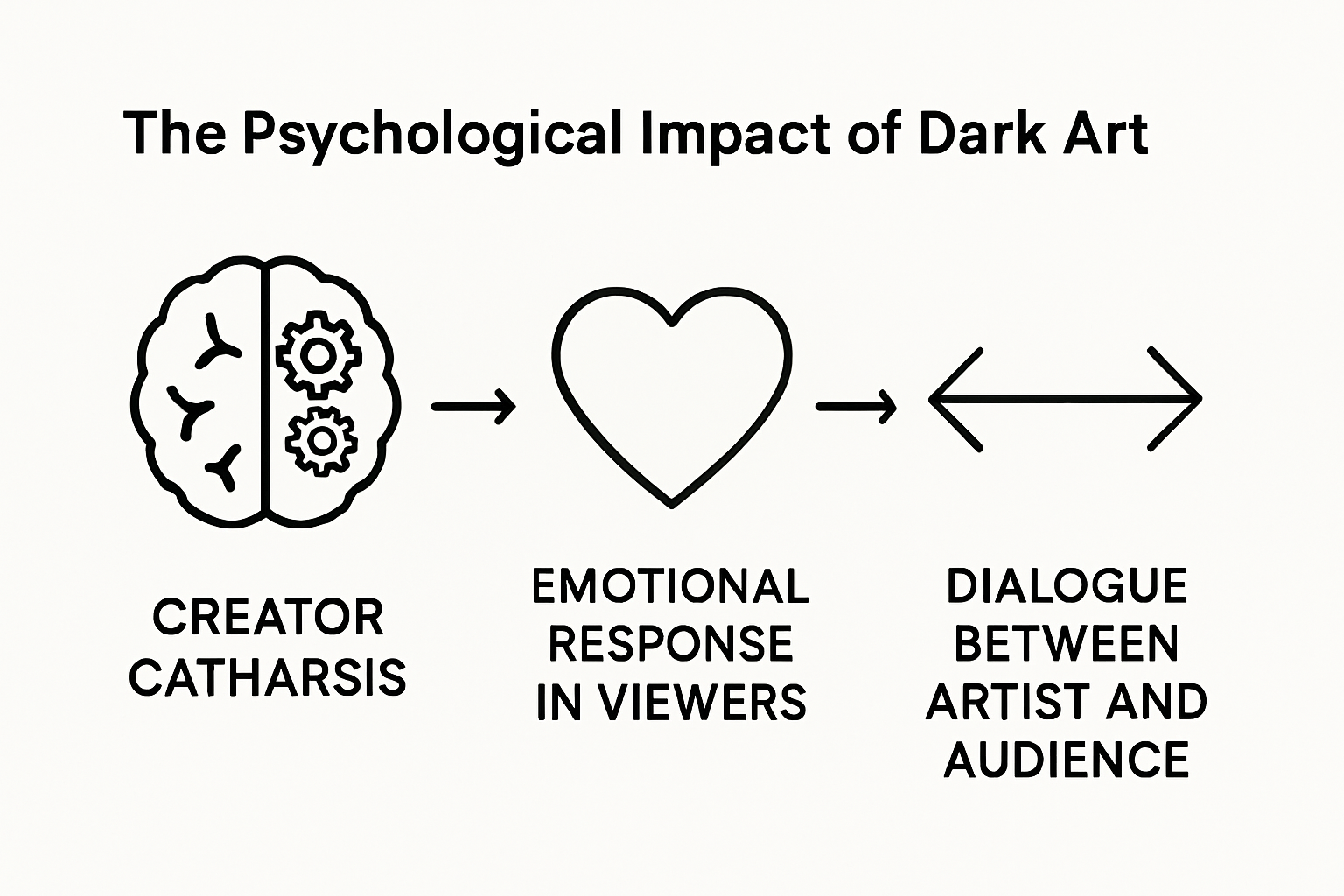
Viewers engage with dark art through a similarly intense emotional mechanism. Creepy comic book imagery demonstrates how visual narratives can trigger deep psychological responses, compelling audiences to confront their own unexplored emotional landscapes. This engagement is not merely passive observation but an active psychological process of recognition, reflection, and potential transformation. Viewers often experience a complex emotional resonance that simultaneously attracts and unsettles them, creating a profound sense of psychological connection.
Emotional interactions in dark art typically involve:
- Psychological mirroring
- Cathartic emotional release
- Confrontation with subconscious fears
- Exploration of complex emotional states
- Challenging aesthetic comfort zones
- Transformative viewer experiences
Ultimately, dark art serves as a powerful medium for emotional communication, transcending traditional boundaries between creator and audience by offering a raw, unfiltered exploration of human psychological complexity.
Risks, Misconceptions, And Collecting Dark Art
Collecting dark art requires sophisticated understanding beyond surface-level aesthetic appreciation. Recognizing original comic art becomes crucial in navigating this complex collecting landscape, where nuanced expertise separates genuine collectors from casual observers.
One significant misconception surrounding dark art involves its perceived negativity. Contrary to popular belief, dark art is not inherently destructive or harmful, but a profound psychological exploration that offers deep insights into human emotional complexity. Collectors often misunderstand the genre’s intent, viewing it as mere shock value rather than a sophisticated form of emotional communication. This misinterpretation can lead to superficial engagement and missed opportunities for deeper psychological understanding.
Investment potential represents another critical consideration for dark art collectors. Understanding rare comic value dynamics reveals that dark art pieces can appreciate significantly when acquired with discernment and historical context. The most valuable works often demonstrate exceptional psychological depth, technical mastery, and unique narrative complexity that transcend mere visual provocation.
Key considerations for responsible dark art collection include:
- Verifying artwork authenticity
- Understanding psychological context
- Assessing technical execution
- Researching artist background
- Evaluating emotional complexity
- Considering long-term artistic significance
Successful dark art collecting requires a nuanced approach that balances aesthetic appreciation, psychological insight, and critical evaluation, transforming the process from mere acquisition to a profound exploration of human emotional landscapes.
Explore the Depths of Dark Art Through Unique Collections
The article unpacks how dark art taps into complex psychological themes like unconscious fears and emotional transformation. If you are drawn to artwork that defies traditional aesthetics and evokes powerful emotional responses, discovering original dark art pieces and graphic novels can deepen your connection to these profound themes. Understanding concepts like nigredo or tenebrism becomes even more vivid when you experience art crafted by visionary creators pushing emotional and symbolic boundaries.
Dive into a curated selection of limited-edition comics, artbooks, and original artworks that embody this psychological intensity at The Mansion Press. Act now to access exclusive releases and collector items that bring these dark visual narratives to life. Elevate your art collection with pieces that challenge comfort zones and invite transformative experiences. Don’t miss your chance to engage with creators who transform shadowy internal landscapes into powerful artistic journeys at The Mansion Press today.
Frequently Asked Questions
What is dark art and how does it differ from traditional art?
Dark art is an artistic genre that explores complex emotional landscapes, often confronting uncomfortable psychological themes. It deliberately subverts traditional aesthetic norms to provoke deep internal responses, whereas traditional art typically focuses on beauty and representation.
What psychological themes are commonly explored in dark art?
Dark art often delves into themes of vulnerability, trauma, societal taboos, and unconscious fears. It serves as an exploration of the darker aspects of human experience, inviting viewers to engage with their own emotions and psychological states.
How does dark art impact viewers’ emotions?
Engaging with dark art triggers various emotional responses, including catharsis and reflection. It can prompt viewers to confront their own unresolved fears and emotions, creating a space for personal transformation and deeper psychological understanding.
What techniques do artists use to convey emotions in dark art?
Artists commonly employ visual symbolism, surreal imagery, and techniques like tenebrism to evoke emotional responses. These elements help communicate complex psychological experiences and invite the viewer to interpret the artwork on a personal level.
Recommended
- Understanding Finding Inspiration in Dark Art – The Mansion Press
- Understanding Exploring Dark Comics Themes for Art Lovers – The Mansion Press
- Understanding Psychological Horror Comics: Themes and Impact – The Mansion Press
- Complete Guide to Dark Visual Storytelling – The Mansion Press
- Understanding the Benefits of Imaginative Play – The Zoofamily
- 7 Emotional Triggers for Overeating and How to Stop Them - LeanAndFit
- Understanding Color Psychology in Fashion Choices – Be Juliet