

Dark romanticism paintings: gothic themes and emotional depth
Most people think of Romanticism as sweeping landscapes and idealized beauty. But dark romanticism paintings flip that script entirely, diving into the shadowy corners of human nature where guilt, terror, and the supernatural reign. This subgenre emerged as artists rejected pure euphoria, choosing instead to explore psychological torment, gothic imagery, and the grotesque. You’ll discover how masters like Fuseli, Friedrich, and Goya used distorted forms and eerie atmospheres to create art that challenges, unsettles, and fascinates collectors today.
Table of Contents
- What Is Dark Romanticism In Painting?
- Key Artists And Iconic Dark Romanticism Paintings
- The Aesthetics And Symbolism Of Dark Romanticism Paintings
- Collecting Dark Romanticism Paintings: Market Trends And Considerations
- Discover Exclusive Dark Romanticism Art At The Mansion Press
- Frequently Asked Questions
Key takeaways
| Point | Details |
|---|---|
| Dark romanticism explores human darkness | This subgenre focuses on guilt, sin, and supernatural themes through gothic visual elements. |
| Key artists shaped the movement | Henry Fuseli, Caspar David Friedrich, Francisco Goya, and William Blake defined the genre. |
| Symbolism drives emotional impact | Ruins, fog, distorted bodies, and somber palettes evoke sublime terror and psychological depth. |
| Market demand continues rising | Auction records show strong collector interest in authenticated works with gothic themes. |
| Collecting requires careful evaluation | Authentication, provenance, and thematic resonance determine value and investment potential. |
What is dark romanticism in painting?
Dark romanticism developed during the late 18th and early 19th centuries as artists began questioning Romanticism’s optimistic view of nature and humanity. While traditional Romantic painters celebrated sublime landscapes and heroic ideals, dark romanticists turned inward to examine human frailty, moral corruption, and existential dread. Mario Praz coined the term in 1930, identifying how these artists emphasized melancholia, insanity, crime, and the grotesque in their visual narratives.
The movement draws heavily from gothic literature and scientific inquiry into human psychology. Artists became fascinated with how guilt, fear, and irrational impulses shape behavior and consciousness. Dark romanticism explores themes of the irrational and demonic, focusing on psychological effects of sin through visual metaphors that challenge viewers to confront uncomfortable truths about themselves.
Visual characteristics set dark romanticism apart from its lighter counterpart:
- Grotesque and distorted human figures representing inner torment
- Supernatural creatures like demons, ghosts, and monsters symbolizing hidden fears
- Decaying architecture and ruins suggesting mortality and societal collapse
- Atmospheric effects using fog, darkness, and ominous lighting
- Somber color palettes dominated by blacks, grays, and muted earth tones
These paintings don’t just depict darkness for shock value. They serve as visual philosophy, asking viewers to consider judgment, punishment, and the shadow side of human nature. The genre bridges dark visual storytelling with fine art traditions, creating works that remain emotionally powerful centuries later. Artists working in this style rejected the notion that art should only uplift or beautify, instead embracing its capacity to disturb and provoke deeper reflection.
Key artists and iconic dark romanticism paintings
Henry Fuseli stands as perhaps the most recognizable name in dark romanticism. His painting The Nightmare depicts gothic horror through a tormented sleeper visited by supernatural creatures, capturing the subconscious terror that fascinated Romantic-era thinkers. The incubus perched on the sleeping woman’s chest became an iconic image of psychological disturbance, while the ghostly horse emerging from darkness adds layers of symbolic meaning about desire and fear.
Caspar David Friedrich took a different approach, embedding darkness within landscapes rather than supernatural scenes. Abbey in the Oakwood uses symbolism and somber palettes to transform a simple graveyard into a meditation on death and spiritual mystery. Bare trees reach like skeletal fingers toward a gray sky, while monks carry a coffin through snow toward ruined Gothic arches. Friedrich’s genius lies in making nature itself feel haunted and psychologically charged.
Francisco Goya pushed dark romanticism to its most extreme expression. His Black Paintings represent raw emotional torment created during political upheaval and personal illness. Saturn Devouring His Son shows the Titan consuming his child in grotesque detail, a nightmarish vision of power, paranoia, and destructive impulses. These murals, painted directly on Goya’s house walls, weren’t meant for public display, making them intensely personal documents of psychological breakdown.
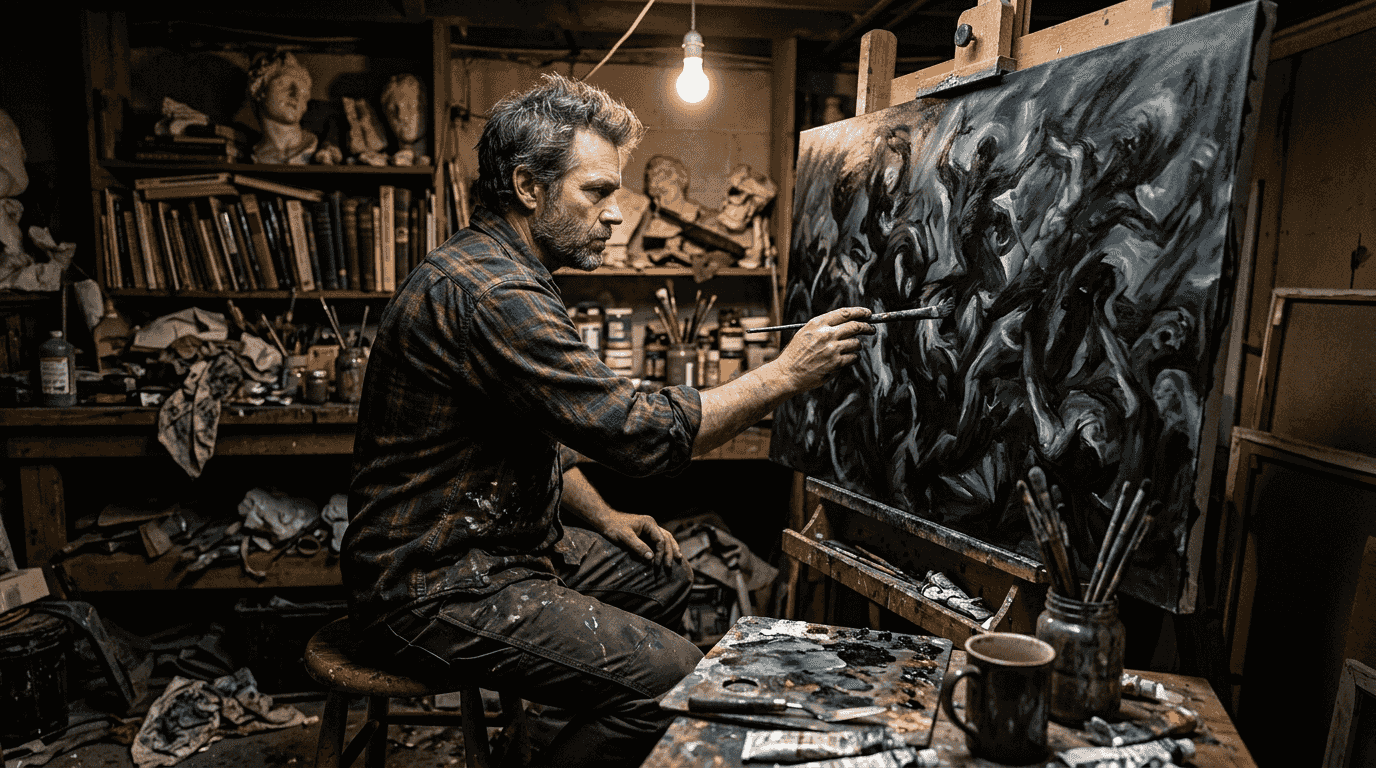
William Blake combined poetry and visual art to explore spiritual darkness and divine judgment. His illustrations for Dante’s Inferno and his original mythological works depicted angels, demons, and tortured souls with muscular, contorted bodies that emphasized physical and spiritual anguish. Blake’s unique vision merged religious mysticism with gothic sensibility.
Pro Tip: When evaluating dark romanticism paintings, look for emotional intensity over technical perfection. These artists prioritized psychological impact, sometimes deliberately distorting proportions or perspective to heighten unsettling effects.
| Painting | Artist | Year | Primary Themes | Key Symbols |
|---|---|---|---|---|
| The Nightmare | Henry Fuseli | 1781 | Subconscious terror, desire | Incubus, ghostly horse |
| Abbey in the Oakwood | Caspar David Friedrich | 1810 | Death, spiritual mystery | Ruins, bare trees, monks |
| Saturn Devouring His Son | Francisco Goya | 1823 | Power, paranoia, destruction | Cannibalism, darkness |
| The Great Red Dragon | William Blake | 1805 | Evil, apocalypse | Dragon, woman, biblical imagery |
These artists shared common techniques despite their different subjects. They used chiaroscuro to create dramatic light and shadow contrasts, distorted human anatomy to suggest psychological distress, and incorporated symbolic objects that viewers would recognize from literature and religious tradition. The connection between their work and the science of pain in visual art reveals how these painters understood emotional response long before modern psychology formalized these concepts. Their influence extends to contemporary artists exploring dark expressionism’s emotional impact through similar visual strategies.
The aesthetics and symbolism of dark romanticism paintings
Dark romanticism painters developed a visual language that communicated complex psychological and philosophical ideas through carefully chosen symbols. Ruins appear frequently, representing not just physical decay but the collapse of reason, faith, or social order. When Friedrich places a Gothic abbey in various states of destruction, he’s commenting on the fragility of human institutions against time and nature’s indifference. Fog and mist obscure clear vision, suggesting the limits of human knowledge and the mysteries lurking beyond rational understanding.
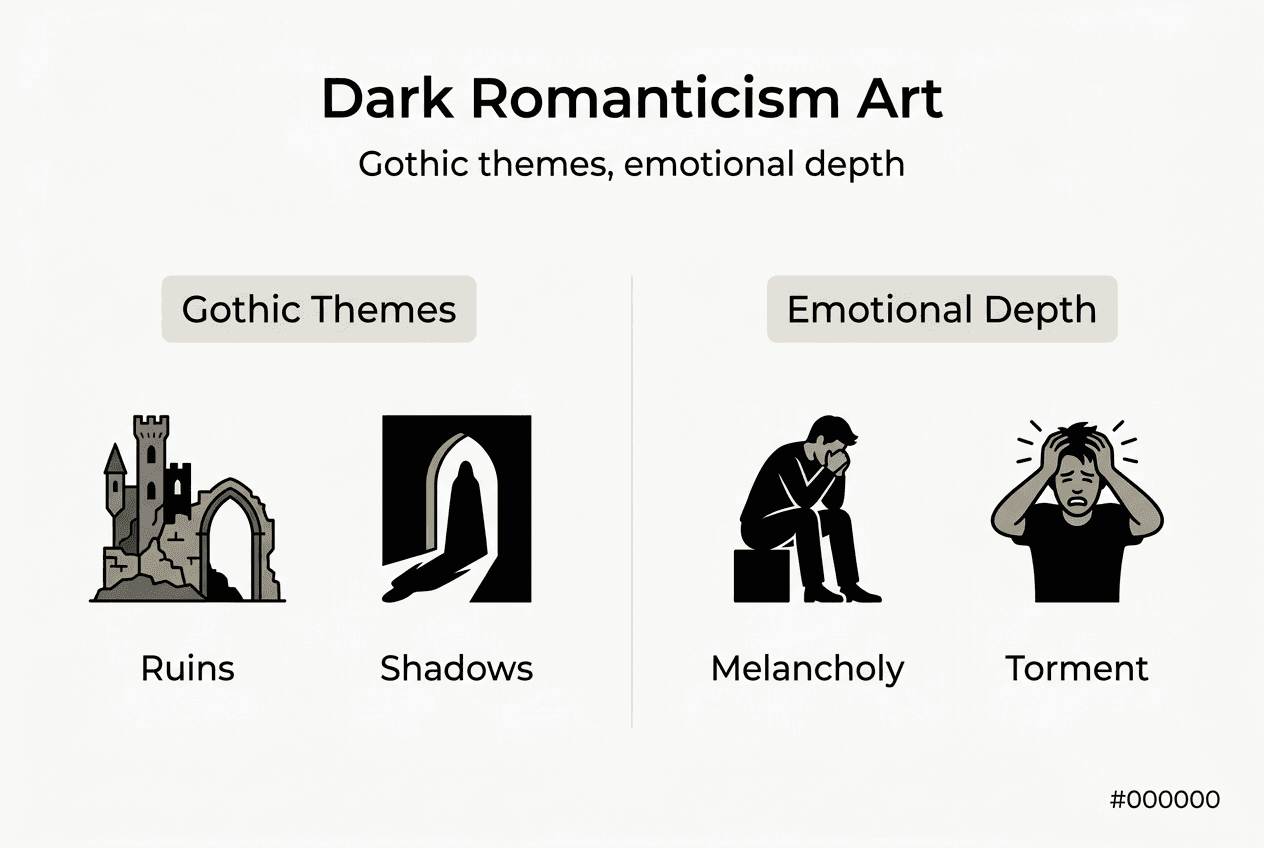
Skeletal imagery serves multiple symbolic functions. Skulls remind viewers of mortality’s inevitability, a memento mori tradition dating to medieval art. But dark romanticists pushed further, showing decomposing bodies, exposed bones, and death as an active rather than passive force. The dying sun or eclipsed moon creates apocalyptic atmospheres, hinting at cosmic disorder or divine judgment approaching. Grotesque creatures embody specific fears: demons represent temptation and damnation, monsters symbolize nature’s destructive power, and hybrid beings suggest the breakdown of natural categories.
Visual techniques like distorted forms and somber palettes evoke emotional depth by making viewers physically uncomfortable. Fuseli’s use of exaggerated distortion aligns with Burkean sublime ideas about depicting bodies in agony to produce awe mixed with terror. When proportions stretch unnaturally or faces contort beyond normal expression, your brain registers something wrong, triggering instinctive unease that mirrors the psychological themes being explored.
Chiaroscuro techniques create stark contrasts between light and darkness, forcing viewers to peer into shadows where threatening forms might lurk. This mirrors the philosophical tension between enlightenment rationality and the irrational forces these artists believed reason couldn’t fully control or explain. The interplay of light and shadow becomes a visual metaphor for conscious and unconscious mind, knowledge and ignorance, salvation and damnation.
| Symbolic Element | Emotional Impact | Philosophical Meaning |
|---|---|---|
| Ruins and decay | Melancholy, loss | Mortality, impermanence of human achievement |
| Fog and darkness | Uncertainty, fear | Limits of knowledge, unknowable mysteries |
| Distorted bodies | Discomfort, empathy | Psychological suffering, loss of control |
| Supernatural creatures | Terror, fascination | Hidden fears, moral corruption |
| Dying light | Despair, foreboding | Apocalypse, divine abandonment |
Pro Tip: Authentic dark romanticism paintings balance beauty with horror. If a work feels purely grotesque without aesthetic consideration, it likely comes from later movements like surrealism or expressionism rather than true Romantic-era dark romanticism.
The aesthetics engage directly with sublime theory, the idea that certain experiences produce simultaneous attraction and repulsion. You’re drawn to look at a Goya Black Painting despite its disturbing content because the composition, brushwork, and tonal range demonstrate masterful technique. This tension between artistic beauty and horrific subject matter defines the genre’s unique power. Understanding these principles helps collectors appreciate why dark expressionism art continues attracting serious buyers and how psychology behind dark art explains its enduring cultural relevance.
Collecting dark romanticism paintings: market trends and considerations
The market for dark romanticism paintings remains robust among serious collectors who value historical significance and emotional depth. Auction records show strong interest, with top works by recognized artists selling for millions when condition, provenance, and gothic elements align. Fuseli’s major paintings rarely appear at auction, making any authenticated work extremely valuable. Friedrich landscapes with dark themes command premium prices, especially pieces featuring ruins or graveyard scenes. Goya’s preparatory sketches and prints from his darker periods attract competitive bidding from museums and private collectors.
Several factors determine value in this specialized market. Artist reputation matters most, with established names like those discussed earlier bringing significantly higher prices than lesser-known contemporaries. Condition affects value dramatically since many dark romanticism works are over 200 years old. Original paintings in good condition with minimal restoration command premiums over heavily restored pieces. Provenance documentation proving ownership history and authenticity adds substantial value, particularly for works that have been exhibited in major museums or published in scholarly catalogs.
Thematic presence of gothic elements increases desirability. Collectors specifically seeking dark romanticism want clear evidence of the movement’s signature characteristics: supernatural subjects, psychological intensity, symbolic depth, and technical execution that serves emotional impact. A Friedrich landscape without dark elements won’t attract the same buyers as his more gothic works, even if technically comparable.
Practical considerations for new collectors:
- Work only with reputable auction houses and galleries specializing in Romantic-era art
- Demand condition reports from conservators before major purchases
- Verify provenance through documented exhibition history and published references
- Consider prints and preparatory sketches as entry points before investing in major paintings
- Join collector groups focused on Romantic and gothic art to build knowledge
Pitfalls to avoid include forgeries, which exist for popular artists like Fuseli and Blake. Misattributed works pose another risk, where paintings by students or followers get incorrectly labeled as by master artists. Overrestored pieces that have lost original surface quality and color relationships represent poor investments despite appearing visually acceptable. Buying based on subject matter alone without considering artistic quality leads to acquiring decorative pieces rather than serious art.
Steps to begin collecting safely:
- Study authenticated works in museum collections to train your eye for quality and style
- Read scholarly catalogs and monographs about specific artists you’re interested in
- Attend previews at major auction houses to examine works in person
- Consult with art advisors who specialize in 18th and 19th century European painting
- Start with more affordable prints or works by secondary artists to build experience
- Develop relationships with dealers who can alert you to appropriate pieces
- Budget for conservation and insurance as ongoing costs beyond purchase price
The connection between historical dark romanticism and contemporary movements like dark realism art means collectors can build thematic collections spanning centuries. This approach increases both intellectual satisfaction and potential investment returns as you develop expertise across related genres. Understanding market dynamics helps you make informed decisions whether collecting for personal enjoyment or long-term financial appreciation.
Discover exclusive dark romanticism art at The Mansion Press
Now that you understand the depth and power of dark romanticism paintings, you can explore curated collections that capture similar gothic intensity and emotional resonance. The Mansion Press specializes in connecting collectors with contemporary artists who channel the same shadowy aesthetic and psychological complexity that defined Fuseli, Friedrich, and Goya’s masterworks. Our carefully selected artworks feature the symbolic depth, technical excellence, and emotional impact that serious collectors value.
Whether you’re drawn to supernatural themes, gothic atmospheres, or psychologically charged imagery, The Mansion Press offers exclusive pieces from independent artists working in dark romantic traditions. Browse our collections to find original artworks, limited editions, and artist collaborations that bring the haunting beauty of dark romanticism into contemporary contexts. Each piece undergoes careful curation to ensure it meets the thematic and aesthetic standards that define this powerful artistic movement.
Frequently asked questions
What defines dark romanticism paintings?
Dark romanticism paintings focus on human frailty, psychological torment, and gothic themes rather than the idealized beauty typical of mainstream Romanticism. They explore guilt, sin, the supernatural, and irrational impulses through symbolic imagery, distorted forms, and somber color palettes. These works challenge viewers to confront uncomfortable aspects of human nature and mortality.
Who are the most influential dark romanticism painters?
Henry Fuseli, Caspar David Friedrich, Francisco Goya, and William Blake stand as the most influential figures in dark romanticism painting. Fuseli pioneered supernatural and psychological subjects, Friedrich embedded darkness in landscapes, Goya pushed the genre to extreme personal expression, and Blake merged visual art with mystical poetry. Each contributed unique perspectives on gothic themes and emotional depth.
How do dark romanticism paintings differ from traditional Romanticism?
Traditional Romanticism emphasizes nature’s beauty, heroic ideals, and emotional transcendence through positive sublime experiences. Dark romanticism explores the shadow side: psychological darkness, moral corruption, supernatural terror, and existential dread. While both movements value emotion and imagination over pure reason, dark romanticists focus specifically on humanity’s capacity for evil, suffering, and self-destruction.
What should collectors consider when buying dark romanticism paintings?
Collectors should prioritize artist reputation, verified provenance, and condition when evaluating dark romanticism paintings. Authenticate works through reputable dealers and conservators to avoid forgeries and misattributions. Assess whether gothic elements and emotional intensity align with the genre’s defining characteristics. Consider starting with prints or secondary artists before investing in major pieces, and budget for ongoing conservation and insurance costs.