

What Is Visionary Art and Its Impact on Collectors
Most collectors underestimate just how influential American artists have become in the rise of visionary art, with global demand for exclusive editions surging by over 30 percent in recent years. For anyone seeking more than mere decoration, visionary art offers a gateway into mystical imagination and spiritual symbolism that challenges mainstream expectations. This guide uncovers the truths behind visionary art, debunks common myths, and reveals how today’s collectors can directly support independent creators while discovering rare and meaningful works.
Table of Contents
- Defining Visionary Art And Common Myths
- Major Styles And Influences In Visionary Art
- Key Characteristics: Imagery, Symbols, Techniques
- Leading Visionary Artists And Iconic Works
- Why Visionary Art Appeals To Collectors
Key Takeaways
| Point | Details |
|---|---|
| Visionary Art Defined | Visionary art transcends traditional representation by expressing inner spiritual experiences and consciousness. |
| Common Myths | Many believe visionary art is esoteric, but it is accessible and reflects universal human experiences through diverse techniques. |
| Artistic Influences | Influenced by movements such as Symbolism and Surrealism, visionary art incorporates various cultural and technological elements. |
| Collector Appeal | Collectors are drawn to visionary art for its deep spiritual insights and the unique opportunity it offers for personal transformation. |
Defining Visionary Art and Common Myths
Visionary art represents a profound artistic approach that transcends traditional visual representation, focusing instead on expressing inner spiritual and mystical experiences. Mystical consciousness in art emerges from an extraordinary realm where imagination, perception, and spiritual insight converge, challenging conventional artistic boundaries.
At its core, visionary art differs fundamentally from representational or decorative styles. Artists working in this genre seek to communicate transcendent states of awareness, drawing inspiration from altered consciousness, shamanic experiences, and deep meditative insights. Unlike traditional art forms that replicate external reality, visionary artists aim to visualize internal landscapes of consciousness, revealing profound psychological and spiritual dimensions often invisible to ordinary perception.
Several common myths surround visionary art that deserve careful deconstruction. Many people mistakenly believe this artistic style requires specialized spiritual training or represents only esoteric, hard-to-understand imagery. In reality, visionary art encompasses a diverse range of expressive techniques, from intricate symbolic representations to abstract explorations of inner emotional territories. Spiritual themes in artistic creation demonstrate that these works are accessible, deeply human expressions of universal experiences.
Here’s a quick comparison of visionary art and traditional art styles:
| Aspect | Visionary Art | Traditional Art |
|---|---|---|
| Source of Inspiration | Inner consciousness, mystical experiences | External world, observable reality |
| Primary Themes | Spirituality, metaphysical symbolism | Physical objects, landscapes |
| Artistic Approach | Expresses psychological and spiritual dimensions | Replicates visual appearance |
| Viewer Experience | Invites introspection and self-discovery | Encourages admiration of technique |
Pro tip: When exploring visionary art, approach each piece with an open mind and allow yourself to experience the artwork’s emotional and spiritual landscape without trying to intellectually decode every detail.
Major Styles and Influences in Visionary Art
Visionary art draws from a rich tapestry of artistic movements, with influential historical art styles shaping its unique aesthetic and philosophical approach. The Vienna School of Fantastic Realism stands as a pivotal influence, blending technical precision with profound metaphysical exploration. Artists within this tradition seek to transcend mere visual representation, instead creating works that penetrate deeper layers of consciousness and spiritual experience.
Several key artistic movements have significantly contributed to the development of visionary art. Symbolism introduced the concept of representing abstract ideas through metaphorical imagery, while Surrealism expanded the boundaries of imagination by exploring subconscious landscapes. Cubism challenged traditional perspective, and Psychedelic art brought vivid, transformative visual experiences that directly parallel the visionary art movement’s core principles. These styles collectively demonstrate how artists have consistently sought to represent inner worlds beyond physical reality.
Contemporary visionary artists continue to evolve the genre, incorporating diverse cultural influences and emerging technological mediums. Digital art techniques, sacred geometry, shamanic imagery, and cross-cultural spiritual symbolism now intermingle to create increasingly complex and nuanced visual expressions. The global network of artists and cooperatives promotes a dynamic, interconnected approach to visionary art that transcends traditional artistic boundaries and cultural limitations.
The table below summarizes major movements that shaped visionary art:
| Movement | Contribution to Visionary Art | Notable Influence |
|---|---|---|
| Symbolism | Metaphorical imagery, abstract ideas | Depth of meaning |
| Surrealism | Exploration of subconscious landscapes | Dreamlike, transformative |
| Cubism | Challenged visual perspective | Non-linear representation |
| Psychedelic | Vivid, transformative visual impact | Intense color, symbolism |
Pro tip: When exploring visionary art collections, pay attention to the subtle symbolic details and emotional resonance of each piece, as these often reveal deeper layers of meaning beyond initial visual perception.
Key Characteristics: Imagery, Symbols, Techniques
Visionary art distinguishes itself through profound symbolic representation and archetypes, exploring spiritual and metaphysical dimensions beyond conventional artistic expression. These works go far deeper than aesthetic beauty, serving as visual portals into consciousness, personal mythology, and transcendent experiences. Artists deliberately employ intricate symbolism to communicate complex spiritual and psychological landscapes that cannot be easily articulated through traditional language.
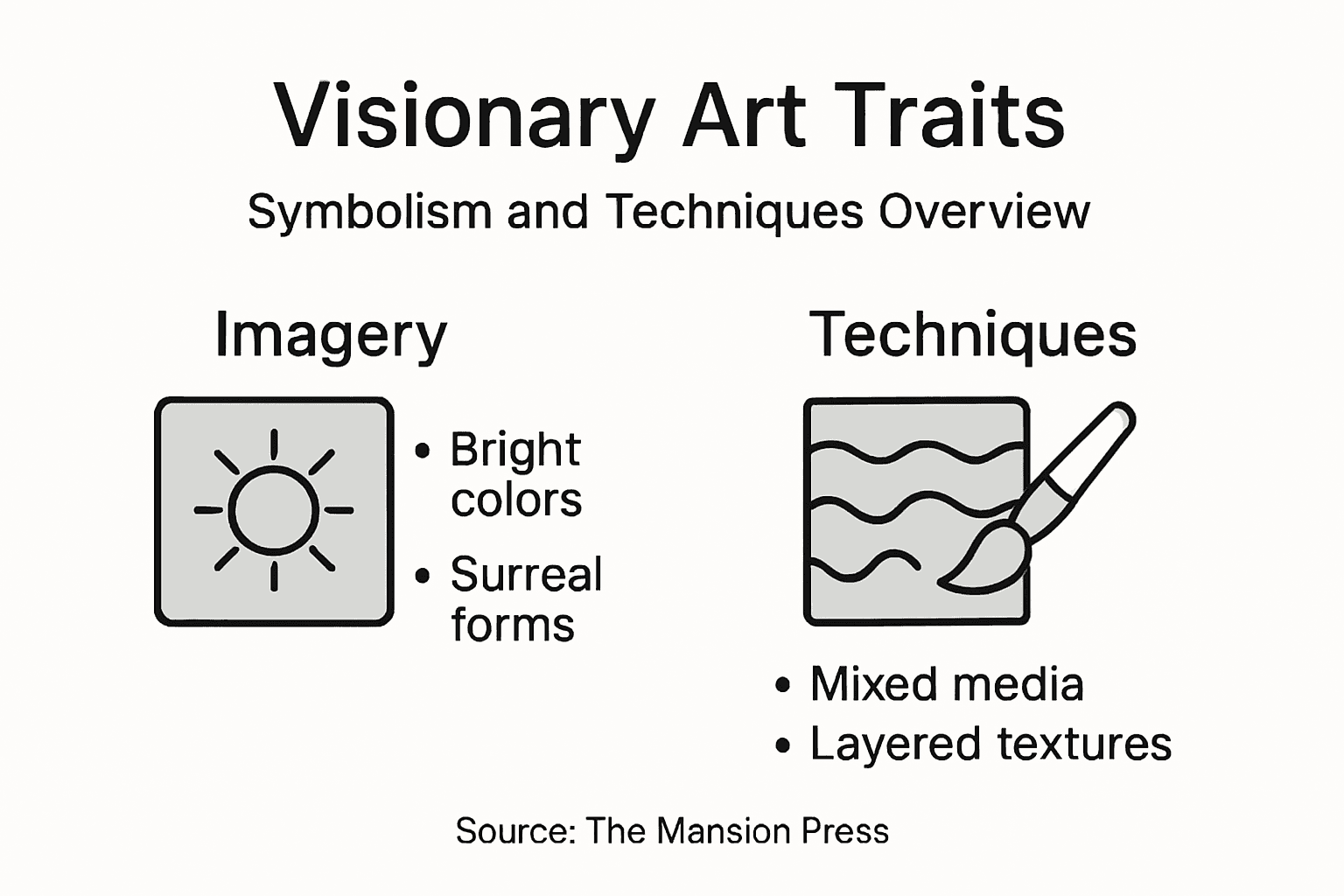
The imagery in visionary art is characterized by extraordinary visual elements that challenge ordinary perception. Vivid colors, intricate geometric patterns, mystical landscapes, and transformative human figures frequently populate these artworks. Cosmic themes and altered consciousness create visual narratives that invite viewers into profound meditative states, revealing inner worlds typically hidden from everyday awareness. Techniques range from hyperrealistic detail to abstract expressionism, allowing artists unprecedented freedom in representing spiritual and psychological experiences.
Technical approaches in visionary art are remarkably diverse, incorporating traditional media like oil painting and watercolor alongside digital technologies, mixed media, and experimental techniques. Sacred geometry, shamanic imagery, and cross-cultural spiritual symbolism frequently intersect, creating rich visual languages that transcend individual cultural boundaries. Contemporary visionary artists often blend technological innovation with ancient symbolic traditions, producing artwork that simultaneously feels futuristic and primordially connected to human spiritual experience.
Pro tip: When collecting visionary art, focus on pieces that create an immediate emotional resonance and challenge your perception, rather than simply matching decorative aesthetics.
Leading Visionary Artists and Iconic Works
The landscape of visionary art is populated by extraordinary creators who have transformed spiritual and psychological experiences into groundbreaking visual expressions. Notable visionary artists like Alex Grey, Ernst Fuchs, and Robert Venosa have pioneered unique approaches that transcend traditional artistic boundaries. These artists share a remarkable ability to translate profound inner experiences into intricate, mesmerizing visual narratives that challenge viewers’ perceptions of reality and consciousness.
Historical figures such as William Blake and Hieronymus Bosch can be considered early predecessors of the visionary art movement, creating works that explored mystical and psychological landscapes long before contemporary artists. Modern visionary artists like Mati Klarwein and Rudolf Hausner have expanded this tradition, incorporating elements of surrealism, sacred geometry, and spiritual symbolism. Their paintings often feature complex, multi-dimensional imagery that invites viewers into transformative visual journeys, blending personal mythologies with universal archetypal experiences.
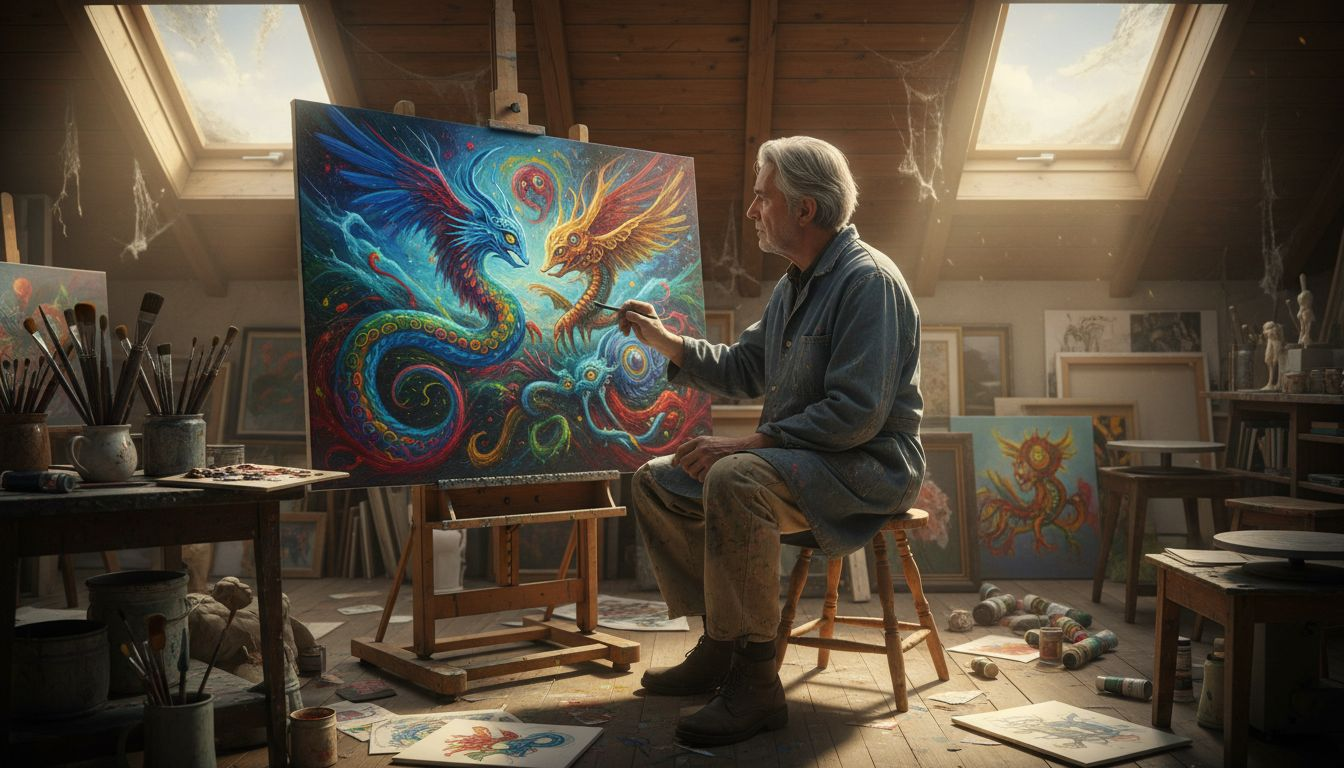
Contemporary visionary art has found significant institutional support through organizations like the American Visionary Art Museum, which celebrates artists who explore consciousness through unconventional visual methods. The genre continues to evolve, incorporating digital technologies, global spiritual traditions, and interdisciplinary approaches that challenge traditional art world categorizations. Artists in this field are not merely creating aesthetic objects, but serving as visual philosophers and spiritual explorers, mapping the complex terrains of human consciousness and transcendent experience.
Pro tip: When collecting visionary art, research the artist’s background and spiritual influences to gain deeper appreciation of the work’s symbolic and emotional layers.
Why Visionary Art Appeals to Collectors
Collectors are increasingly drawn to visionary art as a profound medium of cultural and personal expression that transcends traditional aesthetic boundaries. Art collecting motivations have evolved beyond mere decoration, with contemporary collectors seeking works that reflect deep spiritual and philosophical insights. Visionary art offers a unique opportunity to own pieces that challenge perceptual boundaries, serving as windows into extraordinary states of consciousness and personal transformation.
The appeal of visionary art extends far beyond its visual complexity. Collector status and evolutionary signaling suggest that acquiring such artwork represents more than an aesthetic choice—it’s a sophisticated form of cultural communication. Collectors are attracted to the genre’s ability to convey complex spiritual narratives, personal mythologies, and universal human experiences through intricate symbolic language. These artworks become powerful statements of intellectual and spiritual sophistication, distinguishing collectors as individuals with profound cultural awareness.
Globalization and digital platforms have democratized art collecting, making visionary art more accessible to a broader range of enthusiasts. Collectors are no longer limited by geographic constraints, allowing them to discover and acquire pieces from global artists who explore consciousness, spirituality, and human experience. The genre’s interdisciplinary nature—blending elements of psychology, spirituality, and visual innovation—creates a compelling narrative that resonates with collectors seeking meaningful, transformative artistic experiences.
Pro tip: When collecting visionary art, prioritize pieces that create an emotional and intellectual resonance, rather than focusing solely on market value or artist reputation.
Discover and Collect Visionary Art that Speaks to Your Inner Journey
Are you seeking visionary art that transcends ordinary experiences and speaks directly to your spiritual and psychological dimensions Collectors and art enthusiasts often face the challenge of finding authentic, emotionally resonant pieces that reflect profound personal and metaphysical themes As the article highlights, visionary art invites introspection through symbolic imagery and transformative narratives now you can explore a curated selection of artworks and unique artbooks that connect independent creators with insightful collectors like you
Experience the power of visionary art firsthand by browsing exclusive editions and original artworks at The Mansion Press Immerse yourself in a world where imagination meets consciousness and find pieces that challenge perceptions while offering deep emotional resonance Don t wait to enrich your collection with visionary art that conveys universal human experiences Visit The Mansion Press today and start your journey toward owning meaningful art that inspires reflection and self-discovery
Frequently Asked Questions
What is visionary art?
Visionary art is an artistic approach that expresses inner spiritual and mystical experiences, focusing on psychological and spiritual dimensions rather than replicating external reality.
How does visionary art differ from traditional art?
Visionary art primarily draws inspiration from inner consciousness and metaphysical themes, while traditional art often depicts the observable external world. Visionary artists aim to communicate transcendent states of awareness, whereas traditional artists typically focus on visual realism.
What are some common myths about visionary art?
Common myths include the belief that visionary art requires specialized spiritual training or involves only esoteric imagery. In reality, visionary art is accessible and encompasses a wide range of techniques and styles that represent universal human experiences.
Why are collectors attracted to visionary art?
Collectors are drawn to visionary art for its deep cultural and personal expression that challenges aesthetic boundaries. These artworks convey complex spiritual narratives and personal mythologies, making them valuable statements of intellectual and spiritual sophistication.
Recommended
- How Artbooks Are Curated – Impact on Art Collectors – The Mansion Press
- Dark Art Movements: Impact on Contemporary Collecting – The Mansion Press
- Dark Art Themes: Impact on Modern Art Collecting – The Mansion Press
- What Is Outsider Art and Why It Matters – The Mansion Press
- 7 Influential Curator Examples for Early Artist Discovery - Blog - Music24.com