

What Is Outsider Art and Why It Matters
Most collectors are surprised to learn that the american outsider art market has grown by over 40 percent in the past decade, reflecting a worldwide fascination with creativity beyond formal boundaries. For those seeking works that reject mainstream conventions, outsider art offers raw authenticity and stories that challenge traditional artistic hierarchies. Understanding what truly defines outsider art—and dispelling common misconceptions—can help collectors find rare, emotionally charged pieces that bring fresh perspectives and genuine diversity to global collections.
Table of Contents
- Defining Outsider Art And Common Misconceptions
- Historical Roots And Evolution Of Outsider Art
- Key Traits And Styles Distinguishing Outsider Art
- Why Collectors Value Outsider Artists’ Work
- Ethical Considerations In Buying Outsider Art
Key Takeaways
| Point | Details |
|---|---|
| Definition of Outsider Art | Outsider art is created by self-taught artists outside mainstream institutions, emphasizing raw personal expression over technical skill. |
| Common Misconceptions | Lack of formal training does not disqualify outsider art; these artists showcase extraordinary creativity and complex emotional landscapes. |
| Ethical Collecting | Collectors should prioritize fair compensation and respect for the artist’s autonomy, ensuring that acquisitions are ethical and support the artist’s well-being. |
| Distinctive Characteristics | Outsider art challenges traditional norms through its deep emotional truth, unique perspectives, and intricate visual storytelling that often reflect personal experiences. |
Defining Outsider Art and Common Misconceptions
Outsider art is a unique artistic genre characterized by creativity that emerges beyond traditional art world boundaries. Originating from art critic Roger Cardinal’s term in 1972, this art form represents works created by self-taught artists who operate outside mainstream artistic institutions and formal training.
Unlike conventional art, outsider art prioritizes raw personal expression over technical mastery. These artists often come from marginalized backgrounds, including individuals experiencing mental health challenges, social isolation, or living on the periphery of societal norms. The genre emphasizes authenticity and unfiltered creativity, challenging traditional art world hierarchies by presenting deeply personal and unmediated artistic visions.
Common misconceptions about outsider art frequently arise from misunderstanding its fundamental nature. Many people mistakenly believe that lack of formal training automatically disqualifies work as legitimate art or that these artists are simply producing naive or unskilled pieces. In reality, outsider artists demonstrate extraordinary imaginative capacities, creating complex visual narratives that reveal profound emotional landscapes and unique perspectives rarely seen in mainstream artistic production.
Pro tip: When exploring outsider art, approach each piece with curiosity and respect, recognizing the deeply personal creativity that transcends conventional artistic training.
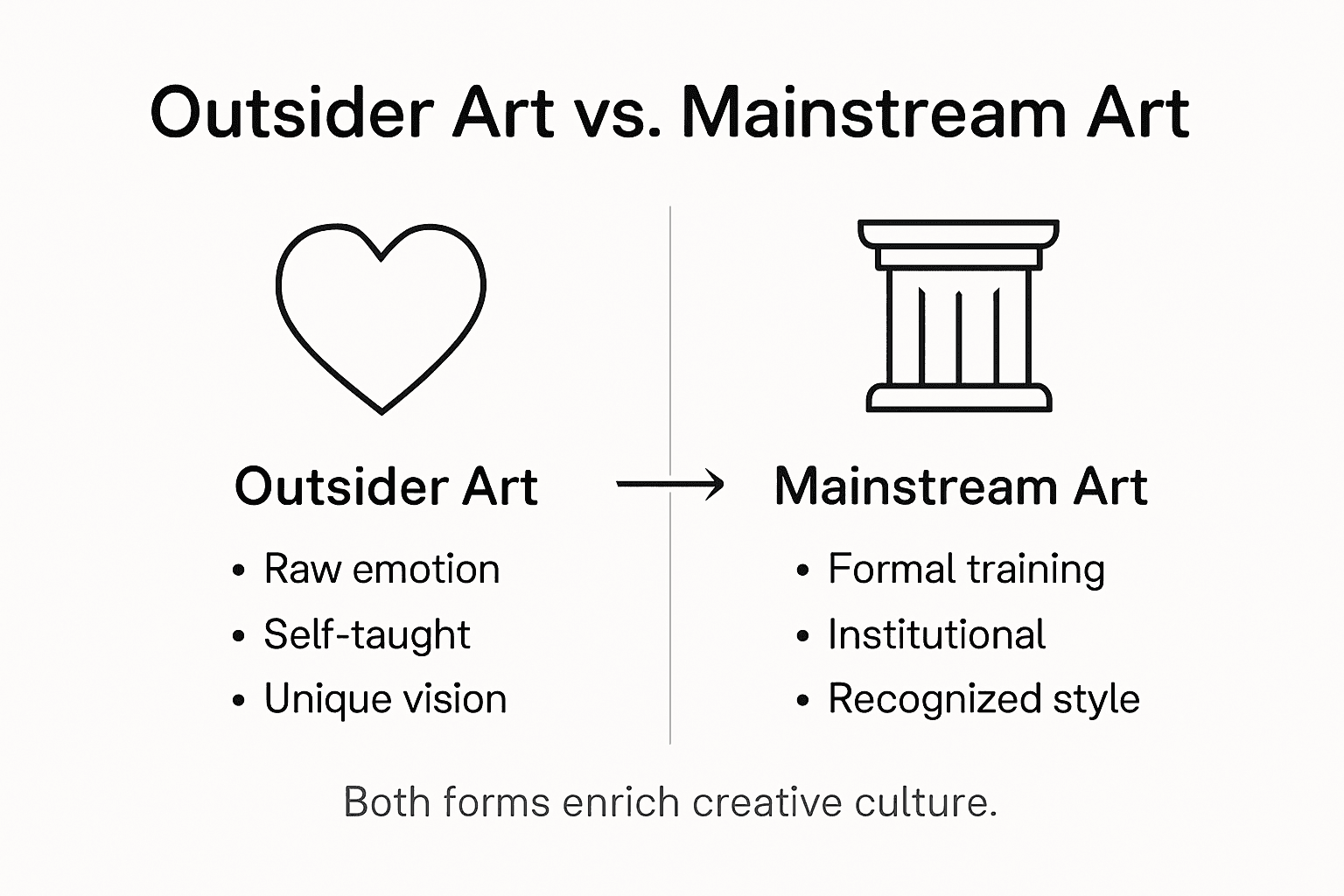
Here’s a comparison of Outsider Art versus Mainstream Art, highlighting what sets this genre apart:
| Aspect | Outsider Art | Mainstream Art |
|---|---|---|
| Artist Background | Often self-taught, marginalized | Typically formally educated |
| Creative Process | Driven by personal compulsion | Influenced by art market and trends |
| Artistic Goal | Express raw emotion, inner vision | Achieve technical mastery, recognition |
| Typical Themes | Isolation, fantasy, personal myths | Widely accepted subjects, diverse |
Historical Roots and Evolution of Outsider Art
Outsider art emerged from complex historical foundations rooted in challenging societal perceptions of creativity and artistic expression. The late 19th century marked a critical turning point, when psychiatrists and artists began showing increasing interest in artwork produced by marginalized individuals, including patients in psychiatric institutions, children, and individuals living outside mainstream cultural frameworks.
Pivotal figures like Jean Dubuffet and Hans Prinzhorn played instrumental roles in legitimizing this art form. By documenting and collecting spontaneous artworks created by isolated individuals, they challenged traditional artistic conventions and recognized the profound creative potential of artists operating beyond established institutional boundaries. Dubuffet’s introduction of the term art brut in the 1940s specifically highlighted artwork created outside traditional artistic training, emphasizing raw, unfiltered personal expression.
The evolution of outsider art reflects broader societal changes in understanding creativity, mental health, and artistic legitimacy. What was once considered marginal or pathological gradually transformed into a respected genre celebrating individual vision and unmediated artistic impulse. Museums, galleries, and dedicated exhibitions began recognizing these artists, shifting from clinical observation to genuine artistic appreciation and providing platforms for voices traditionally silenced or overlooked.
Pro tip: Explore outsider art collections with an open mind, recognizing each piece as a unique narrative of human creativity beyond conventional artistic boundaries.
Key Traits and Styles Distinguishing Outsider Art
Outsider art represents a radical departure from traditional artistic conventions, characterized by its unfiltered and deeply personal creative expression. Artists in this genre typically create work that illustrates extreme mental states and unconventional perspectives, often operating entirely outside mainstream artistic institutions, producing pieces that reveal extraordinary inner landscapes unburdened by formal training or academic expectations.
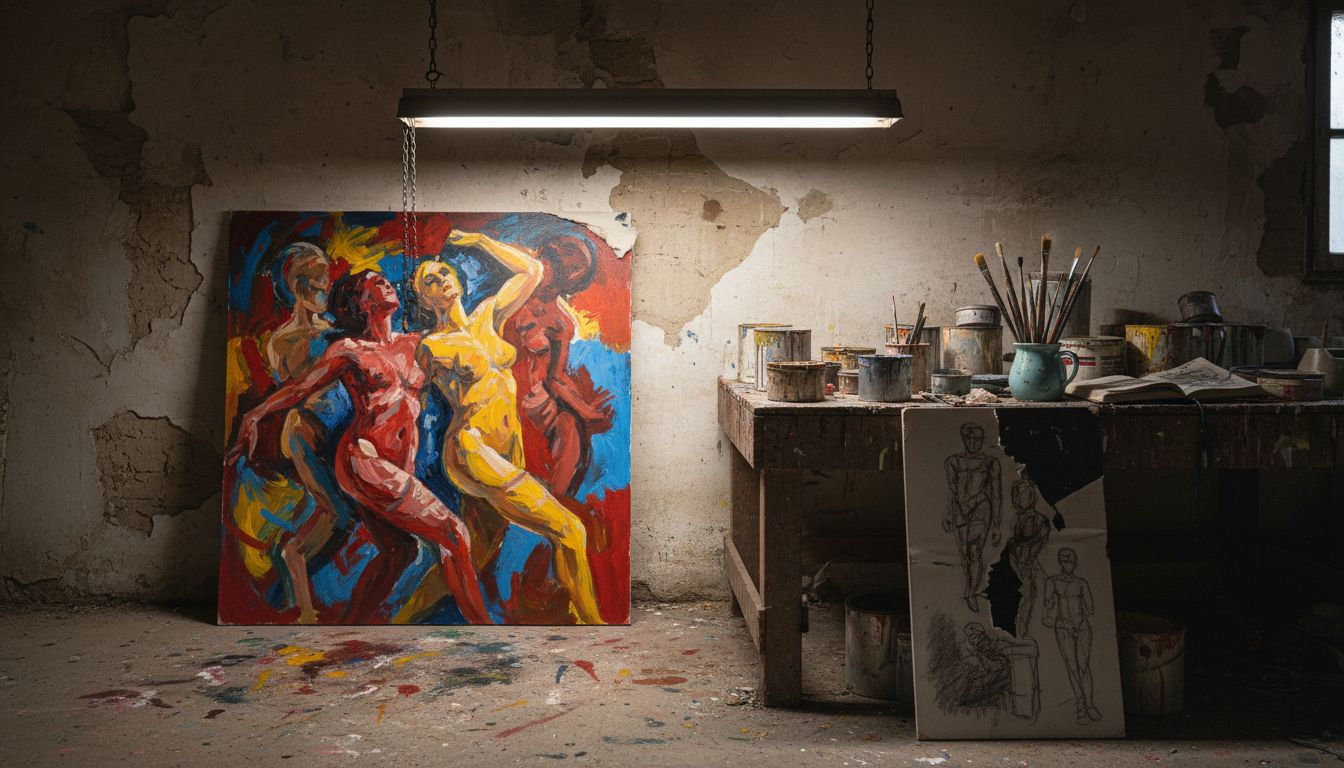
The stylistic hallmarks of outsider art are defined by their raw authenticity and intense emotional depth. These artists employ unique techniques that prioritize personal expression over technical precision, creating works that resonate with profound emotional truth, challenging viewers to look beyond traditional aesthetic standards. Their artistic approach often involves intricate, obsessive detailing, complex symbolic systems, and visual languages that emerge from deeply personal experiences and internal worlds.
Key distinguishing characteristics include an unmediated creative process, where artists are driven by an intense inner compulsion rather than external artistic trends or market demands. Many outsider artists develop elaborate fantasy worlds, create densely layered visual narratives, or explore themes of isolation, spiritual revelation, and personal mythology. Their work frequently demonstrates an extraordinary capacity for visual storytelling that transcends conventional artistic boundaries, offering glimpses into unique perceptual experiences that challenge viewers’ understanding of creativity and human expression.
Pro tip: When exploring outsider art, suspend judgment and approach each piece as a unique window into an artist’s unfiltered inner world.
Why Collectors Value Outsider Artists’ Work
Outsider art represents a unique investment opportunity that transcends traditional art market dynamics. Collectors are drawn to these works for their raw, unfiltered creativity and powerful narratives that emerge from profound personal experiences, offering a glimpse into artistic expressions that exist completely outside mainstream cultural expectations.
The intrinsic value of outsider art lies in its extraordinary authenticity and emotional intensity. These works captivate audiences by presenting alternative perspectives that challenge conventional artistic norms, providing collectors with pieces that are not just visual artifacts but complex emotional landscapes. Each artwork represents a unique vision, unencumbered by formal training or commercial considerations, making them exceptionally rare and intellectually stimulating acquisitions.
Beyond aesthetic appeal, collectors recognize outsider art as a critical form of cultural documentation. These artworks serve as powerful testimonials of marginalized experiences, offering unfiltered insights into human creativity that emerge from spaces typically overlooked by traditional art institutions. The market for outsider art has grown significantly, with collectors understanding that these pieces represent more than decorative objects – they are profound statements of individual human experience, resistance, and unbridled creative expression.
Pro tip: Research the artist’s background and personal narrative to fully appreciate the depth and context of outsider art pieces before making a collection investment.
Ethical Considerations in Buying Outsider Art
Ethical art collecting demands a nuanced understanding of the complex social contexts surrounding outsider artists. Responsible acquisition involves recognizing the vulnerable backgrounds of many artists, ensuring their autonomy and fair compensation are prioritized over mere aesthetic appreciation, particularly for creators who may have experienced significant social marginalization.
Ethical evaluation of art goes beyond aesthetic judgment, requiring collectors to critically examine the moral implications of their acquisitions. This means understanding the personal histories of outsider artists, acknowledging their unique creative processes, and ensuring that purchasing practices do not exploit or objectify artists with potential mental health challenges or social vulnerabilities. Responsible collectors seek to establish relationships of mutual respect, often working directly with artists or reputable galleries that prioritize artist welfare.
The ethical landscape of outsider art collecting is complex and multifaceted. Collectors must navigate issues of informed consent, fair compensation, and cultural sensitivity. This involves researching an artist’s background, understanding their creative context, and making purchasing decisions that genuinely support the artist’s creative autonomy. Some collectors choose to work with organizations that specialize in representing outsider artists, ensuring transparent and equitable transactions that respect the artists’ dignity and creative agency.
Pro tip: Before purchasing outsider art, research the artist’s background, consult specialized galleries, and prioritize transactions that directly benefit the artist’s well-being and creative independence.
Key ethical principles for responsible outsider art collecting are summarized below:
| Principle | Importance | Collector Action |
|---|---|---|
| Fair Compensation | Supports artist’s livelihood | Ensure direct benefit for artist |
| Informed Consent | Respects artist’s autonomy | Confirm artist approval |
| Cultural Sensitivity | Avoids exploitation or objectification | Research artist’s background |
| Artist Relationship | Builds mutual respect and trust | Work with reputable galleries |
Discover and Support Authentic Creativity Through Outsider Art
The article highlights the profound emotional depth and raw authenticity of outsider art which captivates collectors seeking unique expressions beyond traditional boundaries. If you are fascinated by these unfiltered artistic visions and want to explore limited-edition artbooks, original artworks, and collector’s pieces that celebrate independent creators just like outsider artists, we invite you to browse our carefully curated collections at The Mansion Press. Experience firsthand how passionate artist collaborations bring these extraordinary personal narratives to life.
Explore exclusive art and collector’s editions that embody the spirit of outsider art and bold creative voices. Act now to secure unique treasures that are difficult to find anywhere else. Begin your journey with our featured selections at The Mansion Press and discover art that challenges conventions, honors individual stories, and enriches your collection with authenticity.
Frequently Asked Questions
What is outsider art?
Outsider art refers to artwork created by self-taught artists who operate outside mainstream artistic institutions. It emphasizes raw personal expression, often reflecting the unique perspectives of marginalized individuals.
What distinguishes outsider art from mainstream art?
Outsider art is characterized by artists who are often self-taught and whose creative process is driven by personal compulsion. In contrast, mainstream art typically involves formally educated artists influenced by market trends and artistic norms.
Why is outsider art valuable to collectors?
Collectors value outsider art for its authenticity, powerful narratives, and unique perspectives. These works often challenge conventional artistic norms and represent profound emotional landscapes, making them not just visual artifacts but also critical cultural statements.
What ethical considerations should collectors keep in mind when acquiring outsider art?
Collectors should prioritize fair compensation for artists, respect their autonomy, and ensure cultural sensitivity. It is important to research an artist’s background and work directly with reputable galleries to support the artist’s well-being and creative independence.
Recommended
- Underground Art Movements: Impact on Modern Collecting – The Mansion Press
- Understanding Finding Inspiration in Dark Art – The Mansion Press
- Understanding Underground Comic Creators: Art and Impact – The Mansion Press
- Psychology Behind Dark Art – Why It Resonates – The Mansion Press
- Understanding the Influence of Music on Fashion – Be Juliet