

What Is Transgressive Art and Why It Matters
Most people misunderstand transgressive art, often dismissing it as controversy for its own sake. Yet, this provocative movement has shaped entire generations of American artists and inspired collectors across Europe and Asia. With over 60 percent of independent creators citing transgressive influences, the stakes for those seeking rare, limited-edition pieces are higher than ever. Discover why this bold art style demands a closer look and how it could redefine the boundaries of your collection.
Table of Contents
- Transgressive Art Defined and Common Misconceptions
- Major Types and Influences in Transgressive Art
- Key Features and Themes Explored by Artists
- Controversies, Legal Framework, and Public Reception
- Collecting Transgressive Art: Value and Considerations
Key Takeaways
| Point | Details |
|---|---|
| Understanding Transgressive Art | Transgressive art challenges societal norms and moral boundaries, using provocative strategies to engage audiences in critical reflection. |
| Historical Influences | Influences from movements like Dadaism and Surrealism have shaped transgressive art, helping redefine artistic expression through radical practices. |
| Collecting Considerations | Collectors must navigate ethical complexities and focus on intellectual depth, understanding that value in transgressive art comes from its ability to provoke dialogue. |
| Public Reception and Critique | Transgressive art often evokes polarized reactions, highlighting societal tensions and encouraging ongoing discussions about artistic freedom and cultural values. |
Transgressive Art Defined and Common Misconceptions
Transgressive art represents a provocative artistic approach that deliberately challenges societal norms, moral boundaries, and established aesthetic conventions. Unlike traditional art forms that seek to please or beautify, transgressive art intentionally disrupts audience expectations by confronting uncomfortable themes and pushing psychological limits. Philosophical perspectives on art world boundaries reveal that such works fundamentally question what constitutes acceptable artistic expression.
At its core, transgressive art operates as a critical commentary on social structures, utilizing graphic imagery, shocking narratives, and unconventional mediums to expose hidden cultural tensions. These artistic expressions often incorporate elements of violence, sexuality, trauma, and taboo subjects that force viewers to confront challenging emotional and intellectual landscapes. Multimodal provocative representations demonstrate how such art simultaneously repels and attracts audiences by creating complex cognitive responses.
Common misconceptions about transgressive art frequently arise from misunderstanding its fundamental purpose. Many people mistakenly believe these works are created purely to shock or generate controversy. However, transgressive artists typically seek deeper engagement, using provocation as a strategic tool to illuminate social contradictions, challenge institutional power structures, and encourage critical self-reflection. The art form is not about gratuitous offense, but about creating transformative experiences that compel audiences to examine their preconceived notions and societal assumptions.
Pro Tip: When experiencing transgressive art, approach the work with an open mind and consider the underlying social critique rather than focusing solely on its surface-level provocative elements.
Major Types and Influences in Transgressive Art
Transgressive art encompasses a diverse range of artistic expressions that systematically challenge societal conventions across multiple mediums. Historical avant-garde movements like Dadaism, Surrealism, and Fluxus pioneered radical approaches to artistic creation, establishing foundational frameworks for provocative artistic practices. These movements demonstrated how art could function as a powerful tool for social critique, breaking traditional aesthetic boundaries and challenging institutional norms.
Visual art represents one of the most prominent domains of transgressive artistic expression. Performance art, conceptual installations, body art, and experimental film have all served as critical platforms for artists seeking to deconstruct cultural taboos. Underground comic creators, experimental photographers, and multimedia artists frequently use graphic imagery, unconventional narratives, and shocking visual techniques to expose societal contradictions and challenge viewer comfort zones. Contemporary artistic transgressions reflect evolving social dynamics, using provocative representations to illuminate hidden power structures and cultural tensions.

The influences shaping transgressive art are multifaceted, drawing from political movements, philosophical theories, and radical social critiques. Postmodern philosophy, critical race theory, feminist discourse, and queer theory have significantly informed transgressive artistic practices, providing intellectual frameworks for challenging dominant narratives. Artists working in this genre often engage with marginalized experiences, using their work to amplify voices traditionally silenced by mainstream cultural institutions. By disrupting expected aesthetic and narrative conventions, these artists create spaces for critical dialogue and social transformation.
Pro Tip: When exploring transgressive art, approach each work with intellectual curiosity and a willingness to engage with challenging perspectives beyond initial emotional reactions.
Here’s how major historical movements influenced transgressive art practices:
| Movement | Time Period | Key Contribution | Lasting Impact |
|---|---|---|---|
| Dadaism | 1910s-1920s | Embraced absurdity, rejected norms | Opened doors for anti-establishment art |
| Surrealism | 1920s-1940s | Explored unconscious, challenged logic | Fostered psychological and taboo themes |
| Fluxus | 1960s-1970s | Blurred boundaries across media and culture | Promoted experimental and activist art |
Key Features and Themes Explored by Artists
Transgressive art emerges as a powerful medium for challenging societal boundaries, with artists deliberately employing provocative strategies to disrupt conventional thinking. Artistic boundary-pushing techniques reveal a complex landscape of critical engagement, where artists systematically deconstruct cultural norms through shocking imagery, unconventional narratives, and radical representational strategies. These approaches are not merely about generating controversy, but about creating profound opportunities for social reflection and critical dialogue.
The thematic landscape of transgressive art encompasses deeply challenging subjects that mainstream artistic expressions typically avoid. Sexual identity, systemic violence, political oppression, and personal trauma become central narratives that artists use to expose hidden societal tensions. Themes challenging cultural norms demonstrate how artists strategically employ graphic imagery, experimental techniques, and provocative storytelling to force audiences to confront uncomfortable realities about power structures, cultural expectations, and individual experience.
Artists working within transgressive art often employ multiple strategies to maximize their critical impact. Some utilize performance art to physically challenge bodily boundaries, while others create multimedia installations that deconstruct institutional narratives. Underground comic creators, experimental photographers, and multimedia artists frequently collaborate to develop interdisciplinary approaches that blur traditional artistic boundaries. By combining visual shock, intellectual complexity, and emotional vulnerability, these artists create immersive experiences that demand active psychological engagement from their audiences.
Pro Tip: Develop a nuanced perspective when experiencing transgressive art by suspending immediate judgment and focusing on the underlying social commentary and emotional complexity.
Controversies, Legal Framework, and Public Reception
Transgressive art consistently navigates a complex legal and social landscape, challenging established boundaries of acceptable artistic expression. Legal challenges surrounding artistic transgression reveal a nuanced negotiation between artistic freedom and societal standards. Courts and cultural institutions frequently grapple with determining the line between provocative artistic statement and offensive content, creating ongoing tensions that reflect broader debates about freedom of expression and cultural norms.
Historical art controversies demonstrate the profound public reactions these works can generate. Landmark cases like Andres Serrano’s Piss Christ and Robert Mapplethorpe’s photographic exhibitions sparked intense national debates about artistic boundaries, religious sensitivities, and the limits of creative representation. These controversies often reveal more about societal anxieties and cultural fault lines than about the artworks themselves, highlighting how transgressive art functions as a critical tool for social dialogue and self-examination.
Public reception of transgressive art remains deeply polarized, with audiences typically falling into three primary camps: passionate defenders of artistic freedom, vehement critics who view such work as morally corrosive, and a nuanced middle ground that seeks to understand the underlying social commentary. Legal frameworks have gradually evolved to protect artistic expression while maintaining reasonable constraints, recognizing that provocation can serve important cultural and intellectual functions. Museums, galleries, and cultural institutions now often provide contextual frameworks that help audiences approach challenging works with more sophisticated critical perspectives.
Pro Tip: Approach controversial artworks with an open mind, focusing on understanding the artist’s intended social critique rather than immediate emotional reactions.
Collecting Transgressive Art: Value and Considerations
Collecting transgressive art requires a sophisticated approach that goes beyond traditional art acquisition strategies. Dynamics of art collecting reveal a complex interplay between emotional engagement, cultural value, and the unique sensory experience these artworks provide. Serious collectors understand that transgressive art represents more than a visual statement - it’s a profound cultural artifact that challenges societal boundaries and provokes critical thinking.
The valuation of transgressive art involves nuanced considerations that extend beyond traditional aesthetic metrics. Aesthetic and moral value frameworks suggest that moral complexity can actually enhance an artwork’s artistic worth when viewed through a reflective lens. Collectors must navigate intricate ethical terrains, balancing the artwork’s provocative nature with its intellectual and emotional depth. This requires a willingness to engage with challenging narratives and an understanding that value is not determined by comfort, but by the artwork’s ability to generate meaningful discourse.
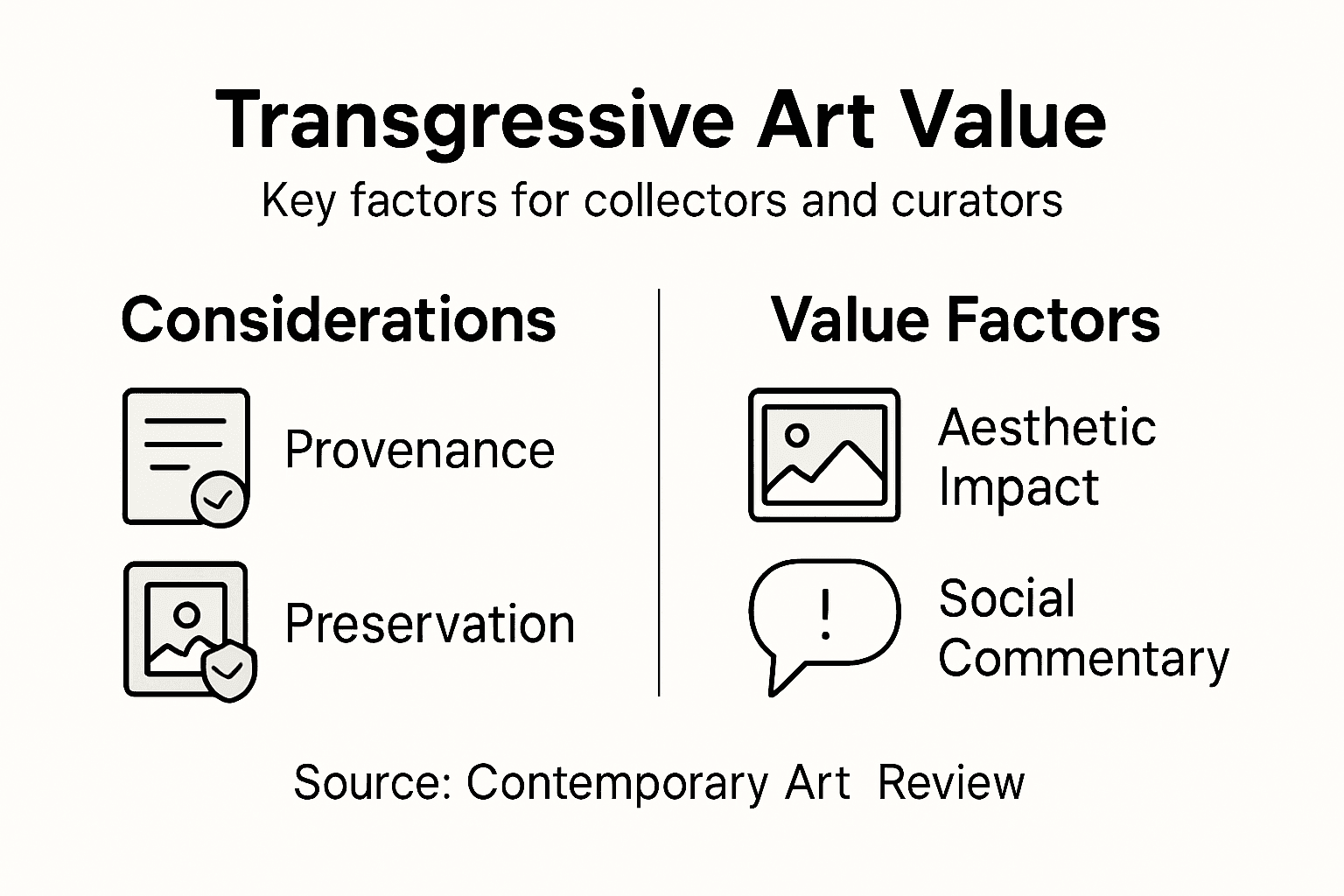
Practical considerations for potential collectors include provenance, preservation challenges, and potential legal complexities associated with provocative artworks. Institutional acceptance, critical reception, and the artist’s reputation play significant roles in determining long-term value. Emerging collectors should develop a comprehensive understanding of the artist’s intent, the historical context of the work, and its potential to generate ongoing critical dialogue. Networking with specialized galleries, attending contemporary art fairs, and consulting experts who understand the nuanced world of transgressive art can provide invaluable insights.
The following table summarizes common challenges and opportunities in collecting transgressive art:
| Challenge | Example Issue | Opportunity |
|---|---|---|
| Provenance | Limited documentation | Unique historical significance |
| Preservation | Fragile/unconventional mediums | Advances in conservation methods |
| Legal Complexity | Censorship or import restrictions | Encourages dialogue on cultural values |
| Critical Reception | Divisive audience opinions | Potential for legacy and innovation |
Pro Tip: Build relationships with galleries and artists specializing in transgressive art to develop a sophisticated understanding of the market and artistic value beyond surface-level provocation.
Discover and Collect the Boldest Expressions in Transgressive Art
If you are intrigued by transgressive art’s power to challenge social norms and provoke deep reflection then finding exclusive works that embody this spirit can transform your collection or artistic journey. The article highlights how these provocative pieces force audiences to rethink cultural expectations and confront taboo themes through unconventional narratives and graphic imagery. At The Mansion Press we specialize in connecting collectors and enthusiasts with original artworks, limited edition artbooks, and comics that push boundaries and showcase diverse voices often overlooked elsewhere.
Experience the cutting edge of artistic transgression. Browse our curated selection of artist showcases and unique collectibles that deliver both intellectual complexity and emotional impact. Whether you seek pieces that explore trauma identity or political critique you will find lasting value and conversation starters here. Act now to secure limited releases and pre-orders available exclusively on The Mansion Press. Elevate your collection and embrace the transformative power of transgressive art by exploring our offerings today.
Frequently Asked Questions
What is transgressive art?
Transgressive art is an artistic approach that deliberately challenges societal norms, moral boundaries, and established aesthetic conventions, often using provocative themes and graphic imagery to stimulate critical discussion.
What are the major types of transgressive art?
Major types of transgressive art include performance art, body art, conceptual installations, experimental film, and underground comics, all of which utilize unconventional techniques to question cultural taboos and power structures.
Why is transgressive art important?
Transgressive art is important because it serves as a critical tool for social commentary, encouraging viewers to confront uncomfortable truths and question their societal assumptions through transformative experiences.
How do artists choose themes for transgressive art?
Artists choose themes for transgressive art by focusing on challenging subjects such as sexual identity, systemic violence, political oppression, and personal trauma, aiming to expose hidden societal tensions and prompt critical reflection.
Recommended
- What Is Outsider Art and Why It Matters – The Mansion Press
- Dark Art Themes: Impact on Modern Art Collecting – The Mansion Press
- Psychology Behind Dark Art – Why It Resonates – The Mansion Press
- Understanding Finding Inspiration in Dark Art – The Mansion Press
- 7 Influential Curator Examples for Early Artist Discovery - Blog - Music24.com