

Start Art Journaling in 2026: 40% Stress Relief Guaranteed
Starting an art journal feels intimidating when you face a blank page with no clear direction. Many aspiring artists hesitate because they worry about making mistakes or lack structured guidance. Art journaling offers a powerful solution by combining creative expression with emotional release, requiring no rigid rules or perfection. This guide removes the overwhelm by walking you through simple, actionable steps to build a rewarding art journaling habit that reduces stress and unlocks your creative potential.
Table of Contents
- Introduction To Art Journaling
- Prerequisites And Materials Needed
- Core Steps To Begin Your Art Journaling Practice
- Common Mistakes And Troubleshooting Tips
- Expected Outcomes And Benefits
- Alternative Approaches And Tradeoffs
- Discover More At The Mansion Press
- Frequently Asked Questions
Key Takeaways
| Point | Details |
|---|---|
| Materials matter | Choose journals with 140 lb/300 gsm paper and start with minimal supplies like colored pens and watercolors to avoid overwhelm. |
| Use prompts strategically | Creative prompts like mood landscapes or memory pages eliminate blank page anxiety and jumpstart your practice. |
| Build consistent habits | Schedule 10 minutes daily or one hour weekly to develop momentum without pressure. |
| Avoid perfectionism | Embrace imperfection and irregular results as part of the creative process, not obstacles. |
| Track your progress | Count completed pages weekly to measure growth and maintain motivation over time. |
Introduction to Art Journaling
Art journaling blends visual creativity with personal writing to create a unique form of self-expression. Unlike traditional diaries or sketchbooks, art journals merge images, colors, textures, and words on the same page. This hybrid approach lets you process emotions visually while exploring new artistic techniques.
The practice delivers substantial emotional benefits. Research shows that consistent art journaling can reduce stress by up to 40% within two months, making it a powerful tool for mental well-being. It increases mindfulness by anchoring your attention in the present moment as you create. Many practitioners report improved mood regulation and greater emotional clarity after just a few weeks of regular journaling.
What makes art journaling especially accessible is its no-rules art journaling philosophy. You create freely without fear of mistakes or judgment. There are no grades, competitions, or standards to meet. This freedom removes the performance anxiety that stops many beginners from starting creative projects.
Key advantages include:
- Complete creative freedom with zero technical requirements
- Dual benefits for both artistic skill development and emotional processing
- Flexible practice that adapts to any schedule or lifestyle
- Safe space for experimentation without external critique
- Builds self-awareness through regular reflective practice
The combination of visual and written expression engages multiple parts of your brain simultaneously. This cross-modal processing enhances both creative thinking and emotional regulation. You develop artistic skills organically while creating a personal visual diary that documents your inner world.
Prerequisites and Materials Needed
Selecting appropriate supplies prevents frustration and sets you up for sustainable practice. Your journal is the foundation. Choosing an art journal with mixed media or watercolor paper (at least 140 lb/300 gsm) is essential for using wet media like paints without warping or bleeding through pages. Thinner paper works only for dry media like pencils and markers.
Journal size impacts portability and comfort. Standard sizes range from pocket (4x6 inches) to large (9x12 inches). Beginners often prefer 5x8 or 6x9 inch formats that balance workspace with portability. Coil or spiral binding lets pages lay flat, making them easier to work on than perfect-bound journals.
Starting with simple supplies prevents overwhelm and delays. Your minimal starter kit needs only:
- One set of colored pens or markers (12-24 colors)
- Basic watercolor set or colored pencils
- Washi tape or decorative tape for borders and accents
- Glue stick or double-sided tape for adding elements
- Two or three brushes in different sizes if using paints
| Supply Category | Budget Option | Mid-Range Option | Purpose |
|---|---|---|---|
| Journal | Strathmore mixed media pad | Canson XL mixed media hardbound | Primary surface for all work |
| Color tools | Crayola markers | Tombow dual brush pens | Adding color and shading |
| Wet media | Crayola watercolors | Winsor & Newton Cotman set | Painting and color washes |
| Adhesives | Elmer’s glue stick | Tombow adhesive roller | Attaching collage elements |
| Embellishments | Dollar store washi tape | MT brand washi tape | Decorative borders and layers |
Compatibility between paper and media matters significantly. Heavy paper supports watercolors and acrylic paints. Marker paper prevents bleeding. Mixed media paper handles most techniques adequately. Match your paper choice to your preferred art style, or choose mixed media paper for maximum versatility.
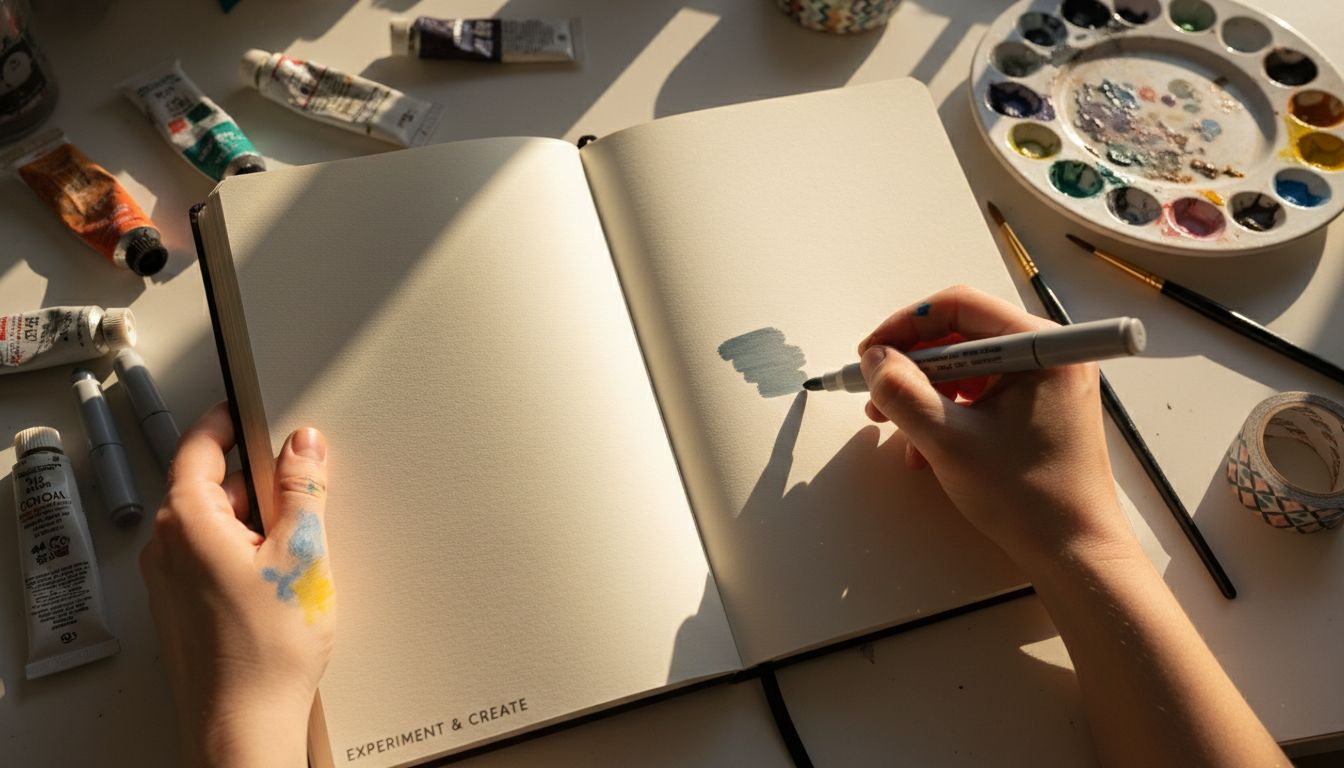
Avoid buying too many supplies initially. This delays starting and creates decision paralysis about what to use. Begin with basics and add specialized tools only after you discover what techniques you enjoy. Many artists find that budget-friendly art supplies advice helps them invest wisely as their practice develops.
Pro Tip: Test new wet media on a back page before using it on your spread. This prevents surprises about bleeding, color intensity, or drying time that could ruin a page you’ve invested time in creating.
Quality matters more than quantity. Choosing quality art journals with appropriate paper weight saves frustration and wasted effort on pages that buckle or tear. One good journal beats five cheap ones that limit your creative options.
Core Steps to Begin Your Art Journaling Practice
Launching your practice requires structure balanced with flexibility. Follow these steps to build confidence and momentum.
-
Select your journal style without pressure. Choose between bound journals for permanence or loose-leaf systems for rearranging pages. Neither choice is wrong. Pick what feels most inviting to you. There are no fixed rules in art journaling, so your preference guides the decision.
-
Gather your minimal supply kit. Assemble only the basics listed earlier. Resist adding more until you’ve filled at least 10 pages. Starting simple prevents overwhelm and analysis paralysis about which tool to use.
-
Use creative prompts to overcome blank page anxiety. Use of creative prompts helps beginners start without staring at emptiness. Try these beginner-friendly prompts:
- Draw your current mood as a landscape with colors matching your feelings
- Create a page about your favorite childhood memory using simple shapes
- Make a color study page testing your paints or markers
- Collage images that represent your goals for this year
- Write three gratitude statements and illustrate each with quick sketches
-
Set a regular but flexible schedule. Establishing a regular but flexible journaling schedule builds habit formation without creating pressure. Start with 10 minutes daily or one focused hour weekly. Consistency matters more than duration. Short frequent sessions build skills faster than rare long sessions.
-
Embrace experimentation and imperfection. Your first pages will look rough. This is normal and expected. View each page as practice, not a final product. Try different techniques without worrying about results. The process matters more than the outcome, especially in early stages.
Explore multimedia art techniques as you gain confidence. Mixing collage, painting, and drawing on the same spread creates visual interest and develops versatility. Each technique teaches different skills that transfer between mediums.
Pro Tip: Keep your journal and supplies in a visible, accessible spot. Out of sight means out of mind. A dedicated basket or shelf that you see daily dramatically increases the likelihood you’ll practice regularly.
Consider DIY artist bookmaking tips if you want to customize your journal format. Creating your own structure adds another layer of creative engagement to the practice.
Develop your visual language gradually. Notice which colors, shapes, and compositions feel authentic to you. Your unique style emerges naturally through repeated practice, not forced planning. Trust the process and let your artistic voice develop organically over months of consistent work.
Experimental illustration techniques can refresh your practice when you feel stuck or bored with your current approach. Trying unconventional methods prevents creative plateaus and keeps journaling exciting.
Common Mistakes and Troubleshooting Tips
Beginners typically encounter three major obstacles that derail their practice. Understanding these pitfalls helps you avoid them entirely.
Perfectionism kills more art journaling practices than any other factor. Waiting for the perfect idea, perfect mood, or perfect page layout prevents you from starting. Common mistakes include impatience with imperfections that stops progress before you build momentum. Your journal exists for you alone. No one judges your work unless you choose to share it. Every professional artist has journals full of messy, imperfect pages.
Fixes for perfectionism:
- Create one intentionally ugly page to break the perfection spell
- Use your non-dominant hand for a spread to remove control expectations
- Set a timer for five minutes and fill a page before it rings, accepting whatever emerges
- Remind yourself that mistakes often become the most interesting parts of a composition
Over-investing in supplies before establishing a practice creates two problems. First, the financial investment adds pressure to create something worthy of expensive materials. Second, too many choices cause decision fatigue that prevents starting. Buy basics first, then add specialized items after you know what you actually use.
Inconsistent practice crashes motivation and skill development. Visual storytelling challenges in art require regular engagement to overcome. Sporadic sessions feel like starting over each time because you forget techniques between sessions. Your hands and eyes need repetition to internalize skills.
Solutions for building consistency:
- Link journaling to an existing habit like morning coffee or evening wind-down
- Set phone reminders for your scheduled journaling time
- Keep your journal in the spot where you naturally relax
- Join online art journaling communities for accountability and inspiration
- Track your practice streak to build momentum and motivation
Pro Tip: When you feel resistance to starting, commit to just one mark on the page. Often the hardest part is beginning. Once you make that first mark, momentum carries you forward for a full session.
Comparing your work to others on social media creates unrealistic expectations. Remember that people share their best pages, not their practice work. Your page three will never match someone’s page 300. Focus on your own progress, not others’ highlight reels. Review strategies to avoid art journaling failure tips by staying focused on personal growth rather than external comparison.
Expected Outcomes and Benefits
Setting realistic expectations keeps you motivated through the early learning phase. Benefits accumulate gradually, not instantly.
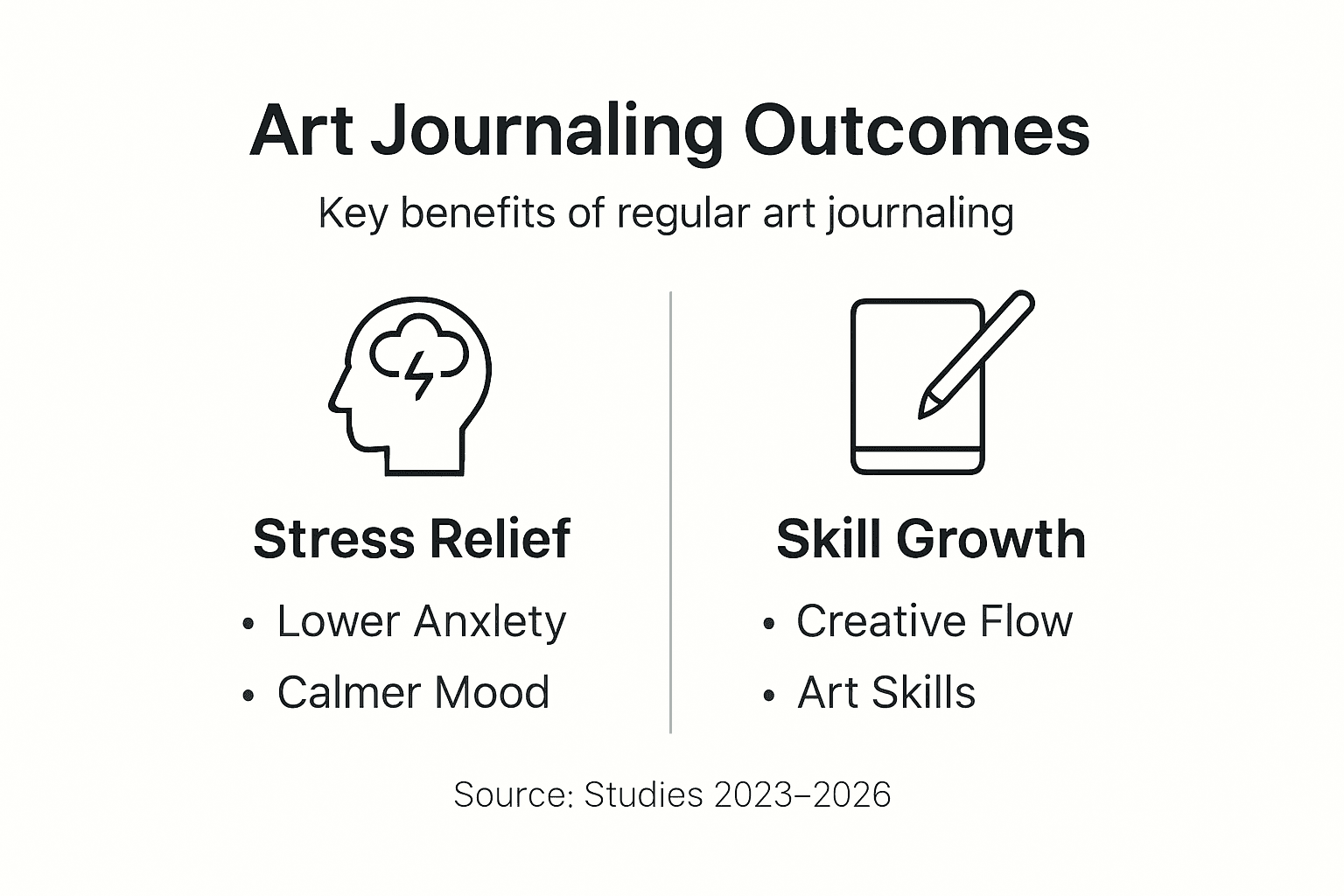
Stress reduction is the most immediate benefit most practitioners notice. Studies demonstrate that consistent art journaling can reduce stress by up to 40% within two months of regular practice. You’ll likely notice increased calm and improved mood regulation within six to eight weeks of journaling three or more times weekly. The act of creating engages your attention fully, providing a break from rumination and worry.
Creative skill improvement follows measurable patterns. Tracking progress with simple metrics like number of completed pages per week provides concrete evidence of growth. Aim for two to three pages weekly as a sustainable beginner pace. Your technical skills in drawing, color mixing, and composition improve incrementally with each session.
| Timeframe | Expected Benefits | Measurable Indicators |
|---|---|---|
| Weeks 1-4 | Initial comfort with materials, reduced performance anxiety | 4-8 completed pages, trying 2-3 different techniques |
| Weeks 5-8 | Noticeable stress reduction, emerging personal style | 8-12 pages, consistent color preferences or motifs appearing |
| Weeks 9-16 | Improved technical skills, regular habit established | 16-24 pages, comfortable with multiple media types |
| Month 4+ | Recognizable artistic voice, significant creative growth | 30+ pages, confident experimentation with new approaches |
Emotional expression and self-awareness deepen as your practice matures. You learn to translate complex feelings into visual form, which often provides insights that words alone cannot. Many practitioners report better understanding of their emotional patterns and triggers through reviewing their journal pages over time.
Your personal style develops organically without forced planning. After filling 20 to 30 pages, you’ll notice recurring themes, color preferences, and compositional choices. These repetitions reveal your authentic visual language. Don’t rush this process by trying to develop a signature style immediately. Let it emerge naturally through exploration.
Track progress through simple methods:
- Count completed pages each week
- Take monthly photos to see technical improvement over time
- Note how long you can focus comfortably in each session
- Observe which techniques feel most natural and enjoyable
- Record emotional shifts before and after journaling sessions
Additional mental health benefits of journaling extend beyond stress reduction to include improved problem-solving, enhanced emotional regulation, and greater life satisfaction. These outcomes strengthen with continued consistent practice over months and years.
Alternative Approaches and Tradeoffs
Art journaling encompasses multiple styles with different requirements and benefits. Exploring options helps you choose an approach matching your preferences and resources.
Exploring diverse journaling styles like mixed media, collage, painting, and writing offers creative variety. Each approach has distinct characteristics.
Mixed media journals incorporate paints, textures, stamps, and layered elements. They create visually rich pages with depth and complexity. However, they require heavier paper, more supplies, and longer working time. Mixed media work costs more initially and demands greater material knowledge. The payoff is dramatic visual impact and extensive technical learning.
Simple drawing and writing journals use pens, pencils, and markers with minimal embellishment. They’re the most affordable and portable option. You need only a journal and basic drawing tools. This approach suits travelers and those preferring quick sessions. The tradeoff is less visual variety, though strong drawing skills can create stunning pages with minimal materials.
Collage journals use cut or torn images, papers, and found materials adhered to pages. They’re excellent for non-drawers who feel intimidated by blank pages. Collage requires adhesives, source materials, and cutting tools. Preparation time for gathering and organizing collage materials adds to each session. The benefit is immediate visual interest without needing drawing skills.
| Journaling Style | Cost | Time Per Page | Skill Requirement | Portability | Visual Impact |
|---|---|---|---|---|---|
| Mixed media | High | 1-3 hours | Medium to high | Low | Very high |
| Drawing/writing | Low | 15-45 minutes | Low to medium | High | Medium |
| Collage | Medium | 30-90 minutes | Low | Medium | High |
| Watercolor | Medium | 20-60 minutes | Medium | Medium | High |
| Digital | High initially | 20-90 minutes | Medium to high | High | Very high |
Watercolor journals focus on painted pages with or without additional elements. They need appropriate paper and quality paints for best results. Watercolor offers beautiful effects but requires learning water control and color mixing. Mistakes are harder to correct than with dry media.
Digital art journaling uses tablets and apps instead of physical materials. It eliminates supply costs after initial device purchase and offers unlimited colors and tools. You can easily edit and rearrange elements. The drawback is less tactile engagement and potential screen fatigue. Some artists feel disconnected from the digital process compared to physical materials.
Consider these factors when choosing your approach:
- Available budget for supplies
- Time you can dedicate per session
- Portability needs for your lifestyle
- Existing artistic skills and confidence
- Desired visual complexity in finished pages
Experimentation helps you discover your preferences. Try different styles for a few pages each before committing to one approach. Many artists blend multiple styles, using simple sketching some days and elaborate mixed media on others when time permits. Mixed media journaling techniques can enhance any base approach with layered interest.
Discover More at The Mansion Press
Your art journaling journey opens doors to broader creative exploration. The Mansion Press offers resources that complement and expand your artistic practice.
Explore DIY artist bookmaking to create custom journals and artist books that reflect your unique vision. These techniques let you design perfect formats for your specific journaling style. Learn multimedia art techniques that enrich your pages with professional-level layering and composition strategies. Discover how artbooks and personal expression intersect in professional creative practice, inspiring your own artistic development.
Frequently Asked Questions
How do I start if I’m afraid of making mistakes?
Begin by intentionally creating an ugly page to remove perfection pressure. Accept that your first 10 pages will look rough as you learn materials and build confidence. Remember that mistakes often become the most interesting parts of compositions when you work with them instead of against them.
What is the best way to develop a regular journaling habit?
Link your journaling to an existing daily habit like morning coffee or evening relaxation. Start with just 10 minutes and keep supplies visible in your frequent living space. Set phone reminders initially, and track your practice streak to build momentum through small wins.
Can I use any kind of paper or art supplies safely?
Match paper weight to your chosen media. Use at least 140 lb paper for wet media like paints and ink. Lighter paper works for dry media like pencils and markers. Test new supplies on back pages before using them on important spreads to avoid surprises about bleeding or color intensity.
How do I know if my art journaling is helping my creativity and mood?
Track completed pages weekly and note your emotional state before and after sessions. Most practitioners notice stress reduction within six to eight weeks. Review pages from month one compared to month three to see measurable skill improvement in technique, confidence, and creative expression.
What are some easy prompts to get started quickly?
Try these immediate starters: draw your current mood as a weather pattern, create a color palette page testing your materials, collage images representing your current goals, illustrate three things you’re grateful for today, or make a simple map of your favorite place. Each takes 10 to 15 minutes and produces a finished page.
Recommended
- Start an Art Collective: 60% Avoid Failure in 2026 – The Mansion Press
- How to Join Art Communities: Connect and Collaborate in 2025 – The Mansion Press
- Master DIY Artist Bookmaking: Create Unique Art Books – The Mansion Press
- Why Hypnotic Midday Movies Is an Artbook for the Emotionally Exhausted – The Mansion Press