

Making Comics on a Budget: A Step-by-Step Guide
Comic creators often face tight budgets and big dreams, especially when striving for professional results. Producing memorable sequential art requires thoughtful planning and resourceful choices without overspending. Whether you are sketching your first graphic novel or sharing short web comics online, this guide offers practical steps for maximizing quality on limited resources, drawing from expert teaching materials and digital tools tailored to modern creators.
Table of Contents
- Step 1: Assess Your Comic Project Needs
- Step 2: Select Cost-Effective Creative Tools
- Step 3: Develop Scripts and Layouts Digitally
- Step 4: Produce Artwork With Affordable Methods
- Step 5: Prepare Files for Self-Publishing
- Step 6: Review and Refine Your Final Comic
Quick Summary
| Essential Insight | Clarification |
|---|---|
| 1. Define your comic’s core elements | Assess theme, characters, art style, and audience to clarify your project scope and direction. |
| 2. Choose affordable creative tools | Identify low-cost software and resources to enhance creativity without exceeding your budget. |
| 3. Utilize digital scripting strategies | Employ digital tools for effective storytelling, allowing flexibility in script and layout creation. |
| 4. Prepare files for self-publishing | Ensure files meet technical standards for print and digital formats to avoid costly errors. |
| 5. Systematically review and refine | Regularly edit and seek feedback to improve the quality of your comic and its narrative flow. |
Step 1: Assess your comic project needs
Before diving into comic creation, you need a clear roadmap of your project’s scope and requirements. Understanding your creative vision and practical constraints will help you make strategic decisions that maximize your limited budget.
Start by defining your project’s core elements through a comprehensive assessment. Systematic storytelling principles suggest exploring several key dimensions:
- Story Theme: What narrative are you trying to tell?
- Character Development: Who are your primary characters?
- Art Style: What visual aesthetic matches your story?
- Page Count: How long will your comic be?
- Target Audience: Who will read your comic?
Effective comic creation requires understanding the relationship between your artistic vision and practical limitations. Personal storytelling techniques emphasize connecting authentically with readers by developing a clear narrative direction.
Break down your project into specific, measurable components. Determine whether you’ll be creating a short web comic, a graphic novel, or a multi-issue series. Each format requires different resources, time commitments, and artistic approaches.
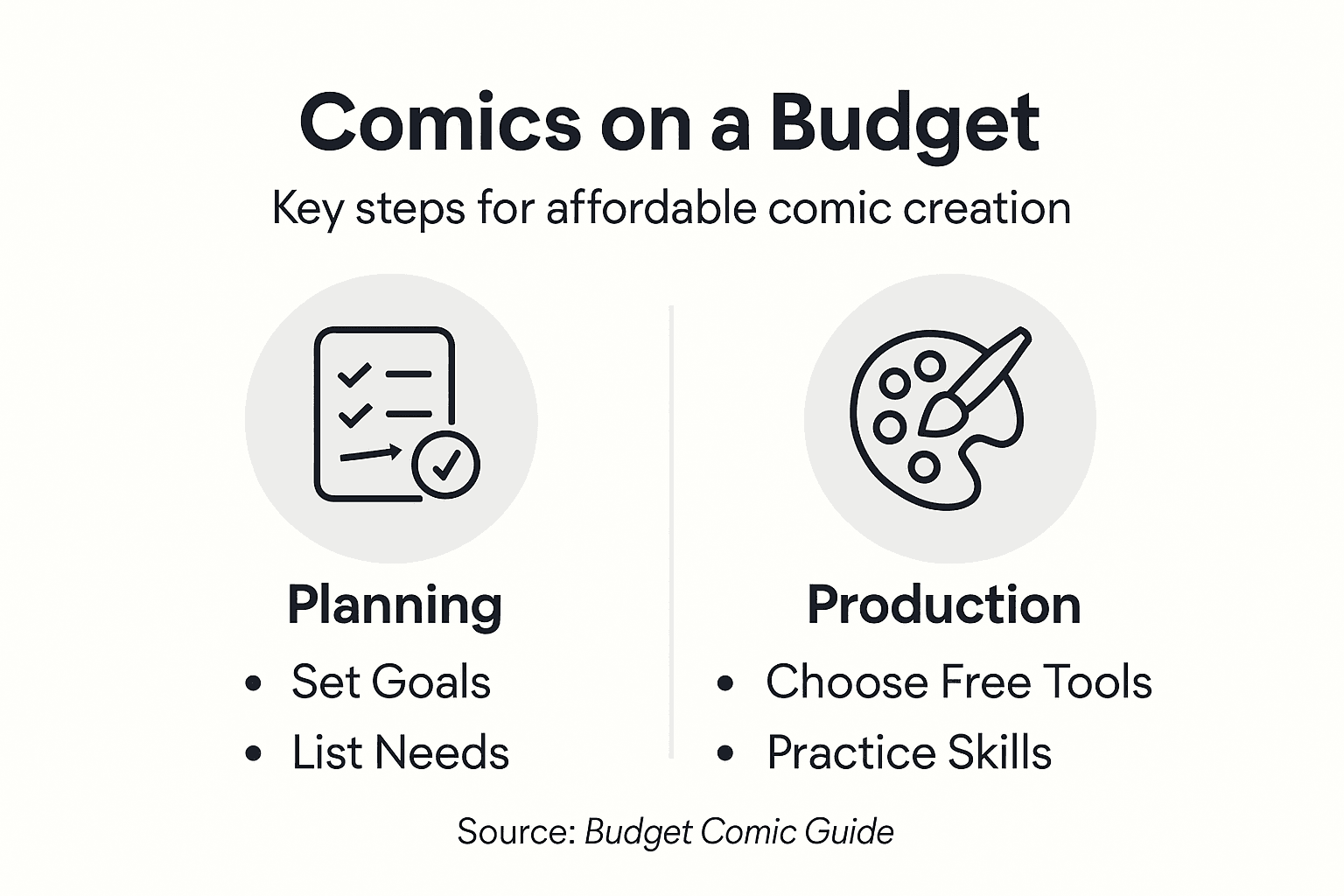
Here’s a comparison of comic formats to help you decide which fits your project best:
| Format Type | Typical Length | Production Effort | Best For |
|---|---|---|---|
| Short Web Comic | 1-10 pages | Quick, flexible process | Beginners, online sharing |
| Graphic Novel | 50-200+ pages | Intensive, long-term | Deep stories, print sales |
| Multi-Issue Series | 20-30 pages/issue | Episodic, ongoing effort | Fandom growth, serialization |
Your project’s initial assessment is the foundation for everything that follows - get this right, and you’ll save time and money.
Pro tip: Create a one-page project summary that outlines your comic’s key elements, helping you stay focused and organized throughout the creative process.
Step 2: Select cost-effective creative tools
Choosing the right creative tools can make or break your comic project, especially when working with a tight budget. Your goal is to find powerful yet affordable resources that maximize your artistic potential without draining your finances.
Low-cost digital platforms offer incredible opportunities for budget-conscious comic creators. Consider these essential tools and approaches:
- Drawing Software: Free options like Krita, GIMP, and Inkscape
- Sketching Tools: Digital tablets with affordable price points
- Collaborative Platforms: Web-based tools for sharing and editing
- Print-on-Demand Services: Minimize upfront printing costs
- Cloud Storage: Free options for backing up your work
Some creators mistakenly believe high-quality comics require expensive equipment. Free online publishing platforms prove that creativity matters more than costly gear. Evaluate each tool based on your specific project requirements, technical skills, and budget constraints.
Professional comics can be created with minimal financial investment - your imagination is the most valuable resource.
Prioritize versatile tools that grow with your skills. Many free software options offer professional-grade features that rival expensive alternatives. Start with basic versions and upgrade strategically as your comic develops.
Pro tip: Try out multiple free tools before committing to one, and take advantage of free trials to find the perfect fit for your comic creation workflow.
Step 3: Develop scripts and layouts digitally
Digital scripting and layout tools have revolutionized how comic creators plan and structure their visual narratives. By leveraging digital technologies, you can create more efficient and flexible storytelling processes that save time and enhance your creative workflow.
Digital comic scripting techniques offer unprecedented flexibility in developing your narrative structure. Here are key strategies for digital script and layout development:
- Storyboarding Software: Use free tools like Storyboarder or Clip Studio Paint
- Script Writing Platforms: Google Docs, Scrivener, or WriterDuet
- Panel Layout Templates: Create reusable digital templates
- Digital Sketching: Use layers to experiment with composition
- Version Control: Save multiple iterations of your script
Most comic creators underestimate the power of digital storytelling refinement. Digital platforms allow you to experiment with pacing, dialogue, and visual flow without wasting physical resources. Focus on creating adaptable scripts that can evolve as your narrative develops.
Digital tools transform your creative process - they’re not just technical aids, but extensions of your artistic vision.
Start with rough digital sketches that capture the core narrative beats. Use digital layers to experiment with panel arrangements, dialogue placement, and visual storytelling techniques. This approach minimizes costly revisions and maximizes creative exploration.
Pro tip: Create a consistent digital filing system for your script drafts, using dated folders to track your comic’s evolution and prevent accidental file loss.
Step 4: Produce artwork with affordable methods
Creating compelling comic artwork doesn’t require expensive equipment or professional studio setups. With strategic approaches and creative techniques, you can produce high-quality illustrations that capture your unique artistic vision while staying within a tight budget.
Affordable digital artwork techniques enable comic creators to maximize their creative potential without breaking the bank. Consider these budget-friendly production strategies:
- Digital Drawing Tools: Free software like Krita and GIMP
- Hybrid Workflows: Combine traditional sketching with digital refinement
- Minimal Supply Approach: Use basic drawing materials strategically
- Online Learning: Free tutorials for skill development
- Scanning Techniques: Convert traditional artwork into digital formats
The key is understanding how to leverage creative drawing exercises that develop your skills without expensive investments. Focus on mastering fundamental techniques that translate across different mediums and tools.
Creativity trumps expensive equipment - your imagination is the most powerful artistic tool.
Start by developing a consistent practice routine that emphasizes skill building over equipment acquisition. Experiment with different techniques, study online resources, and continuously refine your artistic approach without unnecessary financial pressure.

Pro tip: Create a dedicated workspace that maximizes natural light and minimizes distractions, helping you produce quality artwork with minimal resource investment.
Step 5: Prepare files for self-publishing
Successful self-publishing requires meticulous file preparation that ensures your comic looks professional across different platforms and formats. Understanding technical specifications will help you avoid costly reprinting and distribution mistakes.
File preparation techniques are critical for seamless comic distribution. Here are essential file preparation strategies:
- Resolution Standards: Maintain minimum 300 dpi for print quality
- File Formats: Save in PDF, JPEG, and PNG for versatility
- Color Modes: Use CMYK for print, RGB for digital platforms
- Metadata Organization: Include clear title and creator information
- Compression Settings: Balance file size and image quality
Precise technical file specifications can dramatically improve your publishing success. Each platform has unique requirements, so research submission guidelines thoroughly before finalizing your files.
Your file preparation is the bridge between your creative vision and reader experience - build it carefully.
Test your files across multiple devices and platforms to ensure consistent quality. Consider creating both print and digital versions with appropriate resolution and formatting adjustments.
Use this checklist to ensure your comic files are ready for self-publishing success:
| Preparation Task | Importance | Common Mistake to Avoid |
|---|---|---|
| Check DPI Resolution | Essential for print clarity | Using low-res images reduces quality |
| Confirm File Formats | Ensures compatibility | Submitting unsupported file types |
| Organize Metadata | Aids discoverability | Missing title or creator information |
Pro tip: Create a standardized file naming convention that includes version number and date to track your comic’s development and avoid file confusion.
Step 6: Review and refine your final comic
The final stages of comic creation require a critical eye and systematic approach to polish your work into a professional-quality narrative. Refined comics distinguish themselves through meticulous editing and thoughtful revisions that elevate storytelling and visual impact.
Iterative editing techniques are crucial for transforming your initial draft into a compelling comic. Consider these strategic review methods:
- Story Arc Assessment: Evaluate narrative coherence and flow
- Visual Consistency: Check character and background design alignment
- Dialogue Refinement: Trim unnecessary text and enhance character voices
- Pacing Analysis: Examine panel transitions and storytelling rhythm
- Peer Review: Seek constructive feedback from fellow creators
Experimental comic refinement emphasizes multiple drafts as a pathway to creative excellence. Approach your review process as an opportunity for continuous improvement, not just error correction.
Great comics are not born perfect - they are carefully crafted through persistent revision and passionate attention to detail.
Develop a systematic review process that allows objective assessment of your work. Create distance between drafting and editing to maintain a fresh perspective on your comic’s narrative and visual elements.
Pro tip: Set aside your comic for at least a week before final review, allowing yourself to approach the work with renewed objectivity and critical insight.
Unlock Your Comic’s Potential Without Breaking the Bank
Creating comics on a tight budget can feel overwhelming when you face challenges like selecting cost-effective creative tools, producing artwork affordably, and preparing files for self-publishing. This guide highlights the importance of turning your imagination into a powerful artistic tool while managing limited resources effectively. Whether you are developing digital scripts or refining your visual storytelling, staying organized and strategic is key to success.
If you are ready to elevate your comic project with exclusive artbooks, original art, or collector’s editions that inspire and support independent creators, explore the curated collection at The Mansion Press.
Discover unique pieces that connect you to the vibrant world of comics and art. Act now and fuel your creative journey with carefully selected products that reflect the passion and craftsmanship behind every step of comic creation. Visit The Mansion Press today to browse and secure limited-edition items that champion independent artistry.
Frequently Asked Questions
How do I assess my comic project needs effectively?
To assess your comic project needs, start by identifying the core elements of your story. Break down aspects like the story theme, character development, art style, page count, and target audience to create a clear project overview. Compile this information into a one-page summary to guide your decisions.
What are some cost-effective tools for creating comics?
To create comics on a budget, consider using free drawing software like Krita or GIMP, and affordable digital sketching tools. Explore web-based platforms for collaboration and ensure you utilize print-on-demand services to minimize upfront printing costs while maintaining high-quality artwork.
How can I develop scripts and layouts digitally?
Develop digital scripts and layouts by using online storyboarding software or writing platforms like Google Docs. Create panel layout templates to streamline your workflow and ensure flexibility in designing your comic’s structure, allowing for effective storytelling and pacing.
What file preparation steps should I follow for self-publishing my comic?
To prepare your comic for self-publishing, maintain a resolution of at least 300 dpi, and save your files in formats like PDF, JPEG, or PNG. Organize your file metadata, including the title and creator information, and check specific submission guidelines for each platform before finalizing your files.
How do I review and refine my final comic effectively?
Review your final comic by assessing the story arc for coherence, checking for visual consistency, and refining dialogue to enhance character voices. Create a systematic review process, allowing for multiple drafts and seeking feedback from peers to ensure your comic reaches professional quality.
Recommended
- DIY Publishing in Comics: Step-by-Step Guide for Creators – The Mansion Press
- Creating Avant Garde Comics: A Complete Step-by-Step Guide – The Mansion Press
- Starting a Graphic Novel Collection: A Step-by-Step Guide – The Mansion Press
- Creating a Comics Archive: Step-by-Step Guide for Collectors – The Mansion Press