

What Is Grotesque Art? Impact on Modern Collecting
Bold expressions in grotesque art have sparked fascination across American and European art scenes, yet nearly half of art collectors misunderstand its purpose. For those seeking depth and meaning beyond visual shock, recognizing how grotesque art challenges perception can transform any collection. This guide reveals how psychological tension, social critique, and inventive technique make grotesque works essential for collectors striving to elevate both value and understanding in their portfolios.
Table of Contents
- Defining Grotesque Art And Common Myths
- Major Styles And Historical Evolution
- Distinctive Features And Artistic Techniques
- Role In Contemporary Culture And Comics
- Collecting Grotesque Art: Value And Pitfalls
Key Takeaways
| Point | Details |
|---|---|
| Grotesque Art Challenges Conventions | Grotesque art disrupts traditional aesthetics through distortion and exaggeration, promoting critical engagement with societal norms. |
| Historical Evolution | This genre evolved from decorative forms in ancient Rome to complex modern expressions reflecting psychological and social themes. |
| Techniques and Impact | Artists employ techniques like morphological distortion and hybridization to provoke emotional and intellectual responses in viewers. |
| Collecting Considerations | Serious collectors should focus on conceptual depth and historical context rather than superficial shock value when acquiring grotesque artworks. |
Defining Grotesque Art and Common Myths
Grotesque art represents a complex artistic genre that defies traditional aesthetic norms by deliberately challenging viewer expectations. At its core, this artistic style deliberately disrupts conventional representations, blending elements of horror, comedy, and radical estrangement. Artistic perspectives on the grotesque reveal a nuanced approach that transcends simple categorization, instead dwelling in a provocative space between the demonic and the absurd.
Contrary to popular misconceptions, grotesque art is not merely about shock value or creating disturbing imagery. Instead, it functions as a sophisticated artistic strategy that uses distortion, exaggeration, and unexpected juxtapositions to critique social conventions and explore psychological boundaries. Artists working in this genre deliberately manipulate visual representation to provoke emotional and intellectual responses, challenging viewers to confront uncomfortable truths about human perception and societal structures.
Historically, grotesque art emerged from a tension between classical ideals and romantic experimentation. Complex aesthetic developments demonstrate how this genre evolved from Renaissance curiosities to a powerful modern artistic language. Artists like Francisco Goya, Francis Bacon, and contemporary graphic novelists have used grotesque techniques to expose underlying social tensions, psychological states, and the fragility of human experience.
Pro tip: When collecting grotesque art, look beyond initial shock value and consider the deeper conceptual and emotional layers that make each piece a complex narrative of human experience.
Major Styles and Historical Evolution
Grotesque art has a rich and complex historical trajectory that spans centuries, evolving from ornamental curiosities to a profound artistic expression. Historical artistic transformations reveal that the genre originated in ancient Roman decorative forms, which were rediscovered during the Renaissance and subsequently reinterpreted through multiple cultural lenses. These early iterations were characterized by fantastical hybrid creatures and surreal architectural embellishments that challenged conventional aesthetic boundaries.
The development of grotesque art reflects significant cultural and philosophical shifts. During the Enlightenment, artists began incorporating Eastern decorative styles and expanding the genre’s conceptual range. This period marked a critical transition from purely decorative representations to more complex psychological and social commentaries. Artistic paradigm shifts demonstrate how grotesque art became a powerful medium for exploring human identity, societal tensions, and the darker aspects of psychological experience.
Several distinctive styles emerged throughout the genre’s evolution. Mannerist grotesques emphasized distortion and emotional intensity, while Romantic interpretations focused on revealing psychological depths. Modern artists like Francisco Goya, Francis Bacon, and contemporary graphic novelists continued this tradition, using grotesque techniques to expose social critiques, explore human vulnerability, and challenge aesthetic norms. These artists transformed grotesque art from a marginal aesthetic practice into a sophisticated form of cultural commentary that transcends simple visual shock.
Pro tip: When exploring grotesque art styles, trace the historical context of each piece to understand the deeper cultural and psychological narratives embedded within its visual language.
Here’s a comparison of major historical styles in grotesque art:
| Style | Time Period | Defining Features | Key Artists |
|---|---|---|---|
| Ancient Roman | 1st Century BCE | Ornamental, hybrid creatures, architecture | Roman decorators |
| Renaissance | 15th-16th Century | Rediscovered Roman forms, surreal elements | Raphael, Goya |
| Mannerist | 16th Century | Emotional distortion, intensity | Jacopo Pontormo |
| Romantic | 18th-19th Century | Psychological depth, social critique | Francisco Goya |
| Modern/Contemporary | 20th-21st Century | Social commentary, bodily deformation | Francis Bacon, HR Giger |
Distinctive Features and Artistic Techniques
Grotesque art employs a complex array of distinctive visual strategies that fundamentally challenge traditional aesthetic conventions. At its core, the genre relies on radical techniques of distortion, exaggeration, and deliberate category violation. Artists manipulate visual representation by creating hybrid forms that merge incompatible elements, purposefully disrupting viewers’ expectations and creating a profound sense of unsettling ambiguity.
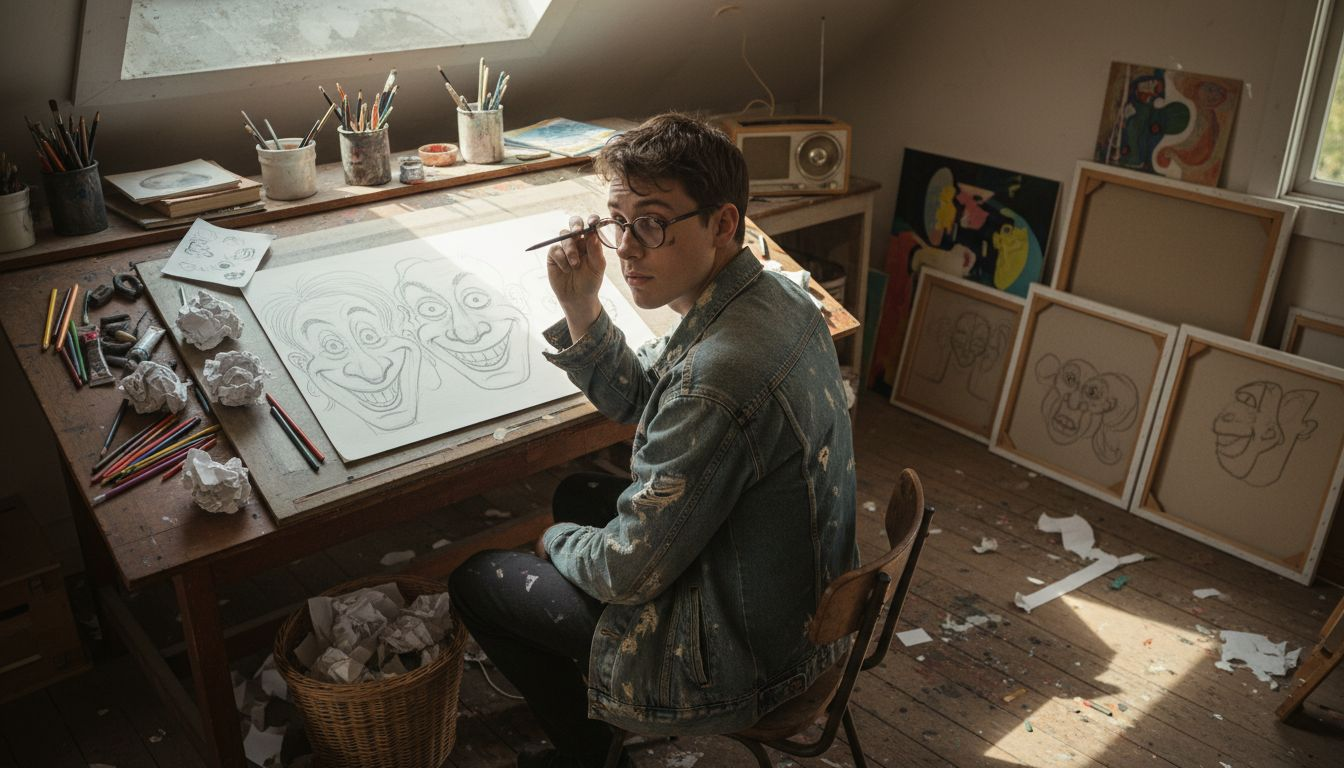
The most compelling artistic techniques in grotesque art involve intricate compositional strategies that blur boundaries between the horrific and the comic. Artistic boundary transgressions demonstrate how artists deliberately juxtapose seemingly incompatible visual elements. These techniques might include transforming human figures into monstrous configurations, creating impossible anatomical arrangements, or introducing surreal combinations that simultaneously provoke laughter, disgust, and profound psychological discomfort.
Key technical approaches in grotesque art include visual parody, extreme morphological distortion, and the strategic subversion of classical representational norms. Contemporary artists like Francis Bacon, HR Giger, and graphic novelists have expanded these techniques, using exaggeration and bodily deformation to expose underlying social tensions and psychological complexities. By pushing visual representation to its most extreme limits, grotesque artists create powerful metaphorical landscapes that reveal uncomfortable truths about human perception, societal structures, and psychological complexity.
Pro tip: Develop a nuanced understanding of grotesque art by examining how each piece strategically disrupts visual expectations and challenges viewers’ emotional and intellectual boundaries.
This summary table highlights techniques and their primary expressive impact in grotesque art:
| Technique | Artistic Impact | Example Use |
|---|---|---|
| Morphological Distortion | Evokes psychological discomfort | Bacon’s twisted figures |
| Hybridization | Creates surprise and ambiguity | Giger’s biomechanical forms |
| Visual Parody | Challenges social conventions | Graphic novel satire |
| Juxtaposition | Blurs comic and horrific boundaries | Surreal scenes in comics |
Role in Contemporary Culture and Comics
Grotesque artistic expression has become a powerful medium for challenging societal norms and exploring complex cultural narratives in contemporary visual culture. Comics and graphic novels have emerged as particularly potent platforms for this artistic approach, using grotesque techniques to deconstruct traditional representations and expose underlying social tensions. By deliberately distorting familiar visual language, artists create provocative narratives that push readers to confront uncomfortable truths about identity, power, and human experience.
In modern comics and graphic storytelling, the grotesque serves as a critical tool for social commentary and identity exploration. Contemporary cultural resistance demonstrates how artists use bodily distortion and surreal imagery to negotiate themes of marginalization, sexuality, and social inclusion. Artists like R. Crumb, Charles Burns, and contemporary manga creators have leveraged grotesque aesthetics to challenge heteronormative narratives, expose systemic power structures, and give voice to traditionally marginalized perspectives.
The role of grotesque art in contemporary culture extends beyond simple visual provocation. It functions as a sophisticated language of critique, using exaggeration, hybrid forms, and psychological discomfort to communicate complex social realities. Comic artists and graphic novelists particularly excel at using these techniques to explore themes of otherness, bodily difference, and societal transformation. By pushing visual representation to its most extreme limits, they create powerful metaphorical landscapes that reveal the fragility and complexity of human experience.
Pro tip: When exploring grotesque comics and art, look beyond initial shock value to understand the deeper social and psychological narratives embedded within each work.
Collecting Grotesque Art: Value and Pitfalls
Collecting grotesque artworks presents a complex challenge for serious art collectors, requiring deep understanding of the genre’s unique aesthetic and cultural significance. Unlike traditional art markets, grotesque art demands sophisticated interpretation beyond surface-level visual shock. Collectors must navigate a nuanced landscape where artistic value is determined by conceptual depth, historical context, and the work’s ability to challenge societal norms rather than conventional aesthetic standards.
The market for grotesque art remains highly specialized, with significant variations in valuation and authentication. Expert collectors recognize that these works represent more than provocative imagery; they are critical commentaries on human experience. Art collecting strategies emphasize the importance of understanding an artwork’s historical lineage, the artist’s conceptual framework, and its broader cultural significance. This approach helps mitigate risks associated with purchasing works that might appear sensationalistic but lack substantive artistic merit.
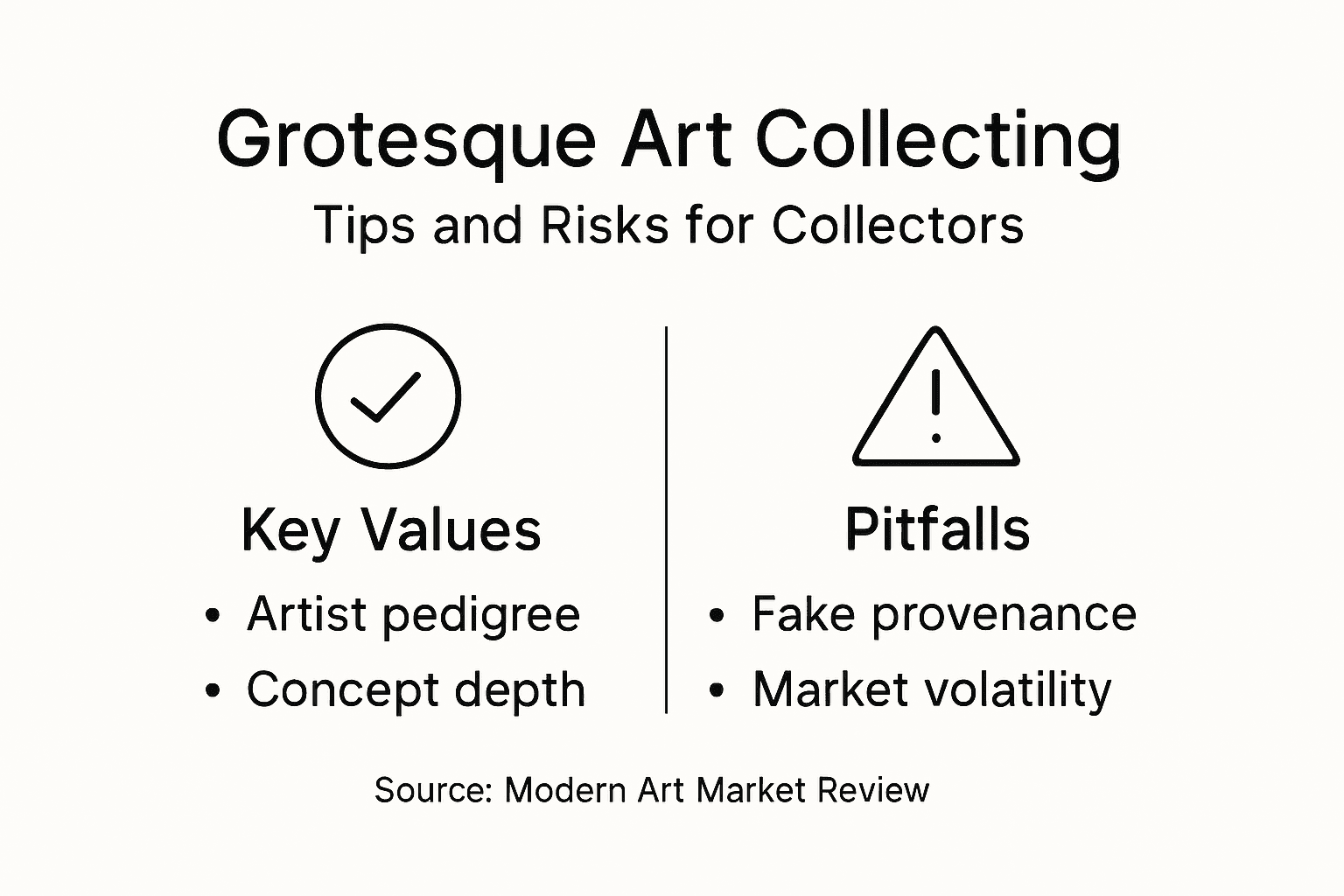
Potential collectors should be aware of several key considerations when acquiring grotesque artworks. Provenance becomes critically important, as does understanding the artist’s reputation and the work’s position within broader artistic movements. Emerging collectors should focus on pieces that demonstrate technical skill, conceptual complexity, and a thoughtful approach to challenging visual representation. While market demand can be unpredictable, works by established artists like Francis Bacon, HR Giger, and contemporary graphic novelists often maintain significant cultural and financial value.
Pro tip: Always research the artist’s background, examine the artwork’s conceptual depth, and consult multiple expert sources before making a significant investment in grotesque art.
Unlock the Depths of Grotesque Art with Exclusive Collectibles
Are you fascinated by the complex beauty and emotional power of grotesque art and its impact on modern collecting? This genre challenges traditional aesthetics and opens a window into deeper psychological and social narratives. If you are ready to move beyond shock value and explore pieces that carry emotional intensity and social critique, discovering unique artworks and limited editions is essential to your collection journey. The Mansion Press connects you directly to independent artists and comic creators who embrace these sophisticated themes, offering exclusive artbooks, graphic novels, and original artworks designed to push boundaries.
Browse our curated selection now and own collectibles that provoke thought and spark conversation. Shop today at The Mansion Press to gain access to upcoming releases and rare items that exemplify the grotesque art tradition, helping you build a collection that stands apart. Embrace the challenge of collecting art that transcends visual impact and tells a profound human story. Explore more and secure your next treasured piece today.
Frequently Asked Questions
What is grotesque art?
Grotesque art is an artistic genre that blends horror, comedy, and distortion to challenge traditional aesthetic norms, provoke emotional responses, and critique social conventions.
How did grotesque art evolve over time?
Grotesque art evolved from ancient Roman decorative forms through the Renaissance, Mannerism, and Romanticism, transforming into a modern medium for social commentary and psychological exploration.
What techniques are commonly used in grotesque art?
Common techniques include morphological distortion, hybridization, visual parody, and strategic juxtaposition, which blur the boundaries between the horrific and the comic to elicit complex responses from viewers.
Why is provenance important when collecting grotesque art?
Provenance is crucial in grotesque art collecting as it helps verify the artwork’s history, the artist’s reputation, and its significance within broader artistic movements, ensuring the collector understands its cultural value.