

Master hollow books: creative design and secret storage
Hollow books represent a captivating fusion of literary tradition and functional artistry, transforming ordinary volumes into unique pieces that hide secrets while celebrating design. Far from crude containers, expertly crafted hollow books demonstrate refined artistic techniques and thoughtful aesthetic choices. This guide explores the creative processes, material considerations, and design strategies that elevate hollow books into treasured collectibles, offering practical insights for crafters and collectors who appreciate where literature meets creative expression.
Table of Contents
- Understanding Hollow Books: History And Artistic Appeal
- The Crafting Process: Materials, Tools, And Step-By-Step Guide
- Design Considerations: Marrying Functionality With Creative Aesthetics
- Choosing The Right Book For Hollowing: Bindings, Paper, And Cover Material
- Explore Expertly Crafted Art Books And Resources
- Frequently Asked Questions
Key takeaways
| Point | Details | |-------|---------|| | Preparation is essential | Careful page treatment and cover protection ensure structural integrity and durability for long-term use. | | Aesthetic harmony matters | Design choices should complement the book’s original style, creating seamless integration between form and function. | | Binding affects complexity | Different binding types like perfect, saddle stitch, or spiral require varying tools and skill levels for successful hollowing. | | Dual purpose appeal | Hollow books serve as both practical hidden compartments and distinctive decorative art objects for collectors. | | Expert techniques elevate results | Strategic tool selection, finishing touches, and artistic embellishments transform basic projects into professional quality pieces. |
Understanding hollow books: history and artistic appeal
Historical hollow books evolved from practical necessity into sophisticated art forms that blend concealment with craftsmanship. Analysis of high-value hollow books reveals subtle compartments integrated with original binding design to enhance aesthetics, demonstrating how skilled artisans prioritized beauty alongside functionality. These pieces used original bindings to maintain authentic appearances, creating seamless secret storage that remained undetectable to casual observers.
Artistic craftsmanship in hollow books requires meticulous attention to matching shapes, finishes, and materials with the original design elements. Collectors prize pieces where compartments blend naturally with page layouts and cover decorations, valuing subtlety as much as functional utility. Modern creators honor these traditions while introducing contemporary artistic interpretations that push creative boundaries.
Today’s hollow books occupy unique positions as both collectible objects and expressive art forms. Enthusiasts appreciate how traditional bookbinding techniques merge with innovative design approaches to produce pieces that transcend simple functionality. Whether displayed openly as conversation pieces or used discreetly for storage, these works represent the intersection of literary culture and creative vision.
Key characteristics that define artistic hollow books include:
- Integration of compartments that respect original page flow and text layout
- Surface treatments matching historical binding styles and period-appropriate materials
- Subtle design modifications that preserve the book’s authentic appearance
- Quality finishing details like felt linings and reinforced edges
Understanding this heritage helps crafters and collectors display rare artbooks with greater appreciation for the artistry involved. Modern hollow books continue this legacy by balancing creative expression with technical precision.
The crafting process: materials, tools, and step-by-step guide
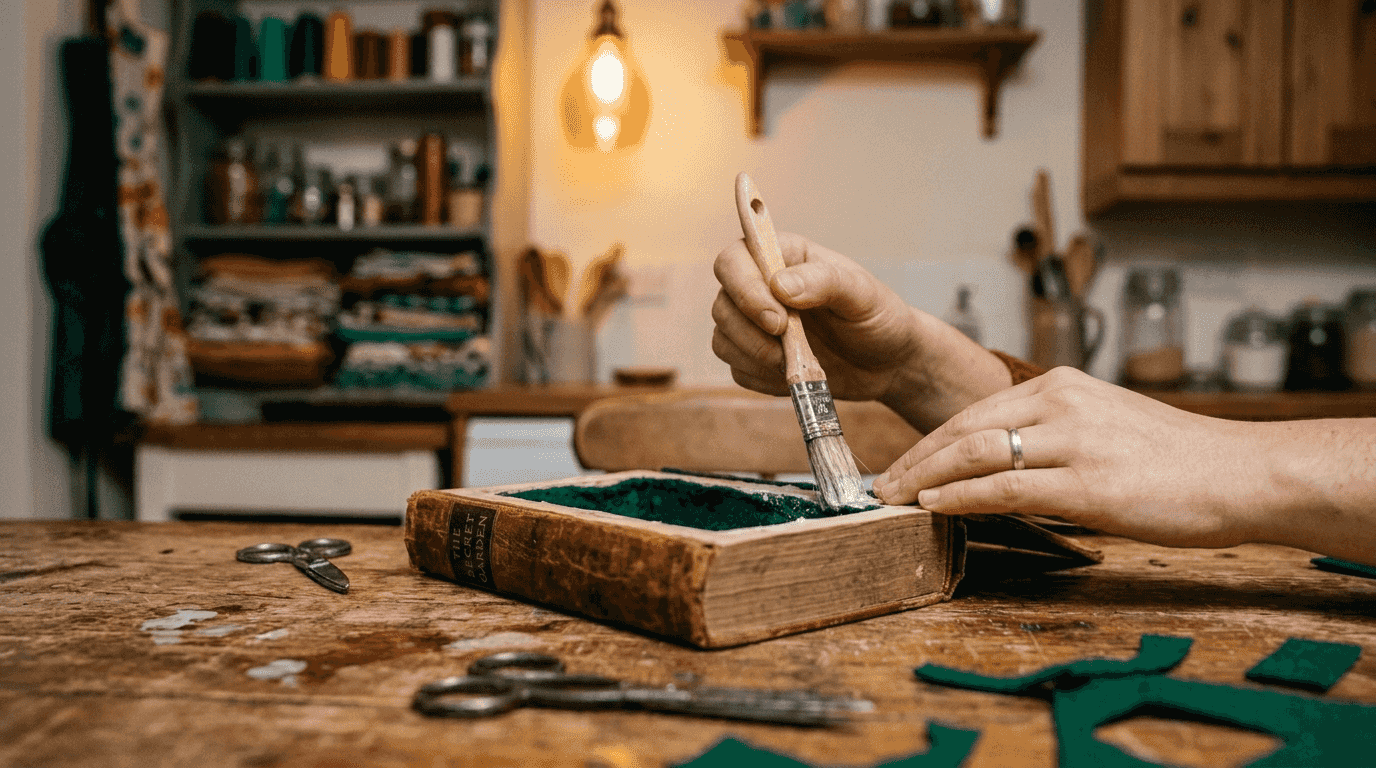
Creating hollow books demands careful material selection and systematic technique to achieve professional results. Begin by protecting the cover with plastic wrap or wax paper to prevent glue damage during the hollowing process. This simple step preserves the book’s exterior appearance and maintains its collectible value.
Apply multiple coats of Modge Podge to page edges, allowing each layer to dry completely before adding the next. Using a new blade and letting Modge Podge dry completely ensures a clean, durable hollow book, creating solid page blocks that resist tearing during cutting. Saturation requires patience but delivers superior structural integrity.
Cutting the cavity requires sharp blades and steady pressure to maintain clean edges. Replace blades frequently as dull tools create ragged cuts and compromise visual appeal. Work methodically through page layers, checking depth regularly to achieve desired compartment size while maintaining adequate border strength.
Binding type significantly influences tool requirements and project difficulty. Perfect binding is harder to hollow due to glue, requiring extra effort to remove adhesive before creating compartments. Saddle stitch and spiral bindings prove easier for beginners, offering more forgiving working conditions.
Essential steps for successful hollow book creation:
- Select an appropriate book based on binding type and cover material
- Protect covers thoroughly with removable barriers
- Mark cutting guidelines with pencil on interior pages
- Apply three to five coats of Modge Podge to page block edges
- Allow complete drying between applications, typically 24 hours minimum
- Cut cavity using fresh blades and consistent pressure
- Remove loose paper particles and smooth interior surfaces
- Line cavity with felt or decorative paper for finished appearance
Pro Tip: Test your blade sharpness on scrap pages before cutting the actual cavity. A sharp blade glides smoothly while dull tools drag and tear, signaling the need for replacement.
Finish by lining the cavity with felt, which adds polish and protects stored items from rough paper edges. Choose colors that complement the book’s interior or create striking visual contrast. This final touch transforms functional compartments into refined storage solutions that reflect artistic attention to detail. Resources like DIY artist bookmaking tips provide additional guidance for advanced techniques.
Design considerations: marrying functionality with creative aesthetics
Design elements elevate hollow books from simple containers to distinctive art pieces that showcase creative vision. Marquetry techniques apply thin wood veneers to covers, introducing natural textures and intricate patterns that transform ordinary bindings. Marquetry uses thin wood veneers selected for texture and pattern to create decorative book covers, offering crafters methods to personalize pieces with organic beauty.
Altered book art takes different approaches by incorporating mixed media elements directly into book structures. Altered books transform the original form via cutting, painting, and collaging to create layered art journals, enabling artists to reimagine volumes as three-dimensional canvases. These techniques produce unique compositions that celebrate both the book’s history and new artistic interpretations.
Binding tooling and decorative arts traditions inspire surface designs that enhance hollow books’ collector appeal. Embossing, gilding, and leather working techniques add sophistication while respecting bookbinding heritage. Combining traditional methods with contemporary aesthetics creates pieces that bridge historical craftsmanship and modern artistic sensibilities.
| Technique | Materials | Visual Effect | Best For |
|---|---|---|---|
| Marquetry | Wood veneers, adhesive | Natural grain patterns, geometric designs | Classic, sophisticated covers |
| Altered book art | Paint, collage materials, mixed media | Layered, textured compositions | Expressive, contemporary pieces |
| Tooling | Leather, embossing tools | Raised patterns, traditional motifs | Vintage-inspired designs |
| Gilding | Gold leaf, adhesive size | Metallic accents, elegant details | Luxury, high-end finishes |
Artistic embellishments serve dual purposes by enhancing visual appeal and increasing uniqueness. Custom designs transform mass-produced volumes into one-of-a-kind creations that reflect personal style or thematic concepts. Collectors particularly value pieces demonstrating creative risk-taking and technical skill.
Consider these design approaches:
- Integrate text elements from original pages into decorative compositions
- Layer translucent materials to create depth and visual interest
- Apply metallic leaf or paint for accent details
- Combine multiple techniques for complex, sophisticated effects
Pro Tip: Plan your design by sketching concepts on paper before committing to the actual book cover. This approach allows experimentation with composition and color without risking mistakes on the final piece.
Successful designs balance aesthetic ambition with the book’s original character, creating harmonious relationships between old and new elements. Resources on DIY artbook publishing and how to curate artbooks guide offer additional inspiration for developing artistic vision in book-related projects.
Choosing the right book for hollowing: bindings, paper, and cover material
Selecting appropriate books significantly impacts both crafting ease and final quality. Binding types present varying complexity levels that affect tool requirements and time investment. Perfect binding requires extra effort to remove glue, making it more challenging for beginners, while saddle stitch and spiral bindings offer simpler working conditions.
Paper thickness directly influences cutting ease and finished appearance. Thin paper like standard printer or paperback pages are easier to hollow than thick coated paper found in art books, though thicker stocks provide more substantial cavity walls. Consider intended use when balancing ease of construction against structural durability.
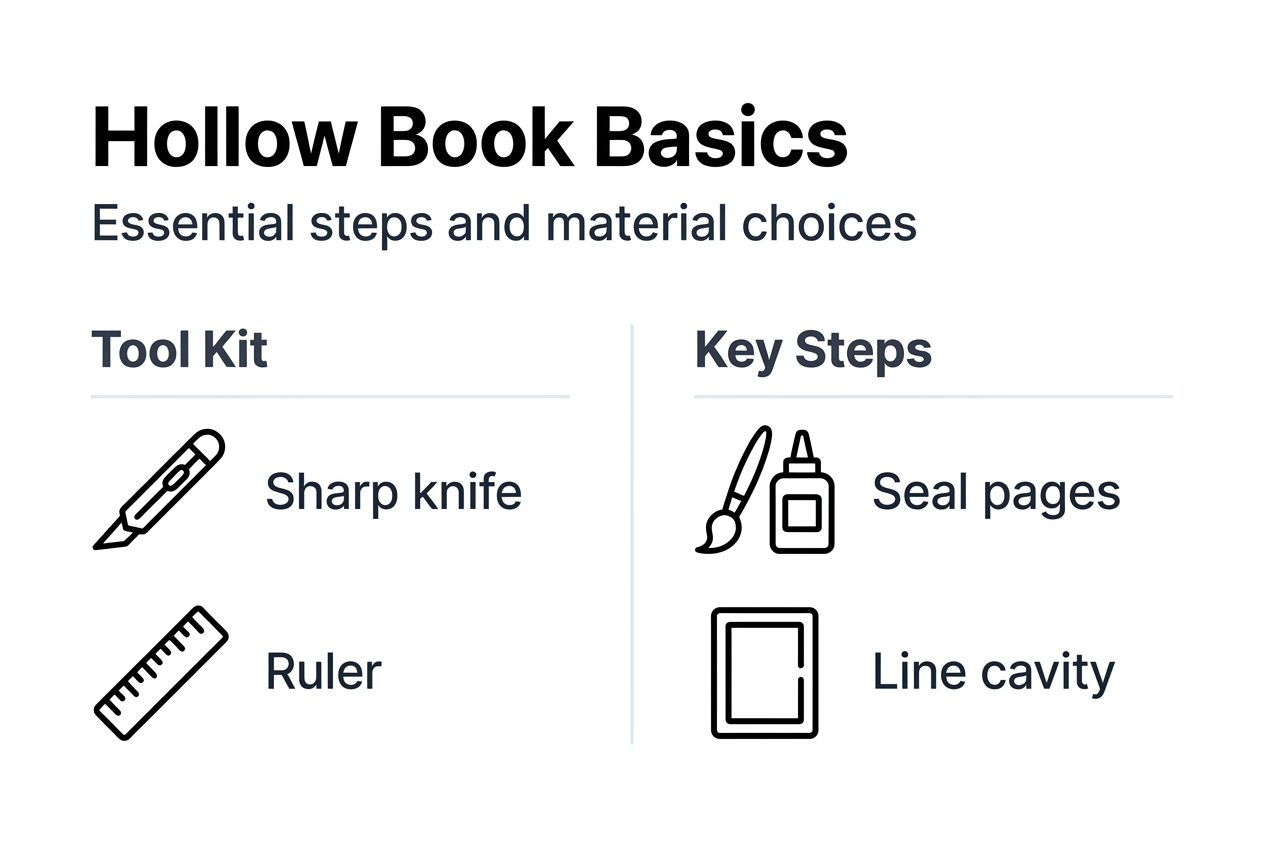
Cover materials dictate tool selection and finishing approaches. Hardcovers may require power tools like Dremels for efficient material removal, while paperbacks work well with craft knives and patience. Leather, cloth, and decorative paper covers each present unique challenges and aesthetic opportunities that influence project planning.
| Binding Type | Difficulty | Tools Needed | Best Application |
|---|---|---|---|
| Perfect binding | High | Craft knife, possibly Dremel | Large compartments, experienced crafters |
| Saddle stitch | Low | Craft knife, ruler | Beginners, smaller books |
| Spiral binding | Very Low | Craft knife, wire cutters | Quick projects, easy modifications |
| Case binding | Medium | Craft knife, bone folder | Quality finish, collector pieces |
Choosing inconspicuous books matters when creating functional secret compartments. Volumes that blend naturally with surrounding collections avoid drawing unwanted attention. Consider whether the book’s subject matter, size, and appearance suit its intended storage purpose and display environment.
Practical selection factors include:
- Page count affects cavity depth and working time
- Book dimensions determine compartment size and portability
- Cover condition impacts final aesthetic quality
- Publication date influences collectible value considerations
Size and time investment should align with project goals and skill levels. Larger volumes offer spacious compartments but require more extensive hollowing, while smaller books provide quicker completion times with reduced storage capacity. Match book selection to available time, intended function, and display requirements for optimal results. Insights from building artbook collections apply equally to selecting volumes for creative modification.
Explore expertly crafted art books and resources
Now that you understand the artistic and technical aspects of hollow books, The Mansion Press offers curated collections and resources to deepen your appreciation for book arts. Whether you’re ready to apply these techniques or seeking inspiration from expertly crafted volumes, our gallery showcases unique pieces that celebrate the intersection of literature and design.
Our blog features comprehensive guides on DIY artist bookmaking tips and strategies to display rare artbooks that complement your growing collection. Explore our carefully selected offerings to discover limited edition artbooks, original works, and collector’s pieces that embody the creative spirit you’ve learned about here. Each item reflects the dedication to craftsmanship and artistic vision that transforms ordinary books into extraordinary art objects.
Frequently asked questions
What tools are essential for hollowing out a book?
Essential tools include sharp craft knives or X-acto knives with replacement blades, Modge Podge or white glue for page adhesion, rulers for marking guidelines, and felt or decorative paper for cavity lining. Hardcover books may benefit from a Dremel rotary tool for faster material removal. Fresh blades ensure neat cuts while preventing page tearing, and wax paper protects covers during the gluing process.
How important is drying time in the hollowing process?
Drying time proves critical for creating durable, clean hollow books that withstand regular use. Rushing between Modge Podge coats compromises page adhesion, resulting in loose sheets and ragged cavity edges. Allow minimum 24-hour drying periods between applications, though humidity and temperature affect actual times. Patience during drying phases directly correlates with final quality and structural integrity.
Does binding type affect tool selection?
Binding type significantly influences both tool choice and project difficulty levels. Perfect binding’s adhesive spine requires extra preparation and possibly power tools, while saddle stitch bindings accommodate simple craft knife work. Spiral bindings offer easiest modification but may limit aesthetic options. Understanding these differences helps match projects to available tools and skill levels for successful outcomes.
What decorating tools enhance artistic hollow books?
Creative decorating tools vary based on chosen design approaches and desired aesthetic effects. Marquetry requires wood veneers, adhesives, and cutting implements for precise pattern work. Altered book techniques use acrylic paints, collage materials, gel mediums, and mixed media supplies. Traditional tooling employs leather working stamps, bone folders, and embossing tools. Select tools matching your artistic vision and technical comfort level.
How long does it typically take to create a hollow book?
The hollowing process can take several hours, with drying time being the most time-consuming part. Active working time ranges from two to three hours for cutting and assembly, while complete projects require six to seven hours total including drying phases. Rushing compromises quality, so plan for extended timelines when creating pieces meant for collection or display.
What types of designs enhance hollow books artistically?
Marquetry uses wood veneers to add intricate natural patterns that celebrate organic beauty, while altered books use cutting, painting, and collaging to create layered compositions with contemporary appeal. Designs integrating text elements, varied textures, and mixed media layers produce visually compelling results. Creative integration enhances both collector appeal and personal satisfaction, transforming functional objects into expressive art that reflects individual vision and craftsmanship.