

How to Display Rare Artbooks for Stunning Visual Impact
Most collectors agree that presenting rare artbooks is far more than a decorative choice—it is an art in itself. With the value of some American artbook editions rising by over 30 percent each year, proper display and preservation truly matter. Whether you are expanding your personal collection or curating a gallery showcase, exploring distinctive presentation solutions helps you protect your investment and bring out the exquisite details in every volume.
Table of Contents
- Step 1: Assess Artbook Condition And Preservation Needs
- Step 2: Select Appropriate Display Environment And Furniture
- Step 3: Install Display Lighting For Maximum Visual Effect
- Step 4: Position Artbooks For Balanced Visibility And Security
- Step 5: Verify Display Stability And Environmental Controls
Quick Summary
| Key Point | Explanation |
|---|---|
| 1. Assess Artbook Condition Thoroughly | Conduct a detailed examination to document physical condition, binding integrity, and any signs of damage for effective preservation. |
| 2. Maintain Ideal Environmental Conditions | Store artbooks between 65-70°F with 30-50% humidity to prevent deterioration from moisture or temperature fluctuations. |
| 3. Use Appropriate Display Furniture | Choose display shelving made from non-reactive materials that minimize chemical emissions and enhance the visual appeal of artbooks. |
| 4. Implement Effective Lighting Strategies | Utilize museum-grade LED lighting to avoid UV damage while showcasing artbook colors and textures without heat exposure. |
| 5. Ensure Security and Stability in Display | Position artbooks securely while allowing visibility; use protective cases and mounts to prevent handling damage during displays. |
Step 1: Assess artbook condition and preservation needs
Evaluating the condition of rare artbooks requires careful observation and systematic documentation. Professional collectors understand that preservation starts with a thorough initial assessment of physical condition, potential damage risks, and specific conservation needs.
Begin by examining the artbook under good natural lighting, which allows you to detect subtle signs of wear or deterioration. Check the binding integrity, page conditions, cover materials, and potential signs of moisture damage or acid degradation. Focus on critical areas like spine connections, page edges, and cover surfaces. Comprehensive preservation strategies from the Library of Congress recommend documenting each observed condition meticulously, creating a detailed record that guides future preservation efforts.
Pay special attention to environmental factors that might compromise your artbook. Temperature, humidity, light exposure, and storage conditions dramatically impact long-term preservation. Ideal storage involves stable environments between 65-70 degrees Fahrenheit with relative humidity around 30-50 percent. Avoid direct sunlight, fluctuating temperatures, and areas prone to dust accumulation.
Pro Tip: Invest in archival quality white cotton gloves when handling rare artbooks to prevent oils and dirt from transferring onto delicate pages and covers.
Here’s a summary of common artbook preservation risks and best mitigation approaches:
| Risk Type | Impact on Artbooks | Recommended Mitigation |
|---|---|---|
| Moisture Damage | Warping, mold, page staining | Keep humidity 30-50%, avoid leaks |
| Light Exposure | Color fading, brittle pages | Use UV-filtered lighting, avoid direct sun |
| Fluctuating Temperatures | Accelerated aging, material cracks | Maintain stable 65-70°F with sensors |
| Dust Accumulation | Surface abrasion, soiling | Seal cases, regular cleaning |
| Chemical Off-gassing | Material breakdown, stains | Use inert, museum-grade shelving |
Step 2: Select appropriate display environment and furniture
Choosing the right display environment for rare artbooks requires strategic planning and careful consideration of preservation principles. Your goal is to create a protective yet visually appealing space that safeguards these valuable cultural artifacts from potential damage while allowing their beauty to be appreciated.
Optimal storage environments demand precise temperature and humidity control. Aim for a stable environment around 68-70 degrees Fahrenheit with relative humidity near 50 percent. Select display furniture constructed from non reactive materials like powder coated metal shelving or museum grade wooden cabinets with sealed surfaces. Avoid wooden shelves that might off gas acidic compounds or contain wood treatments that could deteriorate book materials.
Position your display area away from direct sunlight and heating vents. Consider glass display cases with UV protective coating and built in climate controls if possible. Ensure shelving allows adequate air circulation and prevents overcrowding. Adjustable shelving with graduated heights accommodates various artbook sizes while providing flexible presentation options. Space books with enough room to prevent stress on bindings and cover materials.
Pro Tip: Install museum grade LED lighting with minimal UV emission to illuminate your artbooks safely without causing potential heat or light degradation.
This comparison outlines key differences between typical shelving materials for rare artbooks:
| Material | Preservation Quality | Visual Appeal |
|---|---|---|
| Powder Coated Metal | Highly inert, stable environment | Modern, minimalist |
| Museum Grade Sealed Wood | Low chemical emission, sturdy | Traditional, elegant |
| Untreated Wood | Off-gasses acids, risk of damage | Natural but risky |
| Glass Case (UV Coated) | Excellent protection, climate control | High, premium showcase |
Step 3: Install display lighting for maximum visual effect
Lighting plays a critical role in showcasing rare artbooks while preserving their delicate materials. Your lighting strategy must balance aesthetic presentation with conservation requirements, creating an environment that highlights the artbooks visual details without causing potential damage.
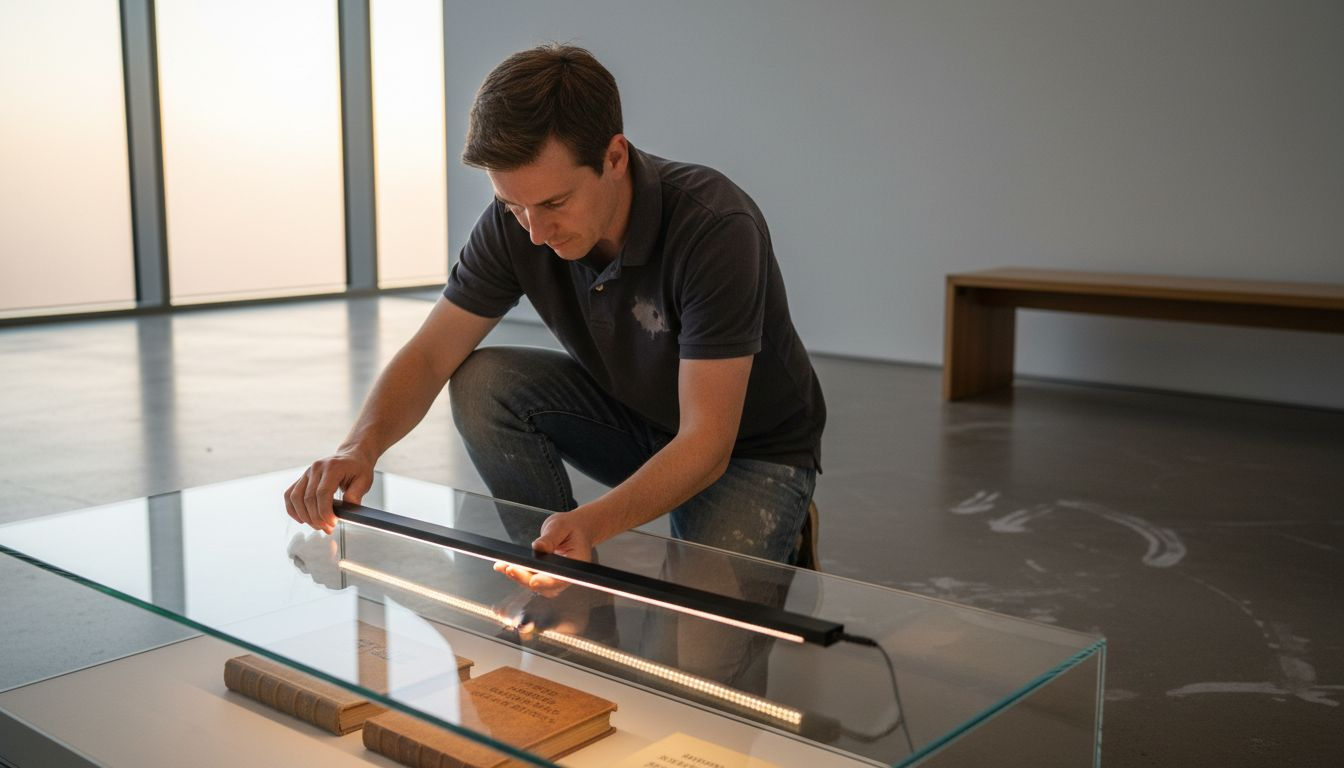
Lighting design principles recommend using specialized museum grade LED fixtures that minimize ultraviolet and infrared radiation. Position adjustable track lighting or directional LED spots at precise 30 degree angles to illuminate book surfaces without creating harsh shadows or direct heat exposure. Choose fixtures with color temperatures between 2700 3000 Kelvin to provide warm natural illumination that accurately represents the artbooks colors and textures.
Implement layered lighting techniques to create depth and visual interest. Use low intensity ambient lighting to provide overall room illumination and strategically placed focused lights to highlight specific artbooks or display areas. Consider installing dimmer switches to control light intensity and reduce potential light exposure during periods when the display is not actively viewed. Ensure each lighting fixture includes appropriate filters to block harmful UV rays that could cause color fading or material degradation.
Pro Tip: Invest in professional light meters to precisely measure and monitor light exposure levels, ensuring your rare artbooks remain protected while beautifully presented.
Step 4: Position artbooks for balanced visibility and security
Positioning rare artbooks requires a delicate balance between showcasing their beauty and protecting their fragile nature. Your display strategy must create an engaging visual experience while implementing robust security measures to preserve these valuable cultural artifacts.
Security strategies for rare collections recommend using specialized display cases with multiple protective features. Arrange artbooks at strategic angles that maximize visibility from different viewer perspectives while minimizing potential handling risks. Use adjustable book cradles or custom mounts that support the spine and prevent unnecessary stress on binding materials. Consider implementing tiered shelving or angled display platforms that allow viewers to appreciate intricate details without direct physical contact.
Create a display layout that encourages controlled interaction. Place more delicate or rare volumes in inner display positions with clear sightlines but limited accessibility. Use transparent security barriers that do not obstruct viewing but prevent unauthorized touching. Implement subtle security features like discreet sensor systems or strategically positioned display lighting that deters potential mishandling while maintaining an inviting aesthetic environment for art enthusiasts.
Pro Tip: Rotate displayed artbooks periodically to distribute potential light and environmental exposure while keeping your collection presentation dynamic and engaging.
Step 5: Verify display stability and environmental controls
Ensuring the long-term preservation of rare artbooks requires meticulous attention to environmental stability and display infrastructure. Your goal is to create a controlled environment that protects these delicate artifacts from potential damage caused by fluctuating conditions or structural instability.
Conservation environment management involves implementing comprehensive monitoring systems that track temperature, humidity, and potential vibration risks. Install digital environmental sensors that provide real-time data on ambient conditions, allowing you to make immediate adjustments. Select display furniture constructed from inert materials that do not off-gas harmful chemicals. Ensure shelving units are anchored securely and have minimal movement potential, using museum-grade mounting systems that distribute weight evenly and prevent structural stress.
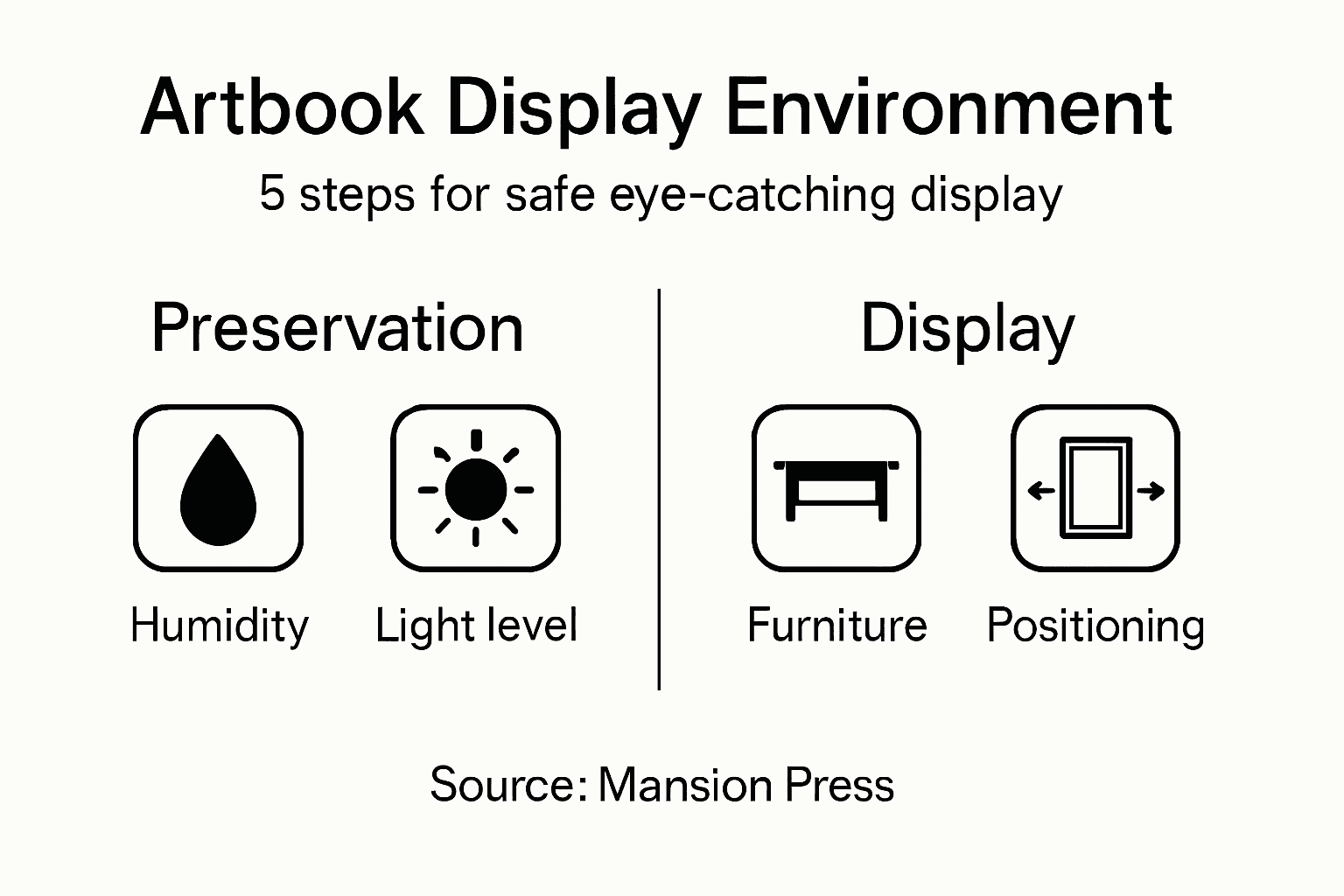
Conduct regular systematic inspections of your display infrastructure. Check for microscopic changes in artbook bindings, potential warping, or environmental stress indicators. Use calibrated hygrometers and thermometers to maintain consistent conditions between 65-70 degrees Fahrenheit with relative humidity around 45-50 percent. Implement a documentation protocol that logs environmental readings and any observed changes, creating a comprehensive preservation record that helps you proactively address potential conservation challenges.
Pro Tip: Create a dedicated spreadsheet for tracking environmental conditions, allowing you to identify subtle pattern changes that might indicate emerging preservation risks.
Elevate Your Rare Artbook Display Experience
Displaying rare artbooks with stunning visual impact requires more than just space and light. This article highlights the challenges of maintaining precise environmental controls, choosing secure display furniture, and positioning artbooks to both protect and showcase their delicate beauty. Whether you struggle with preventing moisture damage or finding the perfect lighting that brings your collection to life without causing harm, it is clear that expert curation and preservation strategies are essential for any serious collector or enthusiast.
Discover how The Mansion Press can help you enhance your artbook presentation. Our exclusive selection of artbooks, limited editions, and original artworks are perfect for collectors who value preservation and aesthetic appeal. Browse through our carefully curated catalog designed to inspire innovative display ideas that honor the conservation principles detailed in the article like stable environments and UV protection.
Take the first step towards creating a captivating and well-preserved rare artbook collection by exploring our unique offerings today. Visit The Mansion Press and bring exceptional artbooks into your curated environment with confidence and style.
Frequently Asked Questions
How can I assess the condition of my rare artbooks before display?
To assess the condition of rare artbooks, examine them under good natural lighting for signs of wear, such as binding integrity and page conditions. Document your observations systematically to guide future preservation efforts.
What is the ideal environmental setting for displaying rare artbooks?
The ideal environment for displaying rare artbooks is stable, with a temperature around 68-70 degrees Fahrenheit and relative humidity near 50 percent. Maintain these conditions to protect your artbooks from damage.
How should I position rare artbooks for optimal visibility and security?
Position rare artbooks at strategic angles to maximize visibility while minimizing handling risks. Use adjustable book cradles or custom mounts to support the spines and reduce stress on bindings.
What lighting conditions should I use to enhance the visual impact of rare artbooks?
To enhance visual impact, use museum-grade LED lighting with a color temperature between 2700-3000 Kelvin. Position lights at a 30-degree angle to illuminate without creating heat or harsh shadows.
How can I ensure the stability of the display infrastructure for my artbooks?
Ensure the stability of your display infrastructure by using secure shelving constructed from inert materials that do not off-gas harmful chemicals. Regularly inspect for any signs of movement or environmental stress to maintain stability.
What should I monitor in the display environment to preserve rare artbooks?
Monitor temperature and humidity levels continuously within the display environment to ensure they remain at 65-70 degrees Fahrenheit and 30-50 percent relative humidity. Implement a documentation protocol to log these readings for long-term preservation.
Recommended
- 7 Smart Ways to Discover and Collect Rare Art Books – The Mansion Press
- Why Collect Rare Art Books – Cultural Value and Investment – The Mansion Press
- Expert Tips for Finding Out-of-Print Artbooks Anywhere – The Mansion Press
- How to Curate an Artbook for Collectors and Creators – The Mansion Press
- How to Present a Literature Review Effectively