

Game Books and Their Impact on Art Collecting
Defining what makes a game book collectible often sparks debate among serious art collectors and passionate comic enthusiasts. The unique fusion of interactive storytelling, stunning visual design, and player involvement pushes game books beyond standard literary or artistic boundaries. As modern editions blend physical craftsmanship with innovative mechanics, collectors look for artifacts that offer more than just visual impact. Exploring game books as interactive artifacts reveals new dimensions of value and engagement rarely found in traditional collections.
Table of Contents
- Defining Game Books And Key Concepts
- Types Of Game Books And Collector Editions
- Interactive Features And Artistic Value
- Collector Market Trends And Investment
- Risks And Common Pitfalls For Buyers
Key Takeaways
| Point | Details |
|---|---|
| Understanding Game Books | Game books blend interactive storytelling with visual design, requiring active engagement and offering unique narrative choices. |
| Collector Editions | Collector editions feature high-quality materials and unique content, appealing to serious collectors and investors. |
| Market Trends | The collectibles market for game books is growing, influenced by younger demographics, digital authentication, and online trading. |
| Risks of Collecting | Collectors face authenticity, market volatility, and preservation challenges, necessitating thorough research and professional validation. |
Defining Game Books and Key Concepts
Game books represent a fascinating hybrid art form that blends interactive storytelling with visual design, challenging traditional boundaries between literature, art, and gaming. These unique artifacts emerge from an intricate landscape where narrative, visual representation, and player agency intersect, creating immersive experiences that transcend conventional media categories.
Understanding game books requires exploring their multifaceted nature. Interdisciplinary frameworks reveal game books as more than simple publications - they are interactive artifacts that demand active engagement from readers. Unlike traditional books or standard video games, game books invite participants to make narrative choices, solve puzzles, and directly influence storyline progression.
Key characteristics of game books include:
- Interactive storytelling mechanisms
- Player-driven narrative progression
- Hybrid design integrating textual and visual elements
- Complex ruleset governing player interactions
- Artwork that serves both aesthetic and functional purposes
The academic discourse surrounding game books has evolved significantly, recognizing them as sophisticated cultural artifacts. Systematic research approaches now examine these works through multiple lenses: literary studies, game design, visual arts, and interactive media theory. This multidisciplinary perspective highlights game books’ unique position at the intersection of creative expression and participatory experience.
Pro tip: Collectors interested in game books should focus on understanding each artifact’s unique interactive design and narrative mechanics, not just its visual aesthetics.
Types of Game Books and Collector Editions
Game books have evolved dramatically since their inception, presenting collectors with an increasingly diverse and sophisticated range of editions. Historical research reveals multiple gamebook types that span from simple interactive narratives to complex collector’s editions with intricate design and gameplay mechanics.
The primary categories of game books include:
- Classic Interactive Storybooks: Traditional format with narrative branching
- Digital Hybrid Editions: Combining physical books with digital interaction
- Limited Collector’s Sets: High-production value editions with exclusive content
- Narrative Puzzle Books: Integrating gameplay challenges within storytelling
- Mature Theme Game Books: Advanced narratives targeting adult audiences
Collector editions represent the pinnacle of game book artistry, often featuring premium materials, unique artwork, and specialized packaging. Modern gamebook production models have expanded beyond traditional publishing, now embracing crowdfunding and print-on-demand strategies that allow for more diverse and niche productions.

These collector editions are not merely books but complex artifacts that blend visual design, narrative complexity, and interactive gameplay. Serious collectors appreciate game books that demonstrate innovative design, unique narrative structures, and high-quality production values that transform them from simple reading materials into immersive artistic experiences.
Here’s a quick reference comparing major types of game books and their collector appeal:
| Game Book Type | Distinctive Feature | Common Audience | Collector Appeal |
|---|---|---|---|
| Classic Interactive Storybooks | Branching story paths | General readers of all ages | Moderate, varies by nostalgia |
| Digital Hybrid Editions | App or web-based integration | Tech-savvy readers, gamers | Growing due to innovation |
| Limited Collector’s Sets | Premium materials, rare runs | Serious collectors, investors | High, especially with exclusives |
| Narrative Puzzle Books | Integrated puzzles, challenges | Puzzle enthusiasts | Rising, driven by interactivity |
| Mature Theme Game Books | Complex, adult narratives | Adult fans, collectors | Niche, but high among target |
Pro tip: When collecting game books, prioritize editions that offer unique interactive mechanics and exceptional visual design over purely aesthetic considerations.
Interactive Features and Artistic Value
Game books transcend traditional artistic mediums by integrating interactive features that fundamentally transform reader engagement. Paratextual elements create unique engagement forms that reshape how audiences experience narrative and visual storytelling, turning passive consumption into active participation.
Key interactive features that enhance artistic value include:
- Narrative branching mechanisms
- Player-driven story progression
- Visual puzzle integration
- Tactile gameplay elements
- Symbolic interactive design
The artistic significance of these interactive features lies in their ability to create multi-dimensional experiences. Unlike traditional art forms, game books invite audiences to become co-creators, influencing narrative trajectories and interpreting visual elements through direct interaction. Digital media environments foster immersive artistic expressions that challenge conventional boundaries between creator, artwork, and audience.
Modern collectors increasingly value game books that demonstrate sophisticated interactive design. These artifacts are not merely collectible objects but complex artistic statements that merge visual aesthetics, narrative complexity, and interactive mechanics. The most compelling game books transform reading from a linear experience into a dynamic, personalized journey of artistic exploration.
Pro tip: Evaluate game book interactive features by examining the depth of narrative choices and the sophistication of visual-mechanical integration.
Collector Market Trends and Investment
The game book collectibles market is experiencing unprecedented growth, driven by sophisticated collectors seeking unique artistic artifacts. Global collectibles market valuations demonstrate remarkable expansion, with projected market sizes exceeding $500 billion by 2030, signaling substantial investment potential for discerning art collectors.
Key market trends for game book collectors include:
- Increasing value of limited edition game books
- Rising interest from younger collector demographics
- Growing digital authentication technologies
- Emergence of blockchain-verified collectible assets
- Expanding online trading platforms
Investment strategies for game book collectors have become increasingly complex. Market research indicates diversification opportunities across physical and digital platforms, with innovative authentication methods enhancing collector confidence and asset liquidity. Modern collectors now evaluate game books not just as artistic objects, but as potential financial assets with appreciating value.
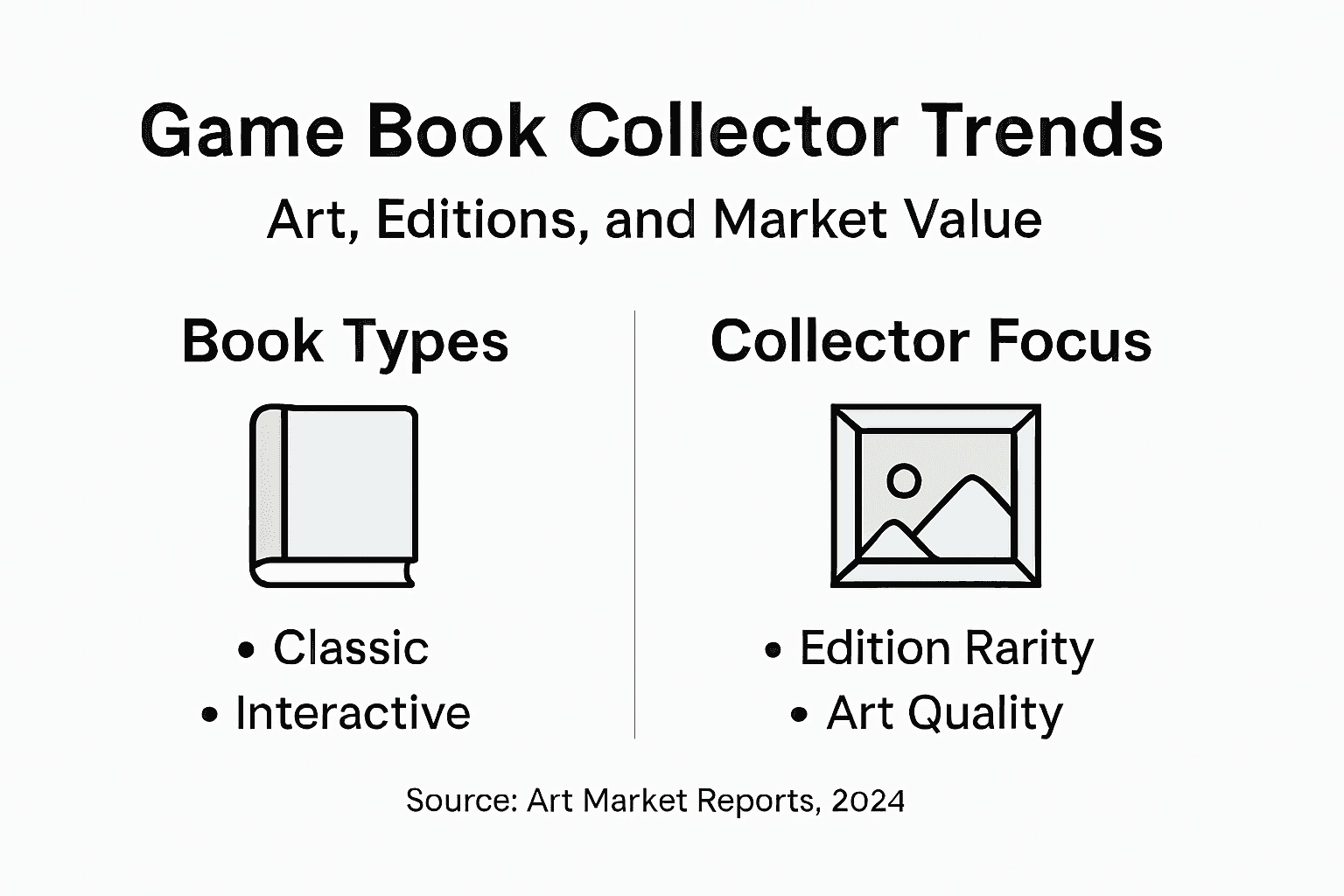
The most valuable game books combine historical significance, artistic innovation, and interactive design. Collectors are now prioritizing artifacts that demonstrate unique narrative mechanics, exceptional visual design, and limited production runs. The convergence of digital technology and traditional collecting practices has transformed game books from niche collectibles into sophisticated investment vehicles.
Pro tip: Research game book editions with unique interactive features and limited production runs to maximize potential long-term investment value.
Risks and Common Pitfalls for Buyers
Collecting game books involves navigating a complex landscape of potential risks that can significantly impact investment value. Hidden risks challenge even experienced collectors, requiring sophisticated strategies to protect both artistic and financial interests.
Critical risks for game book collectors include:
- Authenticity verification challenges
- Market value fluctuations
- Condition preservation difficulties
- Potential counterfeiting
- Digital format obsolescence
- Emotional bias in purchasing decisions
Preservation challenges represent a significant concern for game book collectors. Academic research highlights complex acquisition challenges surrounding physical and digital collectibles, emphasizing the importance of understanding format stability, authentication processes, and long-term storage requirements. Collectors must develop comprehensive strategies that go beyond aesthetic appreciation to protect their investments.
Successful collectors distinguish themselves by implementing rigorous research and validation processes. This involves deep understanding of market trends, careful examination of provenance documentation, expert consultations, and developing a systematic approach to evaluating potential acquisitions. Emotional detachment and methodical assessment are crucial in mitigating potential financial risks associated with game book collecting.
The table below highlights risks facing collectors along with prevention strategies:
| Risk Type | Example Scenario | Mitigation Strategy |
|---|---|---|
| Authenticity issues | Counterfeit edition purchase | Validate through expert review |
| Market volatility | Rapid price swings | Hold diversified investments |
| Condition loss | Improper storage damage | Use archival-quality storage |
| Digital obsolescence | Software no longer works | Maintain backup copies |
Pro tip: Always obtain professional authentication and detailed condition reports before making significant game book investments.
Elevate Your Collection with Exclusive Game Books and Art Editions
Navigating the intricate world of game books as artistic collectibles can be challenging. The complexity of interactive storytelling, limited production runs, and the need for authenticity all demand a trusted source for acquiring high-quality editions. At The Mansion Press, we specialize in connecting discerning collectors with rare, artist-driven game books and collector’s editions that offer exceptional narrative mechanics and visual artistry for a truly immersive experience. Discover how thoughtful selection can turn your passion into a valuable investment while avoiding common pitfalls like authenticity doubts and preservation risks.

Start building your curated collection today by exploring our exclusive range of limited editions and interactive artbooks. Don’t miss out on unique releases available for pre-order. Visit The Mansion Press to browse carefully vetted items featuring the depth of narrative choice and sophisticated design every serious collector desires. Secure your next masterpiece now before these rare artifacts become priceless treasures.
Frequently Asked Questions
What are game books?
Game books are interactive artifacts that merge storytelling, visual design, and player agency, allowing readers to make narrative choices, solve puzzles, and directly influence the storyline.
How do game books differ from traditional books and video games?
Unlike traditional books that present a linear narrative and video games that focus on gameplay, game books invite active reader participation, blending narrative branching with visual art and interactivity to create immersive experiences.
What are some key characteristics to look for in a high-quality game book?
Key characteristics of high-quality game books include engaging interactive storytelling, player-driven narrative progression, unique hybrid design, and intricate artwork that enhances both aesthetics and functionality.
What factors should collectors consider when investing in game books?
Collectors should prioritize editions with unique interactive mechanics, exceptional design quality, limited production runs, and historical significance to maximize the potential long-term investment value.
Recommended
- Comic Books vs Books: Artistic Value Explained – The Mansion Press
- Understanding Graphic Novels versus Artbooks Explained – The Mansion Press
- Understanding Artbook Collecting Basics for Enthusiasts – The Mansion Press
- Graphic Novel Explanation: Artistry and Impact Today – The Mansion Press
- The Magic of Sword Art Online: Top Swords to Add to Your Collection – propswords
- What Is Wall Art? Your Guide to Personalized Decor in 2025 – FunLifeNow