

Graphic Novel Explanation: Artistry and Impact Today
Choosing graphic novels for your collection goes beyond picking out a hardcover with striking art. The true value lies in works that deliver both narrative substance and graphic complexity, not just impressive packaging. For collectors across North America and Europe, understanding the sophisticated narrative form of graphic novels helps avoid common misconceptions and leads to smarter acquisitions. This guide reveals what sets authentic graphic novels apart, debunks format-based myths, and equips you to identify culturally significant pieces worth your investment.
Table of Contents
- Defining Graphic Novels And Common Misconceptions
- Exploring Major Types And Genres
- Key Narrative And Artistic Features
- The Evolution Of Graphic Novels In Art Culture
- Collectibility, Market Trends, And Value Assessment
Key Takeaways
| Point | Details |
|---|---|
| Understanding the Definition | A graphic novel is a cohesive narrative combining art and text, not merely a hardcover comic. |
| Clarifying Misconceptions | Collectors should focus on narrative substance rather than format, as not all hardcover collections qualify as graphic novels. |
| Diverse Genres Exist | Graphic novels span various genres, including autobiography and documentary, which enhance the collector’s potential interests. |
| Market Trends Impact Value | Factors like first edition status and condition significantly affect the collectibility and market value of graphic novels. |
Defining Graphic Novels and Common Misconceptions
The term “graphic novel” gets thrown around so casually that most people assume it simply means any comic book bound in hardcover. That’s not quite right. A graphic novel is a narrative work that combines sequential art with text to tell a complete story, typically with the scope, complexity, and thematic depth you’d expect from a traditional novel. The distinction matters, especially for collectors seeking specific works that fit their collection criteria.
Here’s where misconceptions start piling up. Many assume that the complex nomenclature surrounding comics stems from simple categorization, but the reality is messier. The term emerged in the 1970s and 1980s as a way to legitimize comics as serious literature rather than disposable entertainment for children. Publishers and scholars recognized that some sequential art works deserved recognition alongside traditional novels, yet the broad umbrella use of “graphic novel” for anything in book format created lasting confusion. A comic book collection bound in hardcover isn’t automatically a graphic novel just because it has a spine and dust jacket.
One major misconception centers on format alone. Many collectors believe distinguishing various genres within graphic literature comes down to physical appearance. Not true. A graphic novel requires narrative cohesion and thematic substance comparable to prose novels. Consider the difference: a collected run of superhero comics simply reprinted in book form remains a comic collection, while a work designed as a single narrative arc with intentional artistic and storytelling choices qualifies as a graphic novel.
Another widespread misunderstanding involves assuming all sequential art in book format serves the same purpose. Graphic novels encompass documentary formats, autobiographies, educational materials, and experimental narratives. Each demands different reading approaches. You might spend 30 minutes racing through a trade paperback reprint, while a literary graphic novel requires the contemplative pace of a traditional novel.
The collector’s perspective matters here too. Understanding these distinctions helps you identify which pieces will genuinely enhance your collection based on artistic merit and narrative substance, not just physical format or binding style.
Here’s a summary comparing common misconceptions about graphic novels versus actual features collectors value:
| Aspect | Common Misconception | Actual Collector Focus | Impact on Selection |
|---|---|---|---|
| Format | Hardcover binding defines it | Cohesive narrative is crucial | Ensures literary substance |
| Genre | All genres are similar | Diverse genres exist | Expands collection scope |
| Purpose | All book-format art is equal | Complete, intentional stories | Avoids superficial choices |
| Reading Approach | Quick reading for all types | Some require slow analysis | Supports deeper enjoyment |
Pro tip: When evaluating a graphic novel for your collection, read sample pages first to assess whether the work tells a complete, intentional story rather than assuming the book format guarantees literary substance.
Exploring Major Types and Genres
Graphic novels aren’t confined to caped superheroes saving the world. The medium encompasses a wide variety of genres and styles that tell complete stories through the combination of words and images. Understanding the major categories helps collectors build purposeful collections that reflect their actual interests rather than defaulting to mainstream superhero tales.
Superhero narratives remain the most visible genre, but they represent only a fraction of what graphic novels offer. Crime and mystery stories captivate readers who love noir atmospheres and complex investigations. Science fiction and fantasy works explore imaginative worlds with the visual depth that sequential art uniquely provides. These genres demand sustained worldbuilding that benefits from illustrated panels showing environments, characters, and atmospheric details that prose alone cannot convey.
Autobiographical and biographical graphic novels have exploded in popularity over the past two decades. Artists translate personal memoirs, historical accounts, and intimate stories into visual narratives that feel immediate and authentic. Educational graphic novels tackle everything from history and science to social commentary and political narratives. These works demonstrate that graphic novels function as serious vehicles for conveying complex information and emotional truth.
Supernaturally themed works, from horror to magical realism, thrive in graphic form. The visual storytelling creates palpable tension and wonder that readers experience alongside character reactions. Documentary graphic novels address real events, investigative journalism, and social issues with the credibility of research backed by sequential art’s narrative power.
When building your collection, recognize that graphic novels include both original works and collections of serialized materials, each offering different experiences. Original graphic novels crafted as complete works typically show more cohesive artistic vision. Collected series offer deeper character development across multiple volumes. Both merit collector attention depending on your preferences.
Pro tip: Explore genres outside your comfort zone by starting with award-winning titles in unfamiliar categories, which often represent the highest artistic and narrative achievement in their respective genres.
To help collectors explore major graphic novel genres, here’s a quick-reference table illustrating stylistic traits and appeal:
| Genre | Notable Artistic Features | Typical Narrative Focus | Collector Appeal |
|---|---|---|---|
| Superhero | Dynamic action, vivid colors | Heroic struggles | High mainstream demand |
| Crime/Mystery | Dark tones, strong shadows | Investigation, suspense | Cultivates noir interests |
| Autobiography | Expressive faces, muted palettes | Personal stories | Emotional authenticity |
| Documentary | Realistic layouts, research detail | Social issues, history | Academic recognition |
Key Narrative and Artistic Features
Graphic novels operate on a principle that sets them apart from traditional novels: they demand simultaneous processing of verbal and visual information. Dual coding means your brain absorbs story details from both text and images at once, creating a reading experience fundamentally different from prose. This interplay of words and pictures allows graphic novels to convey emotion, atmosphere, and character development with remarkable efficiency.
Visual framing drives the emotional core of graphic novels. The size and shape of panels control pacing and tension. A full page splash creates different impact than nine smaller panels stacked together. Artists manipulate visual framing to guide your eye through the narrative, emphasizing important moments while rushing past transitional ones. This deliberate graphic style affects how you emotionally connect with characters and plot developments.

The text itself works differently in graphic novels than in prose. Dialogue balloons, narration boxes, and sound effects integrate seamlessly with illustrations rather than standing alone on a page. When narrative techniques in graphic novels combine visual composition with written language, they create a multimodal storytelling experience that engages more of your sensory imagination.
Character expression becomes paramount when you cannot rely on extensive internal monologues. A raised eyebrow, a clenched fist, or body language conveys character motivation instantly. Artists spend considerable effort on facial expressions and body language to communicate what prose writers might explain through paragraphs of description. This visual economy of expression demands sophisticated artistic skill.
Color theory and art style profoundly impact narrative meaning. Visual techniques affect emotional impact and thematic expression through strategic use of color, line weight, and composition. A horror narrative might employ stark black and white with heavy shadows, while a coming-of-age story could utilize warm, vibrant watercolors. The aesthetic choice becomes inseparable from the story itself.
Page layout orchestrates the reading experience. How panels connect, overlap, or fragment across the page structure pacing and emotional intensity. Collectors who understand these technical elements appreciate why certain graphic novels become canonical works.
Pro tip: Study the panel layouts and color choices in award-winning titles like Maus or Persepolis to understand how visual decisions amplify narrative meaning beyond what words alone could achieve.
The Evolution of Graphic Novels in Art Culture
Graphic novels didn’t emerge fully formed as a legitimate art medium. They evolved through decades of cultural negotiation, artistic refinement, and shifting reader perceptions. Understanding this trajectory helps collectors appreciate why certain works became canonical and how the medium earned recognition in galleries, universities, and literary circles.
The 1970s and 1980s marked a turning point. Artists began treating sequential art with the narrative ambition and visual sophistication of traditional novels. Works like Art Spiegelman’s Maus and Frank Miller’s revolutionary adaptations demonstrated that graphic novels could tackle serious subjects with adult complexity. The graphic novel’s emergence as a literary genre required integrating comic art with novel techniques while expanding cultural influence through increased literary value.
Academic acceptance changed everything. Universities began offering courses on graphic narratives. Literary scholars published serious criticism analyzing visual storytelling techniques alongside traditional narrative analysis. Museums started acquiring graphic novels for permanent collections. This institutional legitimacy transformed how general audiences perceived the medium, moving it from “kids’ stuff” to recognized art form.
The 2000s brought explosive diversity. Autobiographical works explored personal trauma and identity. Investigative journalists used graphic format to tell true stories with visual immediacy. International creators contributed their own cultural perspectives, enriching the medium’s visual vocabulary and thematic range. The evolution of artistic techniques and narrative complexity demonstrated how graphic novels had matured into a hybrid art form combining literature and visual expression.
Today, graphic novels occupy mainstream culture while retaining artistic credibility. Publishers release limited edition collections on quality paper with premium bindings. Collectors seek first editions and artist variants with the same fervor as rare book collectors. Awards committees recognize graphic novels alongside traditional literature. This cultural ascension happened gradually through decades of creators proving the medium’s potential.
For collectors, recognizing this evolution matters. Early graphic novels from the 1980s represent the medium’s artistic breakthrough moment. Contemporary works showcase technical mastery built on forty years of accumulated technique and cultural acceptance.
Pro tip: Build your collection around pivotal works from different evolutionary periods, starting with foundational 1980s titles, then adding acclaimed contemporary works to trace how artistic and narrative sophistication advanced.
Collectibility, Market Trends, and Value Assessment
Graphic novels have transformed from overlooked periodicals into serious collectible assets. The market has matured significantly, driven by institutional recognition and expanding consumer demand across North America and Europe. Understanding current trends helps collectors make informed decisions about which works deserve acquisition and how values fluctuate over time.
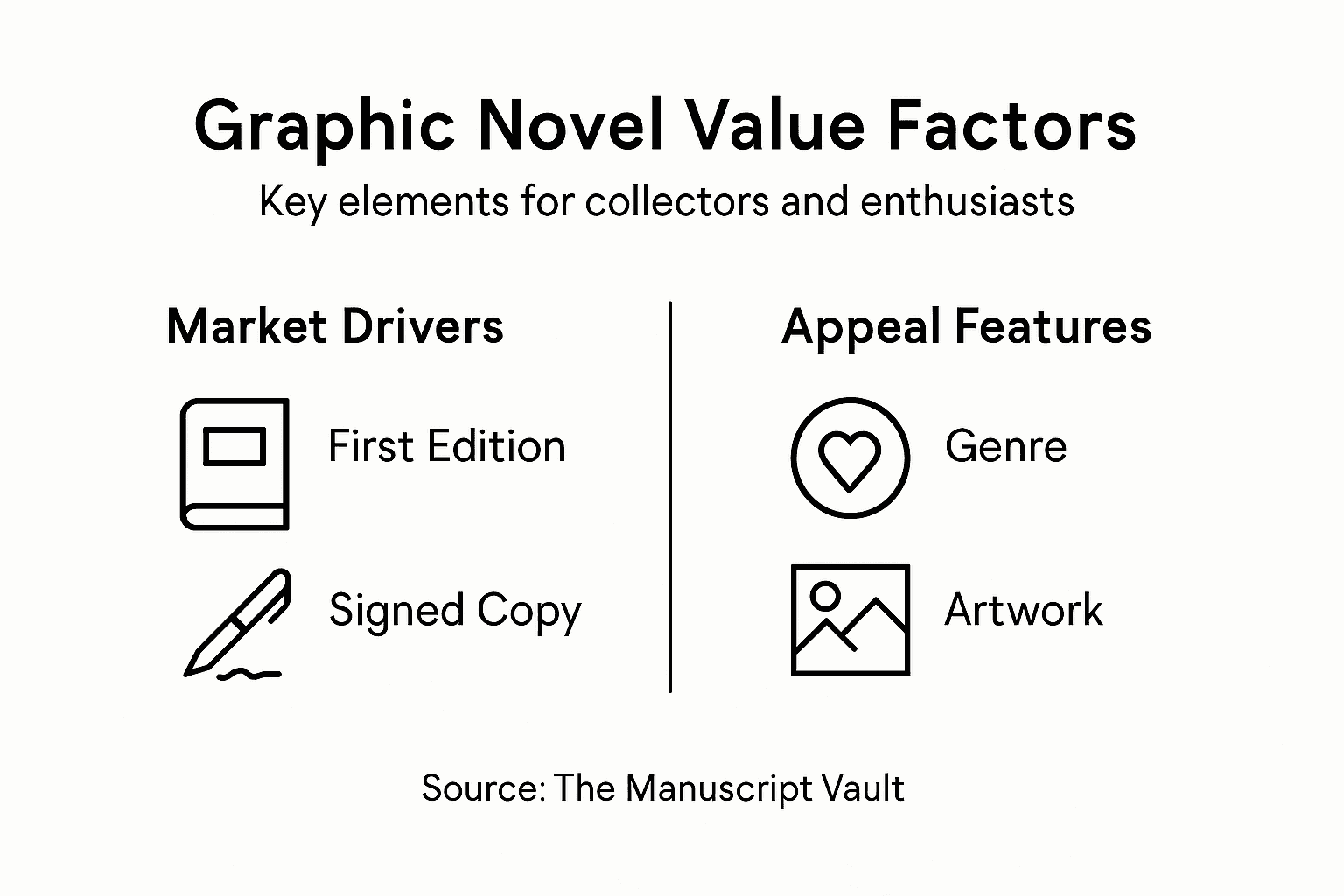
First edition status matters tremendously. An original 1986 printing of Maus commands substantially higher prices than later reprints, even though the story remains identical. Limited edition variants, signed copies, and artist-specific printings create tiered value hierarchies. Condition assessment parallels rare book collecting, with mint copies fetching premiums over read copies. This specificity rewards collectors who understand printing history and edition variations.
Genre preferences drive market segments predictably. Superhero narratives maintain consistent demand, while horror and memoir categories show rapidly expanding collector interest. The graphic novel market shows steady growth driven by expanding consumer interest across digital and print formats, particularly in Asia-Pacific and North American regions. This segmentation means value depends partly on category popularity, not just artistic merit.
Academic legitimization influenced collectibility dramatically. Graphic novels have become recognized as legitimate literature with increasing support from scholarly research, reflected in library acquisition policies and reader engagement patterns. Museums and universities purchasing works for permanent collections created sustained demand, stabilizing prices for canonical titles. This institutional validation signals staying power to collectors considering long-term holdings.
Authenticity and provenance matter increasingly. Signed copies, original artwork, and limited printings command premiums, but verification becomes crucial as counterfeits emerge. Certificates of authenticity and purchase from reputable dealers protect your investment. Self-published works from independent creators represent emerging opportunities, though they carry valuation uncertainty.
Digital distribution and self-publishing innovations create market complexity. Traditional publisher releases compete with crowdfunded projects and digital-only content. This fragmentation means some works become scarcer and more valuable, while others flood the market. Collectors must distinguish between genuinely limited runs and artificially inflated scarcity claims.
Pro tip: Purchase graphic novels from established publishers or verified independent creators with transparent print runs, focusing on works already recognized by major awards or academic institutions to minimize valuation risk.
Discover and Collect Graphic Novels That Define Art and Storytelling
The journey through the artistry and impact of graphic novels reveals a world where narrative depth meets visual mastery. If you are seeking cohesive, intentional stories that transcend mere format and demand emotional connection and artistic appreciation this is your moment to explore curated selections tailored to your collector’s passion. Understand the evolution, genres, and unique storytelling techniques discussed in the article and bring those insights to life with exclusive pieces from independent artists and established creators alike.
Elevate your collection with graphic novels that truly embody narrative substance and artistic innovation. Visit The Mansion Press now to browse limited editions, first prints, and original artworks that match the high standards detailed in the article. Don’t miss the opportunity to own collectible works validated by artistic merit and cultural significance. Start your journey by exploring artist showcases and handpicked collections crafted for discerning readers and collectors seeking more than just books—they seek living art. Act now to secure your place among passionate graphic novel enthusiasts.
Frequently Asked Questions
What distinguishes a graphic novel from a comic book?
A graphic novel is a complete narrative work that combines sequential art with text, typically showcasing greater thematic depth and complexity compared to a comic book, which may consist of episodic stories or shorter narratives.
How do I assess the artistic merit of a graphic novel?
When evaluating a graphic novel, consider the narrative cohesion, artistic style, character development, and emotional impact. Reading sample pages can help you determine if the work offers a complete and intentional story.
What genres are commonly found within graphic novels?
Graphic novels encompass a wide array of genres beyond superheroes, including crime, mystery, autobiographical accounts, education, horror, and documentary formats, each offering unique storytelling techniques and artistic styles.
How has the perception of graphic novels evolved over time?
Graphic novels have transitioned from being seen as children’s entertainment to recognized works of literature, influenced by academic acceptance, diverse storytelling, and increased visibility in art culture. This evolution highlights their legitimacy as an art form and expands their audience base.