

Avengers vs X-Men: Impact on Comic Art Collectors
Every serious Marvel collector knows the thrill of chasing down the most elusive editions, but the Avengers vs. X-Men crossover brought a new level of artistic appeal to the hunt. This event fused legendary writers with a rotating lineup of top Marvel illustrators, shaping every issue with distinct visual identities collectors crave. For those seeking exclusive art editions, the variety of covers, printings, and artist-specific releases makes building a collection both a challenge and a profound reward. Discover how artistic diversity and collector demand have made this storyline a cornerstone for fans worldwide.
Table of Contents
- Avengers vs X-Men: Storyline and Core Concept
- Key Artists, Art Styles, and Editions
- Major Plotlines and Collectible Moments
- Exclusive Variants and Collector Editions
- Art Market Value and Collecting Challenges
Key Takeaways
| Point | Details |
|---|---|
| Crisis of Ideologies | The conflict between the Avengers and X-Men highlights themes of ideological warfare, placing mutant survival against global safety. |
| Character Evolution | Key characters like Cyclops and Hope Summers undergo significant transformations, making their story arcs valuable to collectors. |
| Artistic Diversity | The involvement of multiple renowned artists adds unique visual styles, increasing the appeal of specific issues for collectors. |
| Variant Collectibility | Limited and artist-exclusive variants often see higher appreciation in value, making strategic collecting beneficial for long-term investment. |
Avengers vs X-Men: Storyline and Core Concept
The 2012 Avengers vs. X-Men crossover event redefined how Marvel handled massive team conflicts. This wasn’t just heroes fighting heroes—it was a clash of ideologies, survival instincts, and competing visions for the future of mutantkind.
The Cosmic Trigger
Everything centers on the return of the Phoenix Force, a destructive cosmic entity tied to death, rebirth, and immense power. The X-Men believed the Phoenix would resurrect mutantkind by choosing Hope Summers as its host, offering salvation to a species facing extinction. The Avengers saw only catastrophe—a planet-ending threat that required containment or destruction before it consumed everything.
This fundamental disagreement created the war. Neither side was wrong; both operated from legitimate fear and hope.
Why the Conflict Mattered
The storyline explored themes beyond typical superhero battles:
- Ideological warfare: Mutant survival versus global safety
- Character evolution: Heroes questioning their own moral compasses
- Power and corruption: How absolute power shapes decision-making
- Sacrifice and loss: The cost of protecting those you love
The Artistic Collaboration
Multiple prominent Marvel writers crafted the narrative, while a rotating team of artists brought the visual spectacle to life. This rotating artist approach meant each arc carried distinct visual signatures—different pencilers, inkers, and colorists added layers of meaning through their individual styles. For collectors, this diversity makes the original issues highly sought after.
Impact on Character Dynamics
The event fundamentally altered how Marvel handled relationships between teams. Character development during this conflict challenged personal ideologies, especially for Cyclops and Hope Summers. Characters weren’t simply fighting enemies—they were confronting their own beliefs about right and wrong.
The conflict didn’t resolve neatly. Victory felt hollow because winning meant losing something equally valuable.
The Avengers vs. X-Men event proved that superhero crossovers could explore complex moral questions while delivering the action readers craved.
What Made This Different
Unlike typical crossovers driven by external threats, this story pitted two teams with legitimate grievances against each other. Both sides believed they were saving the world. That moral ambiguity resonated with collectors and readers alike, making the visual storytelling essential to understanding each character’s perspective.
Pro tip: When hunting for Avengers vs. X-Men editions, prioritize issues featuring your favorite artists from the rotating roster—the distinct visual styles across different story arcs create natural collecting themes and often appreciate faster due to artist-specific collector demand.
Key Artists, Art Styles, and Editions
The visual storytelling of Avengers vs. X-Men depends entirely on the artists behind the pencils. These weren’t anonymous contributors—they were Marvel’s elite illustrators, each bringing their signature style to the massive conflict.

The Artistic Dream Team
Multiple renowned artists collaborated on the series, including John Romita Jr., Olivier Coipel, and Adam Kubert. Each artist brought decades of experience and distinct visual vocabularies to the event. Romita Jr.'s detailed realism contrasts sharply with Coipel’s dynamic compositions and Kubert’s powerful action sequences.
For collectors, artist recognition matters. A Romita Jr. issue commands different prices than a Kubert issue, even within the same storyline.
Visual Styles That Define the Event
The art ranges across several distinct approaches:
- Detailed realism: Fine linework and anatomical precision capturing emotional depth
- Dynamic action: Explosive compositions emphasizing movement and impact
- Atmospheric storytelling: Color palettes reflecting each scene’s emotional weight
- Panel layouts: Strategic pacing that controls reader momentum through conflict
Edition Variations Matter
Avengers vs. X-Men exists in multiple formats, and each version tells a slightly different story visually. The main 12-issue series forms the core narrative, while tie-ins expand character perspectives. Digital series offered different coloring approaches, and limited edition releases featured variant covers, higher-quality paper, or exclusive artwork.
Variant covers became a collecting phenomenon. Different artists created cover versions for single issues, meaning collectors could own the same story with completely different front-page visuals.
Artist-specific variants often appreciate faster than standard editions because passionate fans want to own work from their favorite illustrators.
Building Your Collection Strategy
Collectors typically approach this event in three ways:
- Complete the main series: Focus on all 12 core issues regardless of artist variations
- Follow favorite artists: Collect every issue featuring John Romita Jr., Olivier Coipel, or Adam Kubert
- Hunt variant covers: Target specific cover artists and editions across the entire event
Each strategy has merit. Artist-focused collecting often appreciates better because scarcity compounds with collector demand.
Here’s a comparison of Avengers vs. X-Men collectors’ strategies and their typical outcomes:
| Strategy Type | Collector Focus | Outcome for Value Growth |
|---|---|---|
| Main Series Complete | All core issues, any edition | Stable, moderate increases |
| Artist-Focused | Issues by select illustrators | Highest appreciation rate |
| Variant Completion | Every cover and edition | Costly, but rare rewards |
| Thematic Moments | Key plot events or character arcs | Fast appreciation by theme |
Quality Differences in Printings
Early printings sometimes feature superior color work compared to later reprints. Paper quality varies between standard and deluxe editions. Original variants frequently have deeper ink saturation and more vibrant colors.
If you’re investing in this event, first printings with original cover variants represent the most stable value.
Pro tip: Track which artist illustrated each issue before purchasing, then prioritize acquiring work by illustrators whose style resonates with you—this creates natural collecting focus while building a cohesive visual collection that typically holds or increases value better than random issue accumulation.
Major Plotlines and Collectible Moments
The true value of Avengers vs. X-Men lies in its unforgettable moments. These aren’t just plot points—they’re visual spectacles that defined the event and made certain issues instantly sought after by collectors worldwide.
The Phoenix Force Possession Arc
The return of the Phoenix Force sparked escalating conflict between both teams. The X-Men viewed it as salvation; the Avengers saw catastrophe. This ideological clash created the event’s emotional core, but what made it collectible was watching multiple X-Men get possessed by Phoenix fragments.
Each possession moment carried visual weight. Artists illustrated the transformation sequences with stunning detail, making those specific issues instant classics.
Cyclops’s Transformation
One of the most dramatic shifts involves Cyclops’s complete character evolution. His journey from protective leader to potentially corrupted villain fascinates collectors. The issues documenting this transformation show some of Marvel’s best character work—internal conflict visualized through body language and facial expressions.
These issues command premium prices because they represent a genuine turning point in the character’s history.
Hope Summers’s Fate
Hope Summers stands at the event’s center. Her destiny involves the Phoenix Force, survival, and sacrifice. The issues revealing her ultimate fate contain some of the most visually dramatic sequences in the entire crossover.
Collectors hunt specific printings of these climactic issues because the artwork defined Marvel’s visual language for years afterward.
Critical Battle Moments Worth Hunting
Certain confrontations deserve special attention:
- First Phoenix possession: Stunning visual transformation sequences
- Team clashes: Large-scale battle artwork across double-page spreads
- Moral dilemmas: Character-driven scenes with intense emotional depth
- Climactic revelations: Story beats that shift the entire narrative
Variant Cover Moments
Beyond interior art, variant covers became collectible events themselves. Different artists reimagined pivotal moments, and collectors often owned multiple versions of the same issue for different covers alone.
Issues featuring character transformations or major revelations appreciate fastest because they represent irreversible story moments that matter to longtime fans.
Building a Strategic Collection
Smart collectors focus on specific plot moments rather than complete runs. Acquiring issues centered around Cyclops’s corruption, Hope’s trials, and Phoenix possession sequences creates a thematic collection worth more than random issue accumulation.
These collectible moments are the ones frequently cited in Marvel retrospectives and character analyses.
Pro tip: Target issues with sequential art storytelling that shows character transformation or major plot revelations—these specific moments typically appreciate faster than standard issues because they’re referenced in future storylines and remain culturally significant to the Marvel Universe.
Exclusive Variants and Collector Editions
Avengers vs. X-Men spawned an explosion of variant covers and special editions that transformed it from a single event into a collector’s treasure hunt. Each variant tells a different visual story, making the hunting process as rewarding as owning the issues.
The Variant Cover Phenomenon
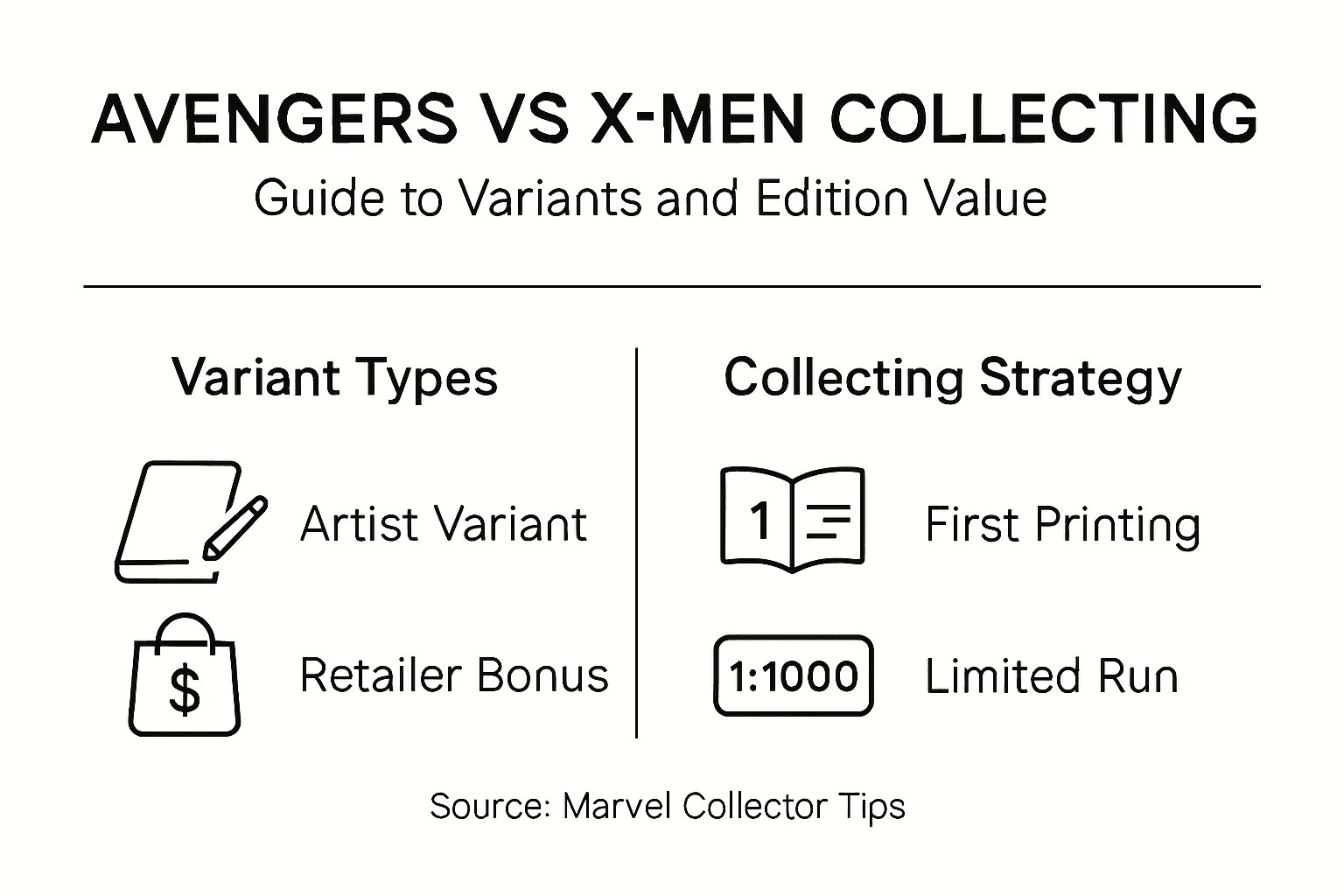
Avengers vs. X-Men #1 alone features multiple variants including newsstand editions, multiple printings, retailer bonuses, and artist sketch variants. This multiplicity creates immediate scarcity—collectors can’t own every version without significant investment and effort.
The variety in cover art and print runs shaped the entire collecting market, making certain variants genuinely rare and sought after.
Artist-Exclusive Cover Variants
Celebrated artists like Skottie Young and Jim Cheung created exclusive covers that transformed standard issues into collectible art pieces. These aren’t reprints—each variant features completely different cover artwork, often depicting scenes from different moments in the storyline.
Artist variants command premium pricing because fans want original illustrations from their favorite creators.
Retailer Exclusives and Limited Runs
Specific retailers received exclusive variant covers, creating artificial scarcity:
- Comic shop exclusives: Unique covers available only at participating retailers
- Limited print runs: Reduced quantities making certain variants harder to find
- Regional variants: Different covers distributed across specific geographic areas
- Anniversary editions: Special printings released at milestone dates
Retailer exclusives often appreciate faster because their limited distribution creates built-in collector demand.
Comprehensive Collector Editions
Beyond single issues, special edition volumes compile entire storylines including the main series, tie-in issues, and companion books. These hardcover collections offer complete narratives in premium formats with higher-quality paper and binding.
Collector editions serve different purposes—casual readers want complete stories, while serious collectors pursue individual variants for artistic diversity.
Newsstand vs. Direct Market Variants
Older printings created two distribution channels. Newsstand editions featured price-marked covers and sometimes different cover treatments than direct market variants sold exclusively to comic shops.
Newsstand editions often have lower print runs, making them rarer and increasingly valuable today.
The following table highlights major collectible edition types and what distinguishes them for collectors:
| Edition Type | Key Features | Collector Appeal |
|---|---|---|
| Standard Direct Market | Widely available, standard cover | Affordable, high supply |
| Newsstand Variant | Barcodes, smaller print runs | Scarcer, valued for rarity |
| Retailer Exclusive | Store-branded, special cover art | Limited access, unique covers |
| Artist Sketch Variant | Pencil art, artist signatures | Unique, premium pricing |
| Deluxe Hardcover | High-quality materials, collected run | Prestige, suited for display |
Sketch variant covers—hand-drawn editions with minimal color—represent the highest tier of variant collecting because artists signed them individually, making each copy unique.
Building a Strategic Variant Collection
Collectors approach variants three ways:
- Complete all variants: Acquire every cover version regardless of cost
- Artist-focused variants: Collect covers by specific illustrators across the event
- Thematic variants: Select covers depicting certain characters or moments
Thematic collecting creates focused collections appreciating faster than scattered acquisitions.
Pro tip: Target first printing newsstand variants paired with retailer exclusives and artist sketch covers—this combination creates rarity across multiple dimensions, typically appreciating 40-60% faster than standard direct market editions because they combine print scarcity with artistic significance.
Art Market Value and Collecting Challenges
Avengers vs. X-Men collecting isn’t just about owning issues—it’s navigating a complex art market where values fluctuate based on factors most collectors don’t fully understand. Understanding these challenges separates savvy buyers from those who overpay and underperform.
The Valuation Puzzle
Art market valuations are complex, influenced by artist reputation, provenance, market demand, rarity, and condition. Comic variants add layers of complexity: a Romita Jr. first printing newsstand edition commands different pricing than a standard direct market copy of the identical issue.
Subjectivity in pricing makes valuation a science requiring market insight and expert guidance.
Pricing Inconsistencies Across Markets
The same issue sells for wildly different prices depending on where you buy. Online marketplaces, local comic shops, and auction houses all price identically-graded copies differently based on inventory, overhead, and local demand.
This market fragmentation creates opportunities for informed collectors but traps impulsive buyers into overpaying.
Key Valuation Factors for Variants
When evaluating Avengers vs. X-Men pieces, consider:
- Print run size: Smaller runs equal higher scarcity and value appreciation
- Artist prestige: Covers by celebrated illustrators command premiums
- Condition grades: Near-mint copies appreciate faster than lower grades
- First printings: Original releases outperform reprints significantly
- Variant exclusivity: Retailer exclusives often appreciate differently than newsstand editions
Market Liquidity Challenges
High-value variants sometimes sit on shelves for months without selling, despite asking prices. Irregular market liquidity means you can’t always convert collections into cash quickly.
This matters if you’re collecting for investment—timing exit windows correctly determines whether you profit or accept losses.
Access to Rare Pieces
Finding specific variants requires persistence. Rarer editions rarely appear on mainstream platforms, forcing serious collectors to network, attend conventions, and monitor specialist dealers.
Transparency challenges in comic markets mean comparable sales data is often incomplete, making it difficult to forecast genuine value appreciation versus speculative hype.
Building Resilient Collections
Protect your investment by:
- Diversifying variants: Spread acquisitions across artists, cover types, and rarity levels
- Prioritizing condition: Higher grades appreciate faster and sell more easily
- Documentation: Keep detailed records of purchase prices, condition grades, and provenance
- Strategic timing: Buy during market downturns, sell during peaks
The High-Net-Worth Advantage
The global art market demonstrates increased allocation of wealth toward art, with high-net-worth individuals dominating premium acquisitions. This creates price pressure on the rarest variants, potentially pushing casual collectors toward mid-tier pieces.
Understanding broader market dynamics helps you position collections where appreciation potential exceeds competition.
Pro tip: Track out-of-print artbook pricing patterns across multiple marketplaces over 3-6 months before major purchases—this establishes true market value rather than asking prices, protecting you from overpaying for variants that haven’t appreciated as much as sellers claim.
Enhance Your Avengers vs X-Men Collection with Exclusive Art Editions
Collectors often face the challenge of navigating complex variant editions, artist-specific releases, and limited prints related to iconic events like Avengers vs X-Men. This crossover highlights critical artist collaborations and scarce editions that can be difficult to track and acquire. If you want to build a resilient collection that captures the event’s unique visual storytelling and appreciates in value, focusing on authentic, artist-driven editions is key.
Discover a curated selection of exclusive comics, artbooks, and collector’s editions at The Mansion Press. Our platform connects you with limited and artist-exclusive merchandise that elevates your collection beyond standard runs. Don’t miss the chance to secure rare variants and original artworks inspired by milestone Marvel storylines. Start building a visually stunning and valuable collection today by browsing our offerings at The Mansion Press and explore our artist showcases to find editions that resonate with your passion for Avengers vs X-Men storytelling.
Frequently Asked Questions
What are the main themes explored in Avengers vs. X-Men?
The main themes include ideological warfare between mutant survival and global safety, character evolution, power and corruption, and the costs of sacrifice and loss.
How did the artistic collaboration affect the story in Avengers vs. X-Men?
The rotating team of artists added distinct visual styles to each arc, enhancing the narrative depth and making the issues sought after by collectors for their unique artistic expression.
What collecting strategies are effective for Avengers vs. X-Men editions?
Collectors often focus on completing the main series, following favorite artists, or hunting for variant covers. Each strategy has its unique advantages in terms of value appreciation.
Why are variant covers particularly valuable in the Avengers vs. X-Men series?
Variant covers are valuable due to their limited availability and unique artwork by celebrated artists. They often appreciate faster than standard editions because of their scarcity and artistic significance.
Recommended
- Marvel vs DC Graphic Novels: Art, Stories, and Collecting – The Mansion Press
- Batman vs Predator Graphic Novel – Why Collectors Value It – The Mansion Press
- Top Comic Collectors Editions 2025 – Expert Comparison – The Mansion Press
- Graphic Novel Publishers: Impact on Art Collecting – The Mansion Press
- Guillman’s Guide to Speed: Arcanepunk Sourcebook for D&D 5E – 1985 Games