

Sequential Art: How Visual Storytelling Shapes Collections
Most people underestimate the complexity behind sequential art, with many mistaking it for simple comics rather than a sophisticated visual language. For american collectors and indie art enthusiasts, recognizing how artists combine imagery and text unlocks a deeper world of creativity and collectible value. Influential figures like Will Eisner and Scott McCloud transformed this art form into a global phenomenon, offering techniques and history that help you choose and appreciate rare, meaningful sequential art pieces.
Table of Contents
- Sequential Art Defined and Misunderstood
- Major Types and Key Distinctions
- Visual Storytelling Techniques Explained
- Collecting Sequential Art: What Matters Most
- Comparing Sequential Art to Other Art Forms
Key Takeaways
| Point | Details |
|---|---|
| Sequential Art is a Unique Medium | It combines visual imagery and text to convey complex narratives, engaging viewers on multiple levels. |
| Historical Context is Crucial | Understanding its roots, from hieroglyphics to contemporary forms, enriches appreciation and analysis. |
| Storytelling Techniques Matter | Artists use strategic panel layouts and visual elements to create meaning beyond the text, enhancing emotional impact. |
| Collecting Requires Knowledge | Collectors should focus on rarity, authenticity, and artistic innovation to build meaningful collections. |
Sequential Art Defined and Misunderstood
Sequential art represents a sophisticated storytelling medium that transcends traditional narrative boundaries. Far more than simple comic strips, this art form combines visual imagery and textual elements to communicate complex narratives and emotional landscapes. Sequential art utilizes strategic image arrangement to convey meaning, a concept pioneered by influential theorists like Will Eisner and Scott McCloud who recognized its profound communicative potential.
Originally conceptualized through graphic novels, comics, and illustrated narratives, sequential art has deep historical roots extending back to early visual communication forms like Egyptian hieroglyphics and medieval illuminated manuscripts. Cultural storytelling through carefully sequenced visual elements demonstrates the medium’s rich narrative complexity, allowing artists to explore themes ranging from personal identity to broader sociopolitical commentary.
Understanding sequential art requires recognizing its unique language of visual syntax. Artists strategically manipulate panel layouts, perspective shifts, graphic styles, and narrative pacing to generate meaning beyond literal representation. Unlike traditional linear storytelling, sequential art allows simultaneous emotional and intellectual engagement, inviting viewers to interpret visual narratives through their individual perspectives and cultural contexts.
Pro tip: When exploring sequential art collections, pay attention to how artists use panel transitions, visual metaphors, and graphic techniques to create nuanced storytelling experiences.
Major Types and Key Distinctions
Sequential art represents a diverse and expansive medium with multiple forms that have emerged across different cultural and historical contexts. The spectrum of sequential art extends from ancient visual communication to contemporary narrative techniques, encompassing a rich variety of artistic expressions that share fundamental storytelling principles.
Traditional forms of sequential art include comics, graphic novels, illuminated manuscripts, tapestries, and sculptural narratives. Each type carries unique characteristics that distinguish its narrative approach. Comics typically feature serialized storytelling with episodic panels, while graphic novels offer more comprehensive narrative arcs. Illuminated manuscripts represent early European examples of visual storytelling, combining intricate illustrations with textual elements to convey religious and historical narratives.

Modern sequential art types demonstrate significant variations in complexity, cultural reception, and artistic intention, reflecting broader societal shifts. Contemporary artists increasingly challenge traditional boundaries, creating hybrid forms that blend digital media, traditional illustration, and interactive storytelling techniques. These evolving forms highlight sequential art’s dynamic nature as a communicative and expressive medium.
Pro tip: Explore multiple sequential art forms to appreciate the nuanced ways artists communicate complex narratives through visual storytelling.
Here’s a summary comparing major forms of sequential art and what makes each unique:
| Form | Key Features | Typical Themes |
|---|---|---|
| Comics | Serial panels, stylized art | Humor, action, adventure |
| Graphic Novels | Extended narrative, complex art | Drama, biography, history |
| Illuminated Manuscripts | Ornate visuals, hand lettered | Religion, mythology |
| Tapestries | Woven images, episodic scenes | History, legends |
| Sculptural Narratives | Carved sequences, relief work | Myth, societal events |
Visual Storytelling Techniques Explained
Sequential art techniques transform narrative communication through sophisticated visual strategies that guide readers through complex emotional and narrative landscapes. Artists manipulate panel composition, visual hierarchy, and spatial relationships to create immersive storytelling experiences that transcend traditional linear narrative structures.
Panel design serves as the fundamental building block of visual storytelling. Each panel represents a specific moment, capturing action, emotion, or narrative progression through carefully selected visual elements. Artists strategically use size, shape, and placement to control pacing and emphasize critical story beats. Wider panels suggest expansive moments, while smaller, tightly framed panels can create tension or highlight intimate details.
The interplay between visual elements like color, perspective, and composition enables artists to communicate complex narratives without relying solely on text. Color palettes can evoke emotional states, perspective shifts can disorient or reframe viewer understanding, and compositional techniques like diagonal lines or negative space can suggest movement, conflict, or psychological states. These nuanced visual language components allow sequential artists to create multilayered narrative experiences that engage readers on intellectual and emotional levels.
Pro tip: When analyzing sequential art, pay attention to how artists use panel transitions, visual metaphors, and compositional techniques to communicate complex narrative information.
Collecting Sequential Art: What Matters Most
Collecting sequential art requires a nuanced understanding of the medium’s complex cultural and artistic dimensions, extending far beyond simple acquisition of physical objects. Successful collectors approach their craft as a form of cultural preservation, recognizing each piece as a potential historical artifact that represents specific artistic movements, narrative innovations, and social commentaries.
The core criteria for meaningful sequential art collection involve multiple sophisticated considerations. Rarity matters, but not exclusively. Collectors should prioritize works that demonstrate significant artistic innovation, represent distinctive narrative techniques, or capture critical moments in visual storytelling evolution. First editions, limited print runs, and works by groundbreaking artists who challenged conventional storytelling methods become particularly valuable, transcending mere monetary worth.
Authenticity and preservation represent crucial aspects of sequential art collecting. Professional collectors meticulously evaluate artwork condition, original printing details, creator signatures, and historical context. They understand that a well-preserved piece maintains not just its physical integrity but also its potential for academic and artistic research. Some collectors focus on specific genres, artistic movements, or regional styles, developing deep expertise that transforms their collections into comprehensive cultural archives.
Pro tip: Develop relationships with reputable dealers and attend specialized art conventions to discover unique sequential art pieces that might not be available through traditional market channels.
Comparing Sequential Art to Other Art Forms
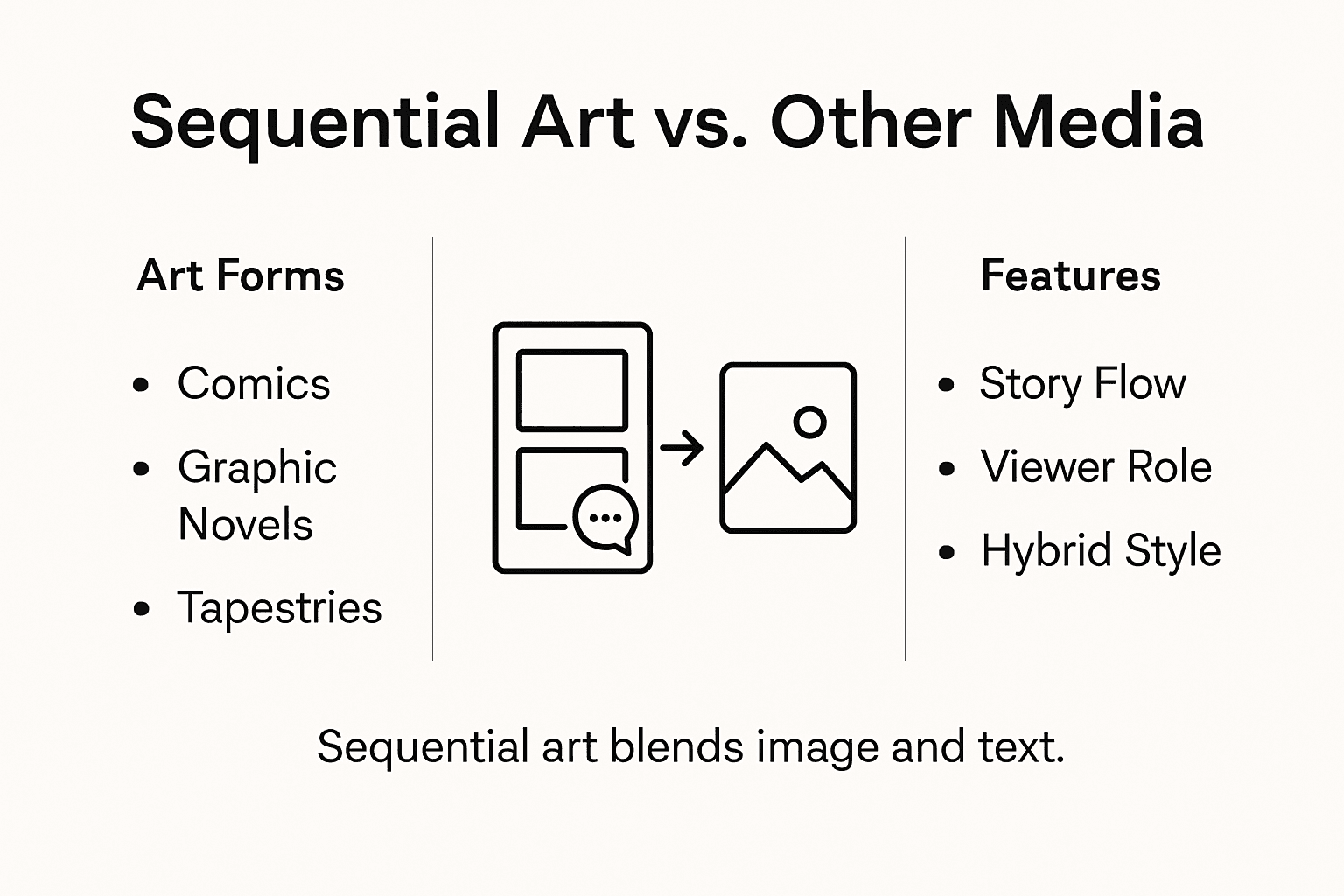
Sequential art represents a unique narrative medium that transcends traditional artistic boundaries, offering a dynamic storytelling approach that fundamentally differs from static visual arts or linear textual narratives. Unlike paintings that capture a single moment or novels that rely exclusively on written language, sequential art weaves visual and verbal components into a rich, multilayered communication form that engages viewers through temporal progression and spatial composition.
Whereas traditional visual arts like painting or sculpture focus on capturing a singular aesthetic moment, and literature depends solely on textual description, sequential art creates meaning through the strategic arrangement of images and occasional text. This approach allows for complex narrative techniques that can communicate emotional nuance, social commentary, and intricate storylines through carefully constructed visual sequences. The juxtaposition of panels creates narrative rhythm, allowing artists to manipulate time, perspective, and emotional resonance in ways unavailable to other artistic mediums.
The hybridization of visual and narrative elements makes sequential art particularly powerful. It can simultaneously function as graphic design, visual storytelling, and cultural commentary, offering a more immersive and interpretive experience than traditional art forms. By combining visual symbolism, graphic design principles, and narrative structure, sequential art enables creators to explore complex themes with a depth and flexibility that transcends the limitations of single-medium artistic expressions.
Pro tip: Develop a critical eye by comparing sequential art pieces across different cultural contexts to understand how visual narrative techniques vary and evolve.
The table below distinguishes how sequential art storytelling techniques compare to traditional visual arts and literature:
| Medium | Narrative Structure | Viewer Engagement Style |
|---|---|---|
| Sequential Art | Visual sequence and panels | Interactive, interpretive |
| Painting | Single static moment | Immediate, observational |
| Literature | Linear textual progression | Imaginative, inferential |
Elevate Your Sequential Art Collection with Exclusive Finds
Sequential art challenges collectors with its complex visual narratives and deep cultural significance. Your passion for understanding panel design, visual storytelling techniques, and the unique blend of text and imagery deserves access to exceptional, carefully curated works that honor these sophisticated elements. Discover rare artbooks, limited edition comics, and original pieces that capture the essence of sequential art’s evolving language.
Explore a handpicked selection designed for serious art enthusiasts only at The Mansion Press. Don’t miss your chance to own exclusive pieces that reflect the dynamic storytelling strategies highlighted in this article. Visit the artist showcases to connect directly with creators pushing the boundaries of sequential art. Act now and transform your collection into a rich archive of innovation and visual mastery.
Frequently Asked Questions
What is sequential art?
Sequential art is a storytelling medium that combines visual imagery and text to convey complex narratives and emotions, utilizing strategic image arrangement to enhance communication.
How does one analyze sequential art effectively?
To analyze sequential art, pay attention to the use of panel transitions, visual metaphors, colors, and composition techniques that artists utilize to convey nuanced storytelling experiences.
What distinguishes comics from graphic novels in sequential art?
Comics typically feature serialized and episodic storytelling with stylized art, while graphic novels offer more comprehensive narratives with complex character development and themes.
Why is the preservation of sequential art important for collectors?
Preservation is crucial for collectors as it maintains the physical integrity and historical context of the artwork, ensuring its potential for academic and artistic research remains intact.