

Graphic Novel Publishers: Impact on Art Collecting
Finding truly original graphic novels can feel like chasing inspiration in a crowded room of sameness. For anyone seeking stories that combine visual artistry with deep narrative, the choice of publisher makes all the difference. This overview spotlights the unique narrative complexity and artistic innovation that define graphic novel publishers, offering guidance so you can discover standout works and support emerging creative voices from across the globe.
Table of Contents
- What Defines A Graphic Novel Publisher
- Major Types Of Graphic Novel Publishers
- How Graphic Novel Publishing Works
- Independent Publishing And Self-Publishing Trends
- Key Rights, Distribution, And Artist Collaborations
- Risks, Costs, And Common Mistakes To Avoid
Key Takeaways
| Point | Details |
|---|---|
| Graphic Novel Publishers Focus on Storytelling | They prioritize long-form narratives that blend visual art with literary elements, distinguishing themselves from traditional comic book formats. |
| Variety in Publisher Types | The graphic novel industry includes mainstream commercial publishers and independent presses, each serving different artistic and commercial needs. |
| Publishing Process Requires Collaboration | Successful graphic novel publishing relies on a coordinated effort among writers, artists, editors, and production specialists at each stage of development. |
| Independent Publishing is Growing | Digital tools are enhancing self-publishing opportunities, allowing creators to reach audiences directly while maintaining creative control. |
What Defines a Graphic Novel Publisher
Graphic novel publishers represent a specialized segment of the publishing industry dedicated to producing literary works that merge visual art with narrative storytelling. Narrative complexity distinguishes their publications beyond traditional comic book formats, emphasizing long-form, self-contained storytelling that transcends serialized comic production.
These publishers differ fundamentally from standard comic book distributors by prioritizing graphic novels as complete literary works. They typically focus on standalone books with sophisticated storytelling techniques, comprehensive narrative arcs, and high production values. The defining characteristics include selecting manuscripts that demonstrate artistic merit, narrative depth, and innovative visual storytelling approaches that challenge conventional graphic storytelling boundaries.
Graphic novel publishers are characterized by several key attributes:
- Producing book-length works with complete narrative structures
- Emphasizing artistic quality and literary sophistication
- Curating works that represent diverse storytelling perspectives
- Maintaining high editorial and production standards
Pro tip: When evaluating graphic novel publishers, examine their catalog’s thematic diversity and commitment to pushing artistic boundaries beyond traditional comic book formats.
Major Types of Graphic Novel Publishers
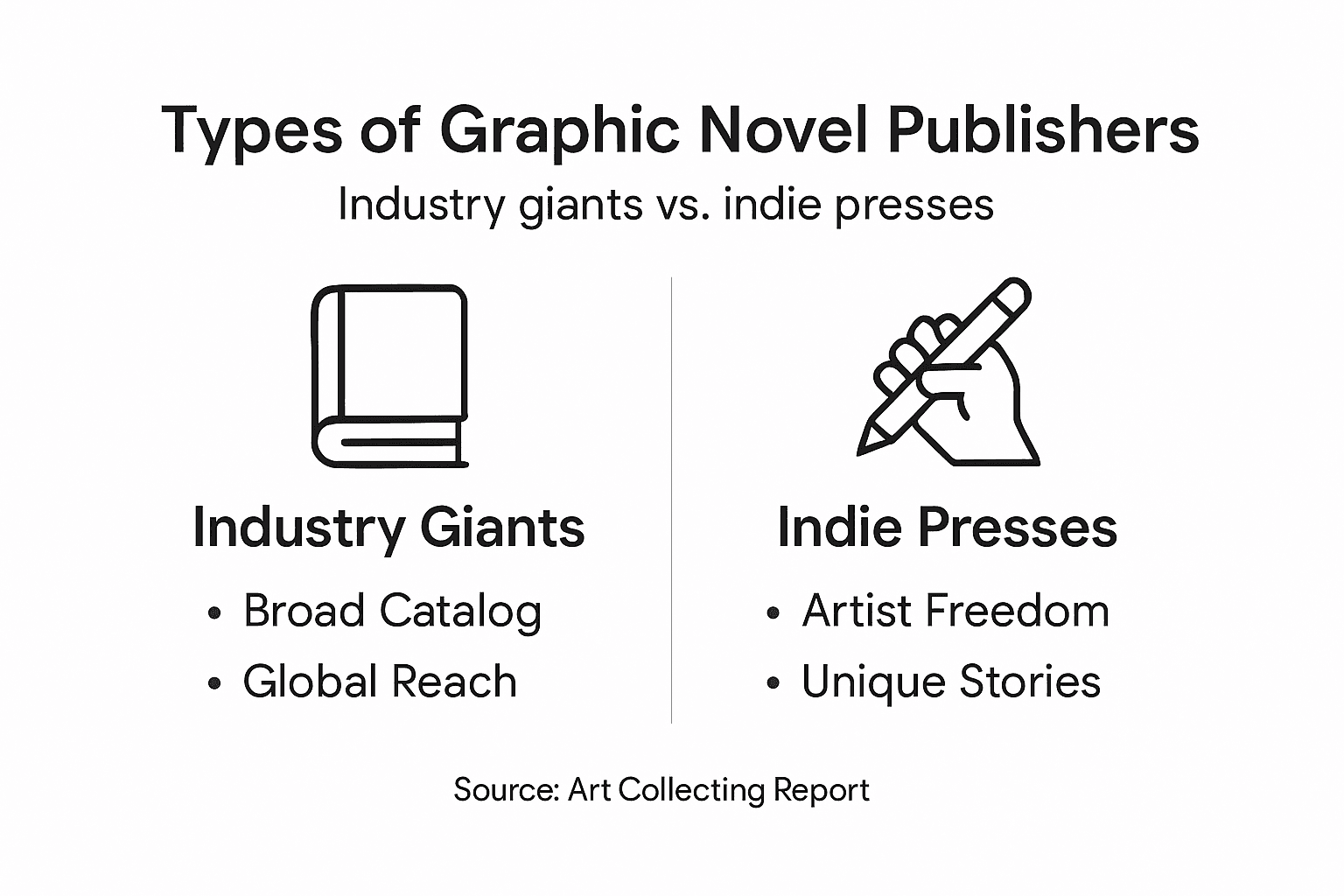
Graphic novel publishers represent a diverse ecosystem ranging from massive industry giants to niche independent presses. Major publishing categories reflect complex market dynamics with distinct characteristics and audience approaches. The publishing landscape encompasses several critical segments that serve different artistic and commercial objectives.

The primary categories include mainstream commercial publishers like DC Comics and Marvel, which dominate large-scale distribution channels and focus on well-established franchises. These publishers typically handle high-volume production and have extensive marketing networks. In contrast, independent publishers occupy a crucial space, offering platforms for experimental, creator-driven works that might not fit traditional commercial models. Digital and print distribution channels diversify publisher types, allowing for more nuanced content strategies.
Publisher Types in Graphic Novel Market:
- Mainstream Commercial Publishers: Large-scale operations with extensive franchise networks
- Independent Press Publishers: Focus on innovative, niche, and experimental content
- Educational Publishers: Producing graphic novels for academic and learning purposes
- Digital-First Publishers: Specializing in online and digital graphic novel distribution
- Genre-Specific Imprints: Targeting specific narrative styles or thematic content
Pro tip: Collectors should explore multiple publisher types to discover unique graphic novel perspectives and support diverse artistic voices.
Here’s how major graphic novel publisher types differ in their strategies:
| Publisher Type | Artistic Focus | Audience Reach | Key Distribution Method |
|---|---|---|---|
| Mainstream Commercial | Franchises, consistent style | Global, mass-market | Retail, online, bookstores |
| Independent Press | Experimental, creator-driven | Niche, enthusiasts | Indie shops, online, festivals |
| Educational | Learning-focused content | Schools, libraries | Educational wholesalers |
| Digital-First | Online-first, interactive | Global, digital natives | Web platforms, apps |
| Genre-Specific Imprint | Targeted themes or genres | Genre fans | Targeted stores, digital |
How Graphic Novel Publishing Works
Complex collaborative processes define graphic novel publishing, involving multiple creative professionals working in intricate synchronization. The journey from concept to published work requires extensive coordination between writers, artists, editors, and production specialists who transform initial creative vision into a polished final product.
The publication process typically follows a structured workflow that begins with concept development and scriptwriting, then progresses through several critical stages. Artists develop detailed storyboards, illustrate characters and scenes, and collaborate closely with writers to ensure narrative coherence. Graphic novel creation involves multiple production stages, including intricate tasks like character design, panel layout, coloring, and lettering.
Key Publishing Stages:
- Concept Development: Initial storytelling and narrative planning
- Scripting: Detailed writing of narrative and dialogue
- Storyboarding: Visual planning of page layouts and scene progression
- Illustration: Creating detailed artwork for each panel
- Coloring and Lettering: Adding visual depth and textual elements
- Editing and Production: Refining and preparing for publication
Pro tip: Aspiring graphic novel creators should develop strong collaborative skills and understand each stage of the publication process to successfully navigate the complex publishing landscape.
Independent Publishing and Self-Publishing Trends
Digital tools are revolutionizing independent publishing in the graphic novel landscape, empowering creators to bypass traditional publishing barriers. Independent artists now have unprecedented opportunities to produce, distribute, and market their work directly to audiences, fundamentally transforming how graphic novels reach readers worldwide.
The self-publishing market continues expanding rapidly, driven by print-on-demand technologies and online marketplaces that provide creators with flexible distribution channels. Self-publishing platforms support diverse graphic novel markets by reducing financial risks and offering creators greater creative control. These platforms enable graphic novelists to experiment with niche genres, unique storytelling approaches, and innovative design techniques that traditional publishers might consider too experimental.
Key Independent Publishing Characteristics:
- Direct artist-to-audience connection
- Lower financial entry barriers
- Greater creative autonomy
- Faster publication timelines
- Enhanced digital marketing capabilities
- Global distribution opportunities
Pro tip: Research multiple self-publishing platforms and understand their specific submission guidelines to maximize your graphic novel’s potential for successful independent publication.
Key Rights, Distribution, and Artist Collaborations
Graphic novel distribution spans multiple complex channels that require sophisticated legal and creative negotiations. Publishers must carefully navigate intricate rights agreements that protect both artistic integrity and commercial interests, ensuring creators receive fair compensation and maintain appropriate levels of creative control.
The collaborative nature of graphic novel production demands rigorous contractual frameworks that define ownership, revenue sharing, and intellectual property rights. Artist collaboration contracts balance creative and commercial interests by establishing clear parameters for copyright, adaptation rights, and potential derivative works. These agreements are crucial for maintaining professional relationships and providing sustainable pathways for artists to monetize their creative output.
Key Rights and Distribution Considerations:
- Comprehensive copyright protection
- Licensing and adaptation rights
- International distribution strategies
- Digital and physical publishing platforms
- Revenue sharing mechanisms
- Collaborative contract frameworks
Pro tip: Always consult intellectual property legal professionals when drafting graphic novel collaboration agreements to ensure comprehensive protection of artistic and financial interests.
Risks, Costs, and Common Mistakes to Avoid
Self-publishing graphic novels involves substantial financial considerations that can quickly overwhelm unprepared creators. Production expenses can range dramatically based on art complexity, with total costs potentially reaching thousands of dollars. These financial challenges require meticulous planning and strategic budgeting to ensure project viability.
New creators frequently underestimate publishing complexities that extend beyond artistic creation. Common pitfalls include inadequate marketing strategies, poor financial management, and unrealistic expectations about audience reach. Understanding these potential obstacles is crucial for developing a sustainable approach to graphic novel publishing.
Critical Risks and Potential Mistakes:
- Underestimating total production costs
- Neglecting professional editing services
- Insufficient marketing and promotion planning
- Limited distribution channel exploration
- Poor financial budget management
- Unrealistic revenue expectations
- Inadequate audience engagement strategies
Pro tip: Create a comprehensive budget that includes not just production costs, but marketing, distribution, and potential unexpected expenses to maintain financial sustainability in graphic novel publishing.
Below is a quick reference for critical risks and costs in graphic novel self-publishing:
| Risk/Cost Area | Impact on Project | Mitigation Strategy |
|---|---|---|
| Production Expenses | May exceed budget | Plan realistic costs up front |
| Editing and Quality | Lower reader perception | Hire professional editorial support |
| Marketing | Limits audience reach | Build an early promotional plan |
| Distribution Channels | Reduced availability | Diversify online and offline options |
| Audience Engagement | Weak repeat sales | Foster communication, reader events |
| Revenue Forecasting | Financial instability | Set conservative profit predictions |
| Creative Workload | Risk of burnout | Set achievable production schedules |
Discover Exclusive Graphic Novels and Collector’s Editions at The Mansion Press
If you are passionate about graphic novels and understand the challenges creators face with publishing costs, distribution, and protecting artistic rights, The Mansion Press offers a unique solution. Our curated online marketplace connects independent graphic novel artists and publishers directly with discerning collectors and readers who value original, limited-edition artbooks and comics. We understand the importance of supporting diverse voices and innovative storytelling beyond mainstream channels, giving you access to exclusive pieces that often cannot be found in traditional stores.
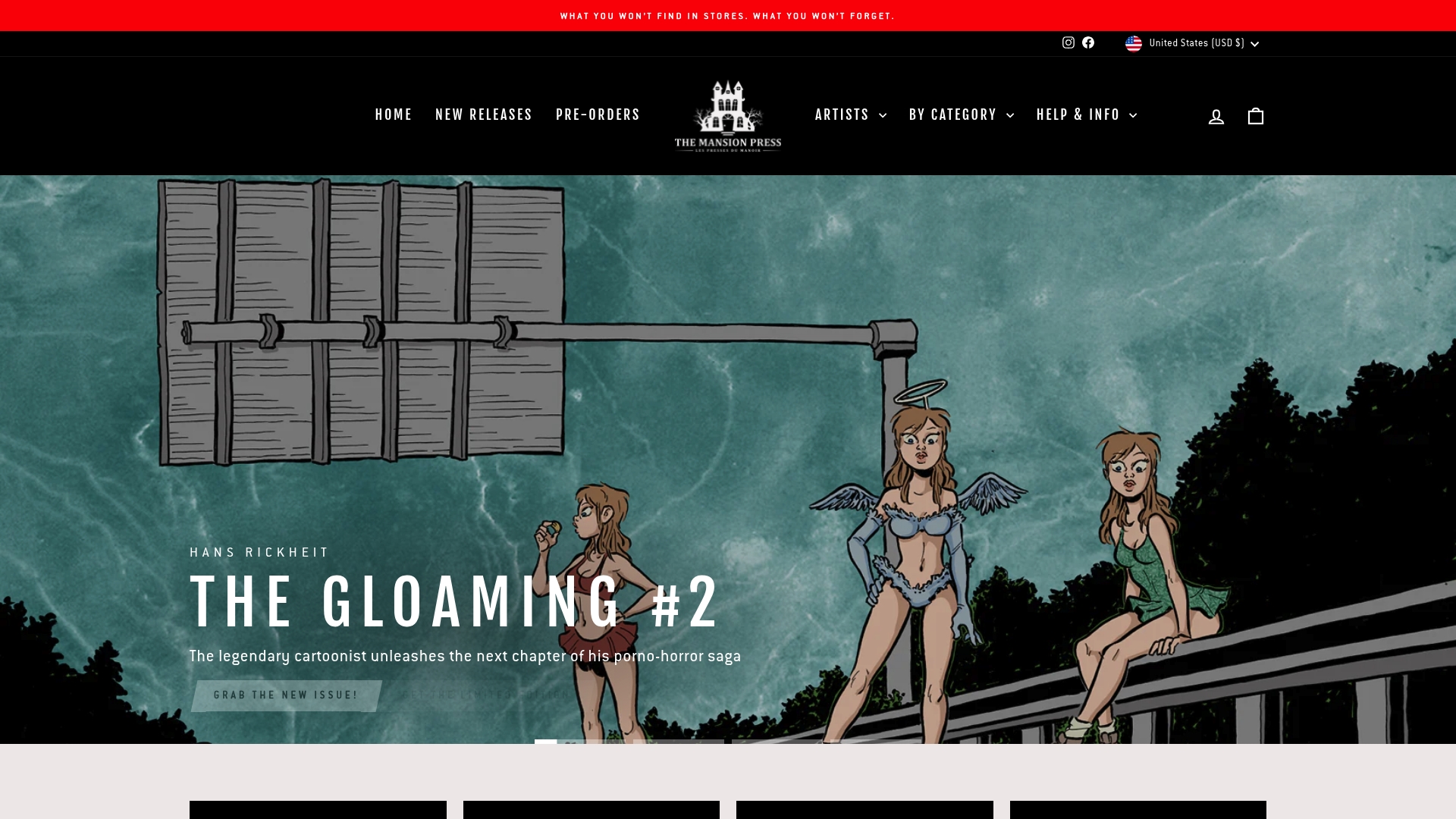
Start exploring our carefully selected collections today at The Mansion Press and join a community that celebrates artistic collaboration and empowers creators to share their work worldwide. Don’t miss your chance to secure rare editions or pre-order upcoming releases that push the boundaries of graphic novel art. Dive into a world where your passion for graphic novels meets opportunity and exclusivity.
Frequently Asked Questions
What is the difference between graphic novels and traditional comics?
Graphic novels are typically longer, self-contained works that emphasize narrative complexity and artistic depth, while traditional comics often consist of shorter, serialized stories with less narrative development.
How do independent graphic novel publishers contribute to the art collecting community?
Independent graphic novel publishers often focus on innovative and experimental content, providing unique narratives and artistic styles that attract collectors interested in diverse storytelling and creative expression.
What should I consider when looking for graphic novel publishers to support?
Consider the thematic diversity and artistic quality of their catalog, as well as their commitment to pushing the boundaries of graphic storytelling and representing diverse perspectives.
What are the key stages in the graphic novel production process?
The production process typically involves concept development, scripting, storyboarding, illustration, coloring and lettering, followed by editing and final production to create a polished published work.
Recommended
- Why Collect Graphic Novels: Understanding Their Value and Appeal – The Mansion Press
- Collector’s Guide for Graphic Novels: Complete Overview – The Mansion Press
- 7 Best Graphic Novels for Collectors to Invest In – The Mansion Press
- Understanding Graphic Novels versus Artbooks Explained – The Mansion Press