

Protecting Comics from Damage: Proven Strategies for Collectors
Most collectors are shocked to learn that improper storage destroys over 40 percent of valuable comic books each year. Whether you are preserving an American Silver Age classic or a rare Japanese manga edition, environmental threats like dust, humidity, and careless handling can strip away value and enjoyment fast. This guide dives into practical, expert-backed methods to ensure your limited-edition comics remain in pristine condition for years to come.
Table of Contents
- Step 1: Prepare A Clean And Safe Storage Space
- Step 2: Select High-Quality Protective Supplies
- Step 3: Store Comics Using Proven Preservation Methods
- Step 4: Display Comics Without Risking Physical Damage
- Step 5: Verify Condition And Perform Regular Quality Checks
Quick Summary
| Key Point | Explanation |
|---|---|
| 1. Create a controlled storage space | Choose a dry, cool environment away from sunlight and moisture for preserving comics. Use archival techniques to minimize damage risks. |
| 2. Use high-quality protective supplies | Invest in acid-free sleeves and rigid backing boards to maintain structural integrity of your comics. Avoid materials that can release harmful acids. |
| 3. Implement effective storage methods | Store comics vertically with acid-free dividers to prevent bending or friction damage, maintaining proper temperature and humidity levels. |
| 4. Display safely to avoid damage | Utilize UV-filter glass and low-intensity lighting for displays, limiting exposure time to protect against fading and physical harm. |
| 5. Regularly check comic conditions | Establish a routine for inspecting your collection every six months; document findings to track any deterioration or required restoration efforts. |
Step 1: Prepare a clean and safe storage space
Creating a secure environment for your comic book collection requires careful planning and attention to detail. Your goal is to establish a protected space that minimizes potential damage from environmental factors like dust, humidity, and temperature fluctuations.
Begin by selecting a dedicated storage area away from direct sunlight, high traffic zones, and potential moisture sources. A cool, dry interior closet or a climate-controlled room works best. Before placing any comics, thoroughly clean the space using lint-free cloths and ensure the area is completely dust-free. Consider using archival storage techniques that professional conservators recommend for preserving sensitive materials.
Prepare clean surfaces by covering shelves or storage containers with acid-free archival paper or protective liners. Avoid wooden surfaces that might release harmful acids or moisture. If using plastic containers, select archival-grade options specifically designed for document preservation. Wear nitrile gloves when handling storage containers to prevent transferring oils or dirt from your hands.
Pro tip: Invest in a small hygrometer to monitor humidity levels and maintain an optimal environment between 30-50% relative humidity for maximum comic book preservation.
This chart highlights suitable environments for comic storage and their key pros and cons:
| Storage Area Type | Advantages | Disadvantages |
|---|---|---|
| Interior closet | Stable temperature, low light | Limited space |
| Climate-controlled room | Optimal environment, adjustable | Higher energy cost |
| Basement | Out of main living area | High humidity risk |
| Attic | Out of way, unused space | Extreme temperature swings |
Here is a quick summary comparing the main threats to comic book preservation:
| Environmental Factor | Typical Source | Potential Damage | Prevention Method |
|---|---|---|---|
| Humidity | Basements, bathrooms | Mold, warping | Climate control, hygrometer |
| Sunlight | Windows, displays | Fading, discoloration | UV-filter glass, shade |
| Dust | Open shelves, vents | Surface abrasion | Archival boxes, liners |
| Temperature changes | HVAC, attics | Brittle pages, warping | Stable indoor storage |
Step 2: Select high-quality protective supplies
Protecting your comic book collection requires investing in top-tier preservation materials that shield your valuable comics from environmental damage and degradation. Your mission is to choose archival-grade protective supplies that provide comprehensive defense against potential threats.
Start by selecting archival-quality storage enclosures specifically designed for comic preservation. Look for acid-free, lignin-free archival sleeves made from polyester film that offer crystal-clear visibility while supporting the comic’s structural integrity. Backing boards are crucial for maintaining comic book shape and preventing bending or creasing. Choose acid-free, archival-grade boards that are rigid enough to provide solid support but thin enough to slide easily into protective sleeves.

When selecting storage containers, prioritize archival-grade boxes constructed from chemically stable materials that resist moisture and environmental fluctuations. Opt for boxes with tight-fitting lids that prevent dust and debris from entering. Consider clear polypropylene containers that allow visual inspection without frequent handling. Avoid cardboard or wooden containers that might release harmful acids or absorb moisture.
Pro tip: Purchase a sample pack of different archival sleeves and test them with less valuable comics to determine the best fit and protection for your specific collection.
Step 3: Store comics using proven preservation methods
Storing your comic book collection requires strategic planning and careful implementation of professional preservation techniques. Your primary goal is to create an environment that protects your comics from physical damage, environmental degradation, and potential long-term deterioration.
Begin by understanding proper storage strategies that professional archivists recommend. Store comics vertically in archival-grade boxes or specialized comic storage containers, ensuring they are supported upright without excessive pressure. Use acid-free dividers between individual comics to prevent friction and potential page damage. When placing comics in storage, make certain they are completely flat or standing vertically to maintain their structural integrity and prevent warping.
Temperature and humidity control are critical for long-term comic preservation. Maintain a consistent environment between 65-70 degrees Fahrenheit with relative humidity around 40-50 percent. Avoid storing comics in basements, attics, or areas with significant temperature fluctuations. Keep comics away from direct sunlight, heating vents, and air conditioning units that can cause rapid environmental changes. When handling comics, always wear clean cotton gloves to prevent transferring oils and dirt from your hands onto the delicate pages.
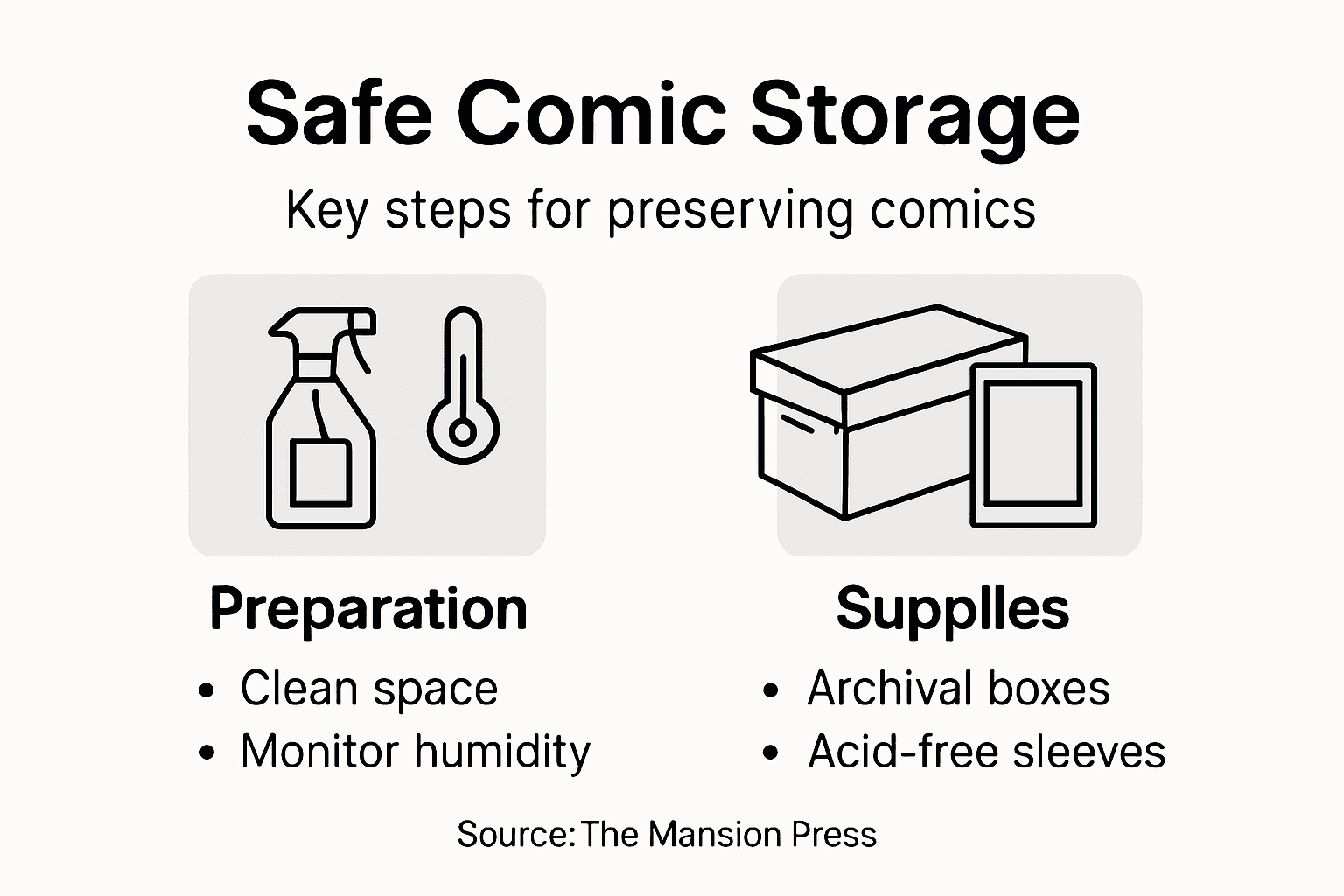
Pro tip: Rotate your comic collection periodically and perform visual inspections to catch any early signs of degradation before they become significant preservation challenges.
Step 4: Display comics without risking physical damage
Displaying your comic book collection requires a delicate balance between showcasing your treasures and protecting them from potential environmental threats. Your ultimate goal is to create a display strategy that allows appreciation while minimizing the risk of physical or structural damage.
Start by understanding light exposure risks that can permanently harm your comics. Select display cases with UV-filtering glass or acrylic that blocks harmful radiation while providing crystal-clear visibility. Position display areas away from direct sunlight, heating vents, and windows that generate temperature fluctuations. Use museum-grade display mounts that support comics without applying pressure to the spine or edges, ensuring they remain perfectly flat or gently angled without bending.
When setting up your display, consider implementing rotating exhibits that limit each comic’s exposure time. Use archival-quality mounting boards made from acid-free materials to provide stable support. Install soft, low-intensity LED lighting with minimal ultraviolet output to illuminate your comics without causing degradation. Control ambient humidity between 45-50 percent and maintain a consistent room temperature around 68-70 degrees Fahrenheit to prevent moisture damage or structural warping.
Pro tip: Invest in digital reproductions or high-quality prints for long-term display, keeping original comics safely stored and preserving their pristine condition.
Step 5: Verify condition and perform regular quality checks
Maintaining the integrity of your comic book collection requires systematic and careful condition monitoring. Your objective is to develop a consistent inspection routine that helps you catch potential preservation issues before they become significant problems.
Begin by implementing condition tracking methods that allow you to document and assess your comics methodically. Create a detailed inspection checklist that covers critical aspects like spine integrity, page condition, color preservation, and structural stability. Use archival-quality white cotton gloves when handling comics during inspections to prevent direct skin contact. Examine each comic under neutral, soft lighting with a magnifying glass to identify subtle signs of deterioration such as paper brittleness, color fading, minor tears, or emerging mold spots. Document your findings in a digital or physical logbook, recording the date of inspection, current condition grade, and any observed changes since the previous review.
Establish a consistent inspection schedule typically every six months for actively collected comics and annually for stable, well-preserved collections. During each review, gently remove comics from their protective sleeves or storage boxes, carefully checking edges, spine alignment, and page conditions. Pay special attention to comics with potential vulnerability due to age or previous handling. Take high-resolution digital photographs as a visual reference for tracking gradual changes over time.
Pro tip: Create a digital backup spreadsheet with columns for comic details, inspection dates, condition notes, and potential restoration requirements to maintain comprehensive tracking of your collection.
Protect Your Collection with Expert Solutions from The Mansion Press
Preserving the condition of your cherished comics takes more than just careful storage and handling. As highlighted in the article, maintaining ideal humidity levels, using archival-grade protective supplies, and monitoring for damage are critical to keeping your collection safe from fading, warping, and physical wear. If you are seeking exclusive comics and artbooks that come with guaranteed quality and expert care, The Mansion Press offers a curated selection designed for collectors who demand longevity and beauty.
Explore our wide range of limited-edition comics and collector’s items at The Mansion Press. Start building your collection today with confidence knowing you have access to premium, artist-supported works and professional-grade products. Protect your investment by browsing our offerings and discovering new releases designed for serious collectors who value preservation and presentation. Visit our homepage and see how you can secure rare art and comics that stand the test of time.
Frequently Asked Questions
How can I create a safe storage space for my comic book collection?
To create a safe storage space, choose a dedicated area away from direct sunlight and moisture sources. Clean the space thoroughly and consider using archival storage techniques, such as acid-free paper for surfaces, to protect your comics from damage.
What type of protective supplies should I use for storing comics?
Select high-quality, archival-grade protective supplies such as acid-free sleeves and backing boards to shield your comics from environmental damage. Investing in archival boxes made from chemically stable materials will help maintain optimal storage conditions and prevent moisture exposure.
What is the best way to store comics to prevent damage?
Store your comics upright in archival-grade boxes to prevent bending or creasing. Use acid-free dividers between comics to reduce friction and keep the comics completely flat or vertical to maintain their structural integrity.
How can I display my comics without risking damage?
Use display cases with UV-filtering glass to protect your comics from harmful light exposure. Consider implementing rotating displays that limit the time each comic is shown, reducing the risk of fading or physical damage over time.
How often should I inspect my comic book collection for damage?
Inspect your comic book collection every six months to catch any signs of deterioration early. Establish a detailed inspection checklist and document your findings to track any changes in condition over time.
What steps can I take if I notice damage to my comics during inspections?
If you find damage, take careful notes of the issue and assess whether the comic can be safely restored. Document the condition and consider consulting with a professional conservator if the damage is severe or requires specialized repair methods.
Recommended
- How to Care for Comics: Essential Tips for Preservation – The Mansion Press
- Archiving Rare Comics: Secure Preservation Guide – The Mansion Press
- Creating a Comics Archive: Step-by-Step Guide for Collectors – The Mansion Press
- Establishing a Comic Book Archive for Collectors – The Mansion Press
- Top Benefits of Professional Packers for UK & International Moves 2025 | Schott Removals