Manga vs manhwa: 5 key differences every comic fan needs
Think manga and manhwa are the same? Over 50% of Western comic readers mistakenly lump these two distinct art forms together, missing out on the unique storytelling, cultural depth, and visual innovations each offers. Understanding the differences between manga and manhwa transforms your reading experience and deepens your appreciation for East Asian graphic storytelling.
Table of Contents
- Introduction To Manga And Manhwa
- Reading Formats And Artistic Styles
- Narrative Themes And Demographic Focus
- Publishing Models And Market Dynamics
- Common Misconceptions About Manga And Manhwa
- Visual Storytelling And Format Innovations
- Practical Reader Tips For Enjoying Manga And Manhwa
- Discover More About Comics And Graphic Storytelling
Key takeaways
| Point | Details |
|---|---|
| Cultural origins | Manga originates from Japan with historical roots tracing back to the 12th century, while manhwa is Korean and developed significantly during the 20th century. |
| Reading direction | Manga reads right-to-left following Japanese convention; manhwa reads left-to-right like Western comics. |
| Visual presentation | Manga primarily uses black and white art with traditional panel layouts; manhwa frequently employs full color and vertical scroll formats optimized for digital platforms. |
| Thematic focus | Manga spans broad genres with clear demographic targeting, while manhwa emphasizes contemporary Korean social issues, romance, and urban settings. |
| Publishing models | Manga remains largely print-based with growing digital adoption; manhwa dominates through digital webtoon platforms designed for mobile consumption. |
Introduction to manga and manhwa
Manga and manhwa share East Asian roots but embody distinct cultural and artistic identities shaped by centuries of unique development. Manga represents a Japanese comic tradition dating back 800 years, evolving from illustrated scrolls into the modern graphic storytelling phenomenon we recognize today. Manhwa emerged from Korean artistic traditions, experiencing significant growth after the 1950s as the country rebuilt its cultural industries following wartime disruption.
These different historical timelines profoundly influence how each medium approaches storytelling, visual design, and audience engagement. Manga’s longer development period allowed for extensive genre diversification and rigid demographic segmentation that defines its industry structure. Manhwa’s more recent evolution coincided with digital technology adoption, positioning it at the forefront of mobile-first comic consumption.
Understanding these foundational differences helps readers appreciate why manga and manhwa look, read, and feel distinct. The historical context reveals how cultural values, technological adoption, and industry practices shaped each medium’s unique characteristics.
Key historical milestones that differentiate the two:
- Manga traces lineage through centuries of Japanese visual storytelling from emaki scrolls to ukiyo-e prints
- Manhwa experienced rapid modernization during Korea’s economic development in the late 20th century
- Digital platforms emerged during manhwa’s formative years, shaping its format from inception
- Manga’s print legacy created standardized formats that persist despite digital transformation
Recognizing these origins illuminates why the two art forms developed such contrasting approaches to visual narrative, reading conventions, and distribution models.
Reading formats and artistic styles
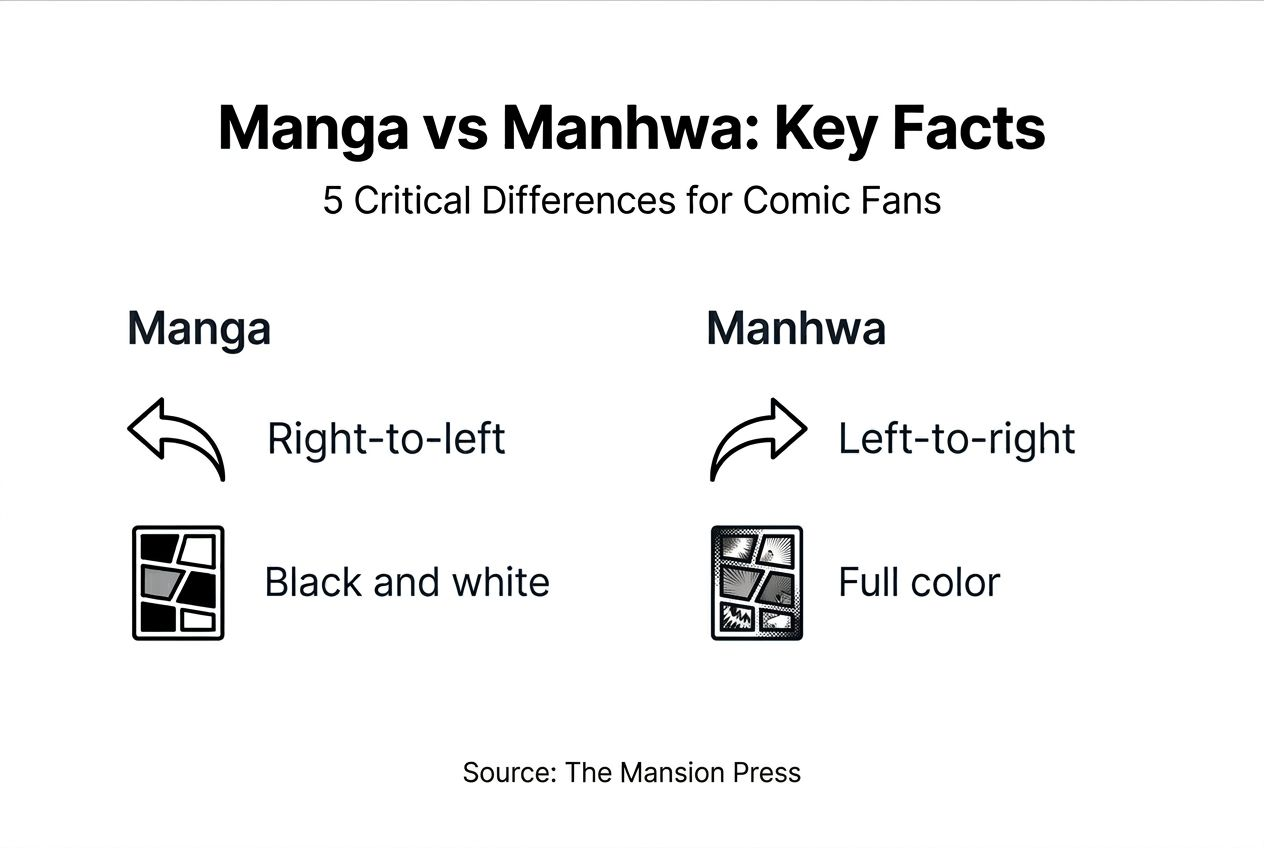
The most immediately noticeable difference lies in reading direction. Manga traditionally reads right-to-left, mirroring Japanese written language conventions. You start at what Western readers consider the back cover and work toward the front. Manhwa reads left-to-right, following the Western reading pattern adopted in modern Korean publishing.
Color usage creates another stark visual contrast. Manga overwhelmingly appears in black and white, a legacy of Japan’s print-based publishing economics where color printing significantly increases production costs. Manhwa frequently uses full color palettes, particularly in digital webtoon formats where color adds no additional expense and enhances mobile screen appeal.
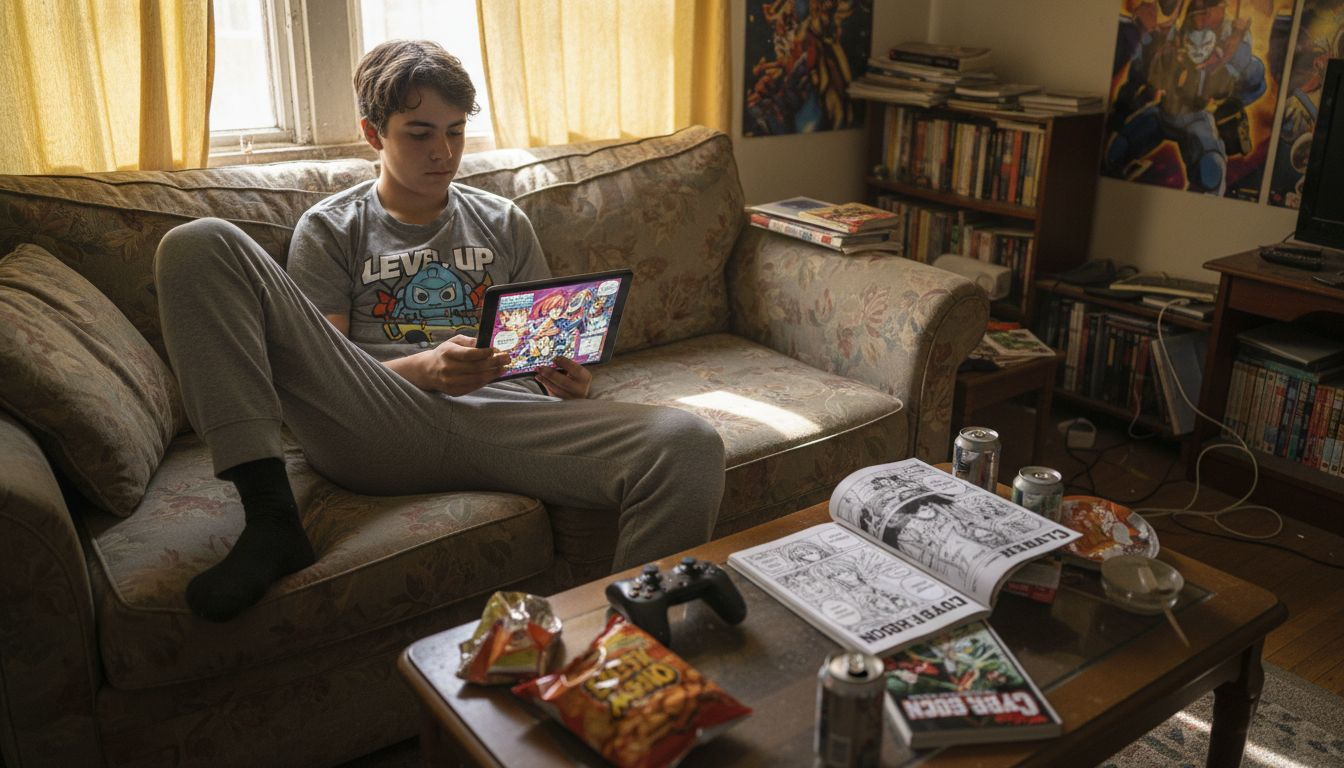
Panel layout philosophies diverge based on platform optimization. Manga employs complex page compositions with varied panel sizes, shapes, and arrangements that guide reader eye movement and control narrative pacing. Manhwa, especially webtoons, uses vertical scrolling with elongated panels stacked sequentially, creating seamless flow perfect for smartphone reading.
| Format Element | Manga | Manhwa |
|---|---|---|
| Reading direction | Right-to-left | Left-to-right |
| Color usage | Predominantly black and white | Often full color |
| Panel layout | Complex page compositions | Vertical scroll format |
| Primary platform | Print (transitioning digital) | Digital webtoon platforms |
| Mobile optimization | Limited | Highly optimized |
These format differences stem directly from production contexts. Japanese publishers prioritize efficient print production and editorial control through standardized formats. Korean webtoon platforms emphasize user experience on mobile devices, where vertical scrolling feels natural and color displays attract engagement.
Pro Tip: When starting a new series, check the reading direction and color scheme immediately. These visual cues instantly reveal whether you’re reading manga or manhwa, helping you adjust your reading approach for optimal enjoyment.
Explore how manga and comics differences extend beyond just manga vs manhwa, and discover how experimental manga layouts push traditional boundaries in innovative ways.
Narrative themes and demographic focus
Thematic preferences reflect distinct cultural contexts and industry structures. Manhwa stories tend to emphasize contemporary Korean social issues, romance, and urban settings, addressing modern life challenges that resonate with younger, digitally connected audiences. Popular manhwa explores workplace dynamics, relationship complexities, and social hierarchies specific to Korean culture.
Manga covers broader thematic territory with established demographic categories. Shonen targets young males with action and adventure, shojo focuses on romance and relationships for young females, seinen offers mature themes for adult men, and josei presents realistic narratives for adult women. This segmentation creates clear genre expectations and helps readers find content matching their interests.
The demographic targeting differs in structure and rigidity. Manga’s categories emerged from magazine-based publishing where distinct publications served specific audiences. Manhwa developed during the platform era where algorithms recommend content based on individual preferences rather than predetermined demographic boxes.
Key thematic distinctions:
- Manhwa frequently tackles modern social commentary and contemporary relationship dynamics
- Manga explores extensive fantasy worldbuilding, historical epics, and sci-fi speculation
- Manhwa protagonists often navigate realistic urban environments and workplace settings
- Manga characters frequently embark on epic quests, supernatural battles, or coming-of-age journeys
- Manhwa emphasizes psychological depth and emotional realism in character development
These thematic differences mirror societal values and publishing practices. Japanese manga industry structure encourages genre specialization and niche audience cultivation. Korean webtoon platforms prioritize content that generates broad appeal and viral sharing potential, favoring accessible contemporary themes over highly specialized genres.
Understanding these narrative tendencies helps readers set appropriate expectations. If you seek grounded relationship drama and social commentary, manhwa likely delivers what you want. If you prefer expansive fantasy worlds or tightly targeted demographic content, manga probably offers richer options.
Publishing models and market dynamics
Publishing platforms fundamentally shape how manga and manhwa reach audiences. Manhwa growth exploded through digital webtoon platforms like Naver Webtoon and KakaoPage, which distribute content directly to mobile devices. These platforms use algorithmic recommendations, free-to-read models with premium options, and social features that encourage sharing and discussion.
Manga maintains strong print foundations despite increasing digital adoption. Weekly and monthly magazines serialize chapters before collecting them in tankobon volumes that fill bookstore shelves. Digital manga platforms emerged later and often mirror print formats rather than reimagining the reading experience.
The vertical scroll format and full color presentation in manhwa directly serve mobile consumption patterns. Readers access webtoons during commutes, breaks, and downtime using smartphones. Publishers optimize every element for small screens, from text size to panel pacing to color contrast.
Distribution model impacts:
- Webtoon platforms enable instant global distribution, accelerating manhwa’s international popularity
- Manga’s print legacy creates physical collectibility and retail presence that manhwa lacks
- Algorithm-driven discovery helps manhwa reach diverse audiences beyond traditional demographic targeting
- Print manga economics favor established creators and publishers with distribution networks
- Digital manhwa platforms lower entry barriers for new creators and experimental content
Pro Tip: Sample both formats on their native platforms before committing to series. Read manga on a tablet or in print to appreciate page layouts fully. Experience manhwa on your smartphone where the vertical scroll and color truly shine.
These publishing differences create distinct reader experiences. Manga offers the satisfaction of physical collection and the anticipation of scheduled releases. Manhwa provides immediate access, frequent updates, and social platform integration that transforms reading into a communal activity.
Common misconceptions about manga and manhwa
Many readers mistakenly view manhwa as simply the Korean word for manga or a regional variation of the same thing. Manhwa is not just manga in Korean; they are distinct in cultural identity, style, and industry practices. This confusion erases the unique characteristics and cultural significance of each art form.
The reading direction difference stems from language conventions, not arbitrary choice. Japanese reads right-to-left and top-to-bottom, so manga follows this natural flow. Korean adopted left-to-right reading for modern publications, making manhwa’s direction feel familiar to Western readers without any cultural compromise.
Color usage reflects production economics and platform contexts rather than artistic preference. Manga creators work within print constraints where black and white proves economically efficient. Manhwa artists leverage digital platforms where color becomes a standard creative tool without cost penalties.
Prevalent myths to dispel:
- Manhwa is not inferior or derivative of manga; it represents parallel development with unique strengths
- Reading direction differences reflect linguistic heritage, not random formatting decisions
- Both art forms feature exceptional artistic quality; neither holds superiority
- Genre availability differs but both offer diverse storytelling across multiple categories
- Digital format doesn’t make manhwa less legitimate than print-based manga
“Understanding the distinct cultural roots and industry practices behind manga and manhwa enriches appreciation for both. They’re siblings in the comic family tree, not duplicates or competitors.”
These misconceptions persist partly because Western audiences encountered manga first, establishing it as the reference point for all Asian comics. This creates unfair comparison where manhwa gets judged by manga standards rather than appreciated on its own merits. Recognizing manhwa’s unique identity allows readers to enjoy both without forcing false equivalencies.
Learn about other common graphic novel misconceptions that limit reader enjoyment and understanding across the medium.
Visual storytelling and format innovations
Manhwa’s vertical scrolling revolutionizes pacing and revelation. Creators control exactly when readers encounter each panel by stacking them vertically, building suspense through scroll distance and timing dramatic reveals for maximum impact. This creates cinematic flow where action unfolds continuously rather than breaking across page turns.
Manga masters the page turn as dramatic device. Cliffhangers land on right-hand pages, forcing readers to turn and discover resolution. Panel arrangements create visual rhythm that speeds or slows reading pace intentionally. Splash pages deliver emotional or action peaks with full-page impact impossible in vertical scroll.
Both formats excel at expressive character art and emotional communication through visual cues. Manga developed extensive visual shorthand for emotions, from speed lines indicating shock to floating symbols expressing mood. Manhwa brings similar expressiveness while adapting techniques for digital clarity on small screens.
| Storytelling Element | Manga | Manhwa |
|---|---|---|
| Pacing control | Page composition and turns | Scroll distance and panel stacking |
| Dramatic reveals | Strategic page placement | Timed scrolling reveals |
| Action sequences | Dynamic multi-panel spreads | Elongated vertical compositions |
| Emotional beats | Full page splashes | Extended single panels |
| Reading flow | Eye-guided page scanning | Continuous vertical progression |
Format innovations respond to consumption contexts:
- Manhwa uses bright colors and high contrast for outdoor mobile reading visibility
- Manga employs detailed backgrounds and fine linework optimized for print resolution
- Webtoons place text carefully to remain legible on small smartphone screens
- Manga integrates sound effects as artistic elements within panel compositions
- Both formats innovate within their constraints to maximize emotional impact
Discover how narrative techniques in graphic novels apply across formats, and explore experimental storytelling in comics that pushes boundaries in both manga and manhwa.
These format-specific innovations mean manga and manhwa each offer unique reading pleasures. Neither format proves superior; they simply optimize for different platforms and consumption patterns.
Practical reader tips for enjoying manga and manhwa
Adapting to manga’s right-to-left reading takes practice but becomes intuitive quickly. Start at what feels like the back cover, read panels from right to left within each page, and move through pages right to left. Most manga includes a diagram explaining the reading order. Give yourself three chapters to adjust; the flow becomes natural.
Manhwa’s left-to-right reading feels immediately familiar to Western readers but requires adjusting to vertical scroll rhythm. Resist the urge to scroll quickly. Let each panel register before moving to the next. The creator designed scroll pacing deliberately to control suspense and emotional beats.
Platform choice significantly impacts enjoyment:
- Read manga in print or on tablets to appreciate full page compositions
- Experience manhwa on smartphones where vertical scroll feels natural and intuitive
- Try official platforms supporting creators rather than piracy sites
- Experiment with both free and premium content to find sustainable reading habits
- Use platform features like bookmarks and reading lists to track multiple series
Pro Tip: Start with acclaimed gateway series in each format. Try “My Hero Academia” for shonen manga’s action appeal or “Tower of God” for manhwa’s epic worldbuilding. Early success builds enthusiasm for exploring deeper into each medium’s offerings.
Beginner-friendly approaches to both formats:
- Choose highly rated series in genres you already enjoy
- Read official translations to support creators and ensure quality
- Join online communities to discover recommendations and discuss series
- Don’t force yourself through series that don’t click; both formats offer massive variety
- Mix reading both formats to appreciate their distinct strengths and storytelling approaches
Building comfort with format conventions unlocks fuller enjoyment. Understanding why manga reads right-to-left or how manhwa uses scroll pacing transforms confusion into appreciation for deliberate creative choices.
Expand your understanding of visual storytelling fundamentals that apply across manga, manhwa, and all graphic narrative forms.
Discover more about comics and graphic storytelling
Your journey into manga and manhwa opens doors to rich storytelling traditions and visual artistry. Whether you prefer manga’s print heritage and demographic precision or manhwa’s digital innovation and contemporary themes, both formats offer endless exploration opportunities.
Explore comprehensive guides, artist spotlights, and collector insights at The Mansion Press, where independent creators and visual storytelling enthusiasts connect. Discover curated collections, limited editions, and expert resources that deepen your appreciation for comics and graphic novels across cultures and formats.
FAQ
What is the main difference between manga and manhwa?
Manga is Japanese comics read right-to-left, typically in black and white with traditional panel layouts. Manhwa is Korean comics read left-to-right, often featuring full color and vertical scroll formats optimized for digital platforms.
Why is manhwa often colored while manga is mostly black and white?
Manhwa’s color usage reflects its digital webtoon platform origins where color adds no production cost and enhances mobile screen appeal. Manga’s black and white tradition stems from print economics where color significantly increases production expenses, making monochrome the industry standard.
How can I tell if a comic is manga or manhwa?
Check the reading direction first: manga reads right-to-left while manhwa reads left-to-right. Visual clues include manga’s predominantly black and white art versus manhwa’s frequent color usage. Cultural context, character names, and publishing platform also reveal origin quickly.
Do manga and manhwa cover the same genres?
Both formats span diverse genres but with different emphases. Manga offers extensive genre variety with clear demographic targeting like shonen, shojo, seinen, and josei. Manhwa focuses more heavily on romance, contemporary drama, and urban fantasy while offering action and fantasy genres too.
Recommended
- Difference Between Manga and Comics: Key Artistic Impact – The Mansion Press
- Graphic Novel vs. Manga: Key Differences Explained – The Mansion Press
- 6 Key Differences: Graphic Novel vs Comic Book Explained – The Mansion Press
- Understanding the Difference Between Graphic Novel and Comic – The Mansion Press