

How to Write Experimental Comics and Captivate Art Collectors
Redefining the boundaries of comic storytelling can spark fresh artistic pathways and attract discerning art collectors. Experimental comics invite creators to challenge conventional narratives, embracing multimodal storytelling and avant-garde techniques that elevate both form and content. For independent comic creators seeking to stand out in a competitive global market, mastering innovative strategies and unconventional layouts unlocks new avenues for expressive visual dialogue. This guide reveals creative methods to help you craft compelling experimental comics with lasting impact.
Table of Contents
- Step 1: Define Your Experimental Comic Concept
- Step 2: Choose Unconventional Narrative Structures
- Step 3: Integrate Avant-Garde Visuals And Layouts
- Step 4: Refine And Test Readability With Art-Focused Audiences
- Step 5: Prepare Your Experimental Comic For Publication
Quick Summary
| Main Insight | Explanation |
|---|---|
| 1. Define your concept clearly | Start with a strong core idea that guides artistic decisions and challenges norms. |
| 2. Use unconventional narrative structures | Break traditional storytelling rules to create an immersive and innovative reader experience. |
| 3. Integrate avant-garde visuals | Experiment with unique layouts and graphic styles to push visual storytelling boundaries. |
| 4. Test readability with audiences | Gather feedback to ensure that the comic remains engaging and comprehensible for art-focused readers. |
| 5. Prepare strategically for publication | Develop a polished submission package that meets artistic and technical standards for potential publishers. |
Step 1: Define your experimental comic concept
Defining a unique experimental comic concept requires transforming traditional narrative structures into innovative artistic expressions. Your goal is to develop a comic that challenges reader expectations and creates an immersive, boundary-pushing experience.
To craft your experimental concept, start by understanding multimodal storytelling approaches that deconstruct conventional comic book formats. These approaches encourage creators to reimagine how visual narratives communicate meaning beyond linear storytelling. Consider exploring conceptual strategies like:
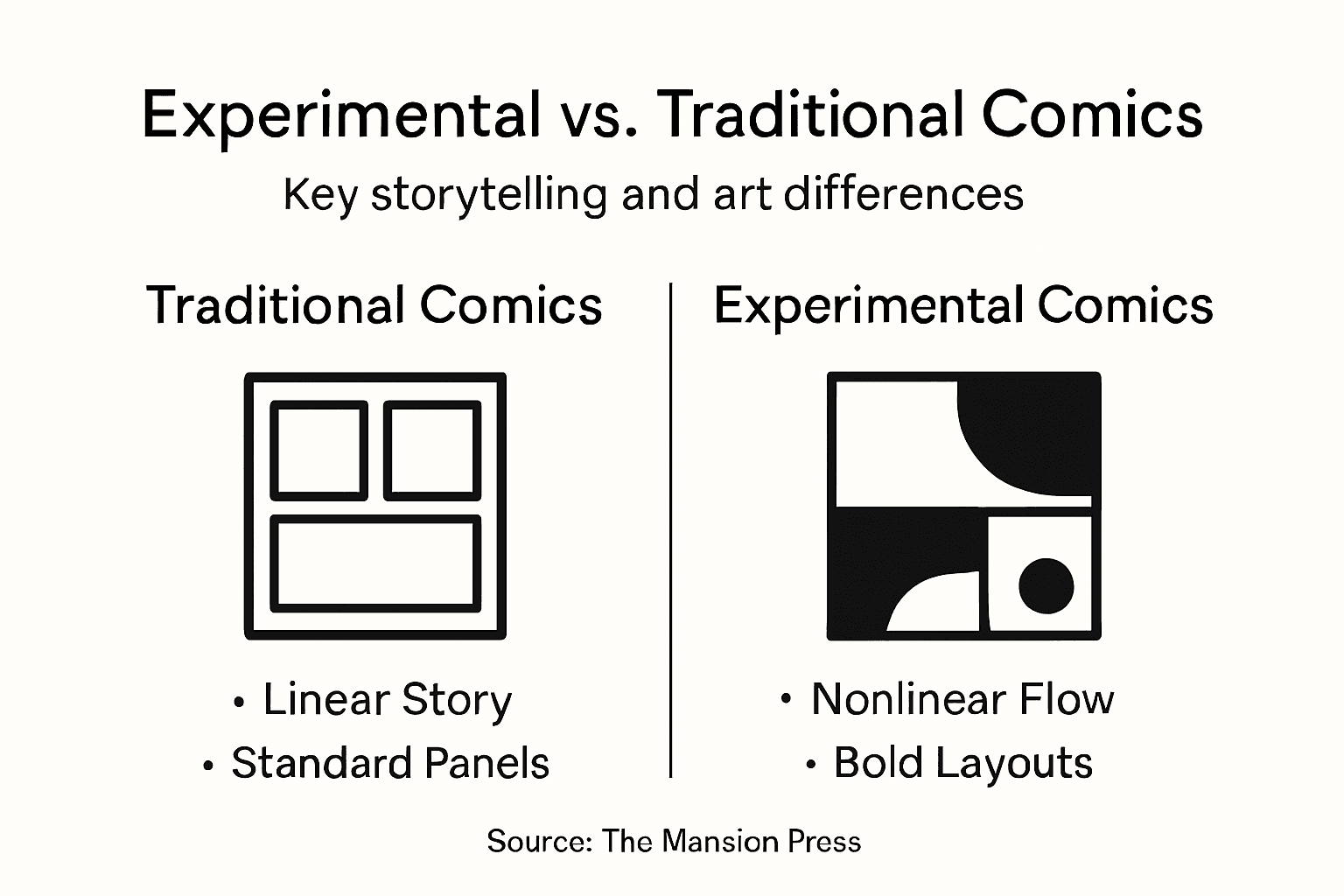
- Disrupting traditional panel layouts
- Incorporating non-linear narrative techniques
- Challenging representational norms
- Integrating unconventional graphic design elements
- Experimenting with visual metaphors and symbolic representations
Successful experimental comics often emerge from a deep understanding of critical comic theory and artistic innovation. Research scholarly frameworks that contextualize your creative vision and help you develop a sophisticated approach to storytelling.
An experimental comic is not just a story - it’s a provocative dialogue between form, content, and reader perception.
Start by identifying the core philosophical or emotional concept driving your experimental comic. Are you challenging political structures? Exploring psychological landscapes? Deconstructing cultural narratives? Your central idea will guide every artistic decision.
Pro tip: Keep a visual research journal documenting experimental comic techniques, unique layout ideas, and conceptual inspirations to continuously refine your creative vision.
Step 2: Choose unconventional narrative structures
Choosing unconventional narrative structures is about breaking free from traditional storytelling constraints and creating a truly innovative comic experience. Your goal is to challenge reader expectations and develop a unique visual narrative that transcends linear storytelling.
Experimental comics thrive on subverting traditional narrative conventions, which means reimagining how stories can be told through graphic sequences. Consider exploring narrative techniques that disrupt typical reading patterns:
- Fragmented storytelling that jumps between timelines
- Multiple simultaneous perspectives within a single page
- Nonlinear plot progressions
- Embedded narratives that challenge chronological understanding
- Visual metaphors that replace traditional dialogue
These approaches transform your comic from a simple story into an immersive artistic experience. Deconstruct traditional narrative frameworks by questioning every conventional storytelling element. Are panels truly necessary? Can your story be told through abstract visual connections?
Experimental narrative structures are not about confusion - they’re about creating deeper, more engaging reader interactions.
Successful unconventional structures often emerge from a deep understanding of visual storytelling principles. Analyze experimental comics that have successfully challenged narrative norms, studying how they manipulate reader expectations and create meaning through innovative design.
Pro tip: Sketch multiple narrative structure drafts, experimenting with different visual storytelling approaches before committing to a final design.
Step 3: Integrate avant-garde visuals and layouts
Integrating avant-garde visuals and layouts transforms your comic from a traditional narrative into a provocative artistic statement. Your mission is to challenge visual storytelling conventions and create a graphic experience that defies reader expectations.
To truly embrace avant-garde design, explore abstract representational techniques that disrupt traditional comic book aesthetics. These innovative approaches push the boundaries of visual communication by reimagining how graphic elements can convey meaning:
- Deconstruct traditional panel structures
- Experiment with asymmetrical page layouts
- Use negative space as a narrative element
- Blend different artistic styles within a single page
- Incorporate unexpected visual textures and techniques
Break geometric constraints by thinking beyond rectangular panels. Consider circular, triangular, or completely fragmented layouts that force readers to actively engage with the visual narrative. Your goal is to create a dynamic visual language that challenges passive consumption.
Avant-garde comics are not about aesthetic rebellion - they’re about expanding the language of visual storytelling.
Successful avant-garde design requires a deep understanding of graphic communication principles. Study experimental artists who have pushed visual boundaries, analyzing how they use unconventional techniques to create powerful emotional and intellectual responses.

Pro tip: Create a visual mood board exploring radical graphic design approaches before finalizing your comic’s visual strategy.
Step 4: Refine and test readability with art-focused audiences
Refining and testing readability is crucial for experimental comics that aim to challenge traditional storytelling while maintaining meaningful audience engagement. Your objective is to create a visual narrative that is provocative yet comprehensible to discerning art collectors and comic enthusiasts.
Experimental comics demand strategic reader interaction through carefully designed visual communication. To ensure your comic resonates with art-focused audiences, implement these critical testing strategies:
- Conduct small focus group sessions with art collectors
- Gather detailed feedback on narrative comprehension
- Analyze visual flow and interpretive complexity
- Test different reading approaches and audience responses
- Iterate design based on targeted audience insights
Create intentional visual complexity that invites interpretation without causing complete disorientation. Design interactive reading experiences that challenge but do not alienate your audience. Think of your comic as a visual dialogue that requires active participation.
Readability in experimental comics is about creating meaningful engagement, not simplistic understanding.
Successful experimental comics balance avant-garde techniques with thoughtful communication. Seek feedback from diverse art-focused audiences, including critics, collectors, and fellow graphic artists who can provide nuanced perspectives on your work’s innovative potential.
Pro tip: Document audience reactions meticulously, treating each reading session as a research opportunity to refine your experimental comic’s visual language.
Step 5: Prepare your experimental comic for publication
Preparing your experimental comic for publication requires strategic planning and a nuanced understanding of artistic and technical requirements. Your goal is to transform your creative vision into a professional, publishable work that resonates with art collectors and experimental comic enthusiasts.
Navigate the publication preparation process with meticulous attention to scholarly and artistic standards. Developing a comprehensive publication strategy involves several critical considerations:
- Develop a clear narrative structure
- Ensure visual consistency across pages
- Prepare high-resolution digital and print files
- Create a compelling artist statement
- Research appropriate publication platforms
Craft a professional submission package that showcases the intellectual depth and visual innovation of your experimental comic. This means going beyond traditional submission guidelines and demonstrating the unique value of your artistic approach.
Publication is not just about presenting your work - it’s about creating a meaningful dialogue with your audience.
Successful publication requires understanding the specific requirements of different platforms. Some art publishers and galleries specialize in experimental comics, so research venues that align with your artistic vision and aesthetic sensibilities.
Pro tip: Create multiple versions of your comic with varying levels of complexity, allowing you to adapt your submission to different publication requirements.
Below is a summary of essential considerations for preparing your comic for publication:
| Consideration | Artistic Value | Technical Requirement |
|---|---|---|
| Visual Consistency | Maintains unique style across work | Ensures print quality |
| Narrative Structure | Conveys conceptual intent clearly | Supports platform formats |
| Submission Materials | Highlights creative vision | Meets publisher standards |
Here’s how core experimental comic strategies compare in purpose and effect:
| Strategy Type | Main Purpose | Audience Impact |
|---|---|---|
| Narrative Structure | Subvert story expectations | Engages critical interpretation |
| Avant-garde Visuals | Disrupt visual norms | Sparks emotional reaction |
| Readability Testing | Balance clarity and challenge | Enhances engagement and insight |
| Publication Strategy | Amplify artistic value | Reaches specialized readership |
Unlock the Power of Your Experimental Comic and Captivate Art Collectors Today
Crafting an experimental comic involves mastering unconventional narrative structures, avant-garde visuals, and a refined visual language that challenges traditional storytelling. The real challenge lies in transforming these bold ideas into a polished work that captivates art collectors and niche audiences without losing readability or artistic impact. Whether you struggle with integrating complex layouts or preparing your comic for a discerning audience, finding the right platform to showcase and sell your innovative work is critical.
At The Mansion Press, we specialize in connecting visionary comic creators with dedicated art enthusiasts and collectors worldwide. Our curated collection features unique artbooks, limited-edition comics, and original artworks that celebrate creative risks and artistic innovation. By partnering with us, you gain access to a community that truly values boundary-pushing storytelling and visual experimentation.
Discover how your experimental comic can thrive beyond the creative process. Visit The Mansion Press today to explore exclusive opportunities for artists, including pre-order features and promotional support designed to amplify your artistic voice. Don’t let your groundbreaking narrative stay hidden. Showcase your work where it belongs.
Are you ready to push the boundaries of comics and reach passionate art collectors eager for innovation? Start your journey now at The Mansion Press and turn your experimental vision into a compelling reality.
Frequently Asked Questions
How do I define a unique experimental comic concept?
To define a unique experimental comic concept, start by identifying the core philosophical or emotional idea that drives your narrative. Consider exploring non-linear storytelling and unconventional visual elements to challenge reader expectations. Keep a visual research journal to document your ideas and inspirations.
What are some unconventional narrative structures I can use in my comic?
You can use fragmented storytelling, multiple perspectives, and non-linear plot progressions as unconventional narrative structures. Experiment with embedding narratives within your comic to challenge chronological understanding. Sketch several drafts to test different visual storytelling approaches.
How can I integrate avant-garde visuals and layouts into my comic?
To integrate avant-garde visuals, deconstruct traditional panel structures and utilize asymmetrical layouts that engage readers more actively. Consider using negative space and incorporating various artistic styles for a dynamic visual experience. Create a visual mood board to inspire your design process before finalizing your comic’s layout.
What strategies should I use to test the readability of my experimental comic?
Testing readability involves conducting focus groups or feedback sessions with art-focused audiences to gauge narrative comprehension and visual flow. Gather detailed responses about interpretation complexity and iterate your designs based on their insights. Make adjustments over several testing sessions to enhance audience engagement.
How do I prepare my experimental comic for publication?
Preparation for publication includes ensuring visual consistency, developing a clear narrative structure, and creating high-resolution files. Research different publication platforms that align with your artistic vision and tailor your submission package to highlight the unique value of your work. Develop multiple versions of your comic to meet varying submission requirements.
What should I focus on when crafting a compelling artist statement?
When crafting an artist statement, focus on articulating the intellectual depth and artistic innovation of your comic. Highlight how your experimental approach reflects your vision and engages with broader themes. Keep the statement concise, aiming for clarity within 300–500 words to effectively communicate your creative intent.
Recommended
- Master Experimental Comic Techniques for Unique Art Forms – The Mansion Press
- How to Read Experimental Comics for Art Collectors and Fans – The Mansion Press
- Experimental Storytelling in Comics: Complete Guide – The Mansion Press
- Creating Avant Garde Comics: A Complete Step-by-Step Guide – The Mansion Press