

How to Read Experimental Comics for Art Collectors and Fans
Over half of American comic readers say they feel lost when faced with experimental formats for the first time. As these intricate works challenge every expectation, even seasoned fans are pushed to rethink how they read, observe, and interpret graphic storytelling. This practical guide breaks down simple steps to help any American reader tackle experimental comics with confidence, from setting up the perfect reading space to developing advanced ways to analyze visual narratives.
Table of Contents
- Step 1: Prepare Your Reading Space and Mindset
- Step 2: Identify Unique Artistic and Narrative Elements
- Step 3: Analyze Visual Language and Panel Structures
- Step 4: Engage Actively With Content and Interpretations
- Step 5: Verify Your Understanding Through Re-reads
Quick Summary
| Key Insights | Explanation |
|---|---|
| 1. Create an Engaging Reading Space | Choose a comfortable, well-lit area to enhance focus and visual exploration of experimental comics. |
| 2. Actively Analyze Artistic Techniques | Develop an eye for unique panel arrangements and visual elements that challenge traditional narratives. |
| 3. Engage in Interpretative Reading | Ask probing questions and track narrative threads while reading to deepen your understanding. |
| 4. Document Insights Through Re-reads | Re-read comics to uncover hidden layers and develop a journal to track evolving interpretations. |
Step 1: Prepare Your Reading Space and Mindset
Reading experimental comics requires a carefully curated environment that supports deep visual exploration and intellectual engagement. Your reading space should be a sanctuary of focus where you can immerse yourself in the unique narrative landscapes of graphic storytelling.
Start by selecting a comfortable space with good lighting that allows you to appreciate the intricate visual details. Position yourself near natural light if possible, but avoid harsh glare that might obscure the artwork. Arrange your seating to provide a clear, unobstructed view of the comic pages. Some readers prefer a desk or table that allows them to spread out multiple pages, while others enjoy a cozy armchair that supports extended reading sessions.
As you prepare to read, understand that experimental comics demand active participation. The space between panels known as the gutter requires readers to make imaginative inferences, transforming you from a passive observer into an active storytelling partner. This means you need a mental state of curiosity and openness. Put away digital distractions, silence notifications, and give yourself permission to engage deeply with the artwork.
A pro tip for serious comic enthusiasts: keep a notebook nearby. Experimental comics often present complex visual narratives that benefit from reflection and personal interpretation. Sketching your observations or jotting down immediate reactions can enhance your understanding and appreciation of the work.
Step 2: Identify Unique Artistic and Narrative Elements
Experimental comics challenge traditional storytelling by transforming visual narrative into an intricate art form that demands careful observation and intellectual engagement. Your goal in this step is to develop a keen eye for understanding how artists manipulate graphic storytelling techniques.
Begin by examining the comic’s spatial composition. Creators strategically position panels to convey complex narrative relationships, using geographical and visual arrangements that go beyond linear storytelling. Pay attention to how panels interact with each other, noting unusual layouts, unconventional reading paths, or deliberate visual interruptions that force you to reconsider traditional comic book reading patterns.
Look closely at the artwork’s unique elements. Are the panels fragmented? Do they overlap? Are there deliberate breaks in visual continuity that challenge your narrative expectations? In experimental comics, the space between panels known as the gutter becomes a critical zone where reader imagination actively completes the storytelling process. This means you are not just a passive reader but an active participant in constructing meaning.

A pro tip for serious comic enthusiasts: develop a practice of visual annotation. Keep a sketchbook or digital notes where you document your observations about panel composition, narrative techniques, and visual storytelling strategies. This practice will sharpen your analytical skills and help you appreciate the nuanced artistry of experimental comics.
Step 3: Analyze Visual Language and Panel Structures
Diving deep into experimental comics requires a systematic approach to understanding their complex visual narratives. Your mission is to decode the intricate visual language that transforms these graphic works from simple illustrations into sophisticated storytelling mechanisms.
Comic page compositions offer creators unique opportunities to position panels according to geographical and narrative relationships, challenging traditional linear storytelling approaches. Examine how artists manipulate panel sizes, shapes, and arrangements to guide your visual journey. Look for irregular geometries, overlapping frames, or unconventional spatial relationships that disrupt standard reading patterns. Some experimental comics might use panels that intentionally fragment visual information, forcing you to reconstruct narrative meaning through active interpretation.
The critical space between panels known as the gutter becomes a dynamic storytelling zone where reader imagination actively bridges narrative gaps. This means you are not merely observing but participating in constructing the story. Pay attention to how visual elements suggest movement, emotion, or temporal shifts without explicitly showing every moment. Artists might use negative space, asymmetrical panel designs, or visual metaphors to communicate complex ideas that transcend traditional linear storytelling.
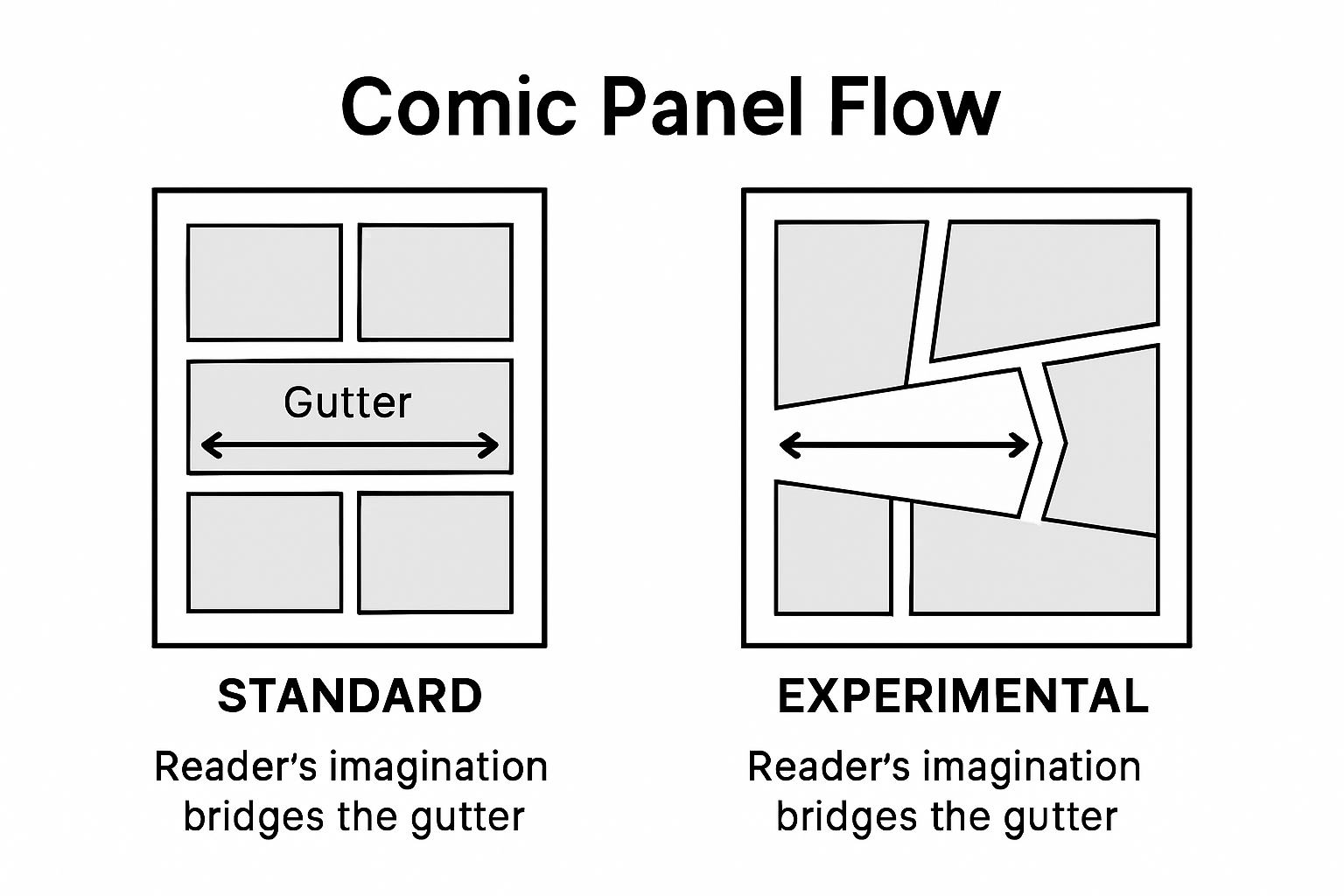
A pro tip for serious comic enthusiasts: develop a systematic visual analysis approach. Create a consistent method for documenting panel structures, visual techniques, and narrative strategies. Consider sketching panel layouts, noting color transitions, and recording your interpretative insights. This practice will transform your reading from passive consumption to active artistic appreciation.
Step 4: Engage Actively With Content and Interpretations
Experimental comics demand more than passive reading. Your goal is to transform yourself from a casual observer into an active participant who constructs meaning through critical engagement and creative interpretation.
Readers are expected to create sophisticated inferences between events in the space between panels, actively participating in the storytelling process. This means looking beyond surface level narratives and exploring the nuanced connections artists deliberately leave for you to discover. Start by asking provocative questions about each panel. What emotions are being suggested? How do visual metaphors contribute to the larger narrative? What remains intentionally unsaid or implied?
The comic book gutter becomes a critical zone where readers function as co-creators, drawing conclusions and connecting events across visual boundaries. Challenge yourself to track narrative threads that might not be immediately apparent. Notice how visual techniques like color shifts, line weight variations, or unexpected perspective changes communicate subtle emotional and psychological states that transcend traditional storytelling methods.
A pro tip for serious comic enthusiasts: develop a personal annotation system. Use different colored markers or digital annotation tools to track your interpretative journey. Sketch quick responses, write marginal notes, and create visual mind maps that capture the complex relationships within the artwork. This practice transforms reading from a linear experience into a dynamic, multidimensional exploration of visual storytelling.
Step 5: Verify Your Understanding Through Re-reads
Experimental comics are complex visual narratives that reveal deeper layers with each subsequent reading. Your goal is to transform initial impressions into nuanced comprehension through intentional and strategic re-examination.
Analyzing the spatial relations and panel arrangements can significantly enhance understanding, as the composition of the page fundamentally influences narrative flow. Approach your re-read as an investigative process. Notice details you missed during your first encounter. Pay attention to subtle visual cues, color shifts, and panel transitions that might have escaped your initial interpretation. Each re-read is an opportunity to uncover hidden narrative threads and complex visual metaphors that were not immediately apparent.
Re-examining the gutter and panel transitions can profoundly deepen comprehension, as readers’ interpretations naturally evolve with multiple readings. Challenge yourself to read the comic from different perspectives. Try reading panels in alternative sequences, focus on background details, or examine the artwork from an emotional rather than linear perspective. This approach transforms your reading from a passive experience into an active dialogue with the artwork.
A pro tip for serious comic enthusiasts: create a reading journal specifically for experimental comics. Document your evolving interpretations, sketch key visual moments, and track how your understanding shifts with each re-read. This systematic approach will not only enhance your appreciation but also develop your visual literacy skills across different experimental comic styles.
Unlock Deeper Connections With Experimental Comics Through Unique Collectibles
Reading experimental comics demands active participation and a keen eye for narrative nuance. If you are eager to take your appreciation beyond paper and digital pages and into your personal art collection, exploring exclusive artbooks, collector’s editions, and original works can bring your experience to life. The challenge of interpreting complex panel structures and the storytelling spaces between panels enhances when holding rare editions that celebrate these very artistic innovations.
Discover curated, limited-edition experimental comics and art-focused products at The Mansion Press. Each piece is a gateway to deeper engagement with graphic storytelling, perfect for collectors and fans who want to explore visual language, panel compositions, and narrative richness firsthand. Don’t wait to enrich your collection with art that invites continuous discovery and reflection. Start your journey now by browsing unique offerings designed to complement your insightful reading of experimental comics.
Frequently Asked Questions
How do I create the best reading environment for experimental comics?
To create the ideal reading environment, choose a comfortable space with good lighting that allows you to appreciate the artwork. Position yourself to avoid glare and consider using a desk or table to spread out multiple pages for a more immersive experience.
What should I focus on when analyzing artistic elements in experimental comics?
Focus on the spatial composition and how panels interact with one another. Look for unusual layouts and interruptions in the visual flow that challenge traditional storytelling methods, and take notes on your observations for deeper insights.
How can I engage more effectively with the narratives of experimental comics?
Engage actively by asking yourself questions about each panel’s emotional cues, visual metaphors, and implied meanings. Challenge yourself to connect narratives across panels and interpret the story beyond its surface level.
What steps can I take to deepen my understanding of experimental comics through re-reading?
To deepen your understanding, re-read the comics while paying attention to details you missed the first time. Notice subtle visual cues and panel transitions, and consider reading panels in different sequences to explore new interpretations.
How can I enhance my visual literacy while reading experimental comics?
Enhance your visual literacy by maintaining a reading journal where you document your interpretations and sketch key moments. This will help you track your evolving insights and appreciate the nuanced artistry of the comics over time.
What materials should I have nearby when reading experimental comics?
Have a notebook or digital device handy to jot down observations or sketch visuals that resonate with you. This practice can significantly enrich your engagement and understanding of complex graphic storytelling.
Recommended
- Experimental Storytelling in Comics: Complete Guide – The Mansion Press
- Master Experimental Comic Techniques for Unique Art Forms – The Mansion Press
- 10 Strange Comics You Must Read for a Mind-Bending Experience – The Mansion Press
- 8 Essential Reads for Comics Collectors’ Education – The Mansion Press
- Comment lire cotation carte Yu‑Gi‑Oh facilement et efficacement - JM Cards