

What Is Punk Art and Why It Matters
Most collectors overlook the raw power of punk art, yet over 60 percent of punk-inspired works remain outside mainstream collections. For international art collectors and indie comic fans, punk art offers a rebellious alternative that redefines authenticity and American artistic influence. This style’s DIY roots and collaborative spirit spark demand for limited editions and rare pieces. Discover how punk art challenges traditional standards while offering unlimited potential for collectors who crave originality.
Table of Contents
- Defining Punk Art And Dispelling Myths
- Key Styles And Visual Techniques In Punk
- Evolution From Diy Zines To Mainstream Influence
- Notable Artists And Iconic Punk Artworks
- Collecting Punk Art: Authenticity, Value, And Risks
Key Takeaways
| Point | Details |
|---|---|
| Punk Art as a Radical Expression | Punk art serves as a rebellion against mainstream norms, characterized by its D.I.Y. aesthetic and social critique. |
| Visual Techniques Define Punk Art | Techniques like bricolage, collage, and chaotic typography challenge traditional aesthetics and convey provocative messages. |
| Evolution from Zines to Mainstream | DIY zines played a crucial role in punk’s rise, allowing for grassroots cultural production and expression outside commercial media. |
| Collecting Punk Art Requires Caution | Authenticity and provenance are essential in collecting punk art to preserve its cultural significance and original intent. |
Defining Punk Art and Dispelling Myths
Punk art emerges as a radical form of creative expression that challenges mainstream aesthetic conventions and societal norms. Unlike traditional art movements, punk represents a visceral rebellion against established cultural institutions, characterized by its raw, unfiltered approach to visual communication. Localized histories of punk reveal that this art form cannot be reduced to a singular narrative but instead reflects complex intersections of music, politics, race, and identity.
At its core, punk art embodies a do-it-yourself (D.I.Y.) aesthetic that rejects commercial polish and embraces imperfection. Emerging from the socio-economic turmoil of the 1970s, particularly in the United Kingdom, punk artists used graphic expressions through music, fashion, zines, and visual art to critique dominant power structures. The movement’s visual language is intentionally contradictory, lacking a unified agenda but united by an underlying spirit of resistance and anti-establishment sentiment.
Common myths about punk art often portray it as merely angry or destructive, but this oversimplifies its nuanced cultural significance. Punk is a sophisticated form of social commentary that uses intentional disruption to challenge audiences, forcing critical examination of societal norms. Its aesthetic embraces deliberate ugliness, raw authenticity, and graphic design techniques that deliberately subvert traditional artistic standards. By rejecting refinement, punk art creates powerful statements about cultural conformity and individual expression.
Pro tip: When exploring punk art, look beyond surface-level aesthetics and consider the deeper social and political contexts that inspire each provocative creation.
Key Styles and Visual Techniques in Punk
Punk art represents a revolutionary visual language that deliberately subverts traditional aesthetic expectations. Punk’s graphic design techniques are characterized by an aggressive, intentionally raw approach that challenges established artistic conventions. These visual styles emerge from a profound rejection of mainstream design principles, utilizing unconventional methods to communicate powerful social and political messages.
The core visual techniques of punk art include several distinctive approaches. Bricolage and collage stand out as primary methods, where artists combine seemingly unrelated visual elements to create jarring, provocative compositions. Typographic design in punk art is particularly notable, often featuring hand-drawn, deliberately messy lettering that mimics ransom note aesthetics or uses chaotic, anarchic letterforms. These techniques are not merely stylistic choices but deliberate strategies to disrupt visual expectations and challenge viewers’ perceptions.
Understanding punk’s visual language requires recognizing its deep connection to social critique. Artists like Jamie Reid exemplified this approach through graphic work that incorporated photomontage, aggressive typography, and provocative imagery. The visual style intentionally embraces imperfection, rejecting the polished aesthetics of commercial design. This approach extends beyond graphic art into fashion, music packaging, and street art, creating a comprehensive visual culture that represents rebellion, individual expression, and resistance to societal norms.
Pro tip: When analyzing punk art, look beyond surface aesthetics and examine the underlying social and political messages embedded in its intentionally disruptive visual language.
Here’s a summary of key visual techniques that define punk art:
| Technique | Description | Artistic Impact |
|---|---|---|
| Bricolage | Assembling disparate elements | Creates provocative imagery |
| Collage | Layering cut-out visuals | Intensifies message delivery |
| Hand-drawn Type | Messy, anarchic lettering | Enhances rebellious feel |
| Photomontage | Combining photos for effect | Adds social critique |
Evolution from DIY Zines to Mainstream Influence
Punk art’s journey from underground subculture to cultural phenomenon is deeply rooted in the DIY zine movement. Punk zines embodied grassroots cultural production that prioritized creativity and community over commercial interests. These self-published works became critical communication channels, allowing artists and musicians to bypass traditional media gatekeepers and directly share their radical perspectives with like-minded individuals.
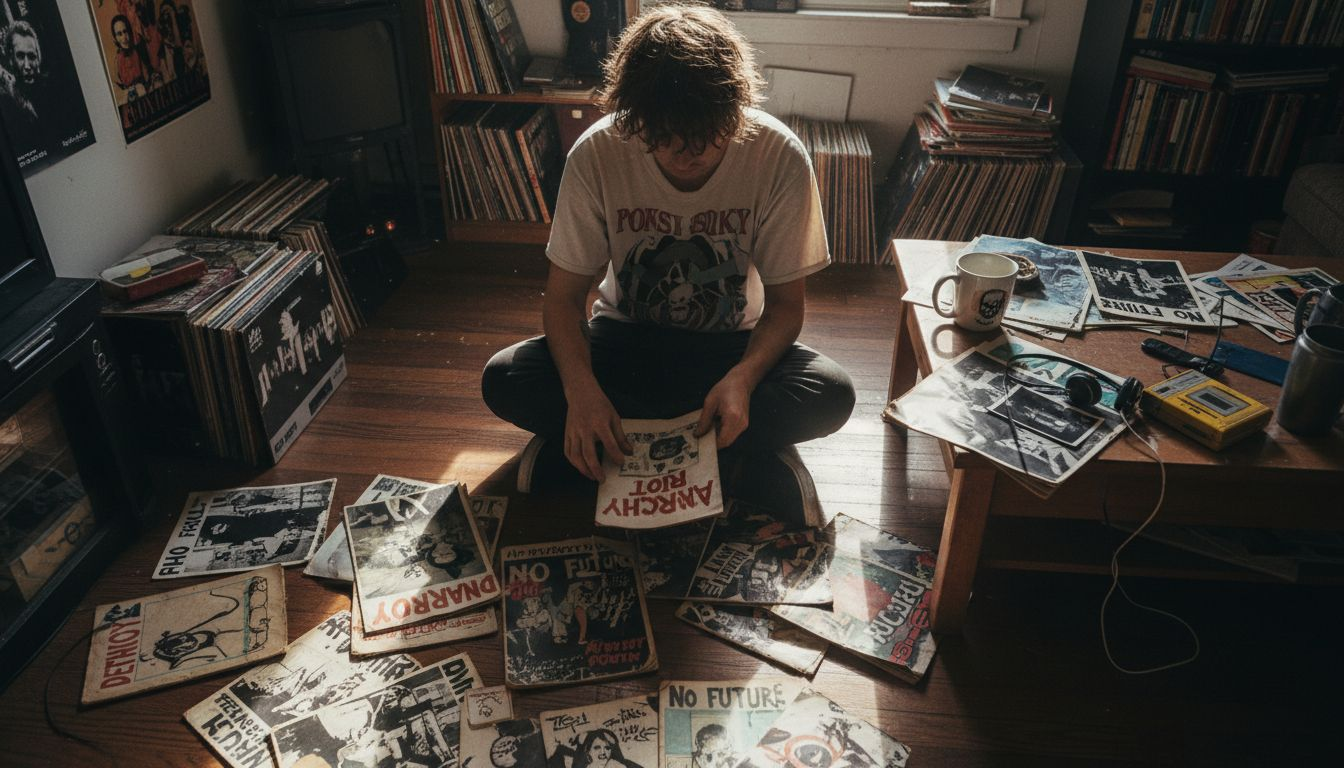
The evolution of punk zines represents more than just a publishing trend. These handmade publications served as vital platforms for artistic expression, political commentary, and subcultural networking. Artists used limited resources creatively, transforming basic printing techniques like photocopying and hand-drawing into powerful visual statements. Each zine became a miniature manifesto, challenging mainstream narratives and creating alternative spaces for marginalized voices to communicate and organize.
As punk’s influence expanded, these underground publications gradually transformed from niche communication tools to significant cultural artifacts. The aesthetic and ethos of DIY zines gradually permeated broader design landscapes, influencing graphic design, fashion, music packaging, and contemporary art. What began as a localized, anti-establishment practice in London and New York punk scenes ultimately reshaped global visual culture, demonstrating the transformative power of grassroots artistic movements.
Pro tip: Collect and preserve vintage punk zines as they represent not just artistic artifacts, but critical historical documents of cultural resistance.
Notable Artists and Iconic Punk Artworks
Punk art emerged as a powerful visual language with artists who transformed political critique into radical graphic expression. Punk artists redefined visual storytelling through provocative, politically charged designs that challenged societal norms. Figures like Jamie Reid became central to this movement, creating iconic works that transcended traditional artistic boundaries and served as potent social commentaries.
Key artists like Jamie Reid, Jean-Michel Basquiat, and Lydia Lunch represented the multifaceted nature of punk art. Reid’s God Save the Queen album cover for the Sex Pistols stands as a quintessential example, featuring a defaced image of Queen Elizabeth II that became a symbol of anti-establishment rebellion. Basquiat’s raw, spontaneous artwork merged street culture, music, and political critique, while Lunch’s performance art and photography embodied punk’s confrontational aesthetic, challenging viewers’ comfort zones and institutional structures.
The punk art movement was characterized by its deliberate rejection of polished, commercial aesthetics. Artists employed techniques like collage, cut-and-paste, hand-drawn typography, and stark color palettes to create visually jarring works that demanded attention. These artistic strategies were not merely stylistic choices but deliberate political statements, using visual language to dismantle traditional hierarchies of art, music, and social expression. By embracing imperfection and raw emotion, punk artists created a visual vocabulary that continues to influence contemporary art and design.
Pro tip: Explore vintage punk art collections to understand the nuanced visual language of cultural resistance and artistic rebellion.
Collecting Punk Art: Authenticity, Value, and Risks
Collecting punk art represents a complex journey through cultural preservation and artistic authenticity. Punk art’s authenticity involves nuanced valuation that extends far beyond monetary worth, encompassing personal style, cultural symbolism, and historical significance. Serious collectors must navigate intricate landscapes of meaning, where each piece represents more than a mere aesthetic object.
The DIY ethic serves as the fundamental lens through which punk art’s value is assessed. Authentic pieces reflect not just visual design, but a profound commitment to challenging institutional structures and rejecting commercial mainstream aesthetics. Original zines, hand-printed posters, and underground music packaging become critical artifacts that document cultural resistance. Provenance becomes crucial, with collectors seeking works that demonstrate genuine connection to original punk scenes and artists’ original intentions.
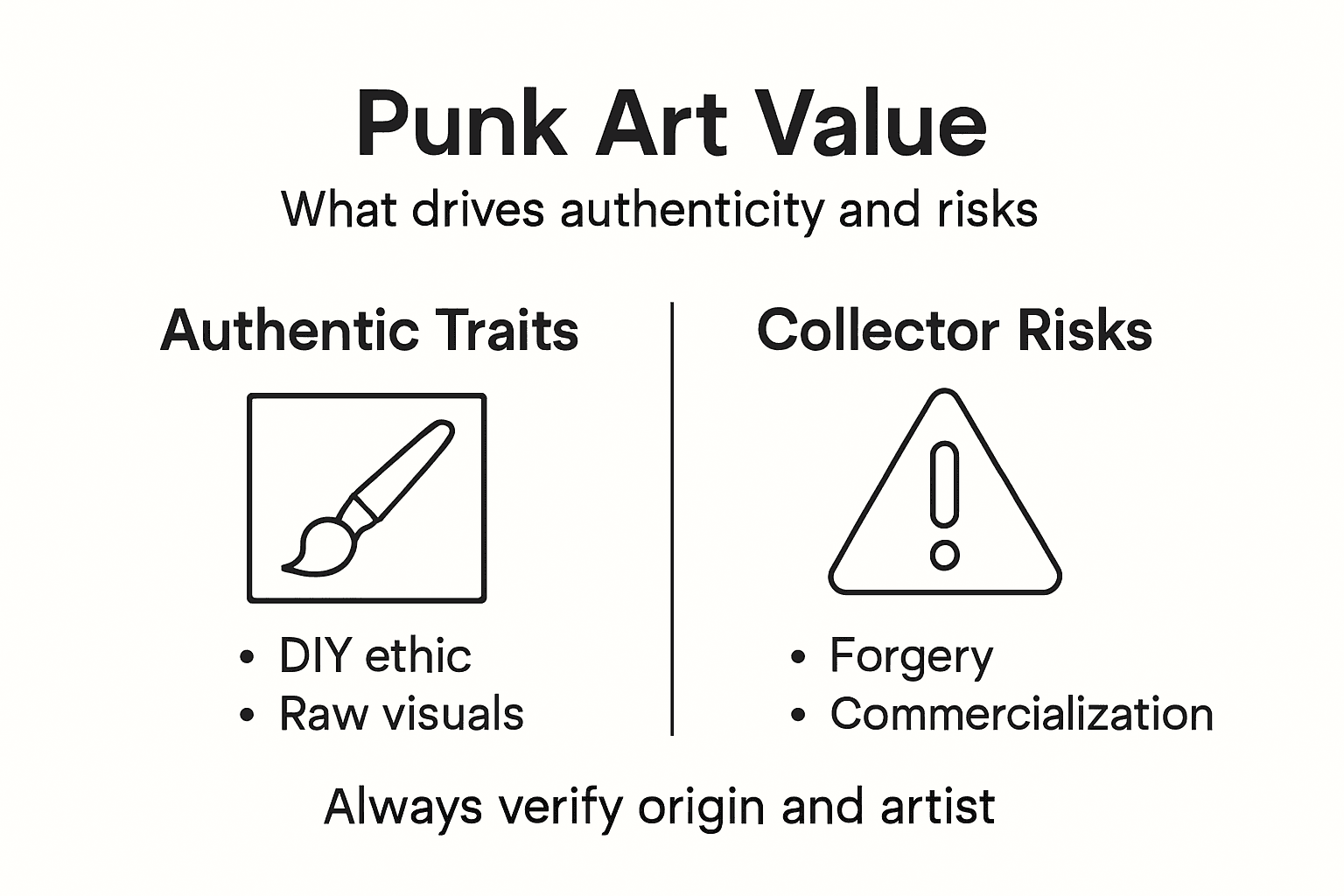
Risks in punk art collecting are substantial and multifaceted. Commercialization threatens the movement’s core principles, transforming rebellious art into commodified objects that potentially strip away their original political potency. Collectors must critically distinguish between authentic cultural artifacts and mass-produced simulacra that superficially mimic punk aesthetics. Ethical considerations become paramount, requiring deep understanding of the artwork’s historical context, the artist’s background, and the specific cultural moment that generated the piece.
Pro tip: Always verify an artwork’s provenance and seek documentation that confirms its authentic underground origins before making significant investments.
Below is a comparison of factors that influence punk art collecting:
| Factor | How It Impacts Collecting | Why It Matters |
|---|---|---|
| Authenticity | Enhances cultural significance | Preserves original intent |
| Provenance | Verifies underground origins | Confirms historical value |
| Commercialization | Risks loss of meaning | May reduce political impact |
| Ethical Context | Informs responsible acquisition | Protects subcultural history |
Discover Authentic Punk Art and Exclusive Collectibles Today
Punk art’s raw energy and D.I.Y. spirit challenge traditional aesthetics and demand a deeper understanding of cultural resistance. If you are passionate about owning pieces that embody these rebellious values while preserving authenticity and social commentary, The Mansion Press offers a carefully curated selection that connects you directly with independent artists and collectors worldwide. Our exclusive artbooks, limited-edition comics, and original artworks honor the punk ethos by highlighting underground creativity and political edge.
Explore your next statement piece now at The Mansion Press and join a global community dedicated to celebrating visual rebellion. Act today to discover unique punk-inspired collections and pre-order upcoming releases before they become unavailable. Your authentic punk art experience starts here—browse, collect, and own a piece of cultural history.
Frequently Asked Questions
What defines punk art?
Punk art is characterized by its radical expression that challenges mainstream aesthetics and societal norms. It embraces a do-it-yourself (D.I.Y.) aesthetic, raw authenticity, and is often rooted in social and political critique.
How does punk art reject traditional artistic conventions?
Punk art employs techniques such as bricolage and collage, featuring aggressive, chaotic typography and deliberately messy visuals. This raw approach subverts traditional artistic standards and delivers powerful social commentary.
Why is the DIY ethic important in punk art?
The DIY ethic emphasizes grassroots cultural production, prioritizing creativity and community over commercial interests. It enables artists to express radical perspectives and forge alternative narratives, making punk art a vital form of cultural resistance.
What are some iconic examples of punk art?
Notable examples include Jamie Reid’s album cover for the Sex Pistols’ “God Save the Queen,” which features a defaced image of Queen Elizabeth II, and the works of Jean-Michel Basquiat, whose raw style merged street culture with political critique.
Recommended
- What Is Outsider Art and Why It Matters – The Mansion Press
- Understanding Why Collect Underground Comics Matters – The Mansion Press
- Underground Comics and Music: A Creative Revolution – The Mansion Press
- Understanding Underground Comic Creators: Art and Impact – The Mansion Press
- 7 Smart Ways to Find Inspiration for Merch Designs – Custom T-Shirts and Printed Merch in Utah | Pulse Merch