

Limited Edition Lithographs: Value and Collecting Impact
Bold statements often set serious collectors apart from casual art buyers. Discovering a limited edition lithograph by an independent artist can transform your collection with true scarcity and documented authenticity. These exclusive prints stand out for their craftsmanship, artist hand-signatures, and edition transparency. Learn how deliberate scarcity and authenticated provenance make each piece a truly unique acquisition, giving you the confidence to invest in artwork that holds genuine value.
Table of Contents
- What Makes A Lithograph Limited Edition
- Types And Variations Of Lithographs
- Production Process And Key Features
- Authenticity, Numbering, And Artist Signatures
- Value Factors And Common Purchasing Mistakes
- Caring For And Displaying Lithographs
Key Takeaways
| Point | Details |
|---|---|
| Limited Edition Significance | Limited edition lithographs are characterized by a predetermined number of prints, enhancing their value through scarcity and uniqueness. |
| Authentication Importance | Each print should be verified through the artist’s signature, unique edition number, and a certificate of authenticity to ensure legitimacy. |
| Value Factors | Key determinants for value include artist reputation, edition size, print condition, provenance, and authentication documentation. |
| Preservation Best Practices | Caring for lithographs involves using archival framing, appropriate environmental controls, and professional handling to maintain their condition and value. |
What Makes a Lithograph Limited Edition
A limited edition lithograph represents a rare and precisely controlled artistic reproduction with specific characteristics that distinguish it from standard prints. Unlike mass-produced artwork, these lithographs are intentionally restricted in total quantity, creating inherent value through deliberate scarcity. Collecting limited edition prints requires understanding the nuanced elements that transform a standard print into a collectible masterpiece.
The primary factor defining a limited edition lithograph is the predetermined total number of prints produced from a single artistic plate. Artists and publishers establish this number beforehand, typically ranging between 10 and 250 prints, with smaller quantities generally commanding higher collector interest. Each lithograph is individually numbered, usually displayed as a fraction like 23/50, indicating its specific sequence within the total print run. This numbering system provides transparency about the print’s rarity and helps collectors track the artwork’s provenance.
Authenticity plays a crucial role in determining a lithograph’s limited edition status. Genuine limited edition prints include several key verification markers: the artist’s signature, a unique edition number, and often a certificate of authenticity. Professional artists typically hand-sign each print within the edition, personally confirming its legitimacy and adding significant value. The signature transforms the lithograph from a mere reproduction into a direct connection with the artist’s creative process, making each piece a distinct collector’s item.
Pro tip: When evaluating a limited edition lithograph, always verify the total edition size, check for the artist’s original signature, and request documentation confirming the print’s authenticity and provenance.
Types and Variations of Lithographs
Lithographs represent a fascinating artistic medium with multiple types of printing techniques, each offering unique characteristics and visual qualities. The fundamental process involves creating an image on a flat surface, traditionally limestone or metal plates, using oil-based mediums that selectively attract or repel printing ink. Artists and printmakers have developed several distinctive approaches to lithographic printing, each with its own aesthetic and technical nuances.
Traditional stone lithography remains the most prestigious technique, where artists directly draw on limestone using specialized greasy crayons or ink. This method allows for extraordinary detail and an organic connection between the artist’s hand and the final print. In contrast, photolithography emerged as a more technical approach, utilizing photographic techniques to transfer images onto plates. Commercial printing often employs offset lithography, which transfers the image from a plate to a rubber blanket and then onto paper, enabling high-volume reproduction while maintaining reasonable image quality.
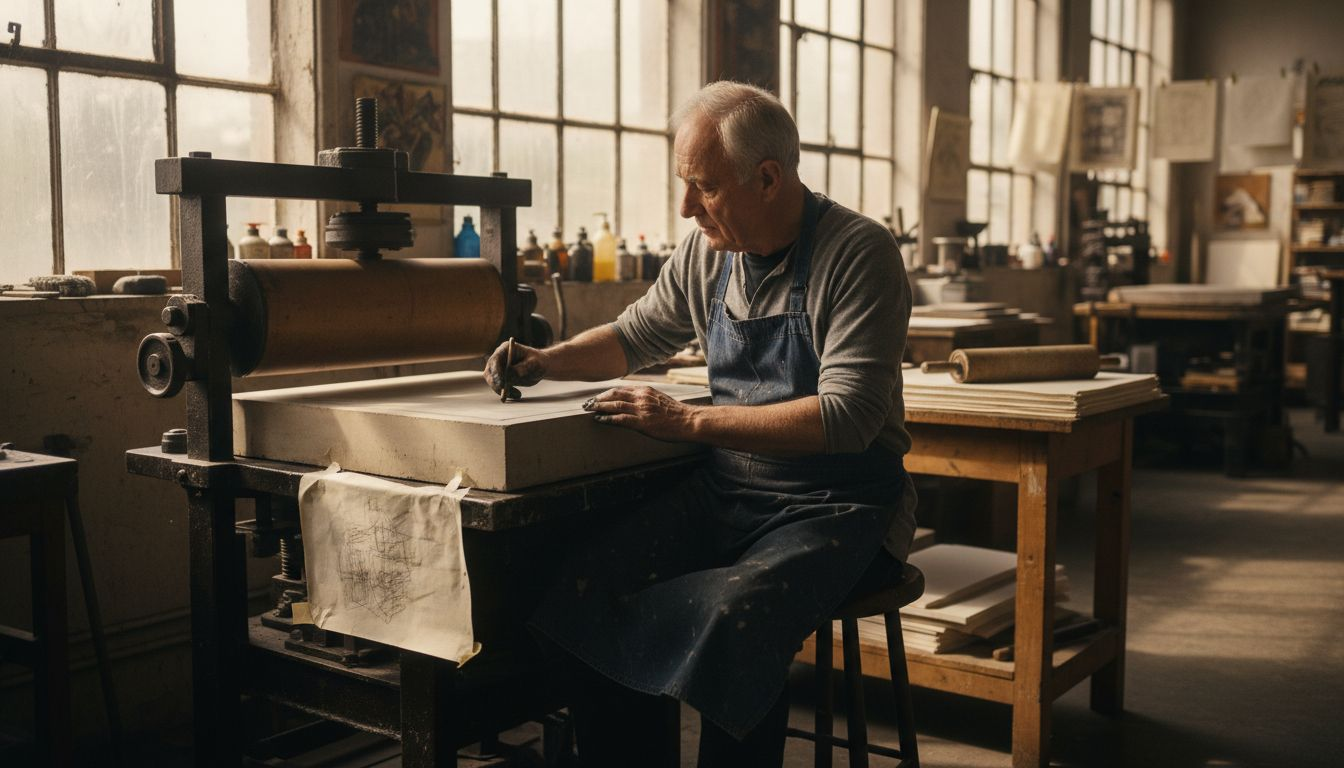
Color lithographs introduce another layer of complexity and artistic expression. Chromolithographs involve using multiple stones or plates, each dedicated to a different color, which are printed sequentially to create a vibrant, multi-colored final image. This technique requires exceptional skill and precision, as each color must be perfectly aligned during the printing process. Modern digital technologies have expanded these traditional methods, allowing for more intricate color separations and more consistent results, though many collectors and artists still prefer the nuanced imperfections of hand-pulled lithographic prints.
Pro tip: When collecting lithographs, examine the printing technique and number of color plates used, as these factors significantly influence the artwork’s complexity, rarity, and potential value.
Here’s a quick comparison of lithograph printing techniques and their main characteristics:
| Technique | Surface Used | Artistic Detail Level | Common Use Cases |
|---|---|---|---|
| Stone Lithography | Limestone | Very high | Fine art, limited editions |
| Photolithography | Metal or others | Precise, technical | Commercial graphics, photos |
| Offset Lithography | Metal plates | Good, industrial scale | Magazines, posters, mass prints |
| Chromolithography | Multiple stones | Vibrant, multicolor | Vintage ads, collectible prints |
Production Process and Key Features
The lithographic production process is a sophisticated art form that relies on the fundamental principle of chemical interaction between oil and water. Artists begin by creating intricate designs using oil-based crayons or specialized inks directly on a smooth limestone or metal plate. This initial drawing serves as the foundation for the entire printing process, requiring exceptional skill and precision to capture minute details and artistic nuances.
Once the initial design is complete, the plate undergoes a critical chemical treatment. Gum arabic and mild acid are applied to the surface, creating a complex chemical environment where non-image areas become water-receptive while the original drawing remains ink-receptive. During printing, the plate is systematically moistened and then inked, with ink adhering exclusively to the greasy drawn areas. This selective inking process allows for extraordinary detail and textural complexity, making each lithograph a unique artistic expression. Professional printmakers must maintain precise control over humidity, ink consistency, and pressure to ensure consistent, high-quality reproduction.
Multi-color lithographs represent the pinnacle of technical complexity in this artistic medium. Each color requires a separate stone or plate, with colors printed sequentially to build the final image. This method demands exceptional registration precision, as each subsequent color must align perfectly with previous layers. Modern printmakers often use digital technologies to assist with color separation and alignment, though traditional hand-pulled methods remain highly prized among collectors for their nuanced imperfections and direct connection to the artist’s original creative process.
Pro tip: When examining a lithograph, look closely at the color registration and plate marks to assess the technical skill and authenticity of the printing process.
Authenticity, Numbering, and Artist Signatures
Authenticity in limited edition lithographs is a critical aspect that transforms a print from a mere reproduction to a valuable collector’s item. Collectors seeking unique art pieces must understand the intricate markers of genuine limited edition works. The primary authentication elements include the artist’s original signature, a unique edition number, and often an accompanying certificate of authenticity that verifies the print’s provenance and legitimacy.
The numbering system is fundamental to a lithograph’s collectible status. Each print in a limited edition is individually numbered, typically displayed as a fraction such as 23/50, indicating its specific position within the total print run. The first number represents the individual print’s sequence, while the second number reveals the total prints produced in that specific edition. Lower edition numbers are frequently more desirable, as they are considered closer to the artist’s original printing process and potentially less worn from subsequent printings. Collectors meticulously track these numbers, understanding that smaller edition sizes typically correlate with higher potential value and increased rarity.
Artist signatures represent more than a mere decorative element they are a critical authentication mechanism. Professional artists personally sign each print within a limited edition, typically using archival-quality ink or pencil directly on the print. These signatures serve multiple purposes: they confirm the artist’s direct involvement, validate the print’s authenticity, and create a personal connection between the artist and collector. Some lithographs include additional authentication marks, such as embossed seals or watermarks, which further substantiate the print’s origin and legitimacy. Experienced collectors learn to distinguish between original signatures and reproduced signatures, understanding that a genuine hand-signed print carries significantly more artistic and monetary value.
Pro tip: Always request a detailed certificate of authenticity and carefully examine the artist’s signature, edition number, and print condition before making a significant lithograph investment.
Value Factors and Common Purchasing Mistakes
Understanding the complex value dynamics of limited edition lithographs requires a nuanced approach to evaluating art market investments. Multiple interconnected factors contribute to a lithograph’s monetary and artistic worth, with some elements carrying significantly more weight than others. The primary value determinants include the artist’s reputation, edition size, print condition, historical significance, and authentication documentation.
The artist’s reputation stands as the most critical value driver in lithograph collecting. Prints created by internationally recognized or historically significant artists typically command substantially higher prices, with works from established masters potentially appreciating exponentially over time. Edition size plays a crucial complementary role smaller print runs inherently increase rarity and collector desirability. Serious collectors meticulously analyze these quantitative and qualitative aspects, understanding that a limited edition lithograph from a renowned artist with only 25 prints will likely appreciate more dramatically than a 250-print edition from a less established creator.
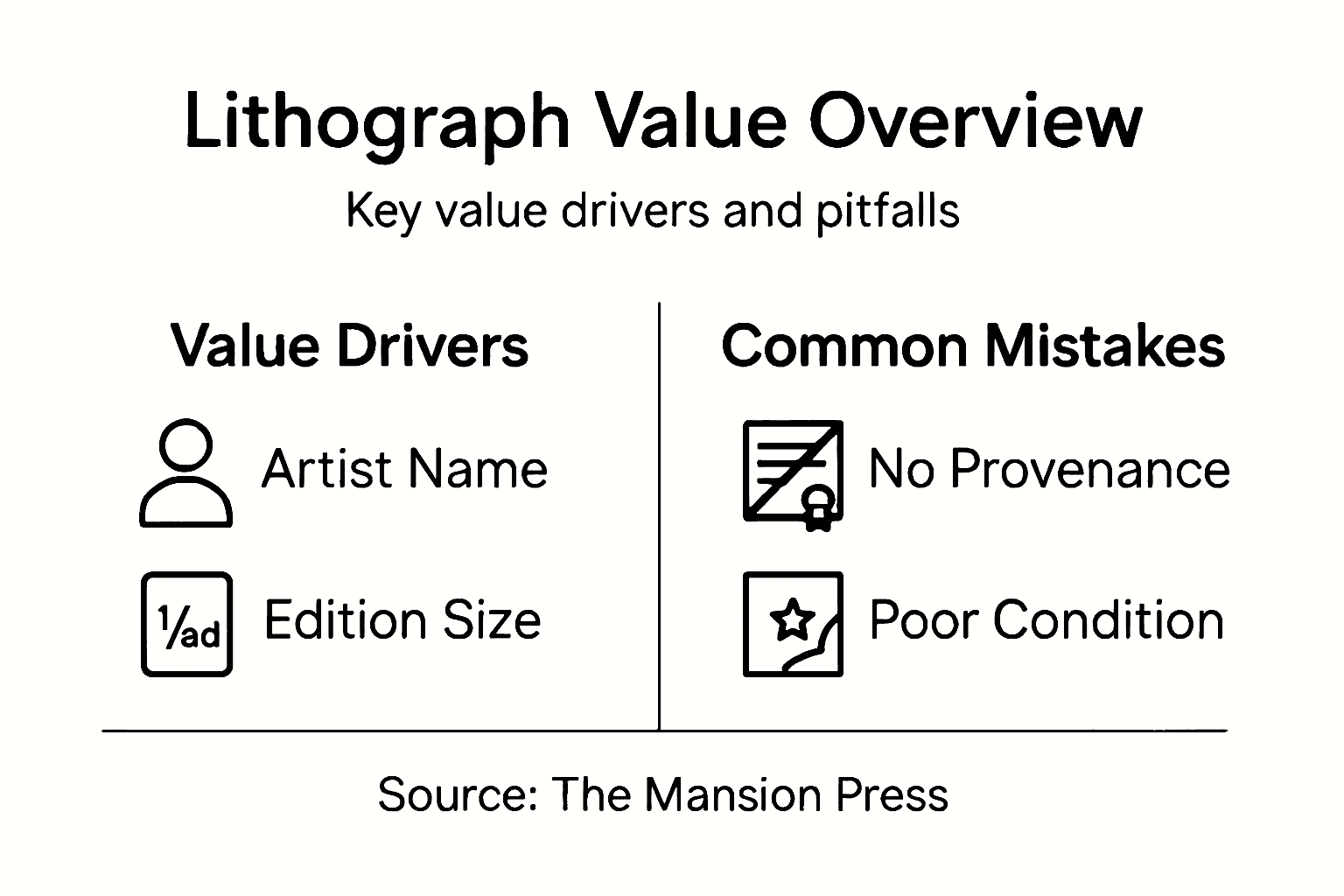
Common purchasing mistakes can dramatically undermine a collector’s investment potential. Inexperienced buyers frequently overlook critical authentication details, purchase unsigned prints, or fail to thoroughly research an artwork’s provenance. These errors can result in acquiring overpriced reproductions or pieces with minimal long-term value. Sophisticated collectors develop a comprehensive evaluation strategy that includes verifying the print’s condition, examining the artist’s signature, confirming the edition number, and obtaining professional authentication. Additional red flags include prints with unclear origin, suspiciously low prices, and sellers unable to provide comprehensive documentation about the artwork’s creation and history.
Pro tip: Always request a comprehensive condition report, verify the print’s complete provenance, and consult multiple expert sources before finalizing any significant lithograph purchase.
Below is a summary of essential factors affecting the value of limited edition lithographs:
| Value Factor | Why It Matters | Impact on Price |
|---|---|---|
| Artist Reputation | Recognized names attract buyers | Major driver of high value |
| Edition Size | Scarcity heightens demand | Smaller editions = more valuable |
| Print Condition | Well-preserved art lasts longer | Pristine works fetch premium |
| Provenance | Art history and ownership | Verified history adds security |
| Authentication | Confirms originality | Genuine documents boost trust |
Caring for and Displaying Lithographs
Preserving the delicate nature of limited edition lithographs requires understanding their unique vulnerability to environmental damage. These paper-based artworks demand meticulous environmental control and specialized handling to maintain their aesthetic and monetary value. Temperature, humidity, light exposure, and storage conditions play critical roles in preventing irreversible deterioration of these fragile artistic treasures.
Display strategies must prioritize protection while allowing aesthetic appreciation. Archival framing represents the gold standard for lithograph preservation, involving acid-free mounting materials, UV-protective glass, and careful spacing to prevent direct contact between the print and glass. Museums and serious collectors typically use conservation-grade materials that block harmful ultraviolet radiation and minimize potential chemical interactions that could degrade the artwork. Strategic placement becomes crucial temperature-stable areas away from direct sunlight, heating vents, and fluctuating environmental conditions will significantly extend a lithograph’s longevity.
Handling and storage require equally rigorous protocols. Professional collectors utilize white cotton gloves when touching prints to prevent oil transfer from skin, and store unframed lithographs in archival-quality flat storage boxes with acid-free tissue paper separating individual pieces. Periodic professional inspection helps identify early signs of deterioration such as foxing, discoloration, or paper degradation. Digital documentation of each lithograph’s condition provides an additional layer of preservation, allowing collectors to track potential changes over time and make informed conservation decisions.
Pro tip: Invest in museum-quality archival storage materials and create a consistent environmental monitoring system to protect your lithograph collection from potential damage.
Discover and Collect Your Own Limited Edition Lithographs Today
Navigating the world of limited edition lithographs can be challenging without access to authentic, artist-signed works and trusted documentation. This article highlights common pitfalls like uncertain provenance and undervalued prints. If you want to build a meaningful collection with confidence, it is essential to find carefully curated pieces that feature clear edition numbering, original artist signatures, and proper authentication. At The Mansion Press, we understand the significance of these factors and offer a unique selection of exclusive, limited-edition art and comics that connect collectors directly with independent creators.
Start exploring our curated collections now at The Mansion Press and experience the thrill of owning rare, verified artwork. Whether you are expanding a collection or beginning your journey, our platform provides detailed listings, pre-order options for upcoming releases, and access to creations not found in traditional stores. Don’t miss the opportunity to elevate your art passion with genuine limited edition pieces that promise both aesthetic joy and investment value. Visit our website today and take your first step toward preserving and celebrating collectible lithographs.
Frequently Asked Questions
What is a limited edition lithograph?
A limited edition lithograph is a rare artistic reproduction with a predetermined total number of prints, intentionally restricted to create value through scarcity.
How do I verify the authenticity of a limited edition lithograph?
To verify authenticity, check for the artist’s signature, a unique edition number, and a certificate of authenticity. These elements confirm the print’s legitimacy and connection to the artist.
What factors affect the value of limited edition lithographs?
Key factors influencing value include the artist’s reputation, edition size, print condition, historical significance, and proper authentication documentation.
What are the different types of lithograph printing techniques?
The main lithographic printing techniques include traditional stone lithography, photolithography, offset lithography, and chromolithography, each offering unique artistic features and levels of detail.