

How to Value Rare Comics for Accurate Pricing Online
Tracking down the real value of a rare comic can feel like a puzzle for serious collectors. Accurate documentation shapes every investment decision and reveals a comic’s true worth. Resources like the Grand Comics Database connect collectors with verified creator credits, publishing details, and variant issues, forming the solid foundation for pricing. You’ll find clear steps on gathering comic data, assessing physical condition, and using expert guidance for the most reliable valuation.
Table of Contents
- Step 1: Gather Essential Comic Details And Documentation
- Step 2: Evaluate Physical Condition Using Grading Standards
- Step 3: Research Market Trends And Past Sales Data
- Step 4: Compare Prices Across Reputable Online Platforms
- Step 5: Verify Valuation With Collector And Expert Feedback
Quick Summary
| Key Insight | Explanation |
|---|---|
| 1. Document Comic Details | Collect vital information such as publication year, title, and creator credits for accurate valuation. |
| 2. Evaluate Physical Condition | Use professional grading standards to assess the comic’s quality and determine its market worth. |
| 3. Research Market Trends | Analyze past sales data and current trends to understand and support your comic’s potential value. |
| 4. Compare Prices Online | Cross-reference prices across various reputable platforms to ensure a comprehensive market understanding. |
| 5. Seek Expert Validation | Engage with experienced collectors and professionals for feedback to refine your valuation and insights. |
Step 1: Gather essential comic details and documentation
Valuing rare comics requires meticulous documentation and research to establish their true market worth. By systematically collecting key details, you’ll build a comprehensive profile that helps determine accurate pricing and historical significance.
Start by examining your comic’s physical attributes and tracking down specific information. Comprehensive comic database resources like the Grand Comics Database offer invaluable research tools for collectors. Key details you’ll want to document include:
- Publication year and issue number
- Comic book series and title
- Original cover price
- Publishing company
- Creator credits (writer, artist, illustrator)
- Printing edition and variant information
- Condition grade and physical characteristics
Professional collectors understand that documentation is the foundation of accurate comic valuation.
Detailed record-keeping involves more than just physical observations. Research the comic’s historical context, print run size, and potential significance. Consult professional rare book documentation guidelines to ensure you’re capturing comprehensive information about your collectible.
Pro tip: Create a dedicated digital and physical archive for your comic documentation, including high-resolution photographs, original purchase receipts, and detailed condition notes.
Step 2: Evaluate physical condition using grading standards
Assessing the physical condition of your comic is crucial for determining its precise market value. Understanding professional grading standards will help you accurately evaluate your collectible and establish its potential worth.
Comic book condition is typically evaluated using standardized professional grading protocols that examine multiple factors systematically. These comprehensive assessments cover key aspects of the comic’s physical state:
- Cover integrity and color vibrancy
- Spine condition and alignment
- Page quality and discoloration
- Presence of tears or missing sections
- Signs of previous restoration
- Overall structural preservation
Professional grading transforms subjective assessments into objective, quantifiable measurements of comic book quality.
Grading typically follows a scale ranging from Poor (lowest) to Near Mint or Mint (highest). Professional collectors and appraisers use precise numerical grades between 0.5 and 10, with decimal points indicating subtle variations in condition. Careful visual inspection and understanding these nuanced standards can dramatically impact your comic’s perceived value.

Here’s a quick comparison of popular comic grading scales and what they mean for collectors:
| Grading Scale Name | Numeric Range | Description |
|---|---|---|
| CGC Universal Scale | 0.5 – 10.0 | Professional third-party grading |
| Overstreet Comic Scale | Poor – Mint | Widely used guidebook standards |
| Comic Book Retailer | 1.0 – 9.8 | Used by most online marketplaces |
| Collector Community | Informal terms | Community consensus on condition |
Pro tip: Always use bright, indirect lighting and wear clean cotton gloves when examining your comic to prevent additional damage during condition assessment.
Step 3: Research market trends and past sales data
Understanding the market value of rare comics requires comprehensive research into historical sales patterns and current collector trends. By systematically examining past sales data, you can develop a nuanced perspective on your comic’s potential worth.
Accessing historical comic book records becomes easier with resources like the Library of Congress comic archives, which provide extensive documentation of comic publication histories and sales trends. Several strategies can help you gather critical market insights:
- Check online auction platforms like eBay and Heritage Auctions
- Review specialized comic book price guides
- Examine recent sales records for similar issues
- Track collector forums and discussion groups
- Monitor specialized comic book marketplaces
- Analyze price trends for specific character or series editions
Market research transforms speculation into informed valuation decisions.
Professional collectors understand that pricing fluctuates based on multiple factors including character popularity, historical significance, condition, and current market demand. Pay close attention to recent sales of comparable comics, noting precise selling prices and the specific conditions that influenced those transactions.
Pro tip: Create a spreadsheet tracking sale prices of similar comics over the past 24 months to develop a comprehensive understanding of your comic’s potential market value.
Step 4: Compare prices across reputable online platforms
Navigating the complex world of comic book pricing requires strategic research across multiple trusted online platforms. Your goal is to develop a comprehensive understanding of your comic’s current market value by comparing prices from various reliable sources.
Start by utilizing comprehensive resources like the Grand Comics Database to cross-reference pricing information and track market trends. Several key platforms will help you build an accurate pricing profile:
- Comic book marketplace websites
- Online auction platforms
- Specialized comic collecting forums
- Professional grading service websites
- Collector-focused price guide websites
- Digital comic book marketplaces
Price comparison transforms guesswork into precise market valuation.
Systematic price tracking involves more than just finding the highest or lowest price. Professional collectors analyze multiple sources, considering factors like condition, edition, and recent sales history. The Internet Archive’s comic collection can provide additional context for understanding historical pricing and availability of specific issues.
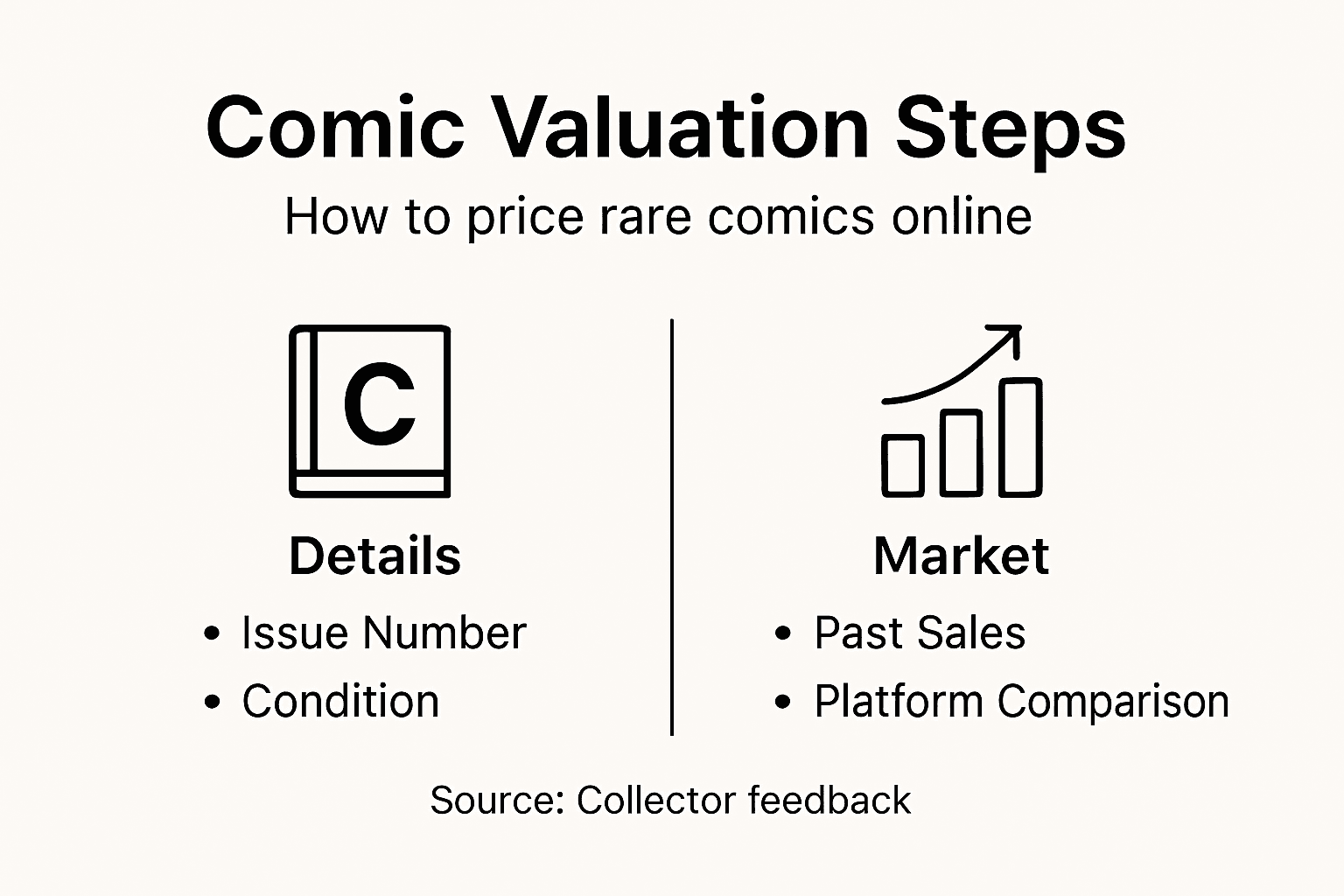
The table below summarizes how different types of online platforms contribute to accurate comic valuation:
| Platform Type | Primary Benefit | Example Use Case |
|---|---|---|
| Auction Sites | Real-time market prices | Track recent high-profile sales |
| Collector Forums | Expert peer insights | Get advice on rare editions |
| Price Guide Websites | Historical value trends | Research pricing over decades |
| Grading Service Websites | Trusted condition grades | Verify numeric grades for resale |
Pro tip: Create a digital spreadsheet to track prices from at least five different platforms, recording the date, platform, condition grade, and exact selling price for the most accurate comparison.
Step 5: Verify valuation with collector and expert feedback
Validating your comic’s market value requires more than just online research—you need insights from experienced collectors and professional appraisers who understand the nuanced world of comic book valuation. Expert feedback provides critical context that transforms your initial pricing estimates into credible market assessments.
Start by consulting authoritative sources like the comic book price guide, which synthesizes expert opinions and collector insights. Engaging with professional networks can help refine your valuation through multiple verification strategies:
- Join specialized comic collector forums
- Attend comic book conventions and appraisal events
- Consult professional rare book valuation experts
- Participate in online collector discussion groups
- Request appraisals from professional grading services
- Share detailed images with experienced collectors
Expert verification transforms pricing speculation into validated market knowledge.
Professional network engagement requires patience and strategic communication. Be prepared to provide detailed documentation about your comic, including high-resolution images, publication details, and your current research findings. Experienced collectors appreciate thorough preparation and will offer more nuanced feedback when you demonstrate serious research.
Pro tip: Always approach expert feedback with humility and openness, recognizing that collective knowledge often reveals insights individual research might miss.
Discover and Collect Authentic Rare Comics with Confidence
Valuing rare comics accurately requires dedication to detail and a trusted source for authentic collectibles. If you are navigating grading standards, market trend research, or expert verification, you understand how challenging it is to find genuine comics that hold their value. At The Mansion Press, we specialize in connecting collectors like you with unique and limited-edition comic books, original artworks, and collector’s editions that are carefully curated to meet high-quality standards.

Explore our exclusive collections and take advantage of pre-order options to secure pieces that reflect true market value and rarity. Start building or expanding your collection today with confidence by visiting our main site. Learn more about our artist showcases and product offerings to find comics and art that align perfectly with your valuation journey.
Frequently Asked Questions
How do I gather the essential details for valuing my rare comic?
To value your rare comic accurately, start by documenting key attributes like the publication year, issue number, series title, and creator credits. Create a comprehensive profile that includes the condition grade and any variant information.
What should I consider when evaluating the physical condition of my comic?
Assess your comic’s condition by examining cover integrity, spine condition, and page quality. Use professional grading standards to assign a grade from Poor to Near Mint, which can significantly affect its market value.
How can I research market trends for my comic book?
Research market trends by examining historical sales data on online auction platforms and checking specialized comic book price guides. Track prices over time and analyze recent sales of similar issues to gain insight into your comic’s potential worth.
What platforms are best for comparing comic book prices?
To compare comic book prices effectively, explore various online marketplaces, auction sites, and collector forums. Collect pricing data from at least five different platforms to establish a well-rounded understanding of the current market value.
How can I verify my comic’s value with expert feedback?
Engage with experienced collectors and professional appraisers to validate your comic’s market value. Provide detailed documentation, including high-resolution images and publication details, to facilitate an informed discussion about your collectible’s worth.