

How to Read Alternative Comics for Artful Collecting Success
Every serious collector knows that discovering truly remarkable comics takes more than luck—it demands intention and artistic curiosity. With alternative comics offering boundary-pushing visuals and complex narratives, cultivating a genuine appreciation starts by preparing a dedicated artful reading environment tailored for focused exploration. This approach not only enhances your ability to spot artistic innovation but also elevates your entire collecting experience, bringing depth and meaning to every addition in your curated collection.
Table of Contents
- Step 1: Prepare An Artful Reading Environment
- Step 2: Select Compelling Alternative Comic Titles
- Step 3: Analyze Visual And Narrative Techniques
- Step 4: Evaluate Artistic And Collectible Value
- Step 5: Verify Authenticity And Edition Quality
Quick Summary
| Key Point | Explanation |
|---|---|
| 1. Create a dedicated reading space | Design a comfortable area with good lighting and minimal distractions to enhance your comic reading experience. |
| 2. Curate diverse comic titles | Focus on selecting alternative comics that showcase unique storytelling and artistic innovation from various sources. |
| 3. Analyze visual and narrative techniques | Develop skills to decode complex visual storytelling and appreciate deeper narrative elements in comics. |
| 4. Assess artistic and collectible value | Understand the artistic significance and potential investment value of alternative comics beyond their entertainment aspect. |
| 5. Verify authenticity and quality | Learn to distinguish genuine, high-quality editions from counterfeits through careful examination and research. |
Step 1: Prepare an Artful Reading Environment
Creating an ideal environment for exploring alternative comics is more than just finding a comfortable chair. It’s about designing a space that enhances your visual and intellectual engagement with this unique art form. Your reading environment should stimulate your artistic appreciation and support deep, immersive comic reading experiences.
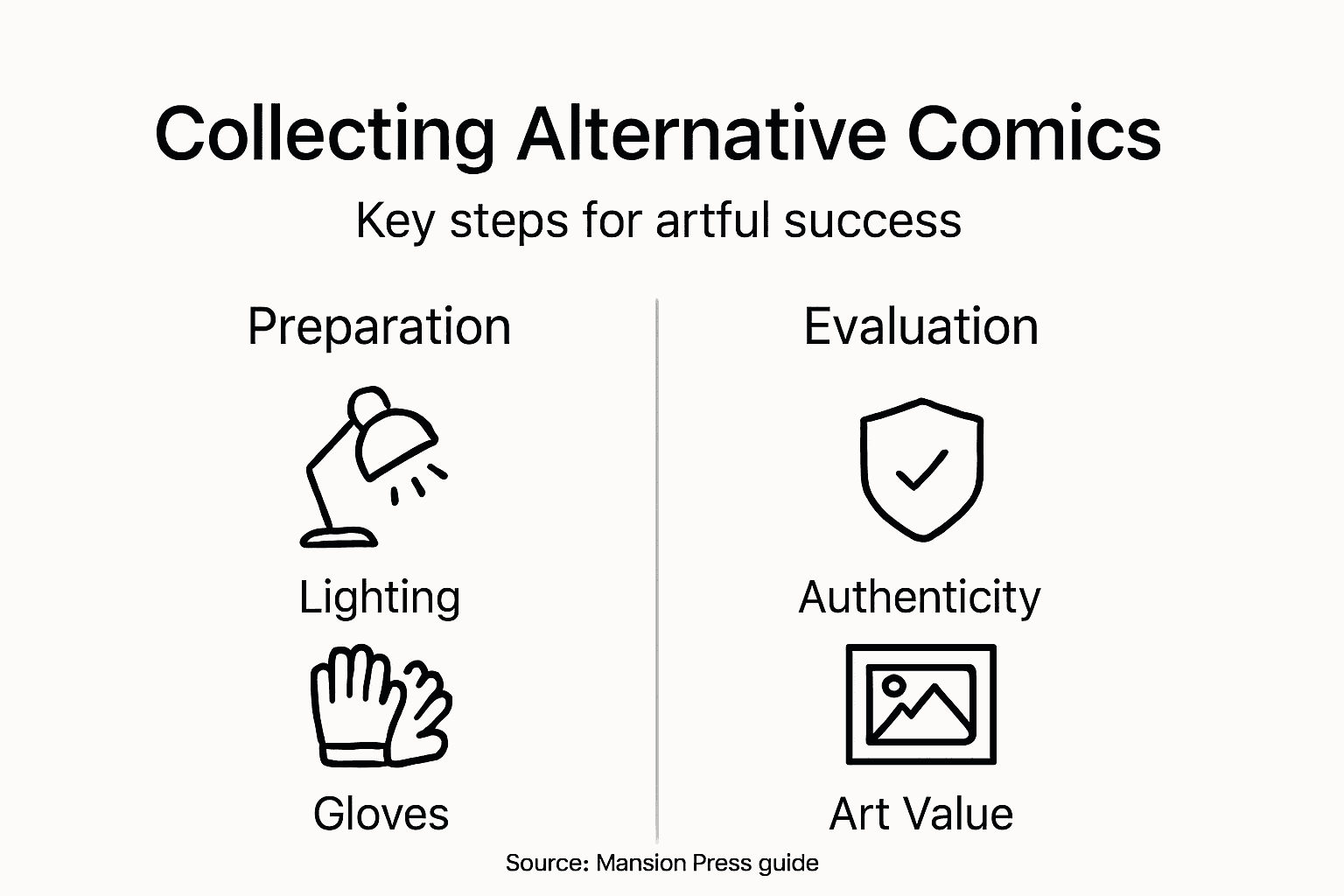
Start by selecting a dedicated reading area with excellent lighting that minimizes glare and allows you to appreciate intricate comic artwork. Natural light works best, but if that’s unavailable, invest in adjustable LED lighting that provides even, soft illumination. Position your reading surface near a window or use a high-quality lamp with color-accurate rendering to ensure you see every nuanced detail of the artwork.
Consider these essential elements for your comic reading sanctuary:
- Ergonomic seating that supports comfortable, extended reading sessions
- A flat, stable surface like a drafting table or art desk for spreading out larger comic volumes
- Minimal visual distractions that could interrupt your artistic immersion
- Climate control to protect delicate comic pages from humidity and temperature fluctuations
Reading alternative comics requires focused attention, which is why creating a supportive visual environment matters so much. By intentionally designing your reading space, you transform comic reading from a casual activity into a deliberate artistic exploration.
Pro tip: Keep soft white cotton gloves nearby to handle rare or delicate comics, preventing oil and dirt transfer while maintaining a professional collector’s approach.
Step 2: Select Compelling Alternative Comic Titles
Selecting compelling alternative comics is an art form that requires careful exploration, discernment, and an understanding of the medium’s rich artistic landscape. Your goal is to curate a collection that transcends mainstream storytelling and represents innovative visual narratives that challenge traditional comic book conventions.
Understanding comic book artistic movements involves looking beyond conventional superhero narratives and exploring titles that push creative boundaries. Alternative comics represent a diverse spectrum of storytelling styles, ranging from autobiographical graphic memoirs to experimental visual poetry. When building your collection, focus on works that demonstrate unique artistic approaches, unconventional narrative structures, and profound storytelling depth.
Consider these key strategies for selecting remarkable alternative comic titles:
- Explore independent publishers specializing in avant-garde comic art
- Research award-winning alternative comic creators
- Attend comic festivals and independent art book fairs
- Follow curated recommendations from comic art historians
- Investigate graphic novels from international artists
Alternative comics are not just publications. They are visual art statements that challenge cultural narratives and expand our understanding of storytelling.
Pay special attention to comics that demonstrate innovative techniques such as experimental page layouts, mixed media approaches, or narrative complexity. By developing a discerning eye, you can build a collection that reflects artistic innovation and personal aesthetic sensibilities.
Pro tip: Invest in comic reference guides and attend specialized comic art exhibitions to continually expand your knowledge and refine your collecting criteria.
Here’s a quick comparison of mainstream and alternative comics collecting approaches:
| Aspect | Mainstream Comics | Alternative Comics |
|---|---|---|
| Narrative Style | Traditional, formulaic | Experimental, boundary-pushing |
| Artistic Techniques | Standard, mass-produced | Unique, innovative |
| Collectible Value | Often rarity-driven | Artistic and cultural significance |
| Seeker Motivation | Popularity, nostalgia | Personal aesthetics, cultural impact |
Step 3: Analyze Visual and Narrative Techniques
Mastering alternative comics requires developing a sophisticated approach to decoding visual storytelling that goes beyond surface-level reading. Your goal is to transform from a casual reader into a discerning art collector who can deeply appreciate the intricate layers of narrative and visual composition within alternative comic works.
Analyzing narrative temporality and spatial design involves understanding how comic artists manipulate time, space, and visual representation to communicate complex ideas. Alternative comics often challenge traditional storytelling by using unconventional techniques that require active interpretation from the reader.
Focus on these critical analytical strategies:
- Examine panel composition and how it guides narrative flow
- Analyze the relationship between text and visual imagery
- Study the artist’s use of negative space and visual metaphors
- Investigate character design and its emotional implications
- Evaluate the rhythmic and temporal qualities of page layouts
Visual storytelling in alternative comics is a dialogue between the artist’s intention and the reader’s interpretation.
Pay particular attention to how artists use visual techniques to create meaning beyond literal representation. Look for subtle details such as color palette choices, line weight variations, and symbolic imagery that contribute to the deeper narrative context.

Pro tip: Develop a practice of reading comics multiple times, each pass focusing on different analytical aspects like narrative structure, visual symbolism, and emotional resonance.
Use this table as a reference for visual analysis techniques in alternative comics:
| Technique | Purpose | Analytical Focus |
|---|---|---|
| Panel Composition | Guides narrative pacing | Flow and transition |
| Color Palette | Sets mood and symbolism | Emotional context |
| Text-Image Balance | Enhances storytelling | Meaning beyond words |
| Negative Space | Directs viewer attention | Visual metaphor and impact |
Step 4: Evaluate Artistic and Collectible Value
Transforming from a casual reader to a sophisticated alternative comics collector requires developing a nuanced understanding of artistic and market value. Your goal is to assess comic works not just as entertainment, but as complex cultural artifacts with intrinsic artistic significance and potential investment potential.
Understanding graphic novels’ cultural significance involves looking beyond surface-level aesthetics to comprehend the deeper narrative and representational complexities. Collectors should approach alternative comics as unique artistic expressions that communicate profound social and emotional experiences.
Consider these critical evaluation criteria:
- Assess artist’s technical mastery and innovative visual techniques
- Evaluate narrative complexity and thematic depth
- Research artist’s reputation and historical significance
- Examine print quality and physical preservation
- Analyze rarity and limited edition characteristics
Collectible value emerges from the intersection of artistic innovation, cultural relevance, and scarcity.
Pay special attention to factors that distinguish exceptional alternative comics: unique storytelling approaches, groundbreaking visual styles, and works that challenge existing narrative conventions. Remember that true value transcends monetary considerations and reflects the comic’s artistic integrity and cultural impact.
Pro tip: Develop relationships with comic historians and attend specialized art exhibitions to continuously refine your understanding of alternative comics’ evolving artistic landscape.
Step 5: Verify Authenticity and Edition Quality
Authenticity is the cornerstone of alternative comic collecting, transforming your acquisition from a simple purchase into a meaningful preservation of artistic heritage. Your mission is to develop a discerning eye that can distinguish genuine, high-quality editions from mass-produced or potentially counterfeit works.
Understanding comic publication nuances requires careful examination of multiple technical and historical indicators. Alternative comics demand more sophisticated verification techniques compared to mainstream comic publications, as their value often lies in subtle artistic and production details that casual collectors might overlook.
Employ these critical authentication strategies:
- Examine paper stock and printing techniques
- Check edition numbering and artist signatures
- Research publisher’s historical print runs
- Inspect printing consistency and color fidelity
- Verify original publication dates and print variations
Authenticity is not just about proving origin—it’s about understanding the comic’s complete artistic narrative.
Pay meticulous attention to minute details like paper texture, ink quality, and printing inconsistencies that can reveal a comic’s true provenance. Professional collectors understand that verifying edition quality is an art form requiring patience, research, and specialized knowledge.
Pro tip: Invest in professional comic authentication tools and build relationships with reputable comic historians who can provide expert verification insights.
Elevate Your Alternative Comics Collection with Exclusive Artful Editions
Navigating the world of alternative comics requires more than passion. It demands access to unique visual narratives, collectible editions, and artist-driven works that embody the innovation and authenticity highlighted in “How to Read Alternative Comics for Artful Collecting Success.” If you want to build a collection that truly reflects artistic mastery and rare storytelling techniques you need trusted sources offering expertly curated selections.
That is where The Mansion Press comes in. Our platform connects collectors and art lovers with limited-edition comics, collector’s items, and original artworks that elevate your passion into true artful collecting. Discover carefully authenticated pieces that align perfectly with the article’s insights on authenticity and artistic value.
Begin transforming your collection today by exploring our exclusive catalog at The Mansion Press. Unlock the opportunity to own groundbreaking alternative comics that sharpen your discerning eye and deepen your appreciation for this rich medium. Don’t miss out on pre-ordering upcoming releases and gaining access to artist collaborations that inspire your collecting journey. Visit now and embrace artful success.
Frequently Asked Questions
How can I create an ideal reading environment for alternative comics?
To create an ideal reading environment, focus on comfortable ergonomic seating, good lighting, and a flat, stable surface. Aim for minimal distractions and excellent climate control to protect your comics.
What criteria should I use to select compelling alternative comic titles?
When selecting alternative comic titles, look for works from independent publishers, award-winning creators, and comics that push artistic boundaries. Researching these factors can help you curate a collection that reflects your personal aesthetic and artistic appreciation.
How do I analyze visual and narrative techniques in alternative comics?
To analyze visual and narrative techniques, examine aspects like panel composition and the relationship between text and imagery. Make it a habit to read comics multiple times, each reading focusing on different elements such as narrative structure and visual symbolism.
What factors contribute to the artistic and collectible value of alternative comics?
Artistic and collectible value arises from a comic’s narrative complexity, artistic techniques, and the reputation of the artist. Assess these factors alongside the physical quality and rarity of the comic for a comprehensive evaluation.
How can I verify the authenticity and quality of alternative comic editions?
To verify authenticity, inspect details like paper quality, printing techniques, and edition numbering. Take the time to research the comic’s publishing history and compare it with known editions to ensure you are getting a genuine piece and maintain its value over time.
What steps should I take if I want to preserve delicate alternative comics?
To preserve delicate alternative comics, handle them with soft white cotton gloves to prevent oil and dirt transfer. Store them in a climate-controlled environment, away from direct sunlight, to protect against humidity and temperature fluctuations.
Recommended
- 7 Essential Tips for Emerging Artists in Alternative Comics – The Mansion Press
- 7 Key Insights into Alternative Comics Movements Today – The Mansion Press
- How to Read Experimental Comics for Art Collectors and Fans – The Mansion Press
- 8 Essential Reads for Comics Collectors’ Education – The Mansion Press