

Graphic Novel vs Comic Book: Impact on Collecting
Choosing between comic books and graphic novels can be a challenging decision for collectors who value both artistic excellence and investment potential. These visual storytelling forms may look similar, yet their differences shape everything from collectibility to display value. Understanding the distinction between serialized comic books and standalone graphic novels gives collectors a sharper edge when scouting for pieces with cultural impact, literary merit, or long-term value.
Table of Contents
- What Defines Graphic Novels and Comic Books
- Format, Structure, and Storytelling Differences
- Venn Diagram: Overlapping Features Explained
- Collector Value and Market Implications
- Common Misconceptions and Buyer Mistakes
Key Takeaways
| Point | Details |
|---|---|
| Format Differences | Comic books are shorter serialized stories, while graphic novels are longer, self-contained narratives. |
| Narrative Complexity | Graphic novels often tackle mature themes and allow for deeper character development compared to comic books. |
| Collector Perspectives | Comic books tend to focus on rarity and episodic value, whereas graphic novels are valued for their artistic completeness and sophisticated storytelling. |
| Common Misconceptions | Buyers often confuse the formats and overlook the artistic merit, which can lead to poor collecting decisions. |
What Defines Graphic Novels and Comic Books
Graphic novels and comic books share a fundamental narrative method of storytelling through sequential art, yet they possess distinct characteristics that set them apart in the world of visual storytelling. Complex iconical language of sequential images unites these art forms while their formats and contexts diverge significantly.
The primary distinctions between graphic novels and comic books emerge through several key dimensions:
- Format: Comic books are typically serialized shorter narratives published periodically
- Length: Graphic novels represent longer, self-contained book-length stories
- Narrative Complexity: Graphic novels often explore more mature and sophisticated themes
- Publication Style: Comics are traditionally released in installments, while graphic novels are complete works
Comic books traditionally target broader audiences and genres, ranging from superhero adventures to slice-of-life narratives. In contrast, graphic novels tend to target more mature readers with sophisticated artwork and serious literary themes. This distinction has evolved from comics being perceived as juvenile entertainment to a respected narrative medium.
Artistic Approaches
While comic books often feature recurring characters and ongoing storylines, graphic novels typically present standalone narratives with deeper character development and more intricate plot structures. The artistic approach in graphic novels frequently emphasizes visual storytelling techniques that elevate the medium beyond simple sequential art.
Collector’s Perspective
For collectors, understanding these nuances becomes crucial. Comic books might represent episodic collectibles with potential investment value, whereas graphic novels are often viewed as complete artistic statements with enhanced literary and aesthetic merit.
Here’s a side-by-side comparison of how graphic novels and comic books appeal to collectors:
| Collector Aspect | Comic Books | Graphic Novels |
|---|---|---|
| Collectibility Drivers | Rarity, series completion | Artistic innovation, narrative scope |
| Investment Focus | First issues, vintage runs | Acclaimed, limited editions |
| Typical Display | Single issues, full runs | Standalone volumes, sets |
| Emotional Appeal | Nostalgia, ongoing stories | Literary depth, unique art style |
Pro tip: When building a collection, consider acquiring both graphic novels and comic books to create a diverse and comprehensive representation of sequential art storytelling.
Format, Structure, and Storytelling Differences
Comic books and graphic novels represent two distinctive approaches to visual storytelling, each with unique narrative characteristics that profoundly impact their artistic expression and collector appeal. Serialized publications differ significantly in their structural design and storytelling techniques.
Key Structural Differences:
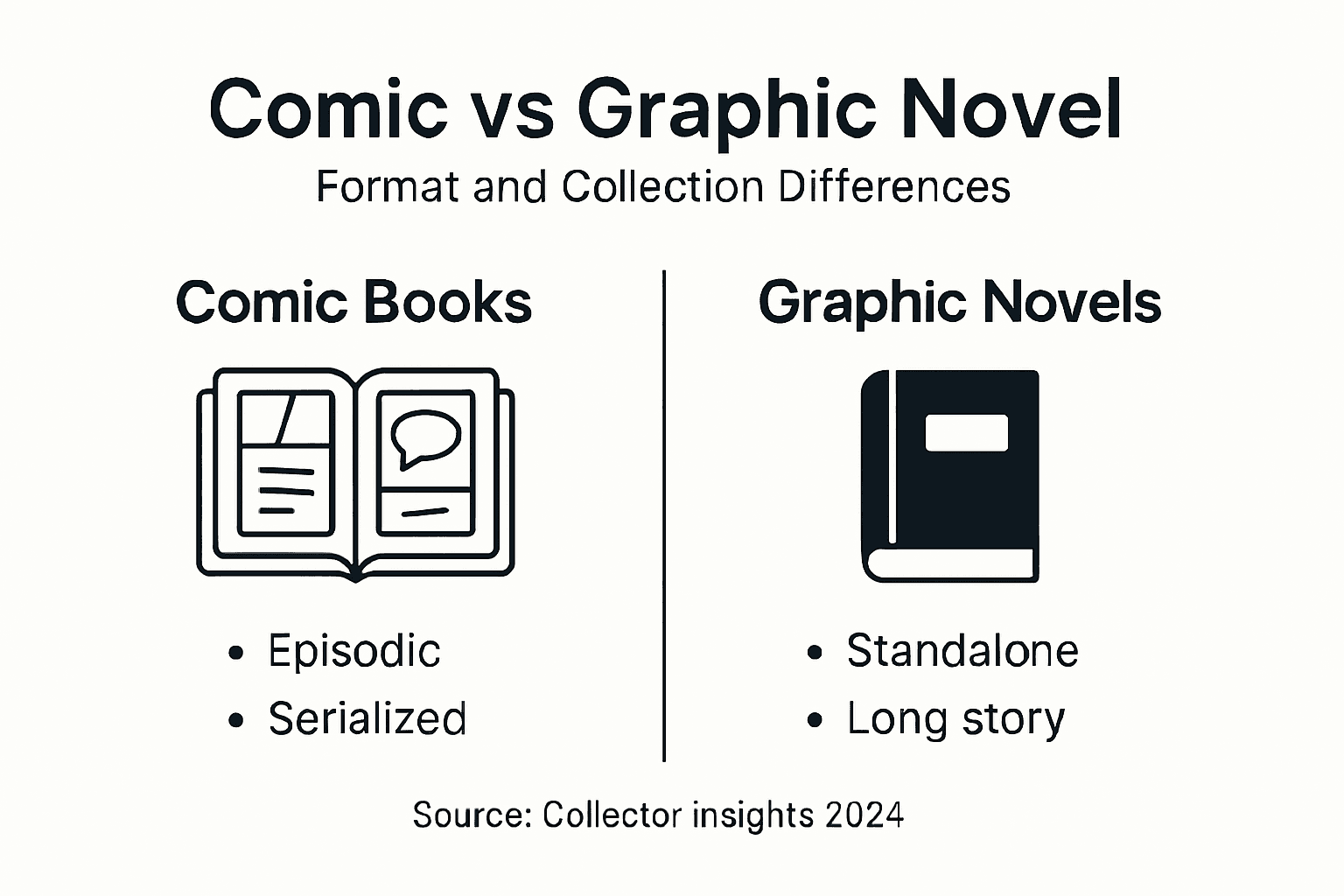
- Publication Format: Comic books are episodic, graphic novels are standalone
- Length: Comic books are shorter, graphic novels are more comprehensive
- Narrative Complexity: Graphic novels offer deeper thematic exploration
- Character Development: Graphic novels provide more nuanced character arcs
The narrative approach distinguishes these mediums fundamentally. Episodic chapters focus on ongoing plot progression in comic books, creating a sense of continuity and anticipation. Graphic novels, conversely, present complete narratives within a single volume, allowing for more intricate storytelling and comprehensive character development.
Artistic Considerations
Artwork in these formats reflects their structural differences. Comic books prioritize dynamic action and quick visual storytelling, while graphic novels invest more in detailed illustrations and sophisticated visual techniques. The artwork in graphic novels often demonstrates higher production values, with more elaborate panel designs and nuanced visual storytelling.
Collector’s Perspective
For collectors, understanding these distinctions becomes crucial. Comic books represent episodic collectibles with potential investment value through rarity and condition, whereas graphic novels are viewed as complete artistic statements with enhanced literary and aesthetic merit. The collecting approach varies significantly between these two mediums.

Pro tip: When building a collection, develop expertise in both formats to appreciate the unique storytelling approaches and artistic techniques of comic books and graphic novels.
Venn Diagram: Overlapping Features Explained
Sequential art techniques unite comic books and graphic novels in a complex narrative landscape, revealing more similarities than collectors might initially recognize. Despite their apparent differences, these visual storytelling mediums share fundamental artistic and narrative characteristics.
Shared Narrative Elements:
- Visual Language: Both use panels and sequential imagery
- Storytelling Techniques: Employ speech bubbles and text-image interactions
- Genre Diversity: Cover similar narrative genres and themes
- Artistic Expression: Utilize illustrations as primary storytelling mechanism
The boundaries between comic books and graphic novels are more fluid than most enthusiasts imagine. Storytelling approaches frequently intersect, with many stories appearing in multiple formats through collections, adaptations, and reprint editions.
Technical Convergence
Both mediums rely on complex visual communication strategies. Comic books and graphic novels utilize identical fundamental tools: panel layouts, visual metaphors, character design, and narrative progression through images. The primary distinction lies not in technique, but in presentation and narrative scope.
Collector’s Insight
For serious collectors, understanding these overlapping features becomes crucial. Recognizing that many works transcend traditional format boundaries allows for a more nuanced and comprehensive approach to collection development. Some graphic novels collect previously serialized comic book narratives, creating an intricate ecosystem of visual storytelling.
Pro tip: Develop a collection strategy that embraces the interconnected nature of comic books and graphic novels, recognizing their shared artistic heritage and narrative potential.
Collector Value and Market Implications
Cultural prestige shapes collector markets for graphic novels and comic books, creating a nuanced landscape of value and perception beyond traditional collectible metrics. The market dynamics reflect complex interactions between artistic merit, rarity, and cultural legitimacy.
Market Value Factors:
- Rarity: Limited edition prints and first printings
- Condition: Preservation and quality of physical artifact
- Historical Significance: Cultural and artistic importance
- Narrative Complexity: Depth of storytelling and artistic innovation
Academic and professional collections increasingly recognize graphic novels as legitimate artistic and cultural artifacts. This shift transforms market perceptions, elevating graphic novels from niche entertainment to respected collectible mediums.
Collector Segmentation
Collector demographics reveal fascinating market segments. Serious collectors distinguish between investment-grade pieces and personally meaningful works, creating a multilayered market where emotional and financial values intersect. Graphic novels often command higher prices due to their perceived artistic sophistication and comprehensive narrative structures.
Investment Considerations
Understanding market trends requires nuanced appreciation of both formats. Comic books retain strong collector interest through nostalgia and series completionism, while graphic novels attract collectors seeking sophisticated, self-contained artistic statements. The most valuable pieces often represent watershed moments in visual storytelling.
Pro tip: Research historical significance and artistic innovation when evaluating potential additions to your collection, focusing on works that represent meaningful cultural or narrative breakthroughs.
Common Misconceptions and Buyer Mistakes
Debunking myths about graphic novels requires understanding the nuanced landscape of visual storytelling. Many collectors and enthusiasts inadvertently perpetuate misconceptions that can significantly impact their purchasing and collecting strategies.
Common Buyer Misconceptions:
- Format Equivalence: Assuming all graphic novels and comics are interchangeable
- Value Determination: Misjudging collectible worth based on surface appearance
- Content Quality: Underestimating narrative complexity and artistic merit
- Collection Strategy: Failing to distinguish between investment and personal collection pieces
Libraries and collectors face challenges in managing graphic novel collections due to evolving narratives and changing market dynamics. Buyers often make critical errors by not understanding the unique characteristics of different publications.
Psychological Buying Traps
Collectors frequently fall into psychological traps that compromise their collecting integrity. They might prioritize nostalgia over actual value, chase trending titles without understanding their long-term significance, or make impulsive purchases without thorough research. Understanding these pitfalls becomes crucial for building a meaningful collection.
Educational Value
Many buyers mistakenly view graphic novels and comics as purely entertainment, overlooking their potential as sophisticated narrative and artistic mediums. This misconception limits their appreciation and can lead to poor collecting decisions that neglect works with significant cultural or artistic importance.
Understanding common buyer mistakes helps improve collection strategies:
| Mistake Type | Impact on Collection | How to Avoid |
|---|---|---|
| Overvaluing Trends | Unstable long-term value | Research historical importance |
| Ignoring Condition | Reduces resale potential | Inspect and preserve items |
| Confusing Formats | Missed artistic merit | Learn key differences |
| Impulsive Purchases | Acquisition regret | Set clear collecting goals |
Pro tip: Always research a publication’s historical context, artistic innovation, and narrative complexity before making a purchase, rather than relying solely on surface-level marketing or collector trends.
Discover the Perfect Balance Between Graphic Novels and Comic Books for Your Collection
Navigating the nuanced world of graphic novels and comic books can feel overwhelming when deciding what to add next. The article revealed key challenges collectors face such as distinguishing narrative complexity, artistic merit, and understanding value beyond just rarity or nostalgia. If you seek investments that truly reflect artistic innovation and storytelling depth, you need more than just luck; you need access to exclusive editions and trusted sources that curate quality with care.
Explore The Mansion Press where carefully selected artbooks, collector’s editions, and unique comics await passionate collectors who appreciate the intricate overlap and unique characteristics these formats provide. With our international selection featuring limited editions and original artworks, you can build a meaningful and sophisticated collection today. Don’t wait for fleeting trends to fade — enrich your collection with pieces that celebrate both the art and the story. Start browsing now to secure exclusive titles that combine narrative depth and visual mastery.
Frequently Asked Questions
What are the main differences between graphic novels and comic books?
Graphic novels typically offer longer, self-contained stories with deeper character development, while comic books are usually shorter, serialized narratives published periodically.
How does narrative complexity differ between graphic novels and comic books?
Graphic novels often explore more mature and sophisticated themes, providing a rich narrative experience, whereas comic books may focus on broader, lighter themes and ongoing stories.
Why should collectors pay attention to the format of graphic novels and comic books?
Understanding the format is essential for collectors because comic books often represent episodic collectibles, while graphic novels are complete artistic statements, affecting their value and appeal in the market.
What common misconceptions do buyers have about graphic novels and comic books?
Many buyers mistakenly assume that all graphic novels and comic books are interchangeable and overlook their unique characteristics, which can impact their collecting decisions and appreciation of the mediums.