

How Comics Inspire Film: Complete Guide to Adaptation
Nearly every american moviegoer has experienced the explosive growth of comic-inspired films, with these adaptations now making up over 30 percent of the highest-grossing box office hits. This surge reveals a deep connection between comics and modern film, shaping everything from visual style to complex storytelling. Grasping how comic book creativity influences hollywood helps explain why this unique mix continues to capture the imagination of millions.
Table of Contents
- Defining Comics’ Influence On Film
- Major Types Of Comic-to-Film Adaptations
- Visual Storytelling: Techniques Translated To Film
- Narrative Structures And Character Development
- Licensing, Rights, And Legal Considerations
- Common Challenges In Comic Adaptations
Key Takeaways
| Point | Details |
|---|---|
| Comics Transform Cinema | Comics significantly influence modern filmmaking through innovative visuals and narrative structures. |
| Types of Adaptations | Comic-to-film adaptations can be direct, reimagined, or hybrid, each with unique challenges in interpretation. |
| Visual Techniques | Filmmakers utilize comic-inspired techniques such as dramatic framing and dynamic compositions to enhance storytelling. |
| Legal Complexities | Successful adaptations must navigate intricate licensing and intellectual property issues to respect original creators’ rights. |
Defining Comics’ Influence on Film
Comics have emerged as a powerful catalyst for cinematic storytelling, transforming visual narratives across multiple dimensions. According to toonsmag, comics fundamentally reshape modern cinema through their innovative approaches to visual aesthetics, narrative structures, and cultural representation.
The translation of comic book worlds into film represents more than mere adaptation - it’s a complex artistic dialogue. Digital technologies have revolutionized this process, enabling filmmakers to capture the distinctive graphic novel aesthetic with unprecedented precision. Ebsco highlights how technological advancements now allow directors to recreate the unique visual styles originally conceived in comic panels.
Key areas of comic book influence on film include:
- Visual composition and framing techniques
- Character design and representation
- Narrative storytelling through dynamic visual sequences
- Expanding genre boundaries beyond traditional storytelling
The symbiotic relationship between comics and film continues to evolve, with each medium borrowing and reinterpreting creative elements from the other.
As visual storytelling becomes increasingly sophisticated, understanding how graphic novels influence culture provides critical insights into this dynamic creative landscape.
Major Types of Comic-to-Film Adaptations
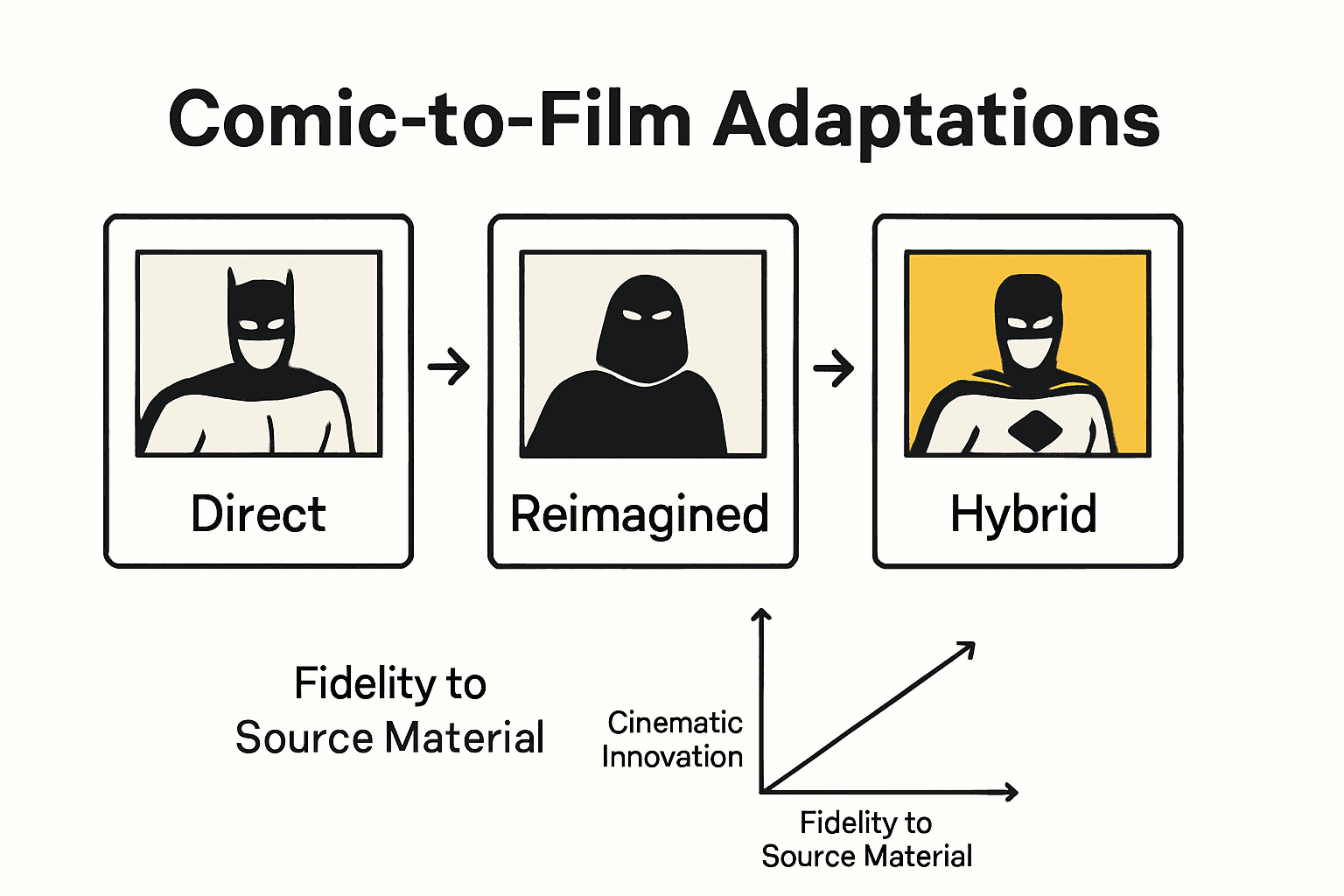
Comic-to-film adaptations represent a complex and nuanced artistic landscape with multiple distinct approaches. Digitalcommons presents a comprehensive analysis revealing several critical categories of adaptation that demonstrate the intricate relationship between graphic storytelling and cinematic interpretation.
The primary types of comic-to-film adaptations can be classified into distinct frameworks:
-
Direct Translation Adaptations: These films aim to recreate the comic’s visual aesthetic and narrative structure as closely as possible, often using panels as direct storyboard references.
-
Reimagined Adaptations: Filmmakers take significant creative liberties, fundamentally reinterpreting the source material while maintaining core character and thematic essence.
-
Hybrid Adaptations: A sophisticated approach blending original comic elements with new narrative constructions, creating a unique cinematic experience.
According to ComicsGrid, these adaptation strategies involve complex translation challenges that extend beyond simple visual reproduction. The process requires profound understanding of both mediums’ storytelling languages. Exploring graphic novel genres becomes crucial in comprehending how different narrative styles influence cinematic translation.
The most successful adaptations demonstrate deep respect for the source material while offering fresh perspectives that engage both comic enthusiasts and general film audiences. This delicate balance transforms comic-to-film adaptation from mere translation into a dynamic artistic dialogue.
Visual Storytelling: Techniques Translated to Film
Visual storytelling represents a complex art form where comic book aesthetics dramatically reshape cinematic narrative techniques. Toonsmag reveals how filmmakers strategically adopt comic book visual elements, transforming traditional cinematographic approaches through innovative panel-inspired compositions and dynamic visual sequences.
Key visual storytelling techniques translated from comics to film include:
- Dramatic Framing: Recreating comic panel perspectives through strategic camera angles
- Dynamic Composition: Capturing motion and energy through carefully constructed visual sequences
- Graphic Transitions: Utilizing comic-inspired scene shifts that break traditional film editing rules
- Stylized Color Palettes: Importing the vivid, high-contrast color schemes characteristic of graphic novels
Ebsco highlights how digital technologies have revolutionized this translation process, enabling filmmakers to precisely recreate the distinctive visual language of comic book narratives. Modern directors now employ sophisticated techniques that blur the boundaries between illustrated and live-action storytelling.

Understanding the nuanced art of visual storytelling becomes crucial in appreciating how comics have fundamentally transformed film aesthetics. The most successful adaptations do not merely reproduce comic imagery but reinterpret its core visual language, creating a rich, immersive cinematic experience that honors the original graphic narrative while introducing unique filmic innovations.
Narrative Structures and Character Development
Toonsmag reveals how comics have fundamentally transformed cinematic storytelling through their innovative narrative approaches. The episodic nature of comic book storytelling has revolutionized film narratives, introducing complex storytelling techniques that challenge traditional linear storytelling methods.
Key transformative narrative strategies include:
- Nonlinear Storytelling: Breaking chronological boundaries
- Serialized Character Arcs: Developing intricate character progressions across multiple installments
- Multiple Perspective Narratives: Presenting stories through diverse character viewpoints
- Interconnected Story Universes: Creating expansive narrative landscapes
ComicsGrid highlights the intricate process of character development in comic-to-film adaptations, emphasizing the delicate balance between preserving original character essence and allowing cinematic interpretation. Filmmakers must navigate complex translation challenges, ensuring characters retain their fundamental psychological and emotional core while adapting to the visual and temporal constraints of film.
Understanding the narrative techniques in graphic novels becomes crucial for appreciating this transformative process. The most successful adaptations do not simply replicate characters but reinterpret their fundamental narrative DNA, creating rich, multilayered cinematic experiences that honor the source material’s depth and complexity.
Licensing, Rights, and Legal Considerations
Comic-to-film adaptations navigate a complex legal landscape that extends far beyond creative interpretation. Wikipedia reveals the intricate challenges surrounding intellectual property rights, highlighting how licensing agreements can dramatically impact the transformation of graphic narratives into cinematic experiences.
Key legal considerations in comic adaptation include:
- Intellectual Property Rights: Securing comprehensive permissions from original creators
- Copyright Negotiations: Defining adaptation boundaries and financial compensation
- Moral Rights Protection: Ensuring original artists’ creative integrity
- Trademark Considerations: Managing character and visual design usage
Wikipedia demonstrates how legal frameworks can significantly influence adaptation possibilities. Filmmakers must carefully navigate complex negotiations, balancing artistic vision with legal constraints while respecting the original creator’s rights. Understanding narrative techniques in graphic novels becomes crucial in comprehending the nuanced legal landscape surrounding these creative translations.
Successful adaptations require a delicate equilibrium between legal compliance and creative innovation. The most sophisticated productions recognize that licensing is not merely a transactional process but a collaborative dialogue that honors the original work’s artistic and legal foundations.
Common Challenges in Comic Adaptations
Toonsmag reveals the complex landscape of transforming comic narratives into cinematic experiences, highlighting the intricate challenges filmmakers encounter when bridging two distinct visual storytelling mediums. The translation process demands far more than simple visual reproduction.
Primary challenges in comic-to-film adaptations include:
- Visual Fidelity: Maintaining the distinctive artistic essence of original comic illustrations
- Narrative Compression: Condensing complex multi-issue storylines into coherent film structures
- Character Authenticity: Preserving character psychological depth and motivational nuances
- Genre Translation: Adapting stylized comic book aesthetics to live-action or animated formats
ComicsGrid emphasizes the delicate balance required in adaptation, where filmmakers must navigate complex translation challenges while respecting the source material’s fundamental narrative integrity. Understanding experimental storytelling in comics becomes crucial in comprehending these intricate transformation processes.
Successful adaptations transcend mere visual reproduction, creating a dialogue between original comic narratives and cinematic interpretation. The most innovative productions view these challenges not as obstacles but as opportunities for creative reimagination, ultimately expanding the storytelling potential across different artistic mediums.
Discover Unique Artworks That Bring Comics to Life on Screen
Adapting comics into films faces complex challenges such as preserving visual fidelity and authentic character development. If you are passionate about the art and storytelling behind these transformations you understand how vital original artistic expression is in this process. At The Mansion Press, we celebrate this connection between comics and cinematic storytelling by offering exclusive artbooks, limited-edition comics, and original artworks crafted by independent artists who push creative boundaries.
Explore our curated collection today at The Mansion Press to own pieces that capture the spirit of graphic storytelling. Whether you are a collector or a fan seeking to deepen your appreciation of comic-inspired narratives, you will find unique treasures not available anywhere else. Start your journey with our stunning selection of comics and artbooks that highlight the very visual and narrative techniques discussed in this complete guide to adaptation. Act now to access exclusive pre-orders and cultivate your personal archive of inspiring comic art.
Frequently Asked Questions
How do comics influence cinematic storytelling?
Comics influence cinematic storytelling through innovative visual aesthetics, narrative structures, and cultural representation, allowing filmmakers to create visually dynamic and engaging narratives that resonate with audiences.
What are the different types of comic-to-film adaptations?
The main types of comic-to-film adaptations include direct translation adaptations, reimagined adaptations, and hybrid adaptations, each offering unique approaches to integrating comic narratives into cinematic formats.
What visual storytelling techniques are adapted from comics?
Key visual storytelling techniques adapted from comics include dramatic framing, dynamic composition, graphic transitions, and stylized color palettes, enhancing the visual language of films based on comic books.
What challenges do filmmakers face when adapting comics into films?
Filmmakers face challenges such as maintaining visual fidelity to the original comic art, condensing complex narratives, preserving character authenticity, and translating genre elements into live-action or animated formats.