


Graphic Auto‑Fiction: Why Visual Memoirs Resonate Deeply
Over the last decade, American graphic auto-fiction has reshaped the boundaries of memoir and visual storytelling. This genre stands out by merging honest personal experiences with powerful artistic expression, creating stories that linger long after the final page. Nearly one in four new graphic novels in American publishing now explore auto-fiction themes, reflecting a growing appetite for deeply personal, visually inventive narratives. Discover how this medium uniquely captures emotion, memory, and perspective through bold styles and innovative techniques.
Table of Contents
- Defining Graphic Auto‑Fiction Clearly
- Different Styles And Narrative Approaches
- How Graphic Auto‑Fiction Is Created
- Legal And Ethical Creator Considerations
- Risks And Collector Implications
Key Takeaways
| Point | Details |
|---|---|
| Graphic Auto-Fiction as a Genre | This form blends personal storytelling and visual artistry, emphasizing emotional representation and subjective experiences. |
| Diverse Narrative Techniques | Artists can employ experimental styles, non-linear storytelling, and mixed media to enhance personal expression. |
| Ethical Considerations | Creators must navigate consent and representation issues to maintain artistic integrity while respecting personal narratives. |
| Collector Risks | The value of graphic auto-fiction is influenced by artist reputation, rarity, and narrative innovation, requiring collectors to approach with careful strategy. |
Defining Graphic Auto‑Fiction Clearly
Graphic auto-fiction represents a powerful narrative form where personal storytelling intersects with visual artistry. This unique genre transforms individual experiences into compelling visual narratives, blending memoir-like authenticity with the dynamic expressive potential of graphic storytelling. Narrative structure in graphic novels reveals how creators strategically use visual elements to communicate deeply personal stories.
At its core, graphic auto-fiction differs from traditional autobiographical work by emphasizing visual metaphor and emotional representation over strictly literal documentation. Artists in this medium use illustration techniques to convey psychological landscapes, transforming personal memories into rich, multilayered visual experiences. The graphic format allows creators to explore subjective emotional terrain that written text alone might struggle to communicate, offering readers an immersive journey through personal experience.
The genre encompasses several distinctive characteristics that set it apart from conventional autobiography or graphic novels. These include non-linear storytelling, experimental visual techniques, and a deliberate blurring between objective reality and subjective perception. Understanding graphic novel formats demonstrates how creators manipulate visual language to construct complex narrative experiences that transcend traditional storytelling boundaries.
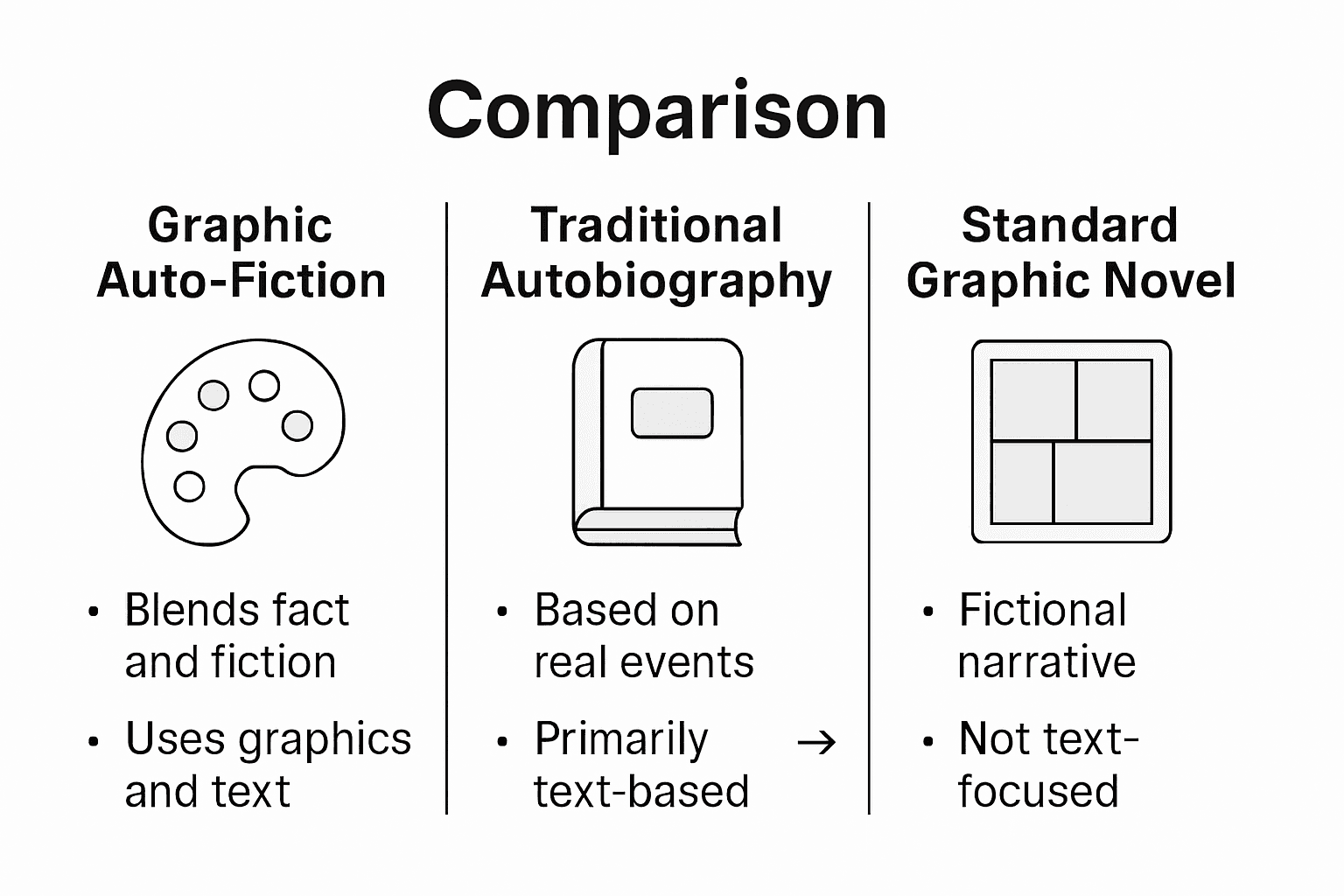
Here’s a comparison of graphic auto-fiction with traditional autobiography and standard graphic novels:
| Aspect | Graphic Auto-Fiction | Traditional Autobiography | Standard Graphic Novel |
|---|---|---|---|
| Focus | Subjective experience, visual metaphor | Factual life events | Fictional or adapted stories |
| Narrative Structure | Often non-linear, layered | Linear, chronological | Follows genre conventions |
| Artistic Techniques | Experimental visuals, mixed media | Illustrations secondary to text | Diverse, but often genre-bound |
| Emotional Expression | Emphasizes psychological depth | Prioritizes factual recounting | Varies; depends on story type |
Pro Tip for Artists: Experiment boldly with visual metaphors and narrative techniques when creating graphic auto-fiction, recognizing that your personal story can be communicated through innovative visual language beyond literal representation.
Different Styles And Narrative Approaches
Graphic auto-fiction encompasses a rich spectrum of narrative styles that challenge traditional storytelling conventions. Narrative techniques in graphic novels reveal how artists manipulate visual language to create complex, multilayered storytelling experiences. These approaches range from highly linear chronological narratives to fragmented, non-sequential representations of memory and personal experience.
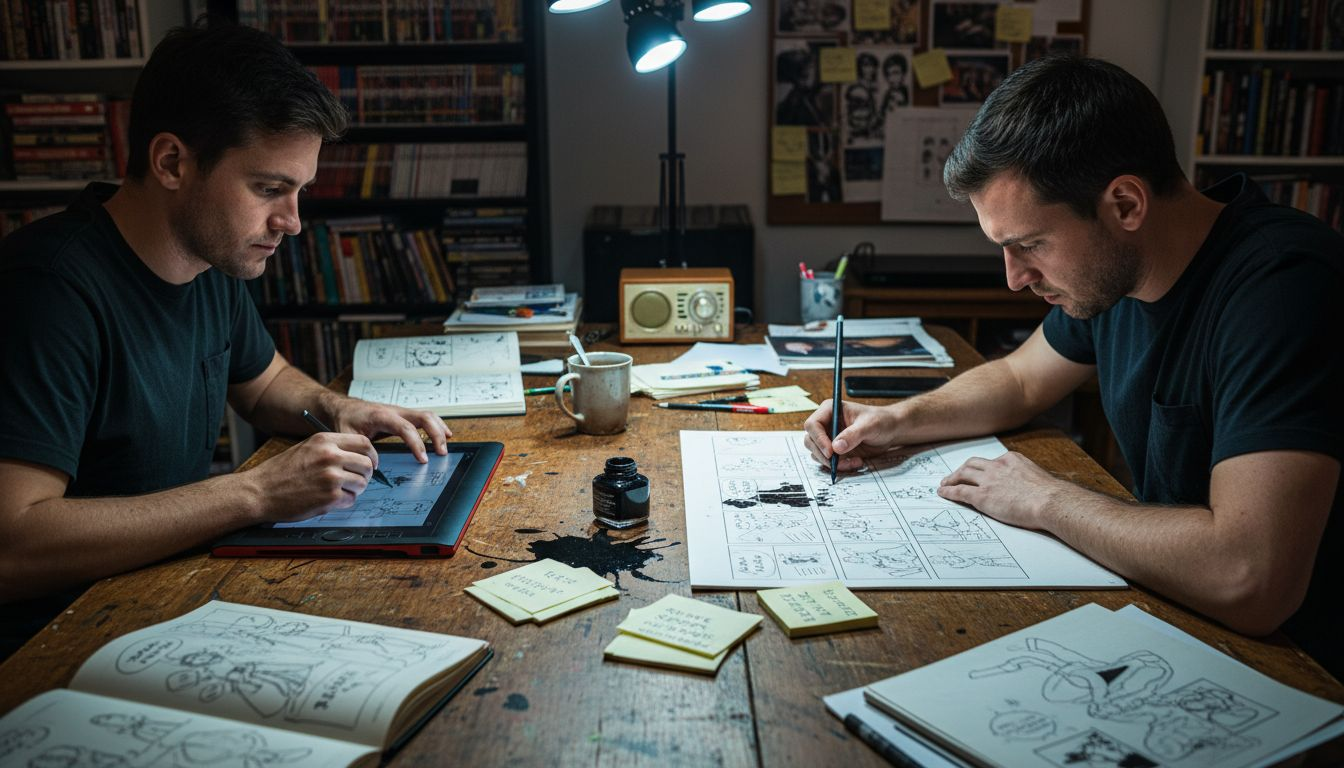
Some artists employ experimental storytelling techniques that deliberately disrupt traditional narrative structures. Experimental storytelling techniques demonstrate how creators can deconstruct linear time, blend multiple perspectives, and use visual metaphors to communicate emotional landscapes. The graphic format allows for unique narrative strategies like simultaneous panel storytelling, where different moments and perspectives coexist within a single visual frame, creating a rich, immersive storytelling experience.
The diversity of narrative approaches in graphic auto-fiction reflects the genre’s fundamental commitment to personal expression. Artists might use techniques such as stream-of-consciousness illustrations, collage-like compositions, or abstract visual representations that capture psychological states beyond literal representation. Some creators incorporate mixed media, blending photography, hand-drawn illustrations, digital art, and textual elements to create complex narrative experiences that challenge readers’ perceptions.
Pro Tip for Storytellers: Embrace visual storytelling as a fluid, dynamic medium where traditional narrative rules can be reimagined and personal experience can be expressed through innovative, non-linear visual language.
How Graphic Auto‑Fiction Is Created
Creating graphic auto-fiction is a deeply personal and intricate process that combines artistic skill, emotional vulnerability, and narrative strategy. Understanding the evolution of graphic novel art reveals the complex techniques artists use to transform personal experiences into visual narratives. This process begins with deep introspection, where creators mine their personal histories, emotional landscapes, and pivotal life moments as source material for their storytelling.
The actual creation involves multiple interconnected stages of artistic development. Artists typically start by sketching preliminary story arcs, identifying key emotional moments and visual metaphors that can effectively communicate their personal experiences. Visual storytelling requires careful consideration of panel composition, color palette, and illustrative style to convey nuanced psychological states. Some creators use documentary-style approaches, while others embrace more abstract, impressionistic representations that capture the essence of memory and emotional experience.
Technical execution demands a sophisticated blend of artistic skills and narrative techniques. Artists might employ digital illustration tools, traditional drawing methods, mixed media approaches, or hybrid techniques that combine photography, hand-drawn illustrations, and digital manipulation. Experimental graphic storytelling demonstrates how creators can push boundaries, using unconventional visual techniques to represent complex emotional journeys that transcend traditional narrative constraints.
Pro Tip for Artists: Embrace vulnerability in your creative process, recognizing that your most authentic visual narratives emerge when you’re willing to explore and expose the most intimate corners of your personal experience.
Legal And Ethical Creator Considerations
Autofiction’s complex landscape reveals the intricate ethical challenges creators face when transforming personal experiences into visual narratives. Graphic auto-fiction sits at a delicate intersection of personal storytelling and artistic representation, where creators must carefully navigate the boundaries between truth, perception, and creative interpretation. The fundamental challenge lies in balancing authentic personal narrative with respect for individuals who may be portrayed within the work.
Legal considerations are paramount in graphic auto-fiction creation. Consent and representation become critical ethical frameworks that creators must thoughtfully address. Graphic novel legal considerations highlight the potential risks of depicting real people without proper authorization, including potential defamation or privacy violation claims. Creators must develop strategies to protect themselves legally while maintaining the emotional authenticity of their personal narratives, which might involve techniques like changing names, altering identifying details, or obtaining explicit permissions from individuals featured in their stories.
The ethical dimensions of graphic auto-fiction extend beyond legal compliance into deeper questions of narrative responsibility. Artists must grapple with complex issues such as the potential emotional impact on real-life subjects, the reliability of memory, and the potential for misinterpretation. Some creators choose to include disclaimers, use composite characters, or explicitly frame their work as a subjective interpretation of events to mitigate potential ethical concerns. This approach acknowledges the inherently personal and interpretive nature of autobiographical storytelling while providing a transparent framework for readers.
Pro Tip for Creators: Prioritize ethical storytelling by seeking consent, protecting individual privacy, and maintaining a transparent approach that respects the complexity of personal narratives while preserving your artistic integrity.
Risks And Collector Implications
Graphic novel market dynamics reveal complex challenges for collectors and artists navigating the evolving landscape of visual storytelling. The market for graphic auto-fiction presents unique investment considerations, where artistic value intersects with potential financial appreciation. Collector risks emerge from the inherent unpredictability of emerging art forms, requiring sophisticated understanding of cultural trends and artistic innovation.
The valuation of graphic auto-fiction works depends on multiple interconnected factors. Understanding rare comics collection demonstrates that rarity, artist reputation, condition, and cultural significance dramatically influence potential value. Collectors must carefully assess not just the visual quality of a work, but its potential historical and narrative importance. Some graphic auto-fiction pieces might represent pivotal moments in artistic expression, while others could become ephemeral artifacts with limited long-term collector interest.
Key factors influencing the value of graphic auto-fiction for collectors:
| Factor | Impact on Value | Collector Consideration |
|---|---|---|
| Artist Reputation | Raises desirability and price | Research artist’s influence |
| Rarity | Increases uniqueness | Seek limited editions |
| Narrative Innovation | Adds historical importance | Evaluate storytelling originality |
| Condition | Maintains or enhances worth | Favor well-preserved works |
Market volatility presents significant challenges for serious collectors and investors. The graphic novel market experiences fluctuating consumer interest, with some works rapidly appreciating in value while others struggle to maintain relevance. Emerging artists working in graphic auto-fiction must balance artistic integrity with commercial viability, knowing that their work’s value depends on both creative innovation and market perception. Collectors need sophisticated strategies that go beyond traditional art acquisition, requiring deep understanding of narrative techniques, visual storytelling trends, and the evolving cultural landscape of visual memoirs.
Pro Tip for Collectors: Develop a nuanced collection strategy by prioritizing works that demonstrate exceptional narrative innovation, unique artistic vision, and potential cultural significance rather than pursuing temporary market trends.
Discover Powerful Visual Memoirs That Speak to You
Struggling to find graphic auto-fiction that truly captures the emotional depth and innovative storytelling explored in the article “Graphic Auto‑Fiction Why Visual Memoirs Resonate Deeply” The challenge lies in locating unique visual memoirs that blend authentic personal narrative with experimental artistic techniques The Mansion Press connects you with independent artists and creators offering exclusive graphic auto-fiction works that embody these qualities Bold visuals and narrative innovation come together for a deeply personal reading experience
Explore our curated selection today at The Mansion Press where you can browse limited editions collector’s items and original artworks that embrace the very themes of subjective experience and visual metaphor discussed in the article Embrace the opportunity to own and support groundbreaking visual memoirs now with easy browsing and pre-order options Don’t miss your chance to invest in cutting-edge storytelling that resonates on a deeply emotional level Find your next treasured piece at The Mansion Press and experience graphic auto-fiction like never before
Frequently Asked Questions
What is graphic auto-fiction?
Graphic auto-fiction is a narrative form that combines personal storytelling with visual artistry, turning individual experiences into rich visual narratives. It emphasizes visual metaphor and emotional representation rather than just factual recounting.
How does graphic auto-fiction differ from traditional autobiography?
Graphic auto-fiction focuses on subjective experiences and non-linear storytelling, using experimental visual techniques to convey psychological and emotional complexities, unlike traditional autobiography which typically presents factual life events in a linear, chronological structure.
What narrative techniques are commonly used in graphic auto-fiction?
Artists often use experimental storytelling styles such as fragmented narratives, simultaneous panel storytelling, and mixed media to create immersive experiences that reflect the intricacies of their personal journeys and emotional landscapes.
What ethical considerations should creators keep in mind when making graphic auto-fiction?
Creators should navigate issues of consent, representation, and the potential emotional impact on subjects depicted in their work. Ensuring ethical storytelling involves obtaining permissions, altering identifying details, and framing the narrative as subjective interpretation to respect individuals’ privacy.