

Difference Between Manga and Comics: Key Artistic Impact
Most American comic collectors are surprised to learn that manga outsells Western comics by over 3 to 1 in global markets. This striking difference reveals just how much artistic style and cultural origins shape the world of sequential art. As collectors and enthusiasts dive deeper, it becomes clear how Japanese manga and American comics offer completely different visual storytelling experiences, from page layouts to publishing traditions. Understanding these contrasts unlocks new perspectives for anyone seeking to appreciate or collect graphic art across cultures.
Table of Contents
- Manga Versus Comics: Core Definitions
- Artistic Styles And Visual Storytelling
- Publishing Practices And Format Distinctions
- Cultural Origins And Influence Globally
- Collectibility And Market Differences
Key Takeaways
| Point | Details |
|---|---|
| Cultural Origins | Manga originates from Japan and incorporates unique artistic traditions, while Western comics primarily stem from American culture. |
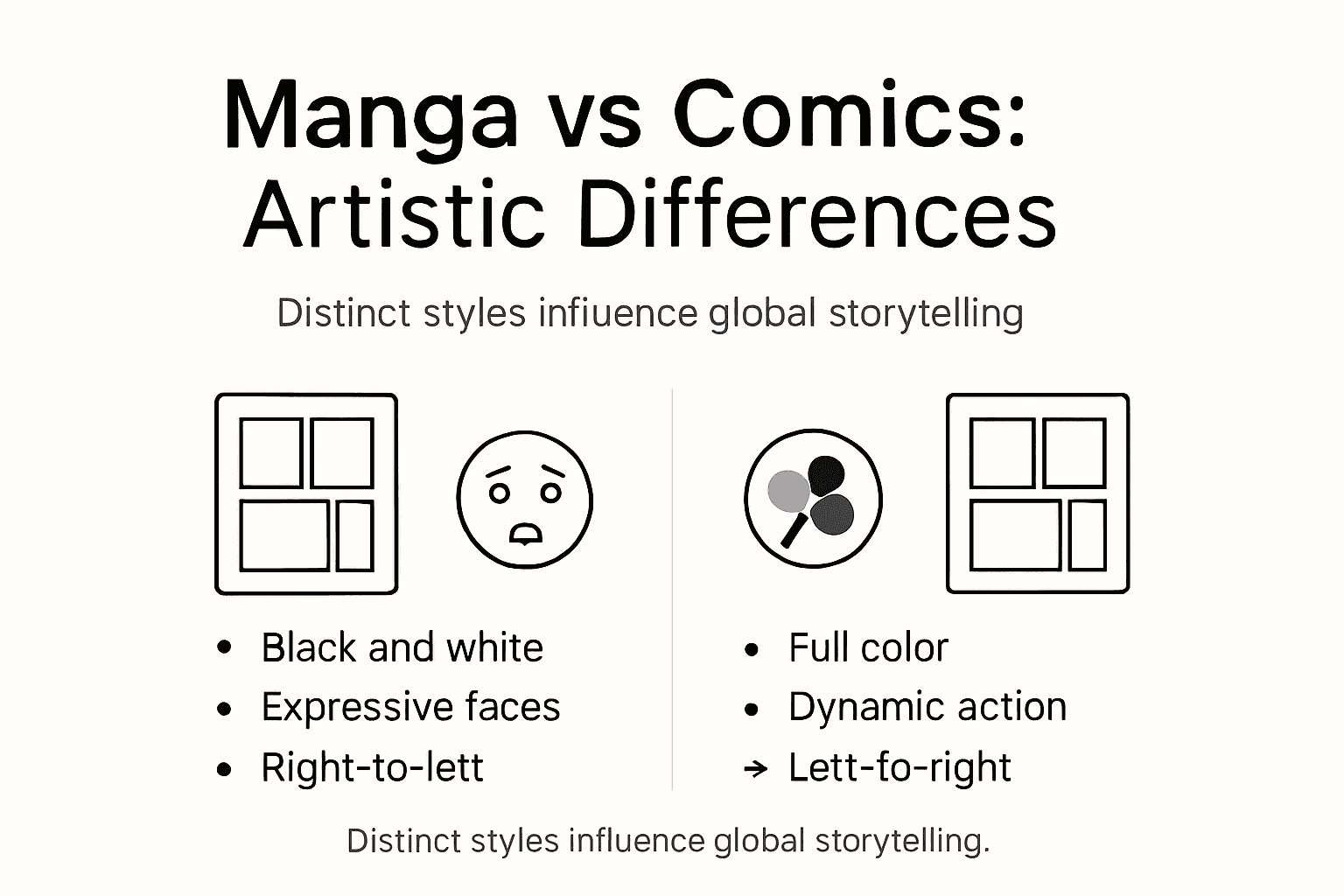
| Artistic Differences | Manga features black-and-white illustrations and fluid panel layouts, contrasting with the vibrant colors and structured formats of Western comics. |
| Reading Formats | Manga is read right-to-left, reflecting Japanese customs, while Western comics follow a left-to-right format. |
| Market Collectibility | Manga collecting often emphasizes first editions and series completeness, while Western comic value is derived from original artwork and limited prints. |
Manga Versus Comics: Core Definitions
At the core of visual storytelling, manga and comics represent two distinct narrative art forms rooted in different cultural traditions. While both mediums use sequential art to convey stories, they diverge significantly in artistic approach, visual design, and cultural context. Manga and comics differ fundamentally in their visual language and narrative structures.
Manga, originating in Japan, typically features black and white illustrations with unique stylistic characteristics. These graphic narratives are traditionally serialized in magazines before being compiled into volumes, allowing for intricate long-form storytelling across multiple genres. Western comics, predominantly American in origin, contrast sharply with their full-color panels, individual issue releases, and strong association with superhero genres. The visual storytelling techniques reflect deep cultural nuances: manga often employs more expressive character designs with large eyes, exaggerated emotional reactions, and dynamic page layouts that guide reader interpretation.
The reading experience itself highlights another fundamental difference. Manga follows a right-to-left reading direction, reflecting its Japanese origins, while Western comics are read left-to-right. This structural variation extends beyond mere directional reading, representing broader cultural communication styles and artistic philosophies. Manga’s visual language tends to be more fluid, with panel transitions that create a sense of movement and emotional depth rarely seen in Western comic traditions.
Pro tip: When exploring manga for the first time, practice reading right-to-left and appreciate the unique visual storytelling techniques that distinguish Japanese graphic narratives from Western comic styles.
Artistic Styles and Visual Storytelling
The realm of sequential art reveals profound differences in artistic expression between manga and Western comics, with each medium developing unique visual languages that reflect deep cultural storytelling traditions. Manga and Western comics represent distinct artistic approaches to narrative visualization, employing divergent techniques that fundamentally shape reader perception and emotional engagement.
American comics typically showcase vibrant, full-color illustrations characterized by dynamic layouts and bold graphic designs. These visual narratives often emphasize muscular superhero figures, intricate action sequences, and dramatic panel compositions that create a sense of kinetic energy. In contrast, Japanese manga distinguishes itself through sophisticated black-and-white artwork that relies on nuanced symbolic systems and highly expressive character design. Manga artists leverage intricate linework, subtle emotional gradients, and minimalist backgrounds to communicate complex narrative and emotional landscapes, creating depth through negative space and strategic visual techniques.
Paneling and page composition further illuminate the artistic divergence between these graphic storytelling forms. Western comics frequently utilize rectangular panels with sharp geometric boundaries, creating a structured visual rhythm. Manga, however, employs more fluid and organic panel transitions, using irregular shapes, overlapping elements, and dynamic gutters that guide the reader’s eye in more intuitive and emotionally responsive ways. This approach allows manga artists to create a more immersive storytelling experience that blends visual and emotional narratives seamlessly.
Pro tip: Develop visual literacy by comparing manga and comic art styles, paying close attention to how panel layout, line quality, and visual symbolism communicate narrative emotion.
Publishing Practices and Format Distinctions
The publishing landscapes for manga and Western comics represent fundamentally different approaches to graphic storytelling and distribution. The evolution of manga publishing demonstrates a unique serialization model that differs dramatically from Western comic production, reflecting deeper cultural and industry-specific practices.
In Japan, manga follows a distinctive serialization process where stories are initially published in thick, magazine-style compilations featuring multiple series. These magazines, often hundreds of pages long, allow artists to release chapters incrementally, building audience engagement over time. Once a series gains popularity, these chapters are subsequently collected into standalone volumes called tankōbon. Western comics, by contrast, typically emerge as individual, full-color issues sold independently, with storylines often designed to be purchased and collected as separate installments. This fundamental difference in publishing strategy influences narrative pacing, artistic development, and reader interaction with the medium.

The digital transformation has further complicated these publishing distinctions, with both manga and comics adapting to online platforms while maintaining their unique characteristics. Manga publishers have been particularly innovative, developing digital-first strategies that preserve their traditional serialization model, while American comic publishers have gradually shifted toward simultaneous print and digital releases. These publishing approaches reflect not just technical differences, but deeper cultural attitudes toward graphic storytelling, with manga maintaining a more continuous, fluid narrative approach compared to the episodic nature of Western comic publishing.
Pro tip: Explore multiple publication formats by comparing magazine serializations, collected volumes, and digital releases to understand the nuanced publishing strategies of different graphic storytelling traditions.
Cultural Origins and Influence Globally
The historical development of manga and Western comics reveals a complex narrative of cultural exchange and mutual influence, challenging simplistic narratives of isolated artistic traditions. Contrary to popular perception, manga did not emerge in complete isolation but through a nuanced process of global artistic dialogue and cross-cultural inspiration.
The Japanese manga tradition emerged from a rich tapestry of visual storytelling that incorporated both indigenous artistic practices and Western graphic influences. Early manga artists drew inspiration from American comic styles, European illustration techniques, and traditional Japanese woodblock printing, creating a unique hybrid form that transcended cultural boundaries. This cultural synthesis allowed manga to develop a distinctive visual language that could simultaneously feel familiar and entirely original, appealing to both Japanese and international audiences. As the medium evolved, it transformed from a localized art form into a global cultural phenomenon that would ultimately reshape visual storytelling worldwide.
Manga’s global influence extends far beyond its Japanese origins, fundamentally transforming visual media and narrative techniques across multiple creative industries. The medium has become a significant cross-cultural phenomenon, demonstrating remarkable adaptability and educational potential. From animation and film to graphic design and storytelling techniques, manga’s aesthetic and narrative approaches have profoundly impacted creative expression globally. Its ability to communicate complex emotional landscapes through distinctive visual techniques has inspired artists, storytellers, and creators across diverse cultural contexts, establishing manga as a truly international artistic language.
Pro tip: Explore manga from different historical periods and cultural contexts to understand its remarkable journey from a local Japanese art form to a global cultural phenomenon.
Collectibility and Market Differences
The manga and comic book markets represent distinctly different ecosystems of collectibility and value, with nuanced approaches to rarity, preservation, and collector engagement. Where Western comic book collecting traditionally centers on original artwork and limited print runs, the manga market demonstrates a more complex valuation structure.
In the Western comic book market, original artwork serves as the primary source of high-value collectibles. Collectors prize individual pages drawn by renowned artists, with prices escalating based on the artist’s reputation and historical significance. Manga collecting, by contrast, operates under different parameters. Since Japanese publishers typically retain original manga plates, collectors focus on alternative markers of value: first edition prints, complete series runs, rare volumes, and early serialized magazine appearances. This fundamental difference shifts the entire collector’s landscape, creating a unique set of priorities and investment strategies specific to manga enthusiasts.
Academic and institutional collecting practices further illuminate the market distinctions between manga and Western comics. Despite manga’s growing global popularity, academic libraries and formal collections often underrepresent manga titles compared to traditional Western graphic novels. This disparity reflects deeper cultural perceptions about artistic legitimacy, archival value, and the relative status of graphic storytelling from different cultural traditions. The result is a market that values manga differently, with collectors and institutions approaching the medium through distinct cultural and historical lenses.
Pro tip: Research publication dates, print runs, and early serialization details when collecting manga to identify truly rare and valuable volumes.
This table highlights global influence and cultural exchange links between manga and Western comics:
| Influence Type | Manga on West | Western Comics on Manga |
|---|---|---|
| Art Style | Inspired graphic novels | Early manga adopted Western techniques |
| Storytelling | Sparked new genres | Shaped paneling structures |
| Media Impact | Influenced animation and film | Introduced episodic publishing models |
| Collector Trends | Increased manga collecting in U.S. | Influenced Japanese publication policies |
Here’s a concise comparison of manga and Western comics across key aspects:
| Aspect | Manga | Western Comics |
|---|---|---|
| Origin | Japan | United States |
| Typical Color | Black and white | Full color |
| Reading Direction | Right to left | Left to right |
| Main Genres | Wide variety | Superhero-focused |
| Serialization | Magazine chapters | Single issue releases |
| Panel Layout | Fluid, dynamic | Geometric, regular |
| Collectible Value | Rare prints, series runs | Original art, limited editions |
Discover the Unique Artistry Behind Manga and Comics Through Exclusive Collections
Understanding the key artistic impacts that set manga and comics apart reveals why each style speaks to its dedicated audience. Whether it is manga’s fluid paneling and black-and-white emotive storytelling or Western comics’ bold colors and dynamic layouts, collectors and art enthusiasts alike share a passion for these distinct visual narratives. If you struggle to find authentic manga or comic art that captures these cultural nuances, The Mansion Press offers carefully curated, limited-edition artbooks, collector’s editions, and original works that bring these storytelling traditions to life.
Explore unique artist showcases and exclusive releases today at The Mansion Press to dive deeper into the rich world of graphic storytelling. Act now to access upcoming pre-orders and secure rare pieces that reflect the artistry and heritage discussed in “Difference Between Manga and Comics Key Artistic Impact.” Transform your collection and celebrate the diversity of manga and comic art with our exclusive offerings. Start your journey by browsing our curated selections and discover the emotional power behind every panel.
Frequently Asked Questions
What is the main difference in artistic style between manga and Western comics?
Manga typically features black-and-white illustrations with expressive character designs and fluid panel layouts, while Western comics are known for their vibrant, full-color art and structured geometric paneling.
How does the reading direction differ between manga and Western comics?
Manga is read from right to left, reflecting its Japanese origins, whereas Western comics are read from left to right.
Why do manga and Western comics have different publishing practices?
Manga often follows a serialization model with chapters released in magazines before being compiled into volumes, while Western comics are typically released as individual issues. This affects narrative pacing and reader engagement.
What cultural influences have shaped manga and Western comics?
Manga developed through a blend of native Japanese artistic traditions and Western influences, creating a unique hybrid style. Conversely, Western comics have influenced manga’s storytelling techniques and panel structures over time.