

Master Collectible Comics Grading Basics for Serious Collectors
Serious collectors know that precise comic book grading is the difference between an ordinary collection and a truly valuable archive. Whether you are curating rare first appearances or hunting down European variants, mastering grading techniques gives you the confidence to make informed purchases and protect long-term value. By building a foundation with trusted guides like the Overstreet Comic Book Grading Guide and the Grand Comics Database, you gain the expert tools and protocols needed for professional assessment at every step.
Table of Contents
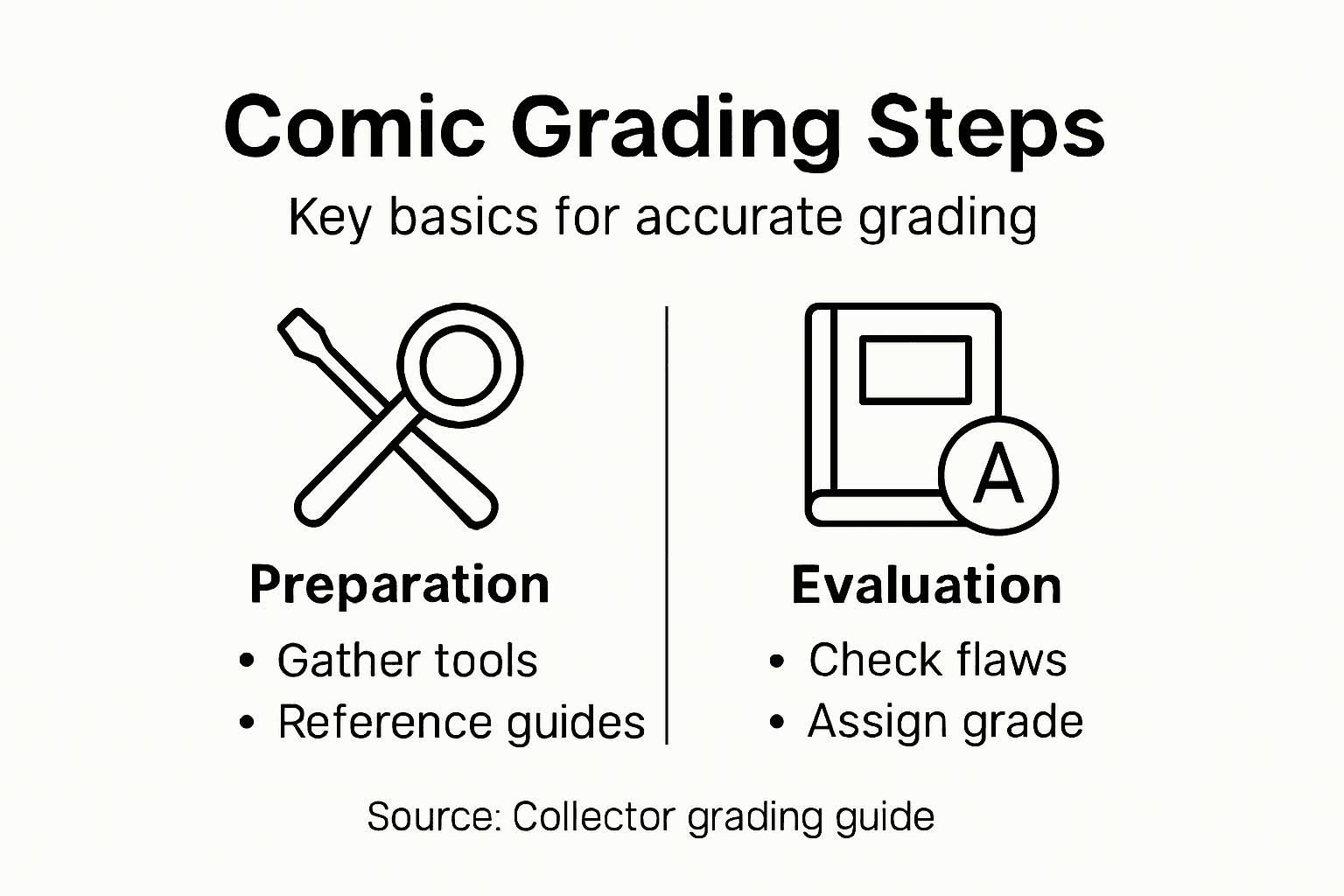
- Step 1: Gather Essential Grading Tools And Reference Guides
- Step 2: Inspect Comic Condition Using Grading Criteria
- Step 3: Evaluate Notable Flaws And Distinguishing Features
- Step 4: Assign An Accurate Grade Based On Established Standards
- Step 5: Verify Grading Accuracy And Document Your Assessment
Quick Summary
| Key Point | Explanation |
|---|---|
| 1. Curate Essential Tools | Gather tools like a magnifying glass and bright lighting to accurately assess comic book conditions. |
| 2. Systematic Inspection Process | Follow a structured method to evaluate cover, spine, and page quality under optimal lighting conditions. |
| 3. Identify and Categorize Flaws | Learn to discern between minor imperfections and significant flaws, focusing on their impact on value. |
| 4. Assign a Standardized Grade | Use the established grading scale to translate physical condition into a professional grade for your comics. |
| 5. Document Findings Thoroughly | Maintain detailed records including photos and descriptions to support your grading assessment and ensure accuracy. |
Step 1: Gather essential grading tools and reference guides
To establish a professional comic book grading setup, you’ll need a carefully curated collection of tools and references that will help you accurately assess comic book conditions and value. Serious collectors understand that having the right equipment makes all the difference between a casual guess and a precise evaluation.
Start by acquiring critical reference resources like the Overstreet Comic Book Grading Guide, the industry standard for understanding comic condition assessment. This comprehensive guide provides detailed frameworks for evaluating comic book states and establishing consistent grading terminology. Your essential toolkit should include:
- Magnifying glass (10x-15x magnification)
- Bright, direct lighting source
- White cotton gloves for handling comics
- Soft, clean work surface
- Ultraviolet light for detecting restoration
- Digital caliper for measuring comic dimensions
Additionally, utilize online resources like the Grand Comics Database to cross-reference publication details and verify print histories. This nonprofit project offers extensive information that can help authenticate and contextualize your comic’s background.
Here’s a quick guide to essential comic grading tools and their purposes:
| Tool | Primary Function | Why It Matters |
|---|---|---|
| Magnifying glass | Reveals fine print details | Detects micro-flaws and wear |
| Ultraviolet light | Spots restoration attempts | Exposes invisible repairs |
| Digital caliper | Measures comic dimensions | Ensures authenticity |
| White cotton gloves | Protects comic surfaces | Prevents oils and fingerprints |
| Bright lighting | Highlights imperfections | Aids clear, accurate inspection |
Investing in quality grading tools isn’t an expense—it’s a strategic investment in your comic collection’s long-term value.
Pro tip: Always handle comics by their edges and store reference materials in a clean, dry environment to maintain their accuracy and condition.

Step 2: Inspect comic condition using grading criteria
Professional comic book grading requires a systematic and meticulous approach to evaluating each comic’s physical condition. You’ll learn how to perform a comprehensive inspection that determines the precise grade and potential value of your collectible.
Begin by examining the comic under bright, direct lighting using the step-by-step comic inspection techniques established by industry experts. Focus on several critical areas of assessment:
- Cover condition: Check for color fidelity, creases, and edge wear
- Spine integrity: Inspect for rolling, breaks, or structural damage
- Page quality: Evaluate paper color, brittleness, and potential discoloration
- Overall structural condition: Look for tears, punctures, or significant imperfections
Utilize resources like the Grand Comics Database to cross-reference typical wear categories and understand nuanced grading criteria specific to different comic eras and publication types. Methodical inspection involves examining comics under multiple lighting conditions and using specialized tools like magnifying glasses and ultraviolet lights to detect subtle imperfections.
Professional grading isn’t just about finding flaws—it’s about understanding the comic’s entire preservation history.
Pro tip: Always handle comics with white cotton gloves and document your observations systematically to maintain an accurate assessment record.
Step 3: Evaluate notable flaws and distinguishing features
Discerning the subtle differences between minor imperfections and significant flaws is crucial in professional comic book grading. Your goal is to develop a keen eye that can accurately assess how various defects impact a comic’s overall condition and collectible value.
Learn to identify and categorize flaws using the comprehensive comic book defect guidelines that professional collectors rely on. Key areas of focus include:
- Color breaks: Small disruptions in cover or page coloration
- Spine stress: Indicators of structural integrity compromise
- Paper quality: Signs of aging, discoloration, or brittleness
- Restoration markers: Identifying professional or amateur repair attempts
- Unique historical features: Censorship marks or publication-specific stamps
Beyond physical condition, understanding historical context becomes critical. Resources like the Comics Code Authority documentation reveal how certain markings can actually increase a comic’s historical significance and collector appeal.
The table below compares common comic book flaws and their impact on value:
| Flaw Type | Typical Cause | Potential Impact on Value |
|---|---|---|
| Color break | Bending or folding | Minor to moderate decrease |
| Spine stress | Frequent handling | Can lower grade significantly |
| Paper discoloration | Age, poor storage | Reduces eye appeal and desirability |
| Amateur restoration | Non-professional repairs | May deter serious collectors |
| Historical markings | Publisher or authority marks | Sometimes adds historical value |
Not all flaws diminish value—some distinguish your comic as a unique piece of cultural history.
Pro tip: Photograph potential flaws from multiple angles to create a comprehensive documentation record that supports your grading assessment.
Step 4: Assign an accurate grade based on established standards
Transforming your detailed comic book inspection into a precise professional grade requires understanding the nuanced grading scale used by serious collectors worldwide. Your goal is to translate physical observations into a standardized numerical assessment that reflects the comic’s true condition.
Reference the comprehensive comic book grading framework that professional collectors use to ensure consistency and accuracy. The standard grading scale typically ranges across these key categories:
- Mint (10.0): Absolutely perfect, pristine condition
- Near Mint (9.0-9.8): Virtually flawless with minimal imperfections
- Very Fine (7.0-8.5): Slight wear, but still extremely well-preserved
- Fine (5.0-6.5): Noticeable wear, but structurally sound
- Very Good (3.0-4.5): Significant wear, potential structural issues
- Good (1.8-2.5): Major defects, but comic remains intact
- Fair (1.0-1.5): Severe damage, limited collectible value
- Poor (0.5): Extreme damage, minimal collector interest
Drawing from institutional perspectives like The Center for Cartoon Studies, remember that grading goes beyond physical condition. Consider the comic’s storytelling integrity, artistic preservation, and historical significance when making your final assessment.
Grading is an art form that balances objective measurement with nuanced appreciation.
Pro tip: Always cross-reference your grade with multiple professional resources to ensure accuracy and maintain credibility in the collector’s market.
Step 5: Verify grading accuracy and document your assessment
After carefully evaluating your comic, the final step involves meticulously confirming your grade and creating a comprehensive documentation record that supports your assessment. This process transforms your individual evaluation into a credible, professional-level grading report.
Follow the systematic documentation guidelines used by professional graders to ensure thorough and transparent record-keeping. Your documentation should include:
- High-resolution photographs of all significant areas
- Detailed written description of observed conditions
- Specific grade justification explaining your numerical assessment
- Comparative notes referencing standard grading references
- Timestamp and grader information
Utilize institutional approaches like comic assessment rubrics that provide objective checkpoints for verification. Cross-referencing your assessment with multiple professional resources helps validate your grading and builds credibility within the collector community.
Accurate documentation transforms a subjective assessment into an objective, defensible evaluation.
Pro tip: Create a digital and physical backup of your grading documentation to protect your research and maintain a reliable reference for future collectors.
Elevate Your Comic Grading Skills with Exclusive Collector’s Editions
Mastering professional comic grading requires precision and attention to detail as outlined in this guide. Whether you are assessing color breaks, spine integrity, or restoration markers, the right comics and artbooks can dramatically sharpen your expertise. At The Mansion Press, we connect serious collectors like you with curated limited-edition comics and art collections that offer a firsthand experience of pristine preservation and unique historical features.

Discover rare collectibles that exemplify high-grade condition to compare against your grading assessments. Take advantage of our marketplace where independent artists and comic creators showcase exclusive works not found in typical retail stores. Start building a reference library and elevate your professional grading accuracy today by exploring The Mansion Press. Don’t wait to own pieces that let you practice and perfect your skills with authenticity and confidence.
Frequently Asked Questions
What tools do I need to start grading my comic books?
To start grading comic books, you will need essential tools like a magnifying glass for inspecting details, bright lighting for visibility, white cotton gloves to protect the comics, a soft work surface, ultraviolet light to detect restorations, and a digital caliper for measuring dimensions. Collect all these tools to ensure a thorough examination of your comics.
How can I assess the condition of my comic books?
Assessing the condition of comic books involves thoroughly inspecting areas like the cover, spine, and pages under bright lighting. Use a systematic approach to check for imperfections to determine their grading accurately.
What are common flaws to look for in comic book grading?
Common flaws to look for include color breaks, spine stress, paper discoloration, amateur restorations, and unique historical features. Identify and categorize these flaws as they significantly impact your comic’s overall value.
How do I assign a grade to my comic book?
To assign a grade, use the standard grading scale that ranges from Mint (10.0) to Poor (0.5). Make sure to reference your observations of physical conditions and any documented flaws to ensure a reliable grading result.
What should I include in my grading documentation?
Your grading documentation should include high-resolution photographs, a detailed description of observed conditions, a specific grade justification, and comparative notes referencing standard grading frameworks. Create this documentation to build credibility and provide a clear record of your assessment.
Recommended
- 8 Essential Reads for Comics Collectors’ Education – The Mansion Press
- Understanding Collecting Rare Comics Guide for Enthusiasts – The Mansion Press
- 7 Essential Tips for Collecting Limited Edition DC Comics – The Mansion Press
- Master Building a Rare Comics Collection Step-by-Step – The Mansion Press