Art Censorship History: Shaping Creative Boundaries
Most american art collectors and independent comic enthusiasts know that artistic expression rarely evolves in a vacuum. Throughout history, societies have used a range of tactics to suppress creativity, influencing everything from groundbreaking paintings to underground comics. A single political controversy can erase entire movements from public view, altering both cultural heritage and the art market itself. This exploration reveals how art censorship still shapes the freedom and innovation artists experience worldwide.
Table of Contents
- Defining Art Censorship And Its Evolution
- Major Types And Causes Of Art Censorship
- Landmark Historical Cases And Movements
- Legal Changes And Institutional Roles Worldwide
- Impact On Artistic Expression And The Market
Key Takeaways
| Point | Details |
|---|---|
| Understanding Art Censorship | Art censorship is a complex phenomenon influenced by political, religious, moral, and institutional factors, evolving from direct censorship to nuanced social control mechanisms in contemporary contexts. |
| Types of Censorship | Major types include political, religious, moral, and institutional censorship, each with distinct motivations and methods that impact artistic expression significantly. |
| Historical Context | Landmark cases illustrate the ongoing struggle between artistic freedom and societal control, revealing the persistent challenges artists face from various censorship mechanisms throughout history. |
| Economic Impact | Censorship affects artists economically, leading to reduced opportunities, self-censorship, and a homogenization of artistic expression, which also stymies cultural diversity and exchange. |
Defining Art Censorship and Its Evolution
Art censorship represents a complex historical mechanism where societal authorities suppress, regulate, or control artistic expression based on perceived threats to established cultural, political, or moral norms. Historical perspectives reveal art censorship as a nuanced system of power dynamics that extend far beyond simple prohibition, encompassing sophisticated strategies of control and suppression.
The evolution of art censorship traces its roots through multiple historical phases, from direct governmental restrictions to more subtle contemporary forms of social and institutional pressure. Early manifestations often involved religious institutions or monarchical powers directly banning or destroying artworks deemed blasphemous or politically dangerous. As democratic societies emerged, censorship transformed, becoming less overt but no less potent—shifting from outright destruction to more complex mechanisms like funding restrictions, social media content moderation, and institutional gatekeeping.
Modern art censorship operates through intricate networks of social control, where cultural boundaries are negotiated rather than strictly enforced. Contemporary censorship frequently emerges from complex interactions between political ideologies, social movements, and institutional power structures, making it significantly more nuanced than historical precedents. Artists now navigate increasingly complex landscapes where self-censorship, algorithmic content filtering, and social media platforms play critical roles in determining artistic visibility and acceptability.
Pro tip: Always document and archive controversial artworks, as preservation becomes an act of resistance against institutional attempts to suppress creative expression.
Major Types and Causes of Art Censorship
Art censorship manifests through diverse and complex mechanisms, each driven by unique motivational forces that reflect societal power structures and cultural anxieties. Different types of art censorship emerge from intricate interactions between political, religious, and social control systems, revealing how authorities attempt to manage creative expression through strategic suppression techniques.
The primary categories of art censorship include political, religious, moral, and institutional censorship. Political censorship typically targets artworks that challenge governmental narratives or expose systemic inequalities, often employing direct suppression or indirect marginalization strategies. Religious censorship emerges from doctrinal concerns, targeting artworks perceived as blasphemous, heretical, or challenging established theological interpretations. Moral censorship represents another significant domain, where artworks are restricted based on perceived threats to social norms, often involving themes of sexuality, violence, or cultural taboos.
Here’s a comparison of major types of art censorship and their core drivers:
| Type of Censorship | Main Motivation | Common Methods | Typical Impact |
|---|---|---|---|
| Political | Control narratives | Artwork bans, funding cuts | Limits dissent, reduces diversity |
| Religious | Uphold doctrine | Removal of blasphemous works | Suppresses theological critique |
| Moral | Protect social norms | Content moderation, warnings | Restricts taboo topics |
| Institutional | Enforce policy | Gatekeeping, visibility controls | Shapes public access to art |
Contemporary art censorship mechanisms demonstrate remarkable adaptability, utilizing sophisticated approaches that extend beyond traditional prohibition, such as algorithmic content filtering, strategic funding restrictions, and social media platform moderation. These nuanced control methods reflect evolving power dynamics, where institutional guidelines and technological infrastructures play increasingly critical roles in determining artistic visibility and acceptability. Artists now navigate complex landscapes where self-censorship and anticipatory compliance have become sophisticated survival strategies.
Pro tip: Document and preserve controversial artistic works meticulously, as archival efforts become powerful acts of resistance against institutional suppression.
Landmark Historical Cases and Movements
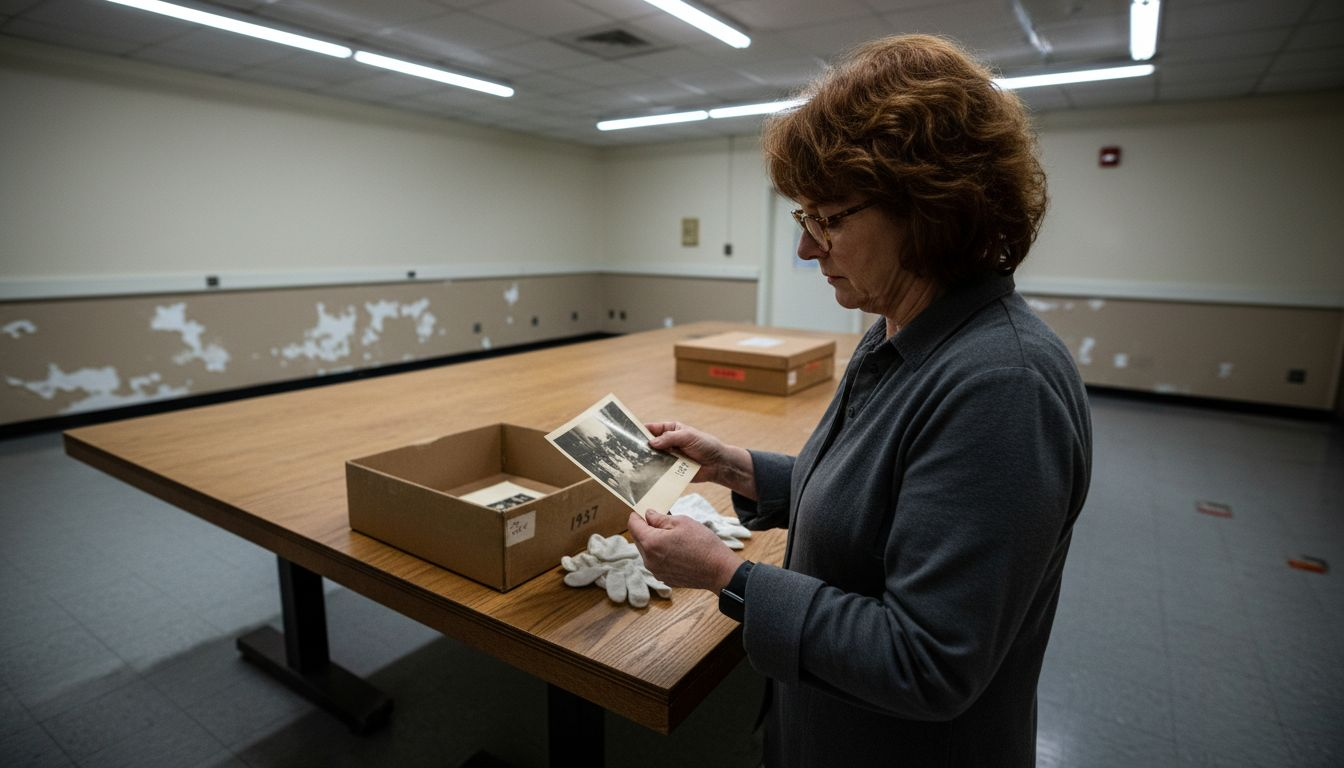
Art censorship has been marked by pivotal moments that dramatically illustrate the ongoing tension between creative expression and societal control. Comprehensive historical records reveal a complex timeline of censorship incidents that shaped artistic freedom across different cultural contexts, demonstrating how artistic suppression reflects deeper social and political dynamics.
Several landmark cases highlight the multifaceted nature of art censorship. The Nazi regime’s systematic suppression of “degenerate art” represents one of the most extreme examples, where modernist artworks were publicly ridiculed, removed from museums, and often destroyed. Similarly, Soviet socialist realism mandated strict artistic guidelines that marginalized any creative work not aligning with state-approved narratives. In the United States, controversies surrounding artists like Robert Mapplethorpe in the late 1980s exposed the ongoing battles between artistic expression and moral conservatism, with his provocative photographs challenging social norms and triggering significant legal and cultural debates.
The following table summarizes landmark art censorship cases and their broader effects:
| Case/Movement | Location | Primary Method | Long-term Outcome |
|---|---|---|---|
| Nazi ‘degenerate art’ | Germany | Destruction, public ridicule | Massive loss of modern art |
| Soviet socialist realism | USSR | Strict content guidelines | Artistic conformity enforced |
| Mapplethorpe controversy | USA | Legal challenges, public debate | Raised awareness of censorship |
| Social media moderation | Global | Algorithmic filtering | Reduced visibility of sensitive work |
The digital age has introduced new dimensions to art censorship, with social media platforms and algorithmic content moderation creating sophisticated mechanisms of artistic control. Online platforms now routinely make complex decisions about artistic content, balancing free expression against perceived community standards. These contemporary forms of censorship often operate through less visible mechanisms—content warnings, algorithmic downranking, and strategic visibility reduction—which are far more nuanced than historical outright bans, yet potentially more pervasive in their impact on artistic representation.
Pro tip: Maintain detailed documentation of censorship attempts, as archival evidence becomes crucial for understanding and challenging systemic artistic suppression.
Legal Changes and Institutional Roles Worldwide
Institutional governance of artistic expression has become increasingly complex, with legal frameworks evolving to address emerging challenges in creative representation. Global trends reveal a sophisticated landscape of legal mechanisms that strategically shape artistic boundaries, demonstrating how governmental and private institutions collaborate to manage creative discourse.
The contemporary legal environment surrounding art censorship is characterized by nuanced and often subtle control mechanisms. Many nations have developed sophisticated legal strategies that go beyond direct prohibition, incorporating methods like strategic funding restrictions, content moderation guidelines, and complex regulatory frameworks. National security laws, blasphemy statutes, and ‘foreign agent’ legislation have emerged as powerful tools for institutional control, allowing governments to exert indirect pressure on artistic expression without resorting to overt censorship.
Worldwide institutional responses to artistic content have become increasingly intricate, with state actors playing dominant roles in censorship processes. Museums, cultural centers, and online platforms now operate as complex gatekeepers, making delicate decisions about artistic visibility and acceptability. These institutions navigate challenging terrain, balancing artistic freedom against perceived social standards, community expectations, and political sensitivities. The result is a dynamic global landscape where artistic expression is continuously negotiated through legal, institutional, and technological channels.
Pro tip: Develop a comprehensive understanding of local and international cultural policies to effectively anticipate and navigate potential artistic restrictions.
Impact on Artistic Expression and the Market
Art censorship fundamentally transforms creative landscapes, creating complex ripple effects across cultural and economic ecosystems. Research demonstrates that censorship systematically disrupts artists’ creative choices and market opportunities, producing profound consequences for individual creators and broader cultural industries.
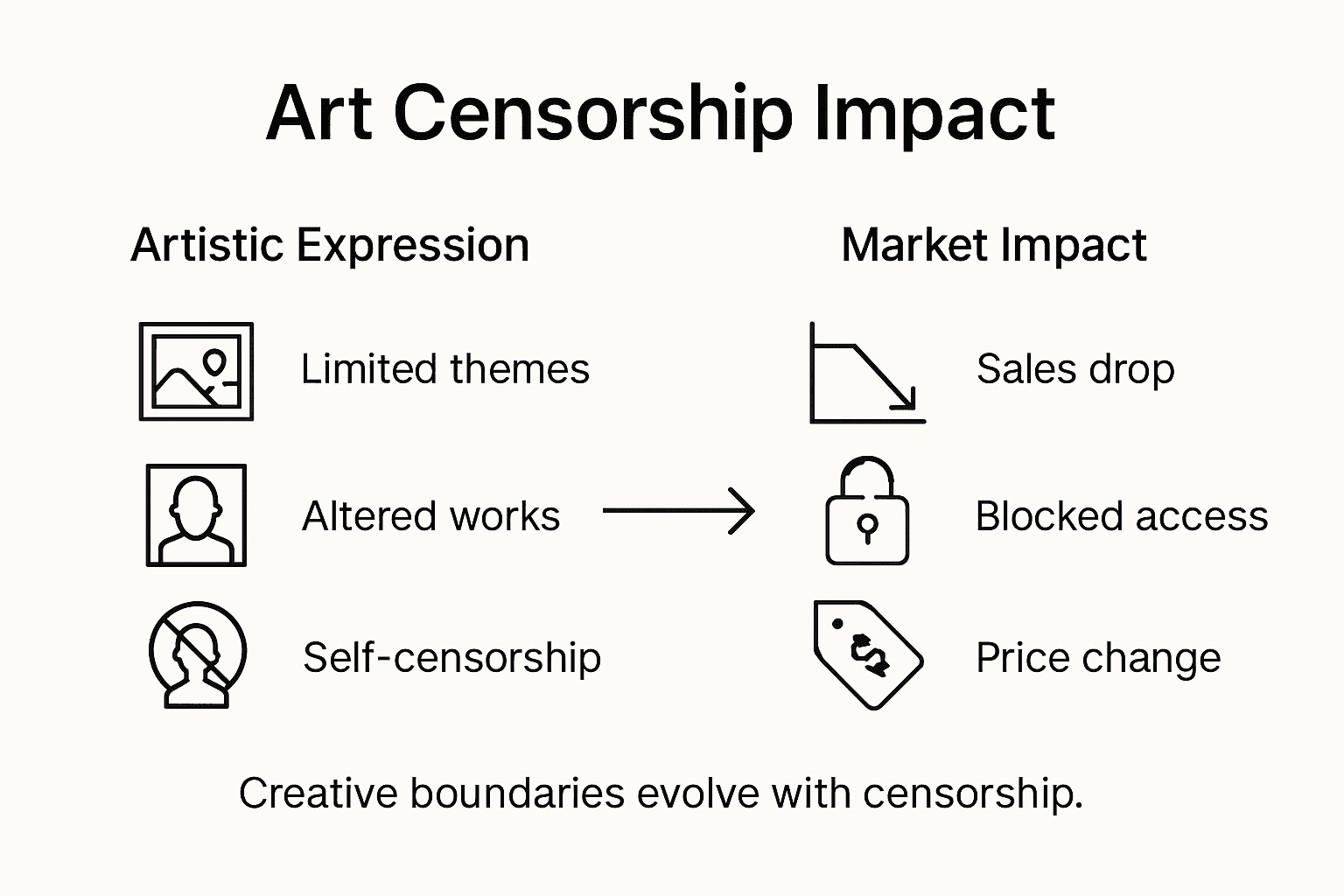
The economic implications of artistic censorship are particularly significant. Artists face substantial market barriers, including reduced exhibition opportunities, limited international collaborations, and decreased revenue potential. These restrictions force creators into strategic compromises, often leading to self-censorship—a subtle but powerful mechanism that preemptively limits artistic exploration. Professional artists increasingly find themselves navigating complex terrain where creative integrity must be balanced against economic survival, resulting in a gradual homogenization of artistic expression.
Global cultural sectors experience substantial economic and social consequences from persistent artistic restrictions, with marginalized voices facing exponential challenges. These dynamics extend beyond individual artists, impacting entire creative ecosystems, cultural diversity, and international artistic exchange. Museums, galleries, and digital platforms become critical negotiation spaces where artistic expression is continuously evaluated, challenged, and potentially restricted, fundamentally altering how creative works are produced, distributed, and consumed.
Pro tip: Develop multiple revenue streams and maintain international professional networks to create resilience against potential censorship challenges.
Explore Bold Artistic Voices Beyond Censorship
Art censorship shapes creative boundaries in ways that restrict artistic freedom and silence vital perspectives. This article reveals how political, moral, and institutional controls compel artists to self-censor and compromise their vision. If you seek to support independent creators whose work challenges norms and sparks conversation, it is essential to connect with platforms that celebrate artistic freedom and diversity.
Discover unique artbooks, comics, and limited editions at The Mansion Press where independent artists can share their uncensored stories. Empower your collection by embracing exclusive artworks that break free from conventional restrictions. Act now to support creativity that resists suppression by browsing and pre-ordering your next standout piece today at The Mansion Press.
Explore the voices you deserve to hear and champion artistic freedom through original artworks only available through trusted artist collaborations.
Frequently Asked Questions
What is art censorship?
Art censorship refers to the suppression, regulation, or control of artistic expression by societal authorities due to perceived threats to cultural, political, or moral norms.
How has art censorship evolved over time?
Art censorship has evolved from direct governmental restrictions and destruction of art to more nuanced contemporary methods such as funding restrictions and social media content moderation.
What are the main types of art censorship?
The main types include political censorship, religious censorship, moral censorship, and institutional censorship, each motivated by different societal factors and goals.
What impact does art censorship have on artists and the art market?
Art censorship can lead to reduced exhibition opportunities, limited collaborations, and decreased revenue potential, ultimately forcing artists into self-censorship and homogenization of creative expression.
Recommended
- Controversial Comics History: Everything You Should Know – The Mansion Press
- Complete Guide to Banned Comics in History – The Mansion Press
- Complete Guide to Controversial Comic Book Covers – The Mansion Press
- Understanding Violent Comics and Controversy in Art – The Mansion Press
- Understanding Video Editor Terms for Effective Filmmaking