


What Defines Cult Comics: Icons, Genres, Legacy
Over half of American comic collectors identify cult comics as their most prized possessions. These graphic narratives break free from mainstream formulas, offering stories and visuals that spark lasting emotional connections. For anyone interested in how American creators use comics to reflect social challenges and push artistic boundaries, exploring cult comics reveals why their passionate fan base keeps growing year after year.
Table of Contents
- Defining Cult Comics and Core Elements
- Genres and Influences Shaping Cult Status
- Key Characteristics of Cult Comics
- Iconic Creators and Breakout Titles
- Cultural Impact and Collector Appeal
Key Takeaways
| Point | Details |
|---|---|
| Cult Comics Distinction | Cult comics challenge traditional storytelling, focusing on themes like alienation and subversion to connect with specialized audiences. |
| Genres and Influences | Emerging from various genres such as horror and experimental, cult comics reflect counter-cultural movements and artistic rebellion. |
| Psychological Appeal | These comics validate outsider experiences, fostering deep emotional connections through complex narratives and characters. |
| Cultural Significance | Cult comics act as cultural artifacts, providing insights into social movements and artistic innovation, attracting passionate collectors. |
Defining Cult Comics and Core Elements
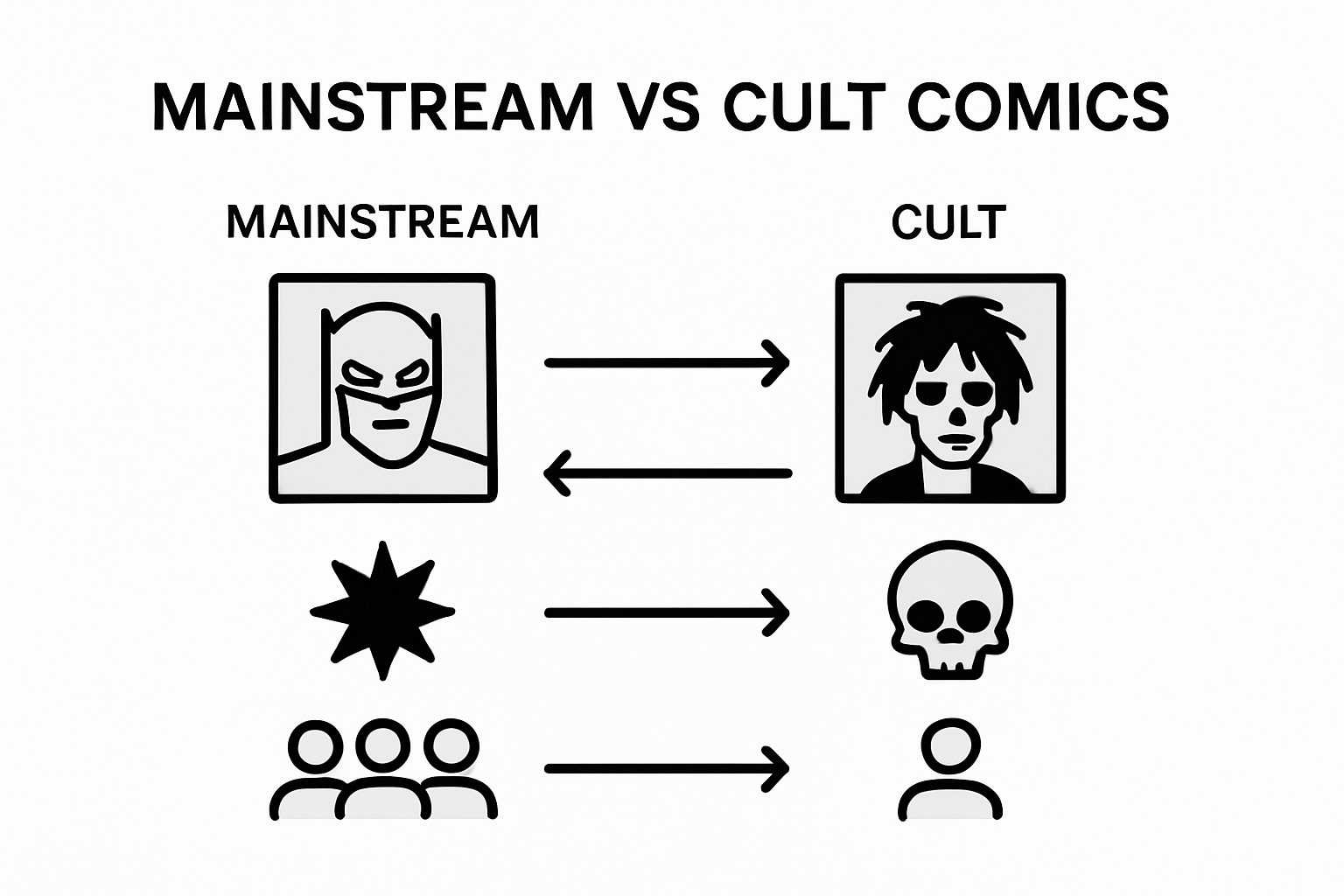
Cult comics represent more than just graphic narratives; they embody unique cultural artifacts that challenge traditional storytelling boundaries. Understanding the intricate vocabulary of comics reveals how these unconventional works transcend mainstream expectations, creating immersive experiences that resonate deeply with specialized audiences.
At their core, cult comics are distinguished by several defining characteristics. They often explore themes of alienation, subversion, and individual identity, drawing readers who feel disconnected from conventional narratives. These works frequently emerge from underground or independent scenes, presenting radical perspectives that mainstream publications might reject. Artists in this domain prioritize creative freedom over commercial appeal, crafting stories that challenge societal norms and personal perceptions.
The psychological appeal of cult comics lies in their ability to create profound connections with readers. Research examining cult fiction’s distinctive characteristics highlights how these works provide powerful mechanisms of ego-reinforcement and personal transformation. Readers discover narratives that validate their outsider experiences, offering complex characters and storylines that traditional media often overlooks. This deep emotional resonance transforms cult comics from mere entertainment into meaningful cultural expressions that reflect alternative perspectives and marginalized experiences.
Key elements that define cult comics include:
- Unconventional narrative structures
- Bold artistic experimentation
- Themes of social critique
- Complex character development
- Rejection of mainstream storytelling conventions
By challenging artistic boundaries and embracing radical creativity, cult comics continue to push the boundaries of graphic storytelling, offering readers immersive experiences that transcend traditional literary and artistic expectations.
Genres and Influences Shaping Cult Status
Cult comics emerge from a rich tapestry of genre influences that challenge traditional artistic boundaries. Research exploring various genre dynamics reveals how specific narrative styles and thematic approaches contribute to a work’s eventual cult status. Horror, science fiction, experimental, and underground genres play pivotal roles in creating narratives that resonate beyond mainstream expectations.
The evolution of cult comics is deeply intertwined with counter-cultural movements and artistic rebellion. Peripheral artistic groups consistently push creative boundaries, using comics as a medium for social critique and personal expression. Quantitative studies analyzing artistic cycles demonstrate how marginalized creators challenge existing cultural norms, generating innovative storytelling approaches that attract dedicated followers who seek alternative perspectives.
Genres that significantly shape cult comic status include:
- Underground comix
- Experimental graphic narratives
- Transgressive storytelling
- Alternative reality science fiction
- Surrealist and avant-garde visual styles
These genres share common characteristics: they reject conventional storytelling, embrace radical artistic techniques, and provide platforms for voices traditionally excluded from mainstream narratives. By prioritizing creative authenticity over commercial appeal, cult comics create immersive experiences that transform readers’ understanding of graphic storytelling. The underground comic creators who pioneer these genres become cultural provocateurs, challenging societal expectations and expanding the boundaries of artistic expression.
Key Characteristics of Cult Comics
Understanding the fundamental vocabulary of comics reveals a complex landscape where cult comics transcend traditional storytelling boundaries. These graphic narratives are distinguished by their unique ability to challenge conventional artistic and narrative expectations, creating immersive experiences that resonate deeply with specialized audiences.

Cult comics are characterized by profound psychological elements that set them apart from mainstream works. Research on cult fiction’s distinctive traits highlights critical attributes such as alienation, vulnerability, and ego-reinforcement. These narratives provide readers with transformative experiences that validate outsider perspectives, offering complex character developments that traditional media typically overlooks.
Key characteristics that define cult comics include:
- Radical narrative experimentation
- Themes of social marginalization
- Subversive artistic techniques
- Psychological depth and complexity
- Rejection of mainstream storytelling conventions
The most compelling cult comics emerge from a deep commitment to artistic authenticity. They function as more than entertainment, serving as powerful cultural expressions that challenge societal norms, amplify marginalized voices, and create profound connections with readers who seek narratives that reflect alternative experiences and unconventional perspectives. Notable cult comic authors consistently demonstrate how pushing creative boundaries can transform graphic storytelling into a revolutionary art form.
Iconic Creators and Breakout Titles
The Modern Age of Comic Books marked a transformative period for graphic storytelling, introducing groundbreaking creators who challenged traditional narrative conventions. This era witnessed an unprecedented explosion of creative talent, with artists and writers pushing the boundaries of visual storytelling and introducing complex, nuanced characters that resonated with increasingly sophisticated audiences.
Iconic creators emerged as true revolutionaries, transforming comics from simple entertainment to powerful cultural expressions. Underground artists and independent publishers played crucial roles in developing narrative styles that defied mainstream expectations. Analyzing the fundamental vocabulary of comics reveals how these creators developed innovative techniques that expanded the medium’s artistic potential, challenging readers to engage with graphic narratives in more profound and meaningful ways.
Breakout titles that defined cult comic status include:
- “Watchmen” by Alan Moore
- “Maus” by Art Spiegelman
- “Ghost World” by Daniel Clowes
- “The Sandman” by Neil Gaiman
- “Love and Rockets” by Los Bros Hernandez
These groundbreaking works share a common thread: they transcended traditional comic book storytelling, offering complex narratives that explored social themes, psychological depth, and artistic experimentation. Must-know iconic underground comic creators consistently demonstrated how graphic storytelling could become a powerful medium for cultural critique, personal expression, and artistic innovation.
Cultural Impact and Collector Appeal
Cult comics represent far more than collectible artifacts; they are powerful cultural documents that capture the zeitgeist of their respective eras. Provocative comics inspire passionate collectors through their ability to challenge social norms, document counterculture movements, and provide unique artistic expressions that transcend traditional storytelling boundaries.
Collector motivation emerges from multiple interconnected factors. These graphic narratives offer more than visual entertainment; they represent cultural artifacts that capture complex social dialogues, personal transformations, and artistic rebellion. Rare and limited edition cult comics become valuable not just for their monetary worth, but for their historical significance, representing moments of creative insurgency and social commentary.
Key elements driving collector appeal include:
- Historical and cultural significance
- Limited print runs
- Artistic innovation
- Narrative complexity
- Representation of marginalized perspectives
Essential cult comic anthologies demonstrate how these works function as more than collectible items. They are living historical documents that preserve alternative narratives, challenge mainstream perspectives, and provide profound insights into social movements, artistic experimentation, and human experience. Collectors are not merely acquiring objects, but investing in cultural memories that represent radical creativity and social transformation.
Discover the Power and Legacy of Cult Comics with The Mansion Press
If you are captivated by the unique psychological depth, radical artistry, and groundbreaking narratives that define cult comics you are not alone. Many passionate readers and collectors seek authentic works that challenge mainstream storytelling while offering profound social critique and emotional connection. The Mansion Press specializes in bringing you exactly those rare and limited-edition artbooks, comics, and collector’s editions that celebrate these iconic creators and their transformative visions.
Explore our curated collection and find essential pieces that embody the bold experimentation, diverse genres, and cultural impact discussed in “What Defines Cult Comics: Icons, Genres, Legacy.” Don’t miss your chance to own exclusive works that reflect outsider perspectives and artistic rebellion. Visit The Mansion Press now and step into a world where cult comics become lasting cultural treasures.
Frequently Asked Questions
What are cult comics?
Cult comics are unique graphic narratives that challenge traditional storytelling boundaries, often exploring themes of alienation, subversion, and individual identity. They resonate with specialized audiences by offering radical perspectives that mainstream comics may overlook.
How do cult comics differ from mainstream comics?
Cult comics prioritize creative freedom and artistic experimentation over commercial appeal. They often feature unconventional narrative structures, complex character development, and themes of social critique, setting them apart from mainstream storytelling conventions.
Who are some iconic creators of cult comics?
Notable creators of cult comics include Alan Moore, Art Spiegelman, Neil Gaiman, and the Hernandez brothers, whose works transformed the medium by introducing complex narratives and innovative techniques that resonate with diverse audiences.
What drives the collector appeal of cult comics?
Collector appeal for cult comics arises from their historical and cultural significance, limited print runs, and artistic innovation. These comics represent cultural artifacts that capture social dialogues and personal transformations, making them valuable beyond just monetary worth.
Recommended
- Understanding Cult Graphic Novels: A Comprehensive Guide – The Mansion Press
- 7 Notable Cult Comic Authors Every Fan Should Know – The Mansion Press
- 7 Educational Insights from Cult Comic Authors Worldwide – The Mansion Press
- 7 Essential Favorite Cult Comic Anthologies for Collectors – The Mansion Press
- 7 Examples of Influential Curators Every Pro Should Know - Blog - Music24.com