

Tintin Compact Edition: Why Collectors Crave It
Serious collectors know the hunt for a complete Tintin set can turn into a never-ending search through online auctions and specialty shops. This challenge matters when you aim to own every adventure, not just a scattering of classic comics on your shelf. The Tintin Compact Edition captures the full experience in eight uniform volumes, offering a unified collection that preserves Hergé’s artistry while streamlining the process for art and comic enthusiasts eager for rare and thoughtfully curated releases.
Table of Contents
- What Makes Tintin Compact Edition Unique
- Comparing Compact and Classic Tintin Releases
- Essential Features for Comic Collectors
- Evaluating Value, Rarity, and Market Trends
- How to Buy and Preserve Authentic Editions
Key Takeaways
| Point | Details |
|---|---|
| Unique Collection Experience | The Tintin Compact Edition offers complete ownership of the series in fewer volumes, appealing to collectors seeking a cohesive display. |
| Preservation of Quality | The edition maintains Hergé’s original artistry with preserved details and vibrant colors, ensuring the iconic look is retained. |
| Accessibility for New Collectors | This format is financially attractive and readily available, making it easier for new collectors to start their Tintin journey. |
| Storage Efficiency | Compact editions require significantly less shelf space compared to classic versions, making them ideal for modern collectors. |
What Makes Tintin Compact Edition Unique
The Tintin Compact Edition delivers something collectors rarely find: a complete series experience without the footprint. Instead of hunting down individual volumes scattered across shelves and markets, the eight-volume set consolidates Hergé’s entire illustrated universe into a cohesive collection.
This isn’t just about convenience. The format fundamentally changes how you interact with the work.
The Completeness Factor
Owning all of Tintin’s adventures together means something to serious collectors. You’re not constantly wondering which volumes remain missing or when the rare issues will surface at reasonable prices.
Key advantages of the compact format:
- All eight volumes fit together as a unified visual statement on your shelf
- No hunting across specialty dealers or waiting months for back issues
- Consistent binding and design across the entire series
- Reduced storage space compared to traditional individual editions
- Lower total investment than sourcing scattered vintage volumes
Complete series ownership matters to collectors because it tells a finished story. With Tintin, you capture Hergé’s complete vision without gaps.
Preservation of Original Artistry
Hergé’s line work and color palettes demand respect. The compact edition maintains the original charm and visual integrity that made Tintin iconic. Collectors appreciate that the format didn’t sacrifice quality for size reduction.
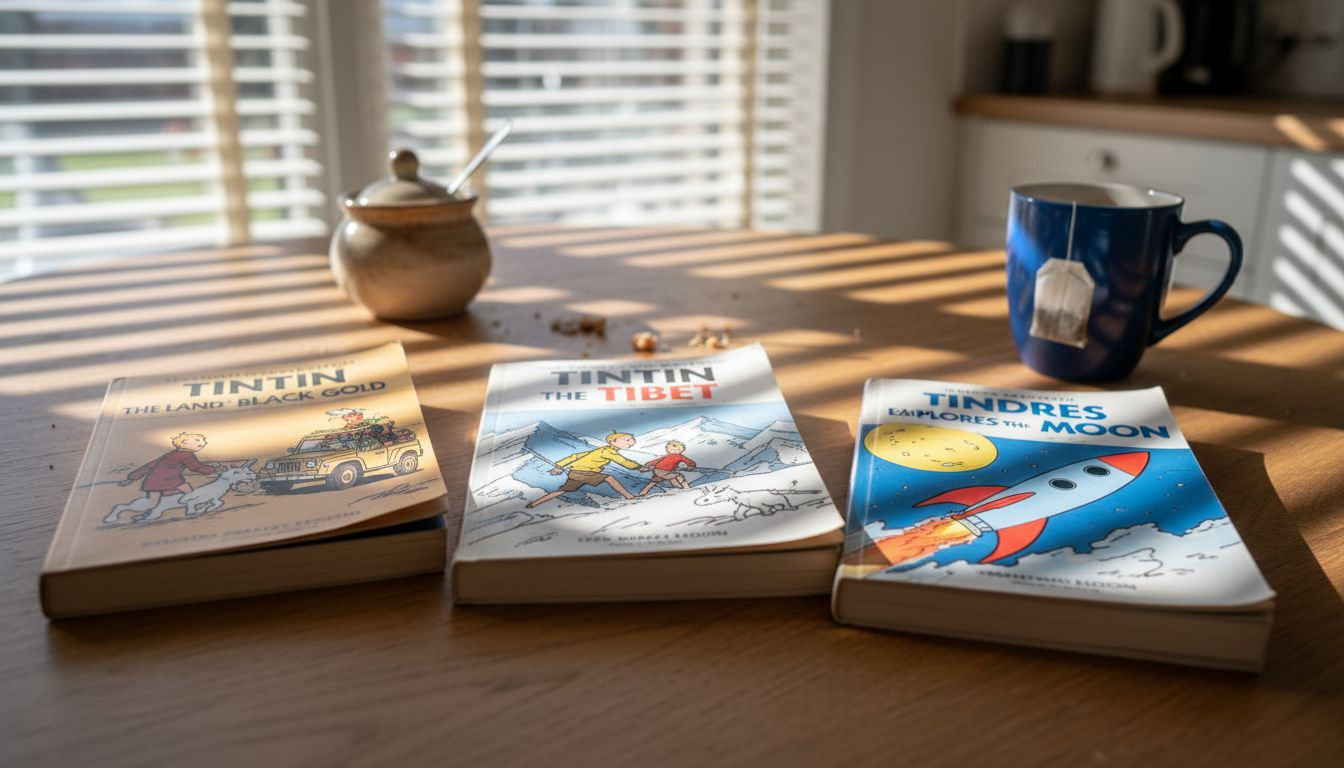
The publisher resized the artwork thoughtfully. Details remain crisp, colors hold their vibrancy, and the distinctive Belgian comic style translates perfectly to the smaller pages.
Accessibility for New Collectors
You don’t need deep pockets or years of searching to complete a Tintin collection anymore. The compact edition democratizes access while rewarding longtime enthusiasts. It’s simultaneously an entry point and a statement collection.
For collectors aged 25-45 who appreciate independent comic creators and curated releases, this format speaks directly to your values. Limited edition comic collections matter because they reflect intentional curation rather than mass production.
The eight-volume structure also creates a sense of closure. You’re not chasing an infinite expansion; the series simply ends, exactly as Hergé completed it.
Pro tip: Display the complete set spine-out on a dedicated shelf to showcase the visual cohesion—collectors often find the unified design more striking than scattered volumes.
Comparing Compact and Classic Tintin Releases
The choice between compact and classic Tintin editions comes down to what matters most to your collection. Both formats capture Hergé’s work, but they serve different collector priorities and display strategies.
Understanding the differences helps you make a decision aligned with your collection goals. Let’s break down what separates these two approaches.
Space and Portability
Compact editions condense the complete series into fewer volumes, making the set dramatically more space-efficient. You’re looking at eight books instead of potentially twenty or more scattered across shelves.
Classic editions maintain the original single-book presentation. Each adventure occupies its own spine. This creates visual variety but demands significantly more shelf real estate.
Space comparison:
Here’s a concise comparison of Compact vs. Classic Tintin editions for collectors:
| Aspect | Compact Edition | Classic Edition |
|---|---|---|
| Shelf Space Needed | 18-24 inches per full set | 40-60 inches per complete run |
| Display Style | Unified, modern spines | Original, varied cover art |
| Accessibility | Easier to purchase as a set | Requires finding individual books |
| Investment Pattern | Lower upfront, possible appreciation | Higher cost, stronger vintage potential |
| Portability | Easy to transport as a set | Bulky and less travel friendly |
- Compact editions: approximately 18-24 inches of linear shelf space
- Classic editions: approximately 40-60 inches depending on collection size
- Compact sets stack easily in travel bags or smaller display areas
- Classic releases require dedicated shelf sections or display cabinets
Visual Presentation and Authenticity
Classic editions preserve the original cover artwork and design language Hergé approved. Collectors valuing historical accuracy prefer seeing each volume as it originally appeared in bookstores and libraries. The traditional presentation feels authentic and timeless.
Compact editions modernize the visual experience. Unified spines create a cohesive visual statement. The design feels intentional and curated rather than scattered.
Your display preference matters as much as your storage space. Classic editions tell individual stories; compact editions tell one unified narrative.
Print Quality and Readability
Both formats maintain strong color reproduction and line clarity. The real difference lies in page size. Classic editions offer larger pages with generous margins, creating a more comfortable reading experience.
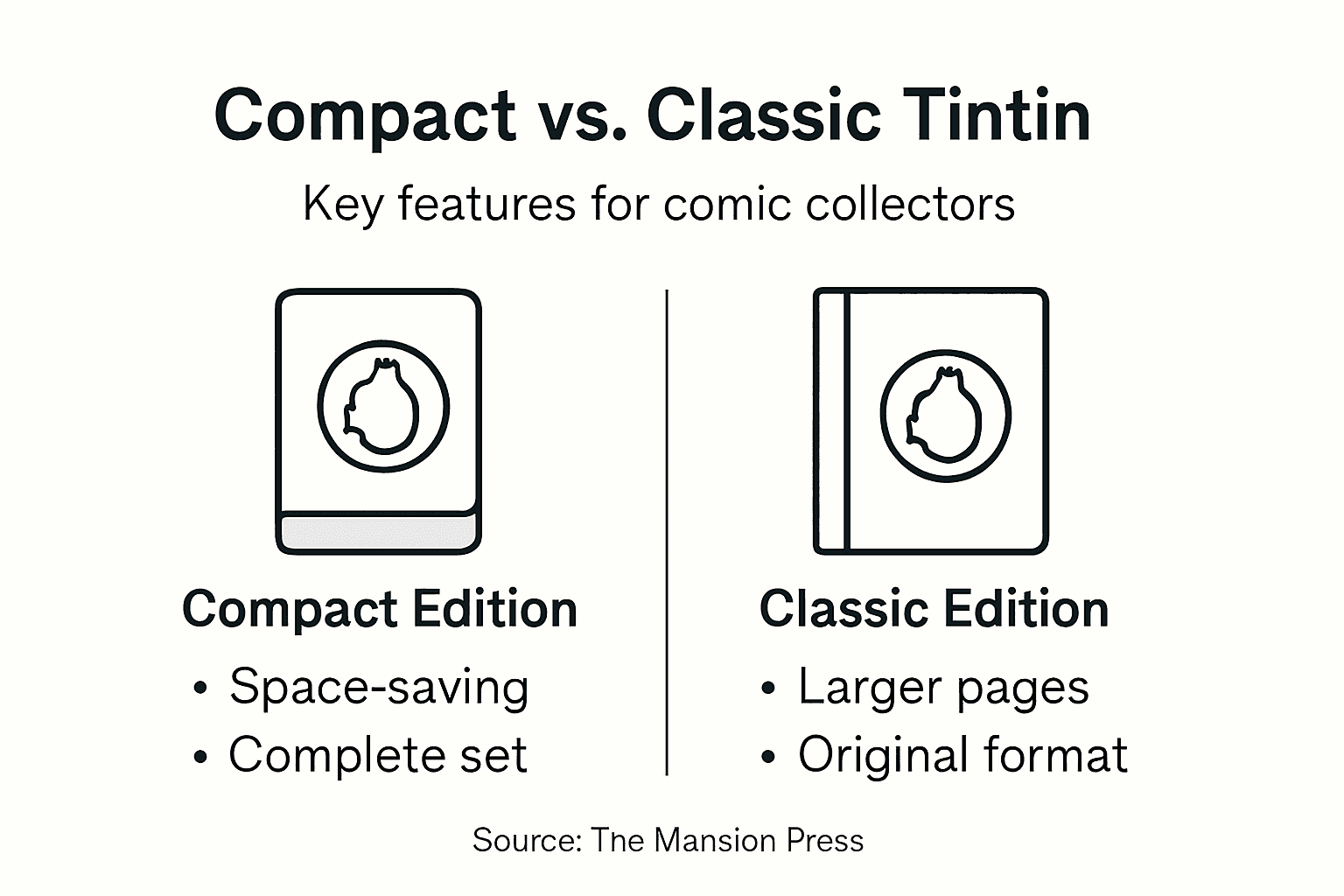
Compact editions resize artwork thoughtfully. Details remain crisp, but the smaller format requires closer viewing. For collectors who display more than read, this rarely matters.
Investment and Accessibility
Classic complete collections often cost substantially more. Hunting for individual volumes across dealers, auctions, and specialty retailers becomes expensive and time-consuming. Compact editions eliminate this barrier significantly.
New collectors typically find compact releases more attractive financially. You’re investing once in a complete package rather than chasing individual volumes over years. However, classic editions sometimes appreciate differently in resale markets.
Collector priorities determine format choice:
- Choose compact for: unified aesthetics, storage efficiency, complete access, lower investment
- Choose classic for: original presentation, individual volume appeal, reading comfort, historical preservation
Pro tip: Start with a compact edition to establish your Tintin foundation, then gradually add key classic volumes you want for reading—this hybrid approach gives you completeness plus the authentic volumes that matter most.
Essential Features for Comic Collectors
What separates a casual reader’s shelf from a serious collector’s vault? The answer lies in understanding what features actually matter when evaluating comics worth owning long-term.
The Tintin Compact Edition excels precisely because it addresses the priorities that collectors like you actually care about. Let’s explore what those features are.
Authenticity and Provenance
Authenticity means the edition is exactly what it claims to be. No reprints marketed as originals, no counterfeit covers, no altered artwork. Provenance tracks where a copy has been and who owned it previously.
For compact editions, you’re buying from publishers with established reputations. The chain of custody is transparent. You know precisely which printing you own and when it was released.
Classic individual volumes sometimes carry mysterious histories. You might wonder about previous owners or storage conditions. Compact editions eliminate this uncertainty entirely.
Condition and Preservation Quality
Comic collectors prioritize high-quality printing and preservation as foundational to collection value. The Tintin Compact Edition uses archival-quality paper and binding that resists yellowing and deterioration.
Condition grading matters enormously in the collector market. A Near Mint comic commands vastly different prices than one showing wear. Compact editions arrive in consistent, protected condition.
Key preservation features:
- Acid-free paper stock that resists yellowing over decades
- Reinforced binding that withstands repeated reading and handling
- Color fidelity that maintains Hergé’s original vision
- Dust jackets designed to protect covers from environmental damage
- Protective storage boxes available for serious collectors
Rarity and Cultural Significance
Rarity drives collector interest, but it’s not random. Tintin holds undeniable cultural significance. These aren’t obscure issues; they represent foundational works of European comic art.
The compact format itself becomes increasingly rare as older printings sell out. First printings of compact editions may become sought-after in future years. You’re essentially securing pieces of comic history in a format that simplifies complete ownership.
Rarity matters most when combined with cultural importance. Tintin isn’t rare because it’s obscure—it’s significant because it’s beloved.
Documentation and Special Editions
Serious collectors document everything. Artist signatures, limited printing numbers, and special edition variations all add value. Some compact editions include forewords by scholars or commemorative notes about Hergé’s legacy.
These details transform a purchase into an investment. You’re not just buying stories; you’re acquiring documented pieces of comic history that appeal to future collectors.
Grading and Consistency
Unlike hunting scattered vintage volumes, compact editions arrive with predictable quality. Every copy meets the same production standards. You’re not gambling on condition or authenticity.
This consistency matters when building a collection you’ll display with pride. No mismatched spines or condition variations undermining your shelf presentation.
Pro tip: Document your compact collection with photographs and purchasing receipts stored digitally—this documentation becomes invaluable if you ever sell, and it helps you track the complete history of your collection.
Evaluating Value, Rarity, and Market Trends
Knowing what a collection is worth requires understanding three interconnected forces: rarity, demand, and market cycles. These factors don’t work independently—they interact constantly to shape pricing and collector behavior.
For Tintin Compact Editions, strategic evaluation separates informed collectors from impulse buyers. Let’s break down how value actually works in this market.
Understanding True Rarity
True rarity differs from artificial scarcity. A comic isn’t rare simply because it’s old; it’s rare when fewer copies exist than collectors want to own. Tintin Compact Editions occupy a middle ground—accessible enough to be enjoyable, scarce enough to hold value.
First printings of certain compact editions become increasingly difficult to locate. Reprints, conversely, remain abundant and hold lower collector value. Understanding rarity versus artificial scarcity helps you distinguish worthwhile acquisitions from hyped releases.
Population reports track how many authenticated copies exist. Fewer copies in circulation translate directly to stronger long-term value potential.
The Demand Factor
Rarity means nothing without demand. A scarce comic nobody wants stays undervalued indefinitely. Tintin enjoys consistent worldwide demand across multiple collector demographics—European enthusiasts, comic historians, art collectors, and casual readers all seek these editions.
This diverse appeal creates stable value floors. Unlike niche franchises that fade when media hype dies, Tintin’s cultural significance endures.
Demand drivers for Tintin Compact Editions:
- Hergé’s legendary artistic reputation
- Global collector base spanning continents
- Cultural relevance in literature and art education
- Limited supply of first printings
- Appeal to independent comic enthusiasts
Market Cycles and Timing
Comic markets fluctuate. Film adaptations, anniversaries, and cultural moments spike collector interest temporarily. Smart acquisitions happen during quiet periods when prices remain reasonable.
Tracking comparable sales and auction results reveals actual market movements. You’ll notice patterns: certain editions appreciate, others plateau, and older reprints depreciate slowly.
For Tintin, anniversaries of Hergé’s work or new adaptations historically drive increased demand. Collectors positioned beforehand capture appreciation potential.
Market cycles reward patience. Buy when interest wanes, hold through trending periods, and you’ll notice value compounds naturally.
Valuation Components
Condition matters enormously. A near-mint compact edition commands premiums over heavily read copies. First printings in superior condition appreciate faster than later reprints.
Provenance adds value when documented. Original owner history, signed copies, or special editions with verified authenticity fetch higher prices. Compact editions typically arrive with clear provenance since they’re new releases with transparent manufacturing records.
Market demand at moment of sale determines actual prices. Compare listings across multiple platforms monthly to track trending values.
Strategic Considerations
Compact editions serve dual purposes—they’re genuinely enjoyable to read while appreciating as collectible assets. This combination rarely exists simultaneously. Most collectibles sacrifice usability for value preservation.
You’re not choosing between reading enjoyment and investment potential. You’re getting both with Tintin Compact Editions.
Pro tip: Document acquisition prices and purchase dates for each volume—this baseline tracking reveals appreciation over five and ten-year periods, helping you identify which compact editions become most valuable within your collection.
How to Buy and Preserve Authentic Editions
Owning Tintin Compact Editions means nothing if they deteriorate in your care. Smart collectors understand that acquisition is just the beginning—preservation determines long-term value and enjoyment.
Let’s explore how to source authentic copies and keep them in exceptional condition for decades.
Sourcing Authentic Editions
Authenticity starts with reputable retailers. Purchase directly from established publishers or authorized sellers with transparent inventory practices. Avoid third-party marketplaces without seller verification or customer protections.
For Tintin Compact Editions, The Mansion Press specializes in curated comic releases and limited editions. You’re buying from specialists who understand collector needs, not general retailers treating comics as commodity inventory.
Always verify publication dates and edition information before purchasing. First printings command premiums, so confirm you’re getting what the listing claims.
Verification checklist:
- Check ISBN numbers match official publisher records
- Confirm printing date on copyright page
- Request detailed photos if buying remotely
- Review seller ratings and return policies
- Verify binding quality and print clarity
Storage and Environmental Control
Preserving comic books requires controlling temperature, humidity, and light exposure. These three factors drive nearly all deterioration.
Your storage environment matters as much as the books themselves. Store in cool, dry spaces away from windows and heat sources. Fluctuating temperatures and humidity damage binding and paper far more than consistent conditions, even if slightly suboptimal.
Aim for temperatures between 60-70 degrees Fahrenheit with 30-40% relative humidity. Basements and attics are dangerous—temperature and humidity swings accelerate aging dramatically.
Protective Materials
Use acid-free sleeves and archival boxes exclusively. Regular plastic or cardboard accelerates yellowing and brittleness. Acid-free materials cost slightly more but extend lifespan by decades.
Store volumes upright on shelves rather than stacked horizontally. Horizontal stacking compresses binding and warps pages over time. Vertical storage distributes weight naturally and allows air circulation.
Use this table to ensure best preservation practices for your compact edition:
| Preservation Step | Rationale | Collector Benefit |
|---|---|---|
| Store upright, not stacked | Prevents spine and page warping | Maintains physical condition |
| Control temperature & humidity | Slows aging and yellowing | Prolongs archival quality |
| Use only acid-free materials | Avoids chemical damage | Retains long-term value |
| Handle with clean, dry hands | Prevents oils and stains | Preserves resale and display appeal |
| Limit sunlight exposure | Reduces color fading | Keeps covers vibrant and sharp |
Quality storage materials cost pennies compared to replacement costs. Invest in archival protection immediately.
Handling Practices
Handle with clean hands or gloves, avoiding food and drink nearby. Oils from bare skin accelerate paper deterioration and leave fingerprints.
Never fully open spines or bend pages unnecessarily. Many collectors damage books by forcing them completely flat during reading. Open volumes gently to a comfortable angle—typically 120-140 degrees.
Don’t mark, annotate, or apply adhesive labels inside. Permanent markers bleed through paper, and stickers leave residue that attracts dust and insects.
Display Strategies
Compact editions look stunning displayed spine-out on dedicated shelves. However, extended sunlight exposure fades covers within months. Position shelves away from windows or install UV-filtering protective glass.
Rotate displayed volumes quarterly if possible. This prevents uneven fading and dust accumulation on exposed spines.
Professional Authentication
For premium compact editions or first printings, consider professional grading. Authentication services verify originality and assign condition grades that matter for resale value.
Pro tip: Photograph your collection from multiple angles with clearly visible dates and ISBN numbers, storing images in cloud storage—this documentation protects against loss while establishing provenance if you ever sell.
Elevate Your Tintin Collection with Curated Compact Editions
Collectors seeking the complete Tintin experience often face challenges like hunting down elusive volumes, ensuring authenticity, and preserving delicate artwork. The Tintin Compact Edition solves these pain points by offering a unified, high-quality set that respects Hergé’s original vision while saving space and reducing investment risk. If you desire a trusted source for these carefully curated editions that balance accessibility and collector value, thoughtful curation is key.
Discover exclusive limited-edition comic collections and artbooks at The Mansion Press, where independent artists and comic creators showcase their best works. Explore our offerings to find authentic comics with proven provenance, archival storage advice, and first printing opportunities designed to protect your investment and passion. Visit The Mansion Press now to build a collector’s library that honors Tintin’s timeless legacy, and take advantage of pre-order options available only through our platform.
Frequently Asked Questions
What makes the Tintin Compact Edition unique for collectors?
The Tintin Compact Edition offers a complete series experience in a cohesive format, allowing collectors to own all eight volumes in a space-efficient manner, reducing the hassle of hunting for individual volumes.
How does the print quality compare between the Compact and Classic editions?
Both formats maintain strong color reproduction and line clarity, but Classic editions feature larger pages for a more comfortable reading experience, while Compact editions provide a more portable option without sacrificing the original artistry.
Why is completeness important for collectors of Tintin?
Owning the complete series means capturing Hergé’s entire vision without gaps. This completeness allows collectors to enjoy the full narrative in one unified format, enhancing the overall collection experience.
What are some tips for preserving Tintin Compact Editions?
To maintain their condition, store the books upright in a cool, dry environment, use acid-free protective materials, and handle them with clean hands or gloves to avoid damaging the pages and covers.
Recommended
- Why the Collector’s Edition of Artbook Vol. 3 Is a Must-Have – The Mansion Press
- Why Collectors Obsess Over Kago’s Covers – The Mansion Press
- What Makes the Collector’s Edition of Vol. 2 Worth Owning – The Mansion Press
- Top Comic Collectors Editions 2025 – Expert Comparison – The Mansion Press
- 6 Signs of Collectible Guitars Every Collector Should Know
- Classic Fragrances Explained: Why They Still Captivate