

How to Display Art Books for Maximum Visual Impact
Every collector faces the challenge of transforming their treasured art books from mere shelving items into a striking centerpiece that commands attention. The way you prepare and curate your display not only shapes the aesthetic impact but also preserves the condition of each volume for years to come. By mastering strategic lighting and creative arrangements, you can turn your collection into an inviting visual narrative that reflects your unique artistic taste.
Table of Contents
- Step 1: Assess And Prepare Your Display Space
- Step 2: Select Art Books For Visual Cohesion
- Step 3: Arrange Books For Optimal Visibility
- Step 4: Integrate Decorative Elements And Lighting
- Step 5: Evaluate And Refine Your Book Display
Quick Summary
| Key Point | Explanation |
|---|---|
| 1. Assess Display Conditions | Evaluate light, temperature, and humidity to protect your art books while enhancing visual appeal in your display area. |
| 2. Curate for Visual Cohesion | Select art books that share themes, colors, and styles to create a harmonious and engaging visual narrative. |
| 3. Arrange for Visibility | Position books based on cover attractiveness and use varied heights and orientations to create depth and intrigue. |
| 4. Incorporate Lighting and Decor | Use adjustable lighting and minimalist decorative elements to enhance your book display without overwhelming it. |
| 5. Continually Refine Arrangement | Regularly assess and adjust your display based on viewer interactions and visual balance for ongoing improvement. |
Step 1: Assess and prepare your display space
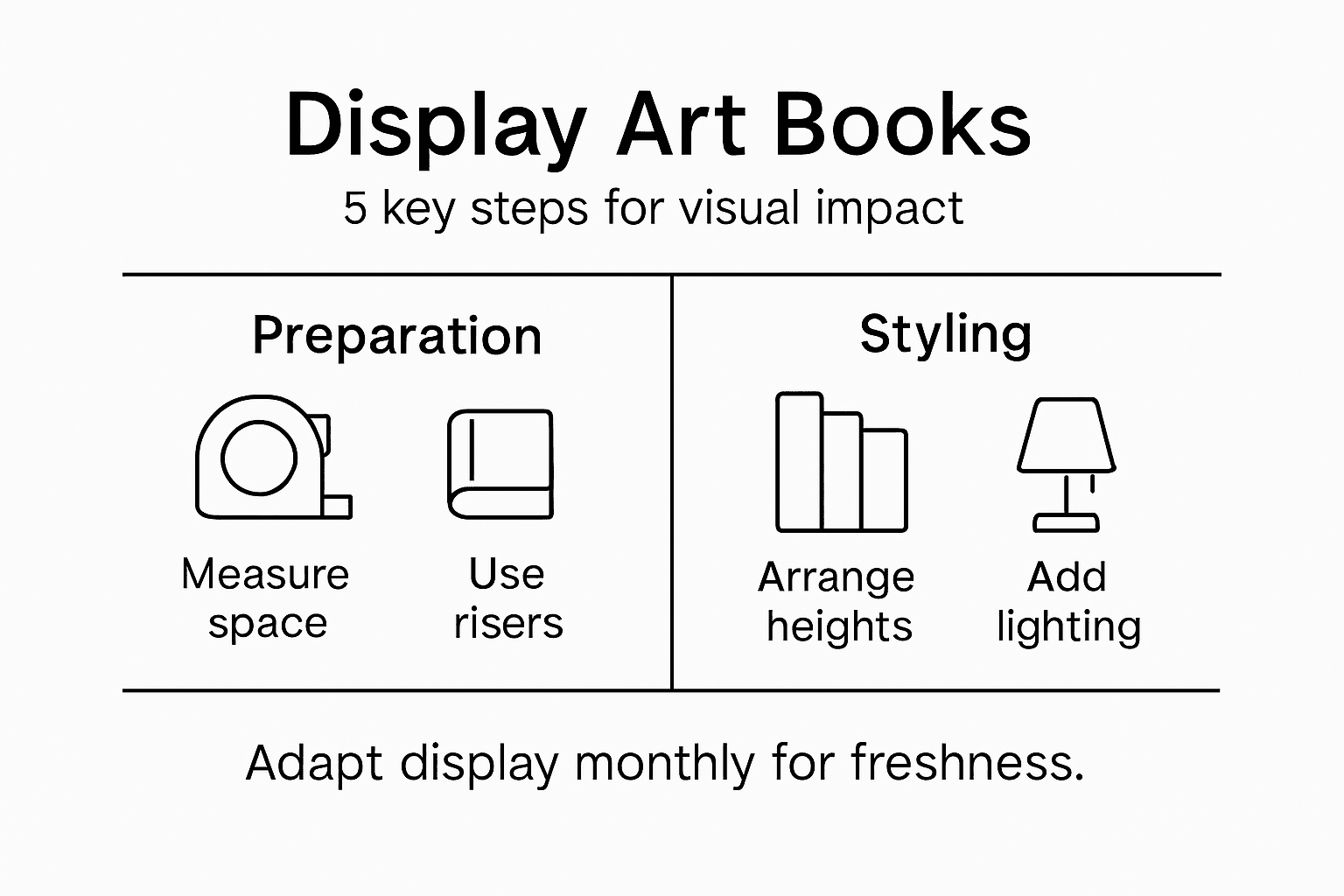
Before showcasing your art book collection, you need to carefully evaluate and prepare your display area to maximize visual impact and protect your valuable volumes. The goal is creating a space that highlights your books while preserving their condition.
Start by identifying potential display locations with strategic lighting and minimal direct sunlight. Art book display strategies recommend considering multiple factors beyond just visual aesthetics. Your potential display zones should have:
- Controlled temperature and humidity levels
- Stable surfaces away from high-traffic areas
- Indirect natural or artificial light
- Protection from potential moisture or dust
Carefully measure your available space and consider the dimensions of your art books. Some oversized volumes might require specialized shelving or dedicated display areas. Consider investing in adjustable shelving units that can accommodate different book sizes and potentially rotate your display periodically.
Here’s a quick reference to common art book display challenges and effective solutions:
| Challenge | Impact on Collection | Recommended Solution |
|---|---|---|
| Direct sunlight exposure | Fading and damage | Use UV-filtered curtains or relocate books |
| High humidity | Mold and warping | Install a dehumidifier or humidity monitor |
| Inadequate shelving | Risk of falls/damage | Invest in adjustable, stable shelving units |
| Cluttered display | Reduced visual appeal | Rotate books and introduce negative space |
| Poor lighting | Diminished visibility | Add adjustable LED lighting and avoid harsh bulbs |
The secret to an outstanding art book display is creating a curated experience that invites viewers to explore your collection.
Pro tip: Always use archival-quality book supports or risers to prevent spine damage and create dynamic visual layers in your display.
Step 2: Select art books for visual cohesion
Choosing art books that create a visually harmonious display requires thoughtful curation and an understanding of design principles. Your goal is to assemble a collection that tells a compelling visual story through carefully selected volumes.
Start by analyzing the visual literacy principles that guide aesthetic selections. Focus on creating a cohesive display by considering key elements such as:
- Color palette consistency
- Similar book sizes and proportions
- Complementary subject matter or artistic movements
- Thematic connections between volumes
- Balanced visual weight across the collection
Pay special attention to the physical characteristics of your art books. Maintain a consistent visual rhythm by grouping books with similar binding styles, cover designs, or publication eras. Some collectors prefer monochromatic displays, while others create dynamic contrasts by mixing different design approaches.
A truly remarkable art book display transforms individual volumes into a unified visual narrative.
Pro tip: Consider photographing your potential book arrangement before finalizing the display to assess overall visual balance and make precise adjustments.
Step 3: Arrange books for optimal visibility
Creating a stunning art book display requires strategic positioning that draws viewers in and highlights each volume’s unique beauty. Your arrangement should transform your collection into an engaging visual experience that invites exploration and appreciation.
Understand the principles of research visibility strategies to maximize your display’s impact. This means thinking beyond simple stacking and considering how each book contributes to the overall visual narrative:
- Position most visually striking covers at eye level
- Create depth by varying book heights and orientations
- Use horizontal and vertical stacking for dynamic presentation
- Leave strategic negative space between volumes
- Highlight rare or special edition books as focal points
Consider the physical layout of your display area. Shelves near natural light or in high-traffic zones can increase engagement, but be cautious about direct sunlight that might damage your books. Experiment with angled displays that allow partial book cover visibility, creating intrigue and encouraging closer examination.
A thoughtfully arranged art book collection tells a story without saying a word.
Pro tip: Rotate your book display periodically to keep the arrangement fresh and prevent spine fading from consistent light exposure.
Step 4: Integrate decorative elements and lighting
Transforming your art book display from simple shelving to a captivating visual experience requires thoughtful incorporation of decorative elements and strategic lighting. Your goal is to create a curated environment that highlights your collection while adding artistic depth and intrigue.
Explore lighting techniques for museums to illuminate your art books with precision and care. Consider these key strategies for integrating decorative elements and lighting:
- Use adjustable LED track lighting for focused book highlighting
- Select complementary display objects that echo book themes
- Create layered lighting with ambient and directional sources
- Position small sculptural elements between book groupings
- Incorporate neutral-toned risers or stands to add visual interest
Decorative accents should enhance, not overwhelm, your art book collection. Choose minimalist objects with clean lines that provide subtle contrast and depth. Metallic objects like small bronze sculptures or ceramic pieces can create elegant visual breaks between books, while maintaining a sophisticated aesthetic.
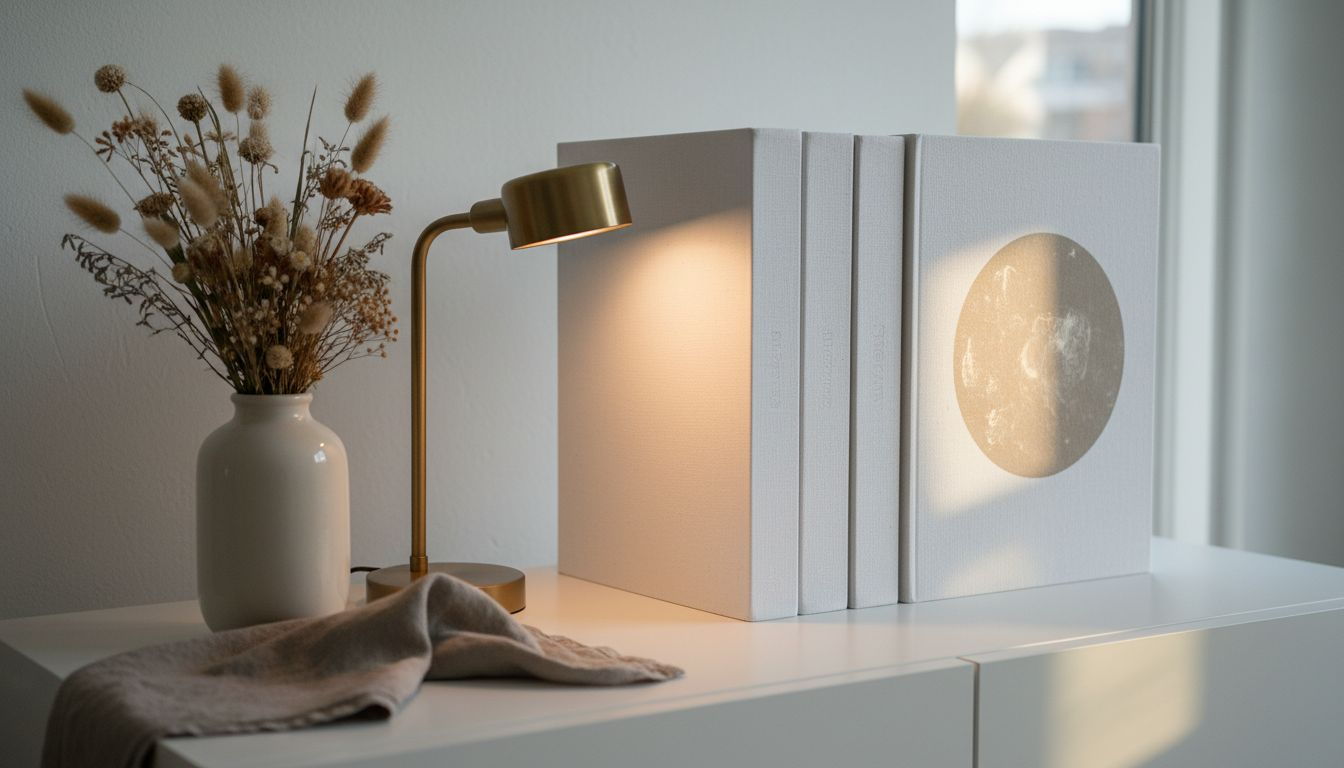
Compare decorative elements and lighting techniques to enhance your art book display:
| Decorative Element | Visual Impact | Best Lighting Technique | Placement Suggestion |
|---|---|---|---|
| Minimalist sculpture | Adds subtle depth | Directional spotlight | Between book groupings |
| Metallic riser | Creates contrast | Soft ambient light | Beneath featured volumes |
| Ceramic object | Introduces texture | Layered accent lights | At ends of shelving |
| Neutral-toned stand | Elevates visual layers | Adjustable track lighting | Under rare editions |
The right lighting and decorative elements transform a book display from ordinary to extraordinary.
Pro tip: Use museum-grade conservation lighting with adjustable intensity to protect your art books while creating a dramatic visual presentation.
Step 5: Evaluate and refine your book display
Creating the perfect art book display is an ongoing process of observation, adjustment, and thoughtful refinement. Your initial arrangement is just the beginning of crafting a truly captivating visual experience that evolves with your collection and aesthetic sensibilities.
Learn to evaluate artworks with critical precision by assessing your display from multiple perspectives. Consider these key evaluation criteria:
- Step back and view the entire display from different angles
- Photograph your arrangement to analyze composition objectively
- Check for visual balance and thematic consistency
- Observe how lighting impacts book cover visibility
- Assess the emotional response your display evokes
Continuous refinement is crucial to maintaining an engaging display. Pay attention to how viewers interact with your collection. Some books might need repositioning to create better visual flow, while others could benefit from being grouped differently to highlight their unique characteristics.
A masterful book display tells a story that continuously evolves and invites closer exploration.
Pro tip: Create a digital mockup of your display using photography or design apps to experiment with arrangements without physically moving heavy art books.
Elevate Your Art Book Display with Exclusive Collections from The Mansion Press
Creating a captivating art book display requires careful curation, thoughtful arrangement, and exquisite visual harmony. If you are striving to solve challenges like maintaining visual balance, controlling lighting to prevent damage, and integrating unique decorative elements, exploring a specially curated selection of art books and collector’s editions can transform your space instantly. The Mansion Press offers exclusive art books and limited editions that perfectly complement your desire for a cohesive and visually striking display.
Discover collections that bring color palette consistency, thematic connection, and rare editions to your display. Start building a display that not only tells a story but also becomes an inspiring centerpiece. Visit The Mansion Press to explore unique art books, comics, and original artworks that elevate your book presentation to new heights. Take the first step toward an extraordinary display today and keep your collection fresh with our exclusive, often limited-edition releases.
Frequently Asked Questions
How can I assess my display space for art books?
To assess your display space for art books, identify areas with controlled lighting and stable environmental conditions. Measure your available space and consider using adjustable shelving to accommodate different book sizes, ensuring that your display remains visually appealing and protective of your collection.
What are some effective strategies for selecting art books for display?
Effective strategies for selecting art books include focusing on color palette consistency and thematic connections among the volumes. Arrange books with similar sizes and styles together to create a harmonious visual narrative, enhancing the overall aesthetic of your display.
How should I arrange my art books for maximum visibility?
To maximize visibility, position the most visually striking covers at eye level and vary the heights and orientations of the books. Leave negative space between volumes to encourage exploration and create depth in your arrangement, inviting viewers to engage with your collection more actively.
What lighting techniques work best for displaying art books?
Using adjustable LED track lighting is one of the best techniques for highlighting art books effectively. Layer your lighting with both ambient and directional sources to create a dynamic visual environment, ensuring that each book is clearly visible without risking damage from direct sunlight.
How can I evaluate and refine my art book display over time?
Evaluate your art book display by stepping back and viewing it from different angles, assessing for visual balance and thematic consistency. Regularly rotate and adjust your arrangement based on viewer engagement and lighting conditions to keep the display fresh and captivating.
What decorative elements should I incorporate into my art book display?
Incorporate minimalist decorative elements like small sculptures or neutral-toned stands that enhance, rather than overwhelm, your book collection. Arrange these accents thoughtfully among the books to add visual interest while maintaining a sophisticated aesthetic.
Recommended
- How to Display Rare Artbooks for Stunning Visual Impact – The Mansion Press
- How to Curate an Artbook for Collectors and Creators – The Mansion Press
- How Artbooks Are Curated – Impact on Art Collectors – The Mansion Press
- Mastering Building an Artbook Collection: A Practical Guide – The Mansion Press
- Is It Possible to Experience Luxury with Special Shaped Shutters?