

How Comics Fight Taboos and Inspire Change
Most American comics have done more than entertain readers—they have actively shaped conversations about cultural taboos. With over 70 percent of classic comic storylines touching on controversial themes, this unique art form pushes boundaries few other media dare to cross. Comics challenge what society believes is acceptable, using bold visual narratives to spark thought and debate. By exploring uncomfortable topics, they help drive meaningful change in the American cultural landscape.
Table of Contents
- Defining Taboos And Comics’ Cultural Role
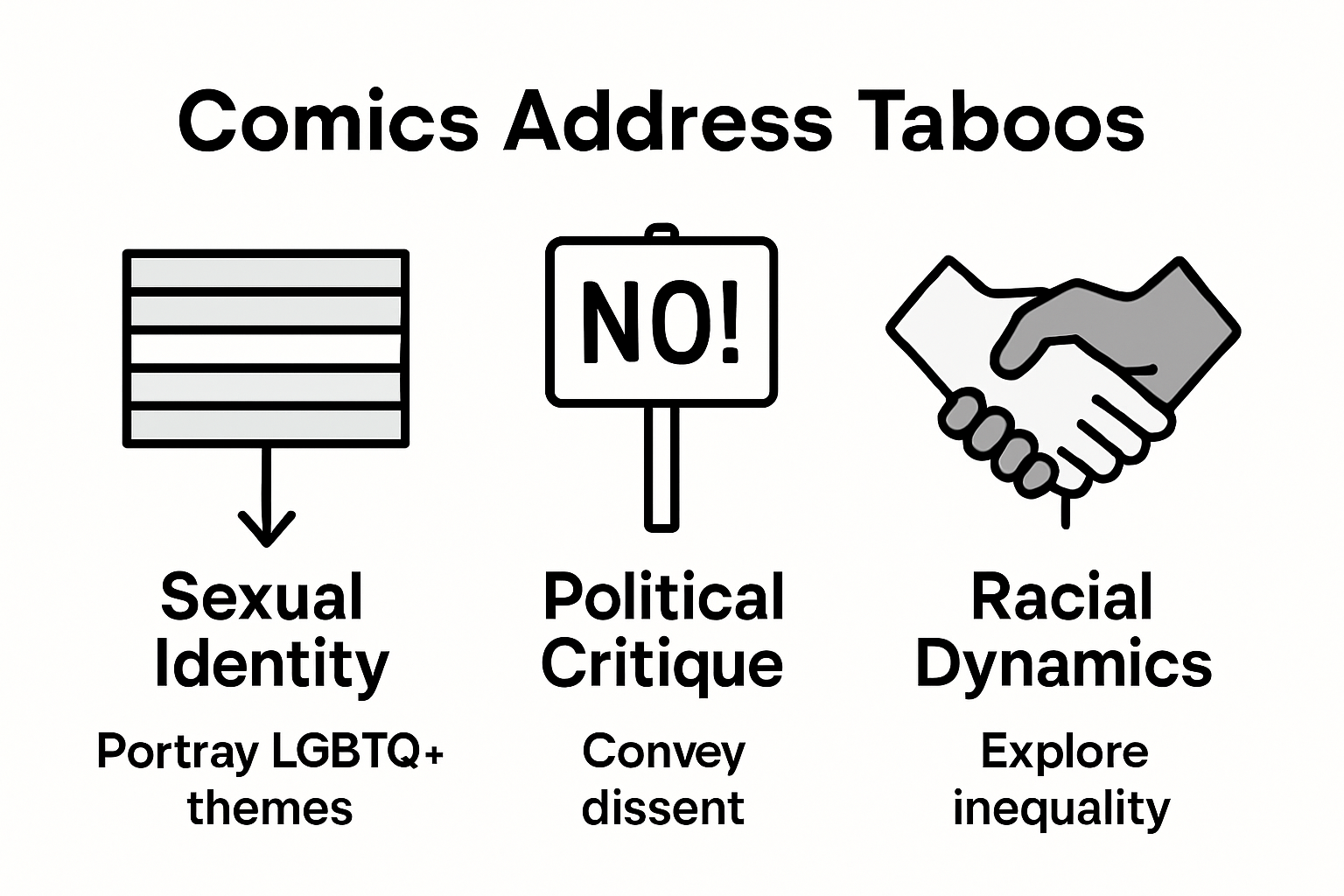
- Types Of Taboos Explored In Comics
- Creative Strategies For Challenging Norms
- Artist Intentions And Societal Reactions
- Risks, Legal Issues, And Market Impact
Key Takeaways
| Point | Details |
|---|---|
| Comics as Social Commentary | Comics challenge societal norms and taboos, serving as platforms for social commentary and transformation. |
| Diverse Themes Explored | They tackle sensitive topics such as gender identity, racial dynamics, and political critique to foster dialogue. |
| Innovative Storytelling Techniques | Artists use narrative subversion and visual strategies to disrupt established social narratives and provoke critical thought. |
| Navigating Challenges | Creators face legal, market, and regulatory challenges that impact their ability to address controversial themes in their work. |
Defining Taboos and Comics’ Cultural Role
Comics have long served as powerful tools for challenging societal norms and pushing cultural boundaries. More than mere entertainment, they represent complex narratives that decode complex social dynamics through visual storytelling. Artists utilize sequential art as a nuanced medium to explore controversial themes that might otherwise remain unexamined, creating a unique platform for social commentary and transformation.
At their core, comics function as social mirrors, reflecting and challenging existing taboos through creative representation. These graphic narratives provide artists unprecedented freedom to deconstruct sensitive topics like gender identity, racial dynamics, sexual orientation, and systemic inequalities. By visualizing uncomfortable realities, comics create spaces for dialogue that traditional media often suppress. Controversial Comics History reveals how graphic storytellers have consistently used their art form as a subversive communication channel.
Understanding comics’ cultural role requires recognizing them as more than entertainment. They are sophisticated social instruments that challenge dominant narratives, amplify marginalized voices, and provoke critical thinking. Through strategic visual metaphors and character development, comics can communicate complex psychological and sociological concepts in accessible, engaging formats. Banned Comics History demonstrates how powerful these narratives can be when they confront societal restrictions head-on, transforming potentially controversial content into transformative social discourse.
Types of Taboos Explored in Comics
Comics have emerged as a profound medium for confronting and exploring complex societal taboos across multiple dimensions of human experience. These graphic narratives courageously tackle sensitive social issues that often remain hidden or marginalized in mainstream discourse, providing artists a unique platform to challenge deeply ingrained cultural norms and perspectives.
Sexual identity and gender representation stand as prominent themes within taboo comic exploration. Artists use sequential storytelling to deconstruct binary gender constructs, illuminate queer experiences, and challenge heteronormative assumptions. Controversial Comic Book Covers demonstrate how visual narratives can provoke critical conversations about sexuality, consent, and personal autonomy. These comics create vital spaces for readers to engage with nuanced representations of human sexuality that traditional media frequently overlook.
Political and social critique represent another significant realm of taboo exploration. Comics serve as powerful instruments for examining systemic inequalities, challenging power structures, and amplifying marginalized voices. Social Identity Narratives reveal how graphic storytellers can reflect and shape community understanding by critiquing cultural norms through strategic narrative techniques. By visualizing uncomfortable social realities, comics transform complex sociological concepts into accessible, emotionally resonant experiences that encourage readers to question established social paradigms.

Racial dynamics, colonialism, and historical trauma constitute another critical domain where comics fearlessly confront societal taboos. Graphic narratives provide artists unprecedented opportunities to deconstruct generational pain, expose historical injustices, and reimagine collective cultural memories. Through intricate character development and strategic visual metaphors, these comics transform potentially painful historical narratives into powerful mechanisms for healing, understanding, and social transformation.
Creative Strategies for Challenging Norms
Comics represent a powerful artistic medium for disrupting established social narratives through innovative storytelling techniques. Narrative subversion emerges as a primary strategy, where artists deliberately deconstruct traditional storytelling frameworks to challenge readers’ preconceived notions and expose hidden societal assumptions. By reimagining character archetypes and narrative structures, comic creators generate provocative dialogues that push audiences beyond comfortable intellectual boundaries.
One critical approach involves critical pedagogical techniques that systematically challenge dominant perspectives on identity and social constructs. Artists strategically deploy visual metaphors, character development, and narrative arcs that interrogate systemic inequalities, revealing complex intersections of gender, sexuality, ethnicity, and cultural experiences. These graphic narratives transform complex sociological concepts into emotionally resonant experiences that invite readers to critically examine their own biases and assumptions.
Digital comic platforms have revolutionized norm-challenging strategies by providing dynamic, interactive spaces for marginal voices and experimental storytelling. Unlike traditional print media, digital comics offer unprecedented flexibility in representation, allowing creators to rapidly respond to social dynamics and amplify narratives frequently overlooked by mainstream cultural institutions. These platforms enable real-time community engagement, transforming comics from static artifacts into living, evolving conversations about social change.
Visual deconstruction emerges as another potent strategy, where artists deliberately dismantle traditional aesthetic conventions to challenge visual stereotypes. By reimagining character designs, panel layouts, and graphic styles, comic creators can subvert expectations, challenge normative representations, and create visceral experiences that force readers to confront their internalized biases. This approach transforms comics from mere entertainment into profound tools for social critique and transformative cultural dialogue.
Artist Intentions and Societal Reactions
Comics represent a dynamic intersection between artistic vision and societal response, where creators intentionally leverage their medium to challenge established power structures and provoke critical dialogue. Artistic intentionality emerges as a complex negotiation between the creator’s vision and the potential social impact of their work, recognizing that each graphic narrative carries the potential to transform collective consciousness.
Political comics in repressive contexts demonstrate remarkable courage in challenging authoritarian narratives. Artists strategically employ visual storytelling to express alternative ideologies of tolerance, civic rights, and individual creativity. By creating spaces for critique that traditional media prohibits, these comics become powerful instruments of social resistance, offering nuanced perspectives that challenge dominant cultural narratives and expose systemic inequalities.
Social identity narratives reveal the intricate dynamics between artist intentions and community reception. Comics function as sophisticated communication platforms where creators deliberately construct narratives that reflect and simultaneously reshape social identities. This complex interaction generates multifaceted responses ranging from profound appreciation to intense controversy, highlighting the transformative potential of graphic storytelling as a medium for social discourse.
Societal reactions to norm-challenging comics often follow predictable patterns of initial resistance followed by gradual acceptance. Artists anticipate and sometimes intentionally provoke these reactions, understanding that controversy can be a powerful mechanism for driving social dialogue. By creating visual narratives that challenge comfortable assumptions, comic creators transform their art from passive entertainment into active social commentary, inviting audiences to critically examine their deeply ingrained cultural beliefs and systemic prejudices.
Risks, Legal Issues, and Market Impact
The landscape of comic book creation involves navigating complex legal and market challenges that can significantly impact artistic expression and distribution. Regulatory frameworks create intricate barriers for artists seeking to challenge societal norms, forcing creators to develop sophisticated strategies for addressing controversial themes while mitigating potential legal and commercial risks.
Historical content regulation dramatically demonstrates the potential consequences of challenging established cultural boundaries. The infamous Comics Code Authority emerged as a direct response to perceived threats of inappropriate content, effectively imposing stringent censorship that fundamentally transformed the comic book industry. This regulatory mechanism illustrates how societal fears can translate into systematic suppression of creative expression, compelling artists to develop nuanced approaches to addressing sensitive topics.
Digital comic platforms have revolutionized traditional market dynamics, offering creators unprecedented opportunities to circumvent traditional regulatory constraints. These emerging platforms provide more flexible spaces for experimental storytelling, enabling artists to reach global audiences while maintaining greater creative autonomy. By leveraging digital distribution channels, comic creators can strategically navigate market and legal challenges, creating spaces for more radical and transformative narratives.
The economic risks of challenging societal norms remain significant, with potential consequences ranging from market marginalization to direct legal challenges. Sophisticated comic artists must balance artistic integrity with strategic market positioning, understanding that true innovation often requires carefully calculated risks. By developing multilayered narratives that engage audiences while subtly challenging established perspectives, creators can effectively transform potential legal and commercial obstacles into opportunities for meaningful social dialogue.
Discover How Comics Break Barriers and Drive Social Change
Comics have the unique power to challenge deep-rooted taboos and spark meaningful conversations around topics like gender, race, and identity. If you believe in supporting bold artistic voices that push cultural boundaries and provoke thoughtful reflection, explore a curated world of collector’s editions and original comics designed to inspire and confront societal norms. These works carry the emotional weight and creative courage that resonate with anyone passionate about transformative storytelling.
Step beyond the ordinary and join a community that values exclusive artbooks and comics that do more than entertain. Visit The Mansion Press today to browse limited releases and pre-order titles from independent creators whose comics challenge conventions and redefine cultural conversations. Support artists who turn controversy into change by embracing new narratives that matter now.
Frequently Asked Questions
What role do comics play in addressing societal taboos?
Comics serve as powerful tools for challenging societal norms and pushing cultural boundaries, offering a unique platform for social commentary and transformation through visual storytelling.
How do comics address themes of sexual identity and gender representation?
Artists use sequential storytelling in comics to deconstruct binary gender constructs and illuminate queer experiences, often provoking critical conversations about sexuality and consent.
What strategies do comic artists use to challenge norms and provoke dialogue?
Comic artists often employ narrative subversion, critical pedagogical techniques, and visual deconstruction to disrupt established social narratives and invite readers to critically examine their assumptions.
How do societal reactions to controversial comics influence their impact?
Societal reactions often begin with resistance but can lead to gradual acceptance. This controversy can provoke critical dialogue, allowing comics to serve as active instruments for social commentary and transformation.
Recommended
- Controversial Comics History: Everything You Should Know – The Mansion Press
- 7 Ways the Most Provocative Comics Inspire Collectors – The Mansion Press
- Complete Guide to Banned Comics in History – The Mansion Press
- Complete Guide to Controversial Comic Book Covers – The Mansion Press
- 7 HIV-Positive Celebrities and Icons Who Are Breaking Down Stigma