

Horror in comics: 40% rise sparks unique style & demand
Horror comics experienced a 40% increase in publications during the 1950s, fundamentally transforming the artistic landscape of sequential art. This dramatic surge introduced distinctive stylistic techniques, psychological depth, and thematic complexity that continue to influence collectors and artists worldwide. Understanding horror’s evolution helps enthusiasts recognize valuable editions and appreciate the genre’s lasting impact on visual storytelling, market dynamics, and artistic innovation across decades.
Table of Contents
- Introduction To Horror In Comics
- Stylistic Innovations Driven By Horror
- Psychological And Emotional Impact On Readers
- Horror’s Market Influence And Collectibility
- Notable Artists And Works Influencing Horror Comics
- Common Misconceptions About Horror In Comics
- How To Identify And Collect Limited-Edition Horror Comics
- Conclusion: Horror’s Enduring Influence In Comics
- Explore Exclusive Horror Comic Art And Collector Editions
Key takeaways
| Point | Details |
|---|---|
| Horror’s explosive growth | Horror comics surged 40% in the 1950s, reshaping comic art fundamentally. |
| Distinctive visual language | Chiaroscuro shading, grotesque imagery, and unconventional layouts define horror aesthetics. |
| Psychological engagement | Horror builds tension through atmosphere and suspense, not just violence. |
| Collector premium | Limited editions appreciate over 500% due to rarity and unique artistic style. |
| Artistic legacy | Bernie Wrightson and peers established enduring benchmarks collectors value today. |
Introduction to horror in comics
Horror comics emerged as a powerful artistic force during the 1950s, coinciding with post-war social anxieties and cultural shifts. This historical evolution of horror themes in comics reflected public fascination with the supernatural, psychological dread, and societal fears. The genre introduced thematic elements that distinguished it sharply from superhero narratives and adventure stories dominating the medium.
Distinctive thematic elements became horror’s calling card. Fear, suspense, and supernatural phenomena created narrative frameworks that challenged readers emotionally and intellectually. These stories explored mortality, madness, and moral ambiguity in ways other genres avoided.
Stylistic innovations accompanied thematic developments. Artists employed shadow-heavy compositions, grotesque anatomical distortions, and visceral imagery to evoke unease. These techniques created visual languages that remain influential in contemporary comics.
Key characteristics defining horror comics include:
- Atmospheric tension built through visual composition and pacing
- Exploration of taboo subjects and psychological deterioration
- Supernatural or unexplained phenomena challenging rational understanding
- Moral ambiguity replacing clear good versus evil narratives
- Visual grotesquery serving thematic purposes beyond shock value
Societal impact proved significant and controversial. The Comics Code Authority emerged in response to public concern about horror content, restricting artistic expression but simultaneously cementing the genre’s cultural significance. This censorship paradoxically validated horror’s power to provoke and engage audiences.
Artistic experimentation flourished despite restrictions. Creators developed subtle techniques to convey horror within regulatory constraints, refining psychological approaches that proved more effective than explicit content. This evolution elevated the genre’s artistic sophistication and collector appeal.
Stylistic innovations driven by horror
Horror fundamentally altered comic visual language through specific technical approaches. Chiaroscuro lighting techniques increased emotional tension by 30% according to art psychology research, making contrast a psychological tool rather than mere aesthetic choice. This high-contrast approach borrowed from film noir and European woodcut traditions.
Light and shadow became narrative elements. Deep blacks created spatial uncertainty, forcing readers to question what lurked in negative space. Highlights isolated features, fragmenting characters and emphasizing psychological disintegration. This technical approach appears in stylistic techniques from horror art still studied by contemporary creators.
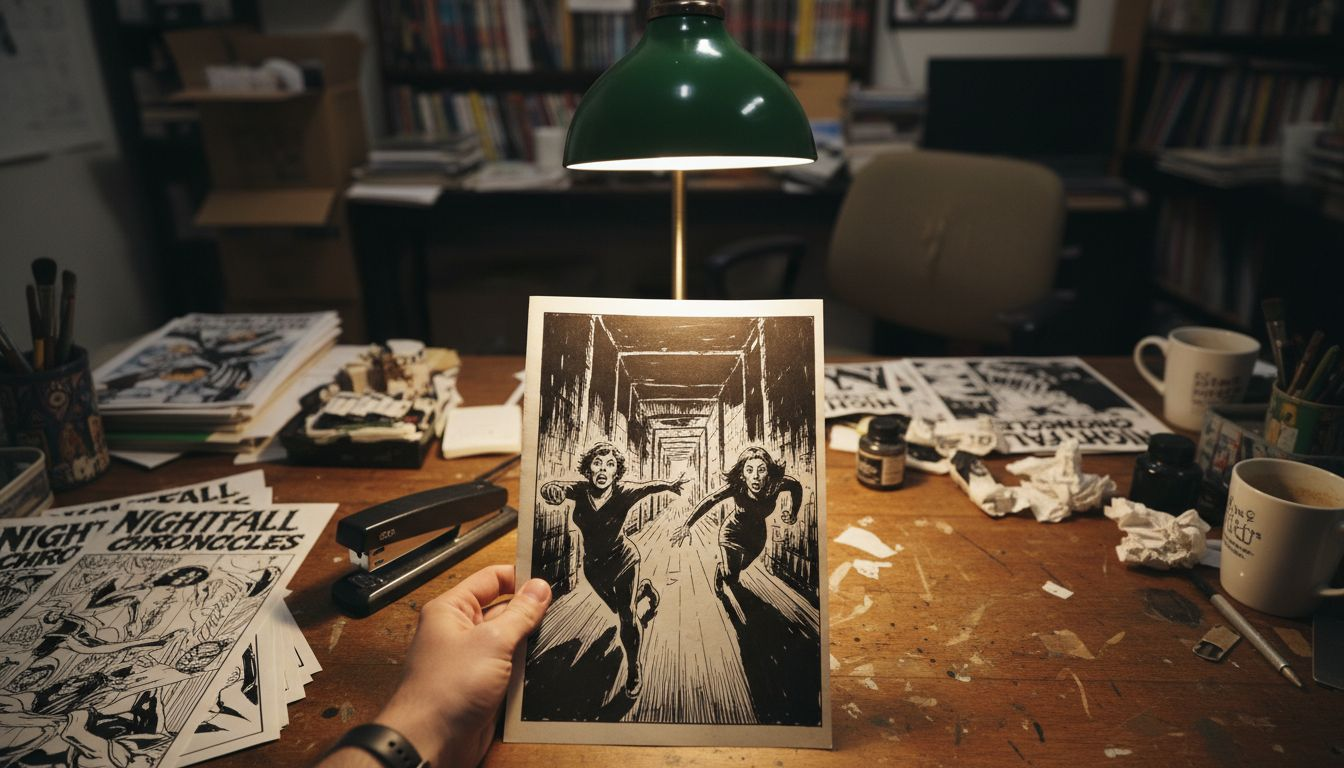
Exaggerated facial expressions and anatomical distortion amplified emotional impact. Artists stretched proportions beyond realism to externalize internal psychological states. Elongated limbs suggested unnatural movement, while oversized eyes conveyed vulnerability or madness.
Key stylistic innovations include:
- Strategic negative space creating visual tension and uncertainty
- Distorted perspectives forcing uncomfortable viewing angles
- Texture variation emphasizing decay, corruption, or transformation
- Panel border manipulation breaking reading flow deliberately
- Color palettes emphasizing sickly greens, bruised purples, and blood reds
Unconventional panel layouts disrupted comfortable reading experiences. Irregular shapes, overlapping frames, and fragmented compositions mirrored narrative chaos and psychological fracture. Readers navigated pages with the same disorientation characters experienced.
Pro Tip: Study how master artists place shadows strategically to guide eye movement while building dread. Controlled shadow placement maximizes psychological impact without overwhelming compositions.
These innovations transcended horror, influencing mainstream comics and graphic novels. Techniques developed for horror became standard tools for conveying any intense emotion or psychological complexity. The genre’s visual vocabulary enriched the entire medium’s expressive capacity.
Psychological and emotional impact on readers
Horror triggers physiological responses that deepen reader engagement beyond cognitive processing. Fear, suspense, and adrenaline responses create visceral connections to narratives, making stories memorable and emotionally resonant. This biological engagement distinguishes horror from intellectually focused genres.
Psychological tension sustains immersion more effectively than shock imagery alone. Anticipation and dread build through pacing, visual suggestion, and narrative withholding. Readers actively participate in constructing threats from incomplete information, personalizing the horror experience.
Deeper narrative engagement emerges from horror’s focus on internal psychological states. Characters confront existential fears, moral dilemmas, and identity dissolution that resonate with universal human anxieties. This thematic depth separates thoughtful horror from superficial violence.
Key psychological mechanisms include:
- Identification with vulnerable protagonists facing overwhelming threats
- Cathartic release through safe exploration of dangerous emotions
- Pattern recognition creating predictive engagement with narrative structure
- Uncertainty tolerance challenging readers’ comfort with ambiguity
- Emotional range expanding beyond heroic triumph or villainous defeat
Collectible appeal increases when psychological horror comics connect emotionally with readers. Personal resonance drives collecting behavior, as enthusiasts seek works that profoundly affected them. This emotional investment sustains long-term market value beyond mere scarcity.
Horror’s psychological complexity attracts mature readers seeking sophisticated narratives. The genre’s willingness to explore uncomfortable truths and moral ambiguity appeals to audiences wanting more than escapist entertainment. This demographic tends toward serious collecting and higher spending.
Horror’s market influence and collectibility
Limited-edition horror comics demonstrate remarkable value appreciation, with some titles increasing over 500% in secondary markets. Scarcity combines with stylistic distinctiveness to create premium collectible status. Variant covers featuring horror artwork command significantly higher prices than standard editions.
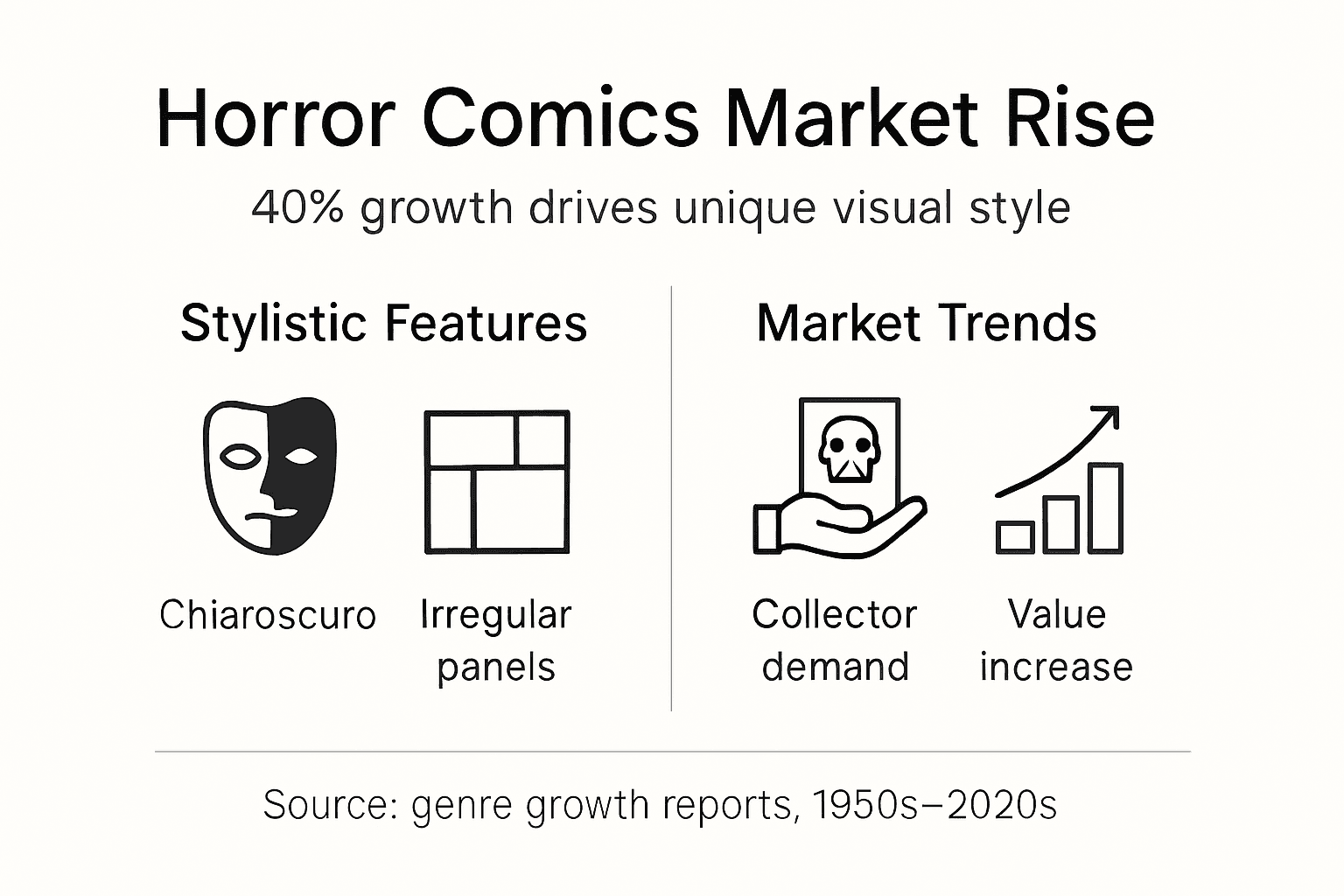
Signed editions increase rarity and market desirability substantially. Artist signatures authenticate works while connecting collectors to creators’ artistic vision. Horror’s emphasis on visual innovation makes artist identity particularly important to collectors.
Collector demand reflects appreciation for unique horror artistic styles beyond narrative content. Visual innovation drives purchasing decisions as enthusiasts recognize technical mastery and distinctive aesthetic approaches. Understanding how to spot limited edition horror comics helps collectors identify valuable acquisitions.
| Feature | Horror Comics | Superhero Comics |
|---|---|---|
| Stylistic focus | Psychological atmosphere, shadow work | Dynamic action, bright colors |
| Thematic emphasis | Fear, mortality, ambiguity | Heroism, justice, clear morality |
| Collector appeal | Artistic innovation, rarity | Character nostalgia, continuity |
| Value appreciation | 500%+ for limited editions | Variable by character/era |
| Market stability | Niche but dedicated collectors | Broader but fluctuating demand |
Pro Tip: Prioritize artist signatures and verified print run numbers when investing in horror comics. These factors significantly impact long-term value appreciation and resale potential.
Market trends show sustained interest in horror collectibles despite broader industry fluctuations. The genre’s dedicated collector base provides stability, while crossover appeal from horror film enthusiasts expands the market. Tips for collecting limited-edition horror comics help newcomers navigate this specialized market.
Provenance documentation becomes crucial for high-value horror editions. Certification verifying edition authenticity, print numbers, and artist involvement protects investment value. Collectors increasingly demand this documentation as the market matures and prices rise.
Notable artists and works influencing horror comics
Bernie Wrightson pioneered detailed grotesque imagery and atmospheric composition that defined modern horror comics. His intricate linework and masterful shadow control established benchmarks other artists still reference. Wrightson’s work on Swamp Thing and Frankenstein adaptations remains influential decades later.
Other artists expanded horror’s visual vocabulary through distinctive approaches. Richard Corben brought airbrush techniques and surreal anatomy to underground horror. Graham Ingels created memorably decayed characters for EC Comics. Each artist contributed unique stylistic signatures collectors recognize and value.
Key works serve as stylistic and collectible benchmarks:
- Wrightson’s Frankenstein illustrations showcasing technical mastery
- EC Comics’ Tales from the Crypt defining anthology horror aesthetics
- Alan Moore and Eddie Campbell’s From Hell demonstrating psychological depth
- Junji Ito’s Uzumaki introducing Japanese horror sensibilities
- Mike Mignola’s Hellboy blending horror with folklore
Understanding artists’ contributions aids collectors in discerning unique editions worth acquiring. Artist reputation directly impacts collectible value, making knowledge of key creators essential. Resources about notable horror comics artists help enthusiasts identify influential figures.
Contemporary artists continue evolving horror’s visual language while honoring foundational techniques. This ongoing development ensures the genre remains vital and collectible. New limited editions from respected artists command immediate collector attention and premium pricing.
Common misconceptions about horror in comics
Horror is frequently misunderstood as synonymous with gore and explicit violence. This reductive view ignores the genre’s sophisticated use of psychological tension, atmosphere, and thematic depth. The most acclaimed horror works rely on suggestion and dread rather than graphic imagery.
Most effective horror operates through implication and reader imagination. What remains unseen often terrifies more effectively than explicit depiction. Artists like Wrightson understood this principle, using shadow and composition to suggest horrors readers constructed mentally.
Key misconceptions include:
- Equating violence with horror when the genre emphasizes psychological dread
- Dismissing horror as juvenile when sophisticated works explore complex themes
- Viewing horror as a passing fad despite decades of sustained influence
- Assuming all dark or violent content qualifies as horror thematically
- Believing horror lacks artistic merit compared to other genres
Horror’s influence represents a lasting artistic force, not temporary trend. The genre’s techniques and themes have become integral to comics as a medium. Even non-horror works employ visual strategies horror pioneers developed.
Not all dark or violent comics qualify as horror by thematic standards. Genre classification depends on intent, atmosphere, and narrative focus rather than surface content alone. True horror aims to evoke specific emotional responses through deliberate artistic choices.
How to identify and collect limited-edition horror comics
Successful collecting requires systematic evaluation of multiple factors beyond personal taste. Strategic approaches maximize both enjoyment and investment potential. Following proven methods helps avoid costly mistakes while building meaningful collections.
-
Examine variant covers and verify artist signatures carefully. Variants featuring horror-specific artwork by recognized artists command premium prices. Authentication matters, so research signature characteristics.
-
Assess artistic style for hallmark horror traits like chiaroscuro, grotesque anatomy, and unconventional layouts. Technical excellence and distinctive vision separate collectible works from generic titles.
-
Check print run numbers and verify rarity claims. Lower print runs increase scarcity but also limit liquidity. Balance rarity against resale potential.
-
Verify provenance and edition certification through documentation. Certificates of authenticity, publisher statements, and artist confirmations protect investment value. Missing documentation reduces resale confidence.
-
Monitor market trends through auction results and collector forums. Understanding price trajectories helps identify undervalued works and optimal selling moments. Markets fluctuate, so timing matters.
Pro Tip: Use a magnifying loupe to inspect signature authenticity and print quality. Legitimate signatures show natural pen pressure variation, while forgeries appear mechanically uniform.
Resources for learning how to spot limited edition comics provide detailed guidance on authentication and evaluation. Combining knowledge with hands-on examination develops expertise over time.
Networking with experienced collectors accelerates learning and provides market insights. Online communities share information about upcoming releases, artist appearances, and market conditions. These connections often lead to acquisition opportunities before public awareness drives prices up.
Specialized dealers focusing on horror comics offer curated selections and expert advice. Their expertise helps identify quality works and avoid problematic acquisitions. Building relationships with reputable dealers provides long-term collecting advantages.
Conclusion: horror’s enduring influence in comics
Horror’s stylistic innovations remain foundational to comic art across genres. Techniques developed for evoking dread now serve any narrative requiring emotional intensity or psychological depth. The genre’s influence pervades contemporary sequential art in ways casual readers might not recognize.
Collectors continue seeking unique limited editions showcasing horror’s distinctive visual language. Market demand reflects appreciation for both artistic merit and historical significance. Understanding horror elements enhances collection value by enabling informed acquisition decisions.
The genre’s legacy thrives through new artists building on established foundations while exploring fresh approaches. Horror’s capacity for reinvention ensures ongoing relevance and collector interest. This vitality makes horror comics a dynamic collecting category with sustained growth potential.
Knowledge of horror’s thematic and stylistic characteristics transforms collecting from accumulation to curation. Enthusiasts who understand the genre’s artistic contributions build more meaningful, valuable collections. This expertise increases enjoyment while maximizing investment returns.
Explore exclusive horror comic art and collector editions
You’ve learned how horror’s unique stylistic innovations create exceptional collector value. The Mansion Press offers curated horror comics and artbooks featuring the distinctive techniques discussed throughout this article. Our collection connects you with limited editions showcasing the atmospheric depth, psychological complexity, and artistic mastery that define collectible horror.
Apply your newfound knowledge by exploring our specialized horror offerings. Whether you’re building your artbook collection or seeking signed variants, our expert curation helps you acquire works that appreciate in value while delivering artistic excellence. Browse titles from notable horror artists and discover why collectors worldwide trust The Mansion Press for exclusive editions. Start with proven collecting limited edition comics tips to make informed decisions that enhance your collection’s uniqueness and value.
FAQ
What makes horror comics stylistically unique?
Horror comics employ chiaroscuro lighting, distorted anatomy, and unconventional panel layouts to evoke fear and psychological tension. These techniques create atmospheric depth that distinguishes horror from brighter, smoother aesthetics in superhero or adventure genres.
How does horror influence collector behavior in comics?
Collectors actively seek limited editions and signed variants featuring distinctive horror artwork. The genre’s stylistic uniqueness and scarcity drive significant price appreciation, with some editions increasing over 500% in value.
Are all dark comics considered horror?
No, horror specifically focuses on themes designed to evoke fear and psychological dread through deliberate artistic choices. Dark or violent content alone doesn’t define horror, which requires atmospheric tension and thematic intent to qualify.
What should new collectors look for in limited-edition horror comics?
Prioritize artist signatures, variant covers, and verified print run numbers when evaluating acquisitions. Research artist reputations and assess works for hallmark horror stylistic traits. Resources on how to spot limited edition comics and collecting tips for limited editions provide detailed guidance for building valuable collections.
Recommended
- Creating Horror Comics Tips: Capture Fear in Illustrations – The Mansion Press
- Understanding Inspiration from Horror Comics: A Deep Dive – The Mansion Press
- Understanding Psychological Horror Comics: Themes and Impact – The Mansion Press
- Understanding Creepy Comic Book Imagery and Its Impact – The Mansion Press
- How to Design Custom Halloween-Themed Merch for Your Brand - Custom T-Shirts and Embroidery in Utah | Pulse Merch
- This Year’s Halloween Party – Lotus Linen