


Experimental Storytelling Explained: Complete Guide
Most american storytellers know that breaking the rules can lead to stunning results. With more than 60 percent of audiences seeking fresh, immersive experiences, the push for experimental storytelling has never been stronger. This trailblazing approach takes narrative beyond familiar patterns, sparking creativity and inviting readers or viewers to engage in ways they never expected. Explore how these methods redefine traditional art and comics, opening new doors for innovation and audience connection.
Table of Contents
- Defining Experimental Storytelling Methods
- Key Formats And Techniques Explored
- Notable Works And Influential Artists
- Practical Uses In Art And Comics
- Common Pitfalls And Challenges
Key Takeaways
| Point | Details |
|---|---|
| Disruption of Traditional Narratives | Experimental storytelling challenges linear storytelling by employing non-linear structures and fragmented narratives. |
| Active Audience Engagement | These methods encourage audiences to participate in meaning-making, fostering intellectual and emotional interactions with the work. |
| Integration of Multimedia | Artists incorporate diverse media, such as visual elements and interactive designs, to create rich, multidimensional storytelling experiences. |
| Balancing Innovation and Clarity | Successful experimental storytellers navigate the tension between artistic creativity and maintaining narrative coherence for audience comprehension. |
Defining Experimental Storytelling Methods
Experimental storytelling represents a dynamic approach to narrative creation that challenges traditional storytelling conventions by pushing artistic and communicative boundaries. At its core, this method seeks to disrupt linear narrative structures, reimagine audience engagement, and explore unconventional ways of conveying meaning. Experimental storytelling techniques emerge from artists’ desires to break free from established narrative constraints and create immersive, thought-provoking experiences.
Understanding experimental storytelling requires recognizing its fundamental characteristic of disrupting audience expectations. These methods often involve nonlinear narratives, unconventional perspectives, fragmented storytelling, and innovative multimedia approaches that challenge how stories are traditionally constructed and consumed. Experimental graphic storytelling exemplifies this approach by using visual mediums to deconstruct narrative frameworks and create multilayered communication experiences.
The philosophical underpinnings of experimental storytelling draw from academic research in pragmatic communication approaches, which examine how audiences interpret meaning beyond literal language. This research reveals that storytelling is not just about linear information transmission but about creating complex interpretive experiences. Experimental storytellers leverage this understanding by designing narratives that actively engage audiences in meaning-making processes, encouraging them to participate intellectually and emotionally with the work.
Key characteristics of experimental storytelling methods include:
- Disrupting linear narrative structures
- Challenging audience expectations
- Incorporating multimedia elements
- Encouraging active audience interpretation
- Blending different artistic disciplines
- Exploring unconventional communication techniques
By embracing these principles, experimental storytellers transform traditional narrative experiences into dynamic, interactive, and thought-provoking artistic expressions that transcend conventional storytelling boundaries.
Key Formats and Techniques Explored
Experimental storytelling encompasses a rich tapestry of innovative techniques that fundamentally challenge traditional narrative structures. Narrative techniques in graphic novels reveal how artists break conventional storytelling boundaries by reimagining how stories can be told and experienced. These techniques often involve complex strategies that transform linear storytelling into immersive, multidimensional experiences.
One primary experimental technique involves stream-of-consciousness narratives, which capture the intricate, nonlinear flow of human thought. This approach abandons traditional sequential storytelling, instead presenting narrative fragments that mirror the complex, often chaotic nature of mental processes. Fragmented narratives similarly challenge audience expectations by presenting stories through disconnected, non-sequential segments that reflect psychological complexity and emotional nuance.
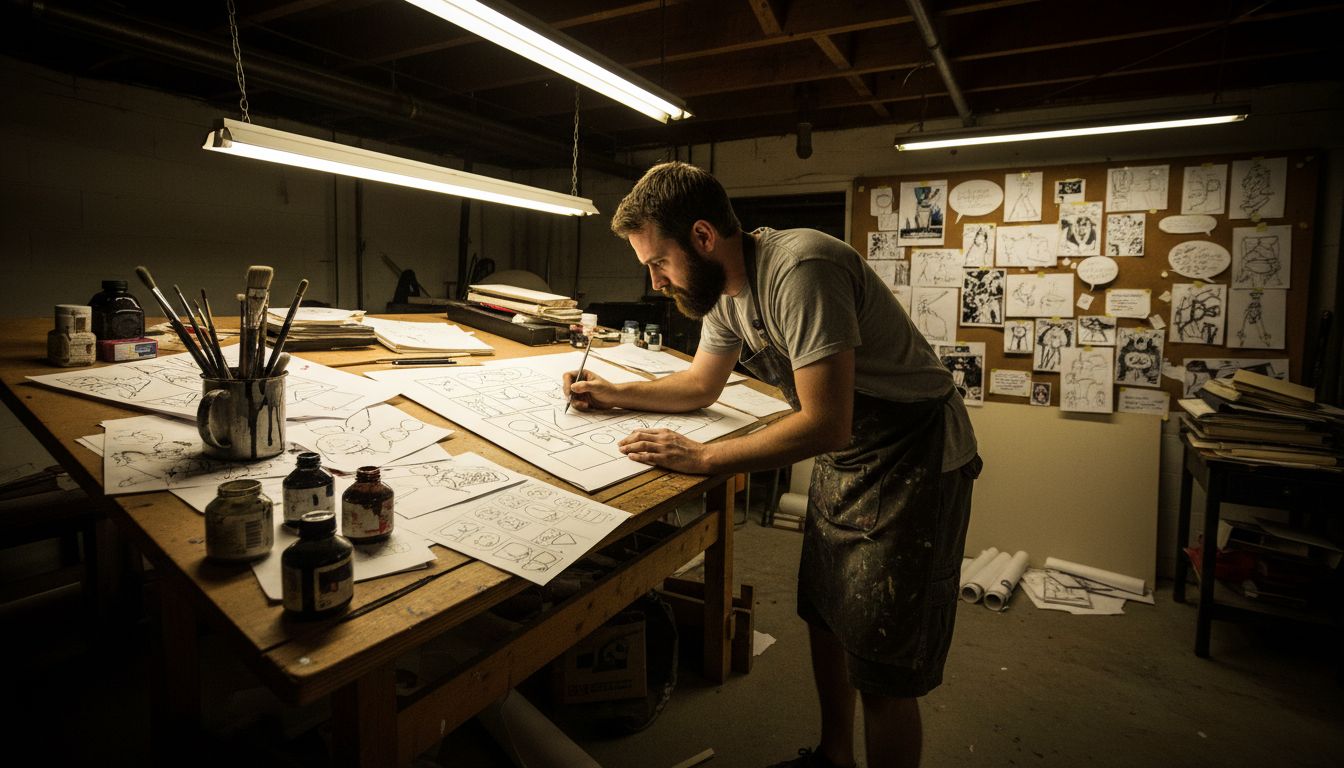
Artists and writers employing experimental techniques frequently utilize multiple innovative approaches. Unconventional literature formats might include visual elements, abstract themes, metafictional components, and multiple narrative perspectives. These methods transform storytelling from a passive consumption experience into an active, intellectual engagement where audiences must reconstruct meaning and interpret complex narrative landscapes.
Key experimental storytelling techniques include:
- Stream-of-consciousness narration
- Fragmented narrative structures
- Multilayered visual storytelling
- Non-linear temporal experiences
- Metafictional elements
- Interactive narrative design
- Multimedia storytelling approaches
By embracing these diverse techniques, experimental storytellers challenge audience perceptions, expand artistic possibilities, and create rich, intellectually stimulating narrative experiences that transcend traditional storytelling boundaries.
Notable Works and Influential Artists
Experimental storytelling has been dramatically shaped by groundbreaking artists who consistently challenge narrative conventions. Notable cult comic authors have been instrumental in pushing the boundaries of traditional storytelling, creating works that redefine how narratives can be constructed and experienced. These innovative creators transform storytelling from a linear progression into a complex, multilayered artistic expression.
Hybrid novel creators like Frank Miller, Neil Gaiman, and Dave McKean have been particularly influential in expanding narrative possibilities. Their work integrates diverse storytelling methods, incorporating elements like photography, collage, diagrams, and illustrations to create rich, multidimensional narrative experiences. These artists demonstrate how experimental storytelling can transcend traditional literary and visual art boundaries, creating immersive works that challenge audience expectations.
Dynamic narrative research has further illuminated how experimental storytellers approach their craft. Scholars like Colette Daiute have developed methodologies that examine narratives as performative, context-driven experiences rather than static texts. This approach reveals how experimental artists intentionally disrupt traditional narrative structures to generate more complex, engaging storytelling methods.
Key influential experimental storytelling artists include:
- Frank Miller (graphic novels)
- Neil Gaiman (cross-genre storytelling)
- Dave McKean (multimedia narratives)
- Brian Selznick (visual storytelling)
- Italo Calvino (literary experimentation)
- David Almond (narrative innovation)
These visionary artists continue to expand the boundaries of storytelling, demonstrating that narrative is not just about telling a story, but about creating profound, transformative experiences that challenge how we perceive and interact with artistic expression.
Practical Uses in Art and Comics
Experimental comic techniques reveal the transformative power of innovative storytelling approaches in visual arts. Artists and creators leverage these techniques to break traditional narrative constraints, enabling more dynamic and engaging communication strategies that challenge audience expectations and expand artistic expression.
Hybrid novel approaches have dramatically expanded the possibilities of storytelling in art and comics. These methods integrate diverse elements like photography, collage, diagrams, and illustrations to create multidimensional narrative experiences. By combining different visual and textual media, artists can construct complex storytelling landscapes that transcend conventional artistic boundaries, offering audiences more immersive and intellectually stimulating experiences.
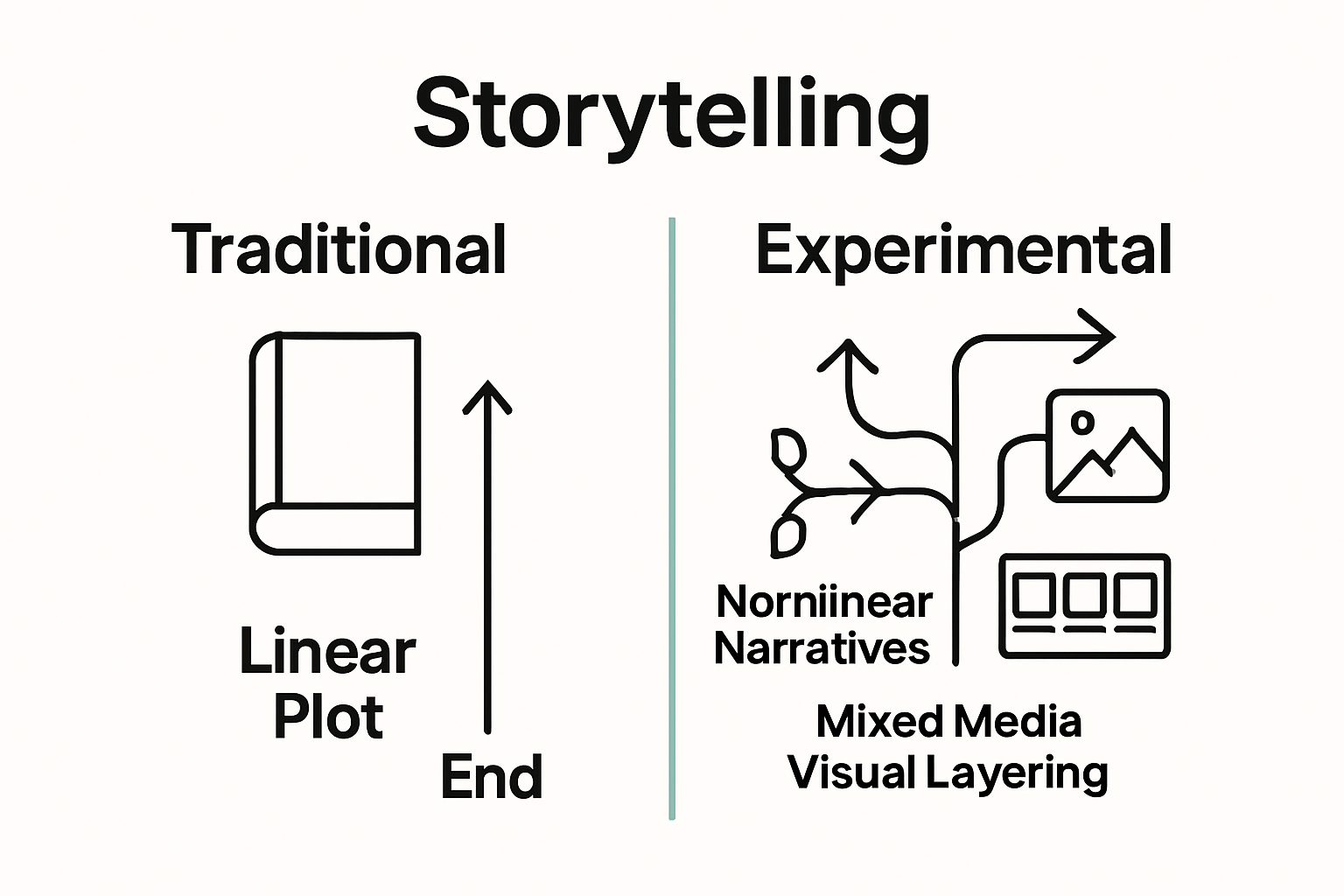
Ethnographic storytelling techniques provide another fascinating avenue for experimental narrative strategies. These approaches blend documentary and fictional elements, allowing creators to explore complex social narratives through innovative storytelling methods. Such techniques enable artists to represent cultural experiences more dynamically, bridging gaps between traditional documentary work and creative expression.
Practical applications of experimental storytelling include:
- Creating multilayered narrative structures
- Exploring non-linear storytelling techniques
- Integrating multimedia elements
- Challenging traditional narrative perspectives
- Representing complex social experiences
- Expanding visual communication strategies
- Blending documentary and fictional approaches
Through these innovative techniques, experimental storytellers continue to push the boundaries of artistic expression, transforming how we understand and experience narrative communication.
Common Pitfalls and Challenges
Experimental storytelling presents numerous complex challenges that artists and creators must navigate carefully. Automatic story generation research reveals critical obstacles in maintaining narrative coherence, particularly when attempting to create innovative storytelling structures that deviate from traditional linear approaches. These challenges require creators to develop sophisticated strategies for maintaining logical connections and preventing narrative fragmentation.
Storytelling generation frameworks highlight significant difficulties in producing long-form narratives that remain coherent and engaging. Artists often struggle with avoiding repetitive patterns, maintaining thematic consistency, and creating narratives that feel both innovative and comprehensible. The delicate balance between experimental techniques and audience comprehension demands nuanced artistic skills and deep understanding of narrative mechanics.
Beyond technical challenges, experimental storytellers face profound creative and conceptual obstacles. Artists must continuously negotiate between pushing artistic boundaries and maintaining meaningful communication. This requires a sophisticated approach that balances innovation with clarity, ensuring that experimental techniques enhance rather than obscure narrative meaning.
Common challenges in experimental storytelling include:
- Maintaining narrative coherence
- Preventing thematic fragmentation
- Balancing innovation with comprehension
- Avoiding repetitive narrative structures
- Managing audience engagement
- Integrating unconventional storytelling techniques
- Preserving emotional resonance
Successful experimental storytellers transform these challenges into opportunities for creative expression, using potential limitations as catalysts for groundbreaking artistic innovation.
Elevate Your Experimental Storytelling with Unique Art Collections
Experimental storytelling challenges traditional narrative paths and invites creators and audiences alike to explore new ways of meaning-making. If you are fascinated by nonlinear narratives, fragmented storytelling, or multimedia techniques that push artistic boundaries this guide has likely sparked your creative curiosity or even revealed challenges like maintaining narrative coherence and engaging your audience effectively.
At The Mansion Press we understand these artistic ambitions and challenges. As a curated online destination offering limited-edition artbooks, exclusive comics, and original works by visionary creators we connect you to inspiring pieces that echo the experimental spirit. Discover works by artists who blend illustration with photography and multimedia elements or explore exclusive hybrid novels that transform storytelling into immersive experiences.
Dive deeper into experimental storytelling through a carefully curated selection of art-centered products available now on The Mansion Press. Whether you are a collector seeking rare editions or a creator searching for inspiration our exclusive collections offer the perfect complement to your journey beyond traditional narratives. Begin your exploration today and transform how you experience art and story at The Mansion Press.
Frequently Asked Questions
What is experimental storytelling?
Experimental storytelling is a dynamic approach to narrative creation that challenges traditional storytelling conventions by utilizing nonlinear structures, unconventional perspectives, and innovative multimedia elements to engage audiences in unique and thought-provoking ways.
What are some key techniques used in experimental storytelling?
Key techniques include stream-of-consciousness narration, fragmented narrative structures, multilayered visual storytelling, non-linear temporal experiences, metafictional elements, interactive narrative design, and multimedia storytelling approaches.
Who are some notable artists in experimental storytelling?
Notable artists in experimental storytelling include Frank Miller, Neil Gaiman, Dave McKean, Brian Selznick, Italo Calvino, and David Almond, who have expanded narrative possibilities through their innovative works.
What are the challenges faced in experimental storytelling?
Common challenges in experimental storytelling include maintaining narrative coherence, preventing thematic fragmentation, balancing innovation with audience comprehension, and ensuring emotional resonance while integrating unconventional techniques.
Recommended
- Complete Guide to Experimental Storytelling Techniques – The Mansion Press
- What Is Visual Storytelling? Complete Guide for Artists – The Mansion Press
- Experimental Storytelling in Comics: Complete Guide – The Mansion Press
- Understanding Visual Narrative: The Art of Storytelling – The Mansion Press
- Créer un storytelling percutant pour engager votre audience