

Copycat Book Phenomenon: Impact on Art Collectors
Finding original art books that truly stand out is getting tougher as collectors spot increasing visual similarities across global markets. For those who seek something distinctive, copycat books offer a compelling blend of intentional design mimicry and artistic reinterpretation. These unique publications often blur the boundaries between homage and innovation, creating a rich conversation about creative value and collector significance. Explore how recognizing these nuanced qualities can help elevate and diversify your curated collection.
Table of Contents
- Defining Copycat Books In The Art Market
- Types Of Copycat Books And Their Distinctions
- Key Features And Artist Collaboration Insights
- Legal And Ethical Issues For Collectors
- Risks And Pitfalls When Buying Copycat Books
Key Takeaways
| Point | Details |
|---|---|
| Understanding Copycat Books | These books challenge notions of originality by replicating artistic styles and elements, prompting discussions on authenticity and market value. |
| Types of Imitation | Copycat books employ featural and thematic imitation, impacting artist perception and market reception. |
| Legal and Ethical Concerns | Collectors must navigate ownership, copyright, and the moral implications of supporting original creators. |
| Risks of Acquisition | Potential authenticity issues and legal complications necessitate thorough research and expert consultation before purchasing. |
Defining Copycat Books in the Art Market
In the dynamic landscape of art collecting, copycat books represent a complex phenomenon challenging traditional notions of originality and artistic authenticity. These publications strategically replicate visual styles, design elements, or content from established artworks, creating a nuanced conversation about creativity and market dynamics.
The concept of copycat books extends far beyond simple imitation. Global art market replica practices reveal a sophisticated ecosystem where reproduction serves multiple purposes - from educational resources to deliberate market strategy. Art collectors encounter these publications through various channels, each presenting unique implications for artistic valuation and intellectual property.
Key characteristics of copycat books include:
- Visual similarity to original artworks
- Intentional design mimicry
- Potentially lower production costs
- Strategic market positioning
- Limited but significant artistic value
Understanding copycat books requires examining their production dynamics and marketplace significance. While some view these publications as derivative, others recognize them as complex cultural artifacts that challenge traditional artistic boundaries. The practice is particularly prevalent in regions with robust art reproduction industries, such as Dafen, China, which supplies replicas worldwide.
Pro tip: When evaluating copycat art books, examine the intentionality behind the reproduction and its potential scholarly or collectible value.
Types of Copycat Books and Their Distinctions
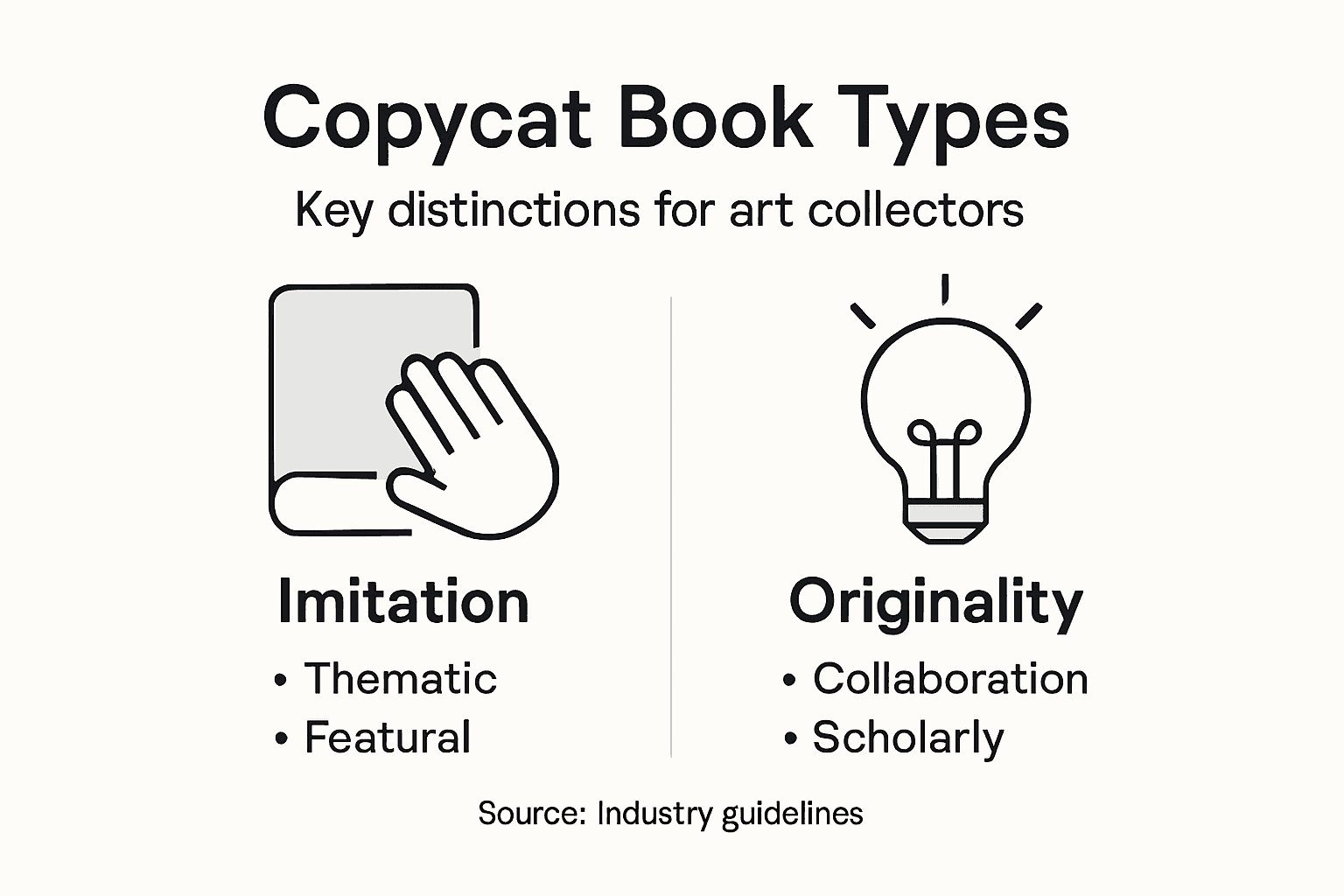
In the art book market, copycat books manifest through sophisticated replication strategies that go far beyond simple imitation. Copycat branding strategies reveal two primary approaches: featural imitation and thematic imitation, each representing distinct methods of artistic reproduction.
Featural imitation focuses on precise visual replication, where copycat books closely mimic specific design elements such as:
- Color palette and graphic style
- Typography and layout
- Visual composition
- Specific artistic techniques
- Structural design elements
Thematic imitation represents a more nuanced approach, where copycat books replicate broader conceptual frameworks rather than exact visual characteristics. These publications capture the essence, symbolic meaning, and underlying narrative strategies of original artworks without direct visual duplication.
Consumer product evaluations demonstrate that featural imitation tends to receive more favorable responses from collectors and art enthusiasts. This suggests that skillful visual reproduction can create significant market value, particularly when the copycat book demonstrates technical proficiency and creative interpretation.

Additionally, copycat books can be categorized into subcategories based on intentionality and execution:
The following table summarizes the main types of copycat books and their typical market impact:
| Type of Copycat Book | Artistic Impact | Collectible Value |
|---|---|---|
| Scholarly Reproduction | Enhances academic access | Moderate, niche interest |
| Artistic Reinterpretation | Expands creative boundaries | High, especially when unique |
| Commercial Mimicry | Dilutes original influence | Low, often mass-produced |
| Educational Replica | Supports art education | Low to moderate, depending on use |
| Homage Publication | Honors original work | Variable, can gain value over time |
- Scholarly reproductions
- Artistic reinterpretations
- Commercial mimicry
- Educational replicas
- Homage publications
Pro tip: Carefully examine the intentional complexity and artistic merit of a copycat book beyond its surface-level similarity to determine its true collectible value.
Key Features and Artist Collaboration Insights
The world of copycat books reveals a complex landscape of artistic collaboration that transcends traditional creative boundaries. ArtScience collaborative practices demonstrate how interdisciplinary partnerships can generate unprecedented creative outputs, particularly in book production and design.
Key features of successful artist collaborations in book production include:
- Shared creative vision
- Complementary skill sets
- Mutual respect for individual artistic expertise
- Willingness to experiment
- Openness to cross-disciplinary interpretation
Collaborative artist book research highlights the nuanced dynamics of creative partnerships, especially those involving poets, painters, and multimedia artists. These collaborations often challenge conventional artistic boundaries, creating unique publications that blur the lines between traditional artistic mediums.
The collaborative process typically involves several critical stages:
- Initial conceptual discussions
- Developing shared aesthetic framework
- Individual contribution and integration
- Iterative refinement
- Final synthesis of creative vision
Moreover, contemporary artist collaborations frequently address broader social contexts, incorporating perspectives on gender, race, and cultural representation. These publications become more than mere books - they transform into complex artistic statements that challenge existing narratives and provoke critical dialogue.
Pro tip: Evaluate artist collaborations by examining the depth of creative dialogue and the unique interpretative layers each contributor brings to the project.
Legal and Ethical Issues for Collectors
Copycat books present a complex landscape of legal and ethical challenges that collectors must carefully navigate. Art market governance reveals intricate dimensions of ownership, provenance, and intellectual property rights that directly impact art book collectors and creators.
Key legal considerations for collectors include:
- Intellectual property rights
- Copyright limitations
- Reproduction permissions
- Authenticity verification
- Potential legal liability for unauthorized reproductions
The ethical dimensions of copycat books extend beyond simple legal compliance, demanding nuanced understanding of artistic integrity and creative attribution. Collectors must distinguish between legitimate artistic homage and unauthorized reproduction, a distinction that requires sophisticated evaluation of:
- Original artist’s intent
- Transformative creative elements
- Permission and collaboration frameworks
- Market value implications
- Cultural and artistic context
Moreover, collectors play a critical role in maintaining artistic ecosystem integrity. By supporting original creators and understanding the complex legal landscape, they can promote responsible collecting practices that respect both artistic innovation and intellectual property rights.
Here’s a comparison of key legal risks and ethical dilemmas faced by collectors:
| Challenge | Legal Risk | Ethical Dilemma |
|---|---|---|
| Copyright Violations | Lawsuits, fines possible | Undermines original artist’s rights |
| Unclear Provenance | Title disputes, seizure | Market trust erosion |
| Lack of Attribution | Damages author reputation | Ethical artistry called into question |
| Unauthorized Reproduction | Legal liability for buyer | Compromises creative integrity |
Pro tip: Always document the provenance and obtain verifiable permissions when acquiring copycat books to protect your collection’s legal and ethical standing.
Risks and Pitfalls When Buying Copycat Books
The art book collecting world presents significant challenges for collectors navigating the complex terrain of copycat publications. Art market forgery risks reveal a landscape fraught with potential financial and reputational dangers that demand sophisticated collector awareness.
Primary risks associated with copycat book acquisitions include:
- Authenticity verification challenges
- Financial investment vulnerability
- Potential legal complications
- Reputation damage
- Market value depreciation
Copycat books create multiple layers of complexity for discerning collectors. The most sophisticated forgeries often incorporate nuanced details that make detection extraordinarily challenging, requiring collectors to develop robust evaluation strategies:
- Comprehensive provenance research
- Expert authentication consultations
- Detailed visual comparative analysis
- Technical material examinations
- Verifiable publication history verification
Collector risk assessment strategies emphasize the critical importance of transparency and expert knowledge. Successful collectors must cultivate a deep understanding of market dynamics, recognize subtle reproduction techniques, and maintain a skeptical yet informed approach to potential acquisitions.
Pro tip: Invest in professional authentication services and maintain a comprehensive documentation trail for every copycat book in your collection to mitigate potential risks.
Discover Authentic Art Books and Unique Collaborations at The Mansion Press
Navigating the complexities of the copycat book phenomenon can be challenging for art collectors who value authenticity and artistic integrity. This article highlights critical concerns such as legal risks, ethical dilemmas, and the importance of genuine artist collaboration. If you are searching for original and carefully curated artbooks, including limited editions and collector’s items that respect creative boundaries and promote artistic innovation, The Mansion Press offers solutions tailored to your needs.
Explore our exclusive collection where transparency and artist collaboration are at the heart of every product. Do not compromise your collection’s value or integrity. Visit The Mansion Press today to browse unique artbooks, comics, and original artworks. Secure your next prized piece with confidence and enjoy the connection to independent artists worldwide. Start building a collection that celebrates authenticity now!
Frequently Asked Questions
What are copycat books in the art market?
Copycat books are publications that replicate visual styles, design elements, or content from established artworks. They challenge traditional notions of originality and authenticity in art.
How do copycat books impact the value of original artworks?
While some see copycat books as derivative, they can also hold significant cultural and scholarly value, influencing the market dynamics and potentially diluting the influence of original pieces.
What are the different types of copycat books, and how do they differ?
Copycat books can be categorized into several types, including scholarly reproductions, artistic reinterpretations, commercial mimicry, educational replicas, and homage publications, each having distinct artistic impacts and collectible values.
What legal and ethical issues should collectors consider when acquiring copycat books?
Collectors must navigate intellectual property rights, copyright limitations, and questions of authenticity when acquiring copycat books, ensuring that they respect artistic integrity and understand the provenance of the works.