

Alternative Art Spaces: Redefining Art Communities
Discovering rare artwork or a limited-edition comic often means searching beyond ordinary galleries and mainstream conventions. For collectors and enthusiasts seeking the thrill of the unexpected, alternative art spaces provide dynamic environments that break traditional molds and open up new creative possibilities. These venues offer not just art for sale, but unique communities and immersive experiences where artistic boundaries are constantly redefined and diverse voices shape vibrant cultural networks.
Table of Contents
- What Alternative Art Spaces Really Mean
- Major Types of Alternative Art Venues Explained
- How Alternative Art Spaces Operate Today
- Benefits For Collectors And Comic Enthusiasts
- Common Challenges And Sustainability Issues
Key Takeaways
| Point | Details |
|---|---|
| Alternative Art Spaces Redefine Creativity | These spaces challenge traditional frameworks, promoting collaboration and inclusivity among artists and communities. |
| Types of Alternative Venues | Various types, such as industrial transformation spaces and nomadic exhibitions, serve unique functions in enhancing artistic expression. |
| Sustainability Challenges | Financial instability and regulatory pressures threaten the existence of these spaces, requiring adaptive strategies for survival. |
| Opportunities for Collectors | Alternative art spaces provide collectors with direct access to emerging talents and unique cultural narratives, fostering active engagement. |
What Alternative Art Spaces Really Mean
Alternative art spaces represent radical reimaginations of creative environments that challenge traditional institutional frameworks. Unlike conventional galleries or museums, these dynamic spaces emerge as experimental platforms where artists, collectors, and communities intersect in transformative ways. Underground art movements have significantly influenced how we understand these unconventional creative ecosystems.
These spaces are characterized by several critical attributes that distinguish them from mainstream art institutions:
- Complete rejection of hierarchical structures
- Emphasis on collaborative and inclusive practices
- Prioritization of marginalized artistic voices
- Flexible and adaptive spatial configurations
- Direct community engagement and participation
The fundamental philosophy of alternative art spaces centers on breaking down traditional barriers. Non-traditional venues enable artistic expression that transcends commercial market pressures, creating environments where creativity can flourish without institutional constraints. These spaces serve as critical platforms for experimental practices, social commentary, and collective imagination.
Understanding alternative art spaces requires recognizing them as more than physical locations - they are living, breathing social ecosystems. They represent dynamic networks where artistic production, community building, and social transformation converge. By challenging established norms, these spaces continuously redefine the boundaries of artistic experience and cultural participation.
Pro tip: Explore alternative art spaces with an open mind and willingness to engage beyond traditional aesthetic expectations.
Major Types of Alternative Art Venues Explained
Alternative art venues represent a diverse ecosystem of creative spaces that challenge traditional exhibition models. Cultural aggregators and specialized art spaces demonstrate the rich complexity of these unconventional environments, each offering unique approaches to artistic expression and community engagement.
These alternative venues can be broadly categorized into several distinctive types:
- Industrial Transformation Spaces: Converted warehouses, factories, and manufacturing sites repurposed as artistic environments
- Community-Driven Galleries: Neighborhood-level spaces prioritizing local artist representation
- Collaborative Experimental Platforms: Fluid venues emphasizing interdisciplinary and interactive artistic practices
- Nomadic Exhibition Spaces: Temporary or mobile venues that challenge fixed geographical constraints
- Digital and Hybrid Environments: Online and mixed-reality platforms expanding artistic accessibility
Each type of alternative art venue serves a unique function within the broader creative ecosystem. Contemporary art exhibition spaces demonstrate remarkable adaptability, transforming former industrial sites into vibrant cultural destinations that foster innovation and community connection.
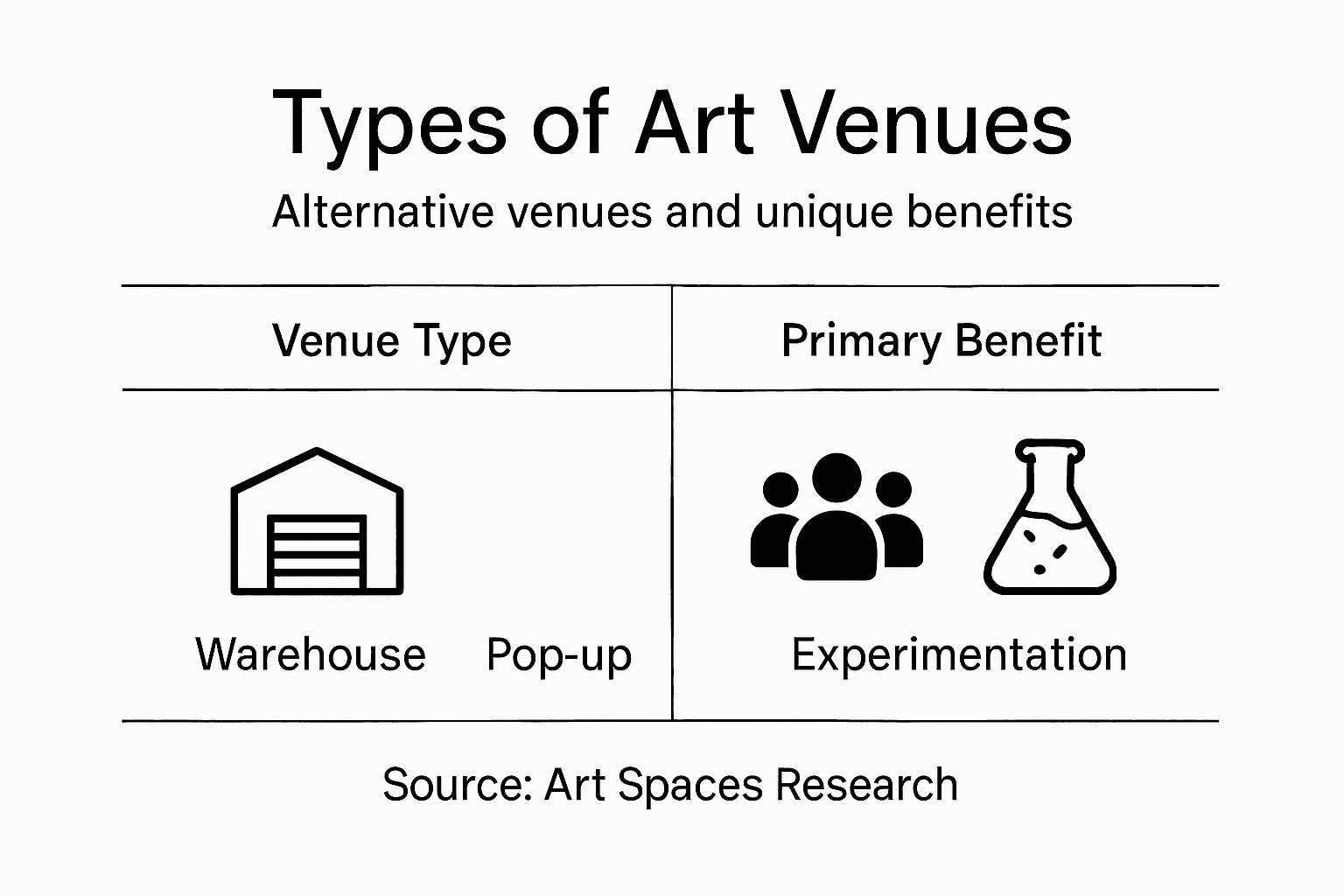
Here’s a comparison of alternative art venue types and their distinctive impacts:
| Venue Type | Example Setting | Primary Benefit |
|---|---|---|
| Industrial Transformation | Repurposed warehouse | Fosters large-scale projects |
| Community-Driven Gallery | Local neighborhood space | Builds local artist support |
| Collaborative Experimental | Multi-use studio | Encourages cross-discipline |
| Nomadic Exhibition | Pop-up location | Expands access regionally |
| Digital/Hybrid Environment | Online platform | Increases global reach |
Understanding these venues requires recognizing them as more than physical locations - they are dynamic social infrastructures that challenge traditional artistic hierarchies. By providing flexible, inclusive environments, alternative art spaces enable emerging artists to experiment, marginalized voices to be heard, and communities to reimagine cultural participation.
Pro tip: Research local alternative art venues before visiting to understand their unique curatorial approach and community mission.
How Alternative Art Spaces Operate Today
Alternative art spaces have fundamentally transformed how artistic communities create, share, and experience creative works. Non-traditional art platforms challenge conventional exhibition models by offering innovative and accessible approaches to artistic expression that transcend traditional gallery constraints.
These contemporary spaces operate through several distinctive strategies:
- Embracing digital and physical hybrid models
- Prioritizing community engagement over commercial metrics
- Implementing flexible, adaptable exhibition frameworks
- Creating horizontal, collaborative decision-making structures
- Actively supporting emerging and marginalized artists
Creative resistance platforms demonstrate remarkable adaptability by integrating multiple approaches. They function not just as exhibition spaces, but as dynamic social infrastructures that challenge existing artistic hierarchies and create new modes of cultural production.
Modern alternative art spaces operate as living ecosystems that continually negotiate between artistic experimentation, community needs, and broader social contexts. By rejecting rigid institutional frameworks, these venues enable artists to explore innovative practices, connect directly with audiences, and reimagine the potential of creative expression in contemporary society.

Pro tip: Follow local alternative art spaces on social media to stay informed about emerging exhibitions and community events.
Benefits for Collectors and Comic Enthusiasts
Alternative art spaces unlock extraordinary opportunities for collectors and comic enthusiasts seeking unique and transformative artistic experiences. Global art scene interactions provide unprecedented access to emerging talents and innovative storytelling that transcend traditional collecting boundaries.
These spaces offer multiple compelling advantages for discerning collectors:
- Direct engagement with emerging artists
- Access to experimental and limited-edition artworks
- Opportunities for unique cultural discoveries
- Expanded perspective on artistic innovation
- Deeper understanding of contemporary creative movements
Comic enthusiast collecting strategies reveal that alternative spaces provide more than just transactional experiences. They create immersive environments where collectors can explore nuanced narratives, understand artistic contexts, and connect with creative communities in meaningful ways.
Beyond traditional collecting models, these spaces democratize art acquisition by removing institutional barriers. They invite collectors to become active participants in artistic ecosystems, supporting experimental practices and fostering direct relationships between creators and audiences. This approach transforms collecting from a passive acquisition process into an engaging, collaborative cultural experience.
Pro tip: Attend alternative art space events to build personal connections with artists and discover unique collectible works.
Common Challenges and Sustainability Issues
Alternative art spaces operate in a complex landscape of persistent challenges that threaten their very existence. Sustainability challenges for alternative spaces reveal intricate struggles between maintaining artistic autonomy and securing operational stability.
The primary sustainability challenges include:
- Chronic financial instability
- Limited long-term funding sources
- Complex regulatory compliance requirements
- Constant pressure to compromise artistic vision
- Difficulty maintaining community engagement
These spaces must navigate multiple interconnected challenges simultaneously. Financial precarity remains the most significant threat, with many alternative art venues relying on short-term grants, donations, and volunteer labor to sustain their operations. This economic vulnerability forces many spaces to make difficult compromises between maintaining artistic integrity and ensuring basic operational continuity.
Moreover, alternative art spaces face unique institutional pressures that challenge their fundamental purpose. They must continuously negotiate between remaining true to their experimental roots and developing sustainable organizational structures that can withstand economic and cultural shifts. This delicate balance requires remarkable adaptability, strategic planning, and a deep commitment to artistic innovation.
The following table summarizes the top sustainability issues and how alternative art spaces adapt:
| Challenge | Common Impact | Adaptive Response |
|---|---|---|
| Funding Instability | Project cancellations | Community fundraising |
| Regulatory Compliance | Barriers to operation | Creative legal structuring |
| Maintaining Vision | Pressure to commercialize | Shared community governance |
| Engaging Communities | Declining participation | Ongoing outreach programs |
| Economic Shifts | Organizational stress | Diversified resource strategies |
Pro tip: Develop multiple funding streams and build strong community partnerships to enhance organizational resilience.
Discover Unique Collector’s Treasures Inspired by Alternative Art Spaces
Alternative art spaces challenge traditional art worlds by creating inclusive, experimental environments where emerging and marginalized voices thrive. If you are passionate about supporting artistic innovation and community-driven creativity, finding exclusive and limited-edition works matters. At The Mansion Press, we understand the challenges artists face as well as the rich cultural value these dynamic ecosystems offer. That is why our curated online retailer connects you directly to independent artists and comic creators, showcasing pieces that reflect the vibrant spirit of alternative art platforms.
Explore a world beyond conventional galleries with our carefully selected artbooks, original artworks, and collectible comics designed to expand your collection with meaningful stories and fresh perspectives. Act now to discover unique offerings and build personal connections with the creative community through The Mansion Press. Support creativity that pushes boundaries by browsing our diverse catalog today and elevate your collection with exclusive finds that embody the ethos of alternative art spaces. Visit us now to start your journey toward acquiring extraordinary art that speaks to your passion and commitment.
Frequently Asked Questions
What are alternative art spaces?
Alternative art spaces are unconventional creative environments that challenge traditional institutional frameworks, serving as experimental platforms for artists, collectors, and communities to intersect.
How do alternative art spaces differ from traditional galleries?
Unlike traditional galleries, alternative art spaces prioritize collaboration, inclusivity, and marginalized voices while often embracing flexible spatial configurations and direct community engagement.
What types of alternative art venues exist?
Various types of alternative art venues include industrial transformation spaces, community-driven galleries, collaborative experimental platforms, nomadic exhibition spaces, and digital/hybrid environments, each with unique functions in the creative ecosystem.
What challenges do alternative art spaces face?
Alternative art spaces often confront challenges such as financial instability, pressure to compromise artistic vision, regulatory compliance requirements, and difficulties in maintaining community engagement.